
Clear speech can make an online course feel more professional, easier to follow, and less tiring to watch. A lavalier microphone keeps the mic close to your voice while leaving your hands free to teach, demonstrate, or present.
We selected 10 wired and wireless options for different recording setups, including iPhone, Android, computer, and camera users. The right choice depends on compatibility, connection reliability, sound quality, and how much freedom you need while teaching.
Best 10 Lavalier Microphone for Online Courses Picks for 2026
Best Dual-Mic Pick
Wireless AI Noise-Cancelling Lavalier

- Dual transmitters for two-person recording
- USB-C and Lightning adapters included
- Up to 164-foot wireless range; five-hour battery
Best For: Online instructors and collaborative course recordings
Best DJI-Compatible Pick

- Works with DJI Mic and DJI Mic 2
- Rotating design supports flexible placement
- Cable routing helps prevent unplugging
Best For: DJI-based course recording setups
Best Budget Phone Kit
MAYBESTA Dual Wireless Lavalier

- Two mini microphones included
- Works with phones, tablets, and laptops
- Plug-and-play setup with noise reduction
Best For: Mobile instructors recording two-person lessons
Best Wired Audio Pick

- Discreet broadcast-oriented capsule
- 3.5mm TRS connection for compatible gear
- Kevlar-reinforced cable and pop shield
Best For: Camera- or interface-based course recording
Best Plug-and-Play Pick

- Wireless and ready to use without an app or Bluetooth
- Includes USB-C and Lightning adapters
- Up to 6 hours of recording with wind protection
Best For: Creators recording courses across phones, tablets, and laptops
Best Budget Wired Option
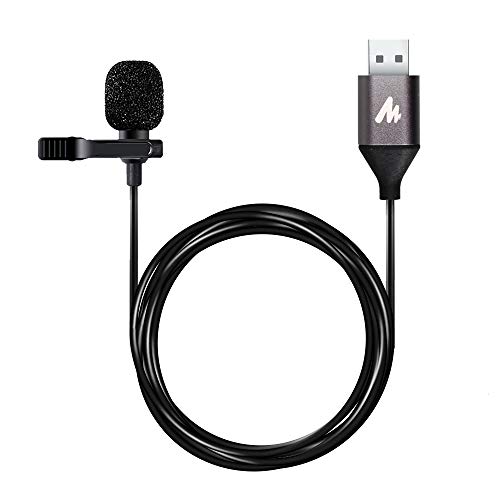
- Plug-and-play USB connection for computers
- Supports 192kHz/24-bit recording
- Includes a clip and foam windscreen
Best For: Desk-based course recording on Windows PCs and Macs
Best for Long Recording Sessions

- Up to 30 hours with the charging case
- 5-gram transmitter with AI noise cancellation
- Includes limiter and safety track protection
Best For: Mobile instructors who need extended wireless recording
Best Long-Cable Pick

- Plug-and-play USB recording
- 20-foot cord for mobility
- Includes clip and two windscreens
Best For: Laptop- and PC-based course creators
Best Wireless Versatility

- 3-in-1 receiver for multiple devices
- Up to 65 feet of wireless range
- Dual transmitters with noise reduction
Best For: Mobile, camera, and multi-speaker course recording
Best for Multi-Device Teaching

- Type-C, Lightning, and USB interfaces
- Directional pickup with noise reduction
- Up to 8 hours of battery life
Best For: Instructors switching between phones and computers
Best Dual-Mic Pick – Wireless AI Noise-Cancelling Lavalier
If you need a lavalier microphone for online courses that can handle two speakers, this wireless XIOMOUS set is a flexible option. It includes dual transmitters, USB-C and Lightning adapters, plug-and-play setup, and AI noise cancellation for recording lessons, presentations, interviews, and meetings.
Best For: Online instructors, presenters, and two-person course recordings using smartphones or tablets.
Pros:
- Two wireless microphones support simultaneous recording for instructor-and-student or interview formats.
- USB-C and Lightning adapters work with many iPhone, iPad, Android, and other USB-C devices.
- AI noise cancellation and a unidirectional pickup pattern are designed to reduce distracting background sound.
- Offers wireless transmission up to 164 feet and up to five hours of recording per microphone.
Cons:
- The supplied battery-life specification is shorter than the 16-hour figure in the product title.
- It is designed around smartphone and tablet recording rather than a standard 3.5mm camera connection.
Its dual-mic design makes it especially useful for collaborative lessons, while the included adapters simplify phone-based course production. Confirm your device connection before buying and plan charging for longer teaching sessions.
Best DJI-Compatible Pick – DJI Lavalier Microphone
For course creators already using DJI wireless equipment, this compact lavalier microphone offers a straightforward wired connection to compatible DJI receivers. Its 3.5mm TRS connector, rotating design, and cable-routing feature are suited to lessons, interviews, livestreams, and other spoken-content setups.
Best For: DJI Mic and DJI Mic 2 owners who want a discreet wired lavalier for online course recording.
Pros:
- Compatible with DJI Mic 2 and DJI Mic systems.
- Rotating design allows flexible positioning while recording.
- Cable routing helps reduce accidental unplugging.
- Compact, concealable body suits presentations and on-camera teaching.
Cons:
- It requires a compatible DJI receiver and does not function as a standalone wireless microphone.
- The single 3.5mm TRS connection is less convenient for direct phone recording without additional equipment.
This is a focused accessory rather than an all-in-one course microphone. It makes the most sense when your existing recording setup already includes a DJI receiver and you want a small, flexible lapel mic.
Best Budget Phone Kit – MAYBESTA Dual Wireless Lavalier
This MAYBESTA set is a practical choice if your lavalier microphone for online courses needs to work across phones, tablets, and laptops. It includes two mini microphones, a receiver, Lightning and USB-C compatibility, automatic connection, and noise reduction for teaching videos, conferences, and livestreams.
Best For: Mobile course creators who want two microphones and broad device compatibility at a compact size.
Pros:
- Two microphones support interviews, demonstrations, and instructor-and-guest recordings.
- Compatible with Android devices, iPhones, iPads, laptops, and tablets through the included connection options.
- Plug-and-play setup does not require an app or manual adapter pairing.
- The longer receiver interface is designed to work with many phone cases.
Cons:
- The supplied notes do not specify an exact wireless range or battery runtime.
- Its omnidirectional pickup can capture sound from around the microphone, so placement still matters in noisy rooms.
- The listed warranty information is abbreviated and should be verified before purchase.
For phone-first teaching content, the MAYBESTA kit combines flexible compatibility with a two-mic configuration. Its automatic connection and case-friendly receiver can reduce setup friction, though room noise and battery expectations deserve attention.
Best Wired Audio Pick – RØDE Lavalier GO
The RØDE Lavalier GO is a wired lavalier microphone for online courses aimed at creators who value a discreet, durable setup. Its 3.5mm TRS connector works with compatible cameras, audio interfaces, and wireless transmitters, while the omnidirectional capsule is forgiving when clipped to clothing.
Best For: Course creators using a camera, audio interface, or wireless transmitter with a 3.5mm TRS input.
Pros:
- Broadcast-oriented 4mm capsule provides discreet placement for on-camera teaching.
- Omnidirectional pickup is forgiving when microphone placement shifts slightly.
- Foam pop shield helps reduce wind noise and vocal plosives.
- Kevlar-reinforced 1.2-meter cable and cable-managing clip are built for repeated use.
Cons:
- It is wired, so the cable may limit movement during lessons.
- The 3.5mm TRS connector may require an adapter or compatible transmitter for some phones and computers.
- Only one microphone is included.
This is a strong fit for a fixed teaching setup where reliability and simple placement matter more than wireless freedom. Check that your camera, interface, or transmitter accepts a 3.5mm TRS lavalier before ordering.
Best Plug-and-Play Pick – Mini Mic Pro
If you want a lavalier microphone for online courses that works across phones, tablets, and laptops with minimal setup, the Mini Mic Pro is a flexible wireless option. It includes USB-C and Lightning adapters, noise-reduction features, wind protection, and up to six hours of recording per charge.
Best For: Course creators who record lessons on different mobile devices and want a portable wireless setup.
Pros:
- Works with iPhone, Android, tablets, laptops, and iPads through included USB-C and Lightning adapters.
- Plug-and-play operation requires no app or Bluetooth connection.
- Includes foam and dead-cat wind protection for indoor or outdoor recording.
- Supports up to six hours of use per charge and allows simultaneous device charging.
Cons:
- Six-hour battery life may require recharging during longer recording sessions.
- Its wireless receiver and adapters add more pieces to manage than a simple wired mic.
The Mini Mic Pro is a practical choice when convenience and device compatibility matter most. Its compact design and included accessories make it well suited to recording lessons in different locations.
Best Budget Wired Option – MAONO UL10 USB Lavalier
The MAONO UL10 is a straightforward lavalier microphone for online courses when you record directly on a computer. Its USB connection, plug-and-play design, metal clip, and 192kHz/24-bit recording support make it a simple choice for desk-based teaching and video production.
Best For: Instructors recording lessons, presentations, meetings, or voiceovers on a Windows PC, Mac, laptop, or other USB device.
Pros:
- USB plug-and-play connection works with Windows PCs, Macs, laptops, and other USB 2.0 devices.
- Supports up to 192kHz/24-bit recording for detailed audio capture.
- Lightweight design includes a metal lapel clip and foam windscreen.
- Useful for classroom recording, online videos, meetings, podcasts, and interviews.
Cons:
- Its wired USB design limits movement compared with wireless lavalier microphones.
- Compatibility is focused on USB-equipped computers and does not include a wireless mobile setup.
Choose the UL10 if your course-production workflow centers on a computer and you prefer uncomplicated wired operation. It offers useful recording specifications without adding batteries, transmitters, or apps.
Best for Long Recording Sessions – BOYA mini 2 Wireless Lavalier
The BOYA mini 2 is a wireless lavalier microphone for online courses designed for mobility and extended use. It combines a 5-gram transmitter with AI noise cancellation, 48kHz/24-bit audio, app controls, a safety track, and up to 30 hours of battery life with its charging case.
Best For: Instructors who move while teaching, record on smartphones, or need long battery life for repeated lessons.
Pros:
- Very lightweight 5-gram transmitter is designed for discreet, comfortable wear.
- AI noise cancellation offers light and strong modes for different environments.
- Charging case provides up to 30 hours of battery life, with transmission up to 328 feet.
- Limiter and -12 dB safety track help protect recordings from clipping.
Cons:
- It does not support Bluetooth connectivity.
- Camera compatibility is limited to specified DJI devices and does not include several popular action cameras.
- App control requires using the BOYA Central app for settings such as gain, EQ, and noise cancellation.
The BOYA mini 2 is compelling for creators who prioritize freedom of movement and long runtime. Check the receiver and device compatibility carefully before buying, especially if you plan to record with a camera rather than a phone or tablet.
Best Long-Cable Pick – Movo M1 USB Lavalier
If you want a straightforward lavalier microphone for online courses, the Movo M1 focuses on dependable USB recording for laptops and computers. Its omnidirectional pickup, plug-and-play setup, and 20-foot cord make it practical for lessons, webinars, tutorials, and desktop recording where you may need extra movement.
Best For: Laptop- and PC-based course creators who want a wired microphone with generous cable length.
Pros:
- USB plug-and-play setup requires no software or drivers.
- 20-foot cable provides substantial mobility while presenting.
- Includes an aluminum lapel clip and two foam windscreens.
- Omnidirectional design suits voiceovers, tutorials, podcasts, and streaming.
Cons:
- The wired design offers less freedom than a wireless microphone.
- It is primarily suited to USB-compatible laptops and computers.
The Movo M1 is a sensible choice when simplicity and reach matter more than wireless convenience. Its included accessories also make it ready for recording out of the box.
Best Wireless Versatility – PQRQP GT16 Wireless Lavalier
The PQRQP GT16 is a flexible lavalier microphone for online courses when you record across phones, tablets, cameras, and other devices. Its 3-in-1 receiver, wireless range, dual transmitters, and built-in noise reduction support hands-free lessons, demonstrations, interviews, and mobile content creation.
Best For: Teachers and creators who need wireless recording across iPhone, Android, camera, and compatible computer setups.
Pros:
- 3-in-1 receiver supports Lightning, USB-C, and 3.5mm connections.
- Wireless transmission reaches up to 65 feet.
- Dual microphones are useful for two-speaker recordings.
- Noise reduction and omnidirectional pickup help emphasize voices.
Cons:
- Battery life is listed at up to 7 hours, so charging is part of regular use.
- The 3.5mm receiver connection is not suitable for laptop audio input.
- Some Android and USB-C devices may require OTG to be enabled manually.
The GT16 offers more freedom and device flexibility than a conventional wired lavalier. Check your device connection and OTG requirements before relying on it for a course session.
Best for Multi-Device Teaching – FosFun 3-in-1 Lavalier
The FosFun TLU-02 is a practical lavalier microphone for online courses if you switch between iOS devices, Android phones, and computers. Its integrated Type-C, Lightning, and USB interfaces simplify setup, while directional voice capture, noise reduction, and up to eight hours of battery life support lessons, meetings, and course recording.
Best For: Instructors who record on several device types and want a compact microphone with directional noise reduction.
Pros:
- Integrated Type-C, Lightning, and USB interfaces reduce adapter needs.
- Plug-and-play operation is designed for low-latency recording.
- Directional pickup and noise reduction target surrounding distractions.
- Up to 8 hours of use supports longer classes and meetings.
Cons:
- The supplied details identify it as a single-channel microphone.
- Its noise-reduction performance may still depend on the recording environment.
- The listed connector details should be checked against your specific device before purchase.
For instructors moving between phones and computers, the TLU-02’s built-in connector range is its main advantage. It is especially appealing for portable teaching setups where quick connection and reduced background noise are priorities.
How We Picked the Best Lavalier Microphone for Online Courses
We evaluated these microphones as tools for recording lessons, lectures, tutorials, and live online classes. Our comparison focuses on voice clarity, device compatibility, connection type, portability, noise handling, and practical setup. Wireless kits can provide more freedom of movement, while USB lavaliers generally offer a simpler connection to a computer. We also considered whether each option supports one or two speakers and whether its adapters suit modern phones and other recording devices.
Features such as noise cancellation and high-resolution recording can help, but they do not replace good mic placement or a quiet recording space. A microphone that works reliably with your teaching device is usually more valuable than one with an impressive specification that complicates setup.
Quick Comparison
| Best For | Recommended Type | Why It Helps |
|---|---|---|
| Phone-based lessons | Wireless Lightning or USB-C kit | Freedom to move and easy mobile recording |
| Computer courses | USB lavalier | Direct connection with minimal setup |
| Two-person instruction | Dual wireless microphone set | Records an instructor and student together |
| Camera recording | Camera-compatible wireless or wired mic | Supports presentations away from a desk |
| Budget buyers | Basic wired or compact wireless model | Lower cost and straightforward operation |
Key Buying Factors for a Lavalier Microphone for Online Courses
Device Compatibility
Check the connector before buying. USB-C is common on newer Android phones, computers, and many tablets, while Lightning remains relevant for older iPhones and iPads. Some kits include multiple adapters, which is useful if you record across several devices. Confirm that your phone can accept an external microphone while charging or using headphones if that matters to your workflow.
Wired Versus Wireless
A wired lavalier is usually affordable, light, and dependable at a desk. Wireless microphones are better when you stand, write on a board, demonstrate equipment, or move around a classroom. Consider battery life, charging, pairing, range, and whether the receiver occupies your device’s only port.
Voice Quality and Noise Control
For courses, intelligible speech matters more than exaggerated bass or studio-style specifications. Look for a secure clip, a suitable cable length, and effective wind or background-noise reduction. Test the microphone with your actual teaching software before recording a full lesson.
Single or Dual Transmitters
A single transmitter suits solo instruction. A dual system is more practical for interviews, demonstrations, discussions, or co-teaching, provided both channels remain clear and easy to manage.
Who Should Buy Which Lavalier Microphone for Online Courses?
Choose a compact wireless kit if you teach from a phone and need to move freely. Pick a USB lavalier if most lessons are recorded at a laptop or desktop and you value simple plug-and-play operation. A dual wireless set is the better fit for interviews and collaborative lessons, while a multi-connector kit makes sense for creators who switch between iPhone, Android, and computer recording. If your priority is maximum reliability at a fixed desk, a wired model remains a sensible choice.