
If your headphones sound flat, quiet, or underpowered from a motherboard jack, an internal sound card can make a big difference. The right model can deliver cleaner output, stronger amplification, and better control over high-impedance headphones.
In this roundup, we focus on internal sound cards for high impedance headphones that balance sound quality, power, compatibility, and value for gaming, music, and general PC use.
Best 10 Internal Sound Card for High Impedance Headphones Picks for 2026
Flagship PCIe Upgrade
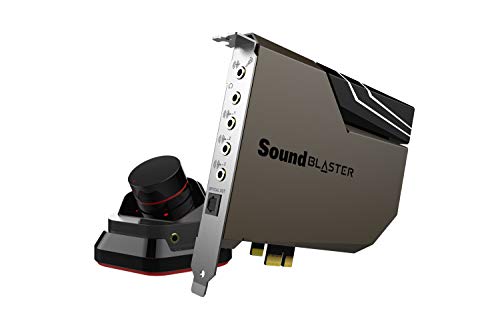
- Xamp bi-amp drives up to 600Ω headphones
- ESS 9018 DAC with 127 dB DNR
- Audio Control Module adds quick access controls
Best For: Desktop listeners needing a powerful internal card for high impedance headphones
Compact PCIe Value Pick

- 32-bit / 384 kHz playback with up to 120 dB SNR
- Low-profile card with half-height bracket
- 7.1 analog output plus SPDIF and headset ports
Best For: Small-case PC builds needing a compact internal sound upgrade
External Amp Alternative

- Xamp amp drives up to 600Ω headphones
- USB DAC with 130 dB SNR and 32-bit / 384 kHz
- Works with PC and major consoles
Best For: Users who want a USB DAC/amp instead of an internal PCIe card
Budget PCIe Surround Pick

- PCIe x1 sound card with 5.1/7.1 support
- Up to 192 kHz playback and 120 dB SNR
- Compact internal upgrade for Windows 10 PCs
Best For: Entry-level PC upgrades with surround audio support
Studio-Grade PCIe DAC Card
PCIe HiFi Sound Card with Dual DACs
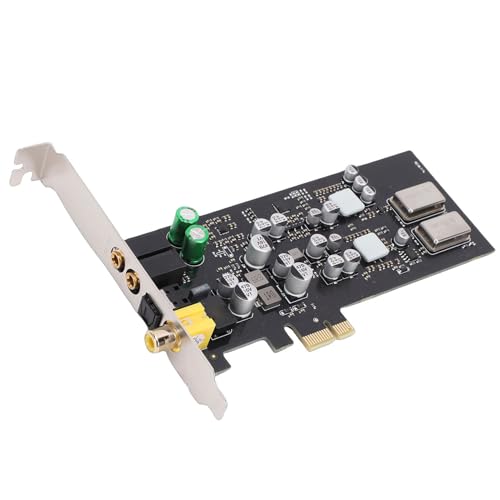
- Dual DACs with headphone drivers
- Optical and coaxial digital outputs
- Supports multiple sampling rates and formats
Best For: Music producers and PC audio upgraders who want a DAC-focused internal card
High-Impedance Headphone Amp Card
Creative Recon3D SB1350 PCIe Sound Card

- Dedicated headphone amp supports up to 600 ohms
- THX TruStudio Pro and Dolby Digital Live
- PCIe x1 card with 5.1 surround support
Best For: Gamers and headphone users needing a PCIe card for up to 600-ohm cans
Dual-Chip PCIe Audio Upgrade
ST113 Sound Card with ES9018K2M DAC

- SSS1700 controller with ES9018K2M DAC
- Headphone, mic, speaker, optical, and coaxial ports
- Front-panel audio header for desktop builds
Best For: Desktop users wanting a versatile internal card with multiple outputs
Premium PCIe DAC for Power-Hungry Headphones
Creative Sound BlasterX AE-5 Plus
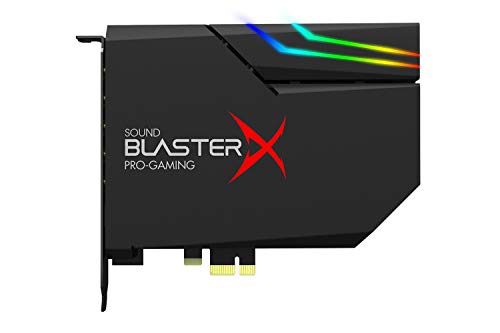
- Drives headphones up to 600Ω with Xamp
- 32-bit / 384 kHz playback and 122 dB DNR
- Supports Dolby Digital Live and DTS Encoding
Best For: Users needing strong headphone amplification plus gaming-friendly audio features
Budget 5.1 PCIe Upgrade
Padarsey PCIe 5.1 Internal Sound Card
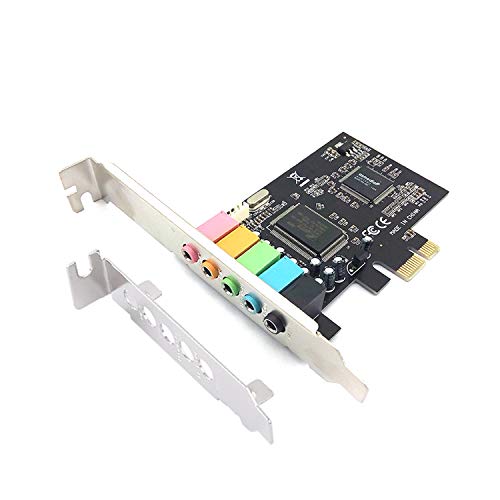
- 5.1 surround sound support
- Low-profile bracket for compact cases
- Basic 32/64-bit audio processing
Best For: Budget users who only need basic surround audio on Windows 7
Hi-Res Surround Sound Upgrade
Creative Sound Blaster Audigy Fx Pro

- 32-bit / 384 kHz playback with 120 dB SNR
- Creative Nexus AutoEq headphone customization
- Discrete 7.1 analog output plus SPDIF
Best For: Users wanting cleaner hi-res audio and tuning tools in a compact PCIe card
Flagship PCIe Upgrade – Creative Sound Blaster AE-7
If you want an internal sound card for high impedance headphones, the Creative Sound Blaster AE-7 is built for serious desktop listening. Its discrete Xamp headphone bi-amp, 1Ω output impedance, and support for headphones up to 600Ω make it a strong match for demanding studio cans and high-end planar-magnetic models.
Best For: PC users who want a high-end PCIe sound card with a powerful headphone amp and premium DAC performance.
Pros:
- ESS SABRE-class 9018 DAC with 127 dB DNR and up to 32-bit / 384 kHz playback
- Xamp discrete headphone bi-amp drives up to 600Ω headphones
- 1Ω output impedance is well suited to sensitive and high-impedance headphones
- Audio Control Module adds easy access to volume and front I/O
Cons:
- Requires a PCIe slot, so it is only for desktop PCs
- More feature-rich than a basic audio upgrade if you only need simple output
The AE-7 is the most fully featured option here for headphone-focused desktop setups. It pairs strong analog drive with high-resolution playback and hardware audio processing, making it a sensible pick when you want both power and flexibility from an internal card.
Compact PCIe Value Pick – Creative Audigy Fx Pro
The Creative Sound Blaster Audigy Fx Pro is a straightforward internal sound card for high impedance headphones if you want a compact desktop upgrade without moving into a premium DAC/amp stack. It offers 32-bit / 384 kHz playback, up to 120 dB SNR, and a low-profile design that should fit smaller cases more easily.
Best For: PC builders who want a compact PCIe sound card with solid audio specs and broad analog connectivity.
Pros:
- 32-bit / 384 kHz playback with up to 120 dB SNR
- Supports discrete 7.1-channel analog output
- Includes headset, mic-in, line-in, and SPDIF connectivity
- Half-height bracket and short card length suit smaller cases
Cons:
- Notes do not list a dedicated high-impedance headphone amp rating
- Less specialized for demanding headphones than the AE-7 or G6
This is the practical choice if you mainly want better PC audio and flexible connections in a compact form factor. It is less of a headline amp solution, but its size and feature set make it appealing for general desktop use.
External Amp Alternative – Sound BlasterX G6
While not an internal sound card for high impedance headphones, the Sound BlasterX G6 is a useful desktop and console alternative if you can work with USB instead of PCIe. Its discrete Xamp headphone amplifier, 1Ω output impedance, and support for headphones up to 600Ω make it highly relevant for demanding headphone setups.
Best For: Gamers and PC/console users who want a portable USB DAC/amp with strong headphone-driving ability.
Pros:
- Discrete Xamp headphone amp with 1Ω output impedance
- Drives sensitive 8Ω IEMs through studio-grade 600Ω headphones
- 130 dB DNR and 32-bit / 384 kHz DAC support
- Includes 7.1 virtual surround, Dolby Digital decoding, and Scout Mode
Cons:
- Uses USB, so it is not an internal PCIe card
- Audio output mode is stereo rather than native multichannel analog output
The G6 stands out when headphone drive strength matters more than internal installation. If you do not need a PCIe card and want a flexible USB unit for PC or consoles, it offers a strong mix of amplification and gaming features.
Budget PCIe Surround Pick – Creative Audigy FX V2
The Creative Sound Blaster Audigy FX V2 is a simple internal sound card choice if you are looking for a basic desktop audio upgrade rather than a dedicated amp-heavy solution for high impedance headphones. It supports PCIe x1, offers up to 192 kHz playback, and includes 5.1 and 7.1 surround support for Windows 10 PCs.
Best For: Budget-minded PC users who want an internal PCIe sound card with surround support and a modest spec bump.
Pros:
- PCIe x1 design is easy to fit in most desktops
- Up to 192 kHz playback with 120 dB SNR
- Supports both 5.1 and 7.1 surround output
- Compact footprint for straightforward installs
Cons:
- Notes do not mention a dedicated high-impedance headphone amplifier
- Platform detail is limited to Windows 10 in the supplied notes
This card makes sense when your priority is a clean, uncomplicated internal upgrade. It is more about practical desktop sound and surround support than pushing difficult-to-drive headphones, so it fits best as an entry-level option.
Studio-Grade PCIe DAC Card – PCIe HiFi Sound Card with Dual DACs
If you want an internal sound card for high impedance headphones that also covers digital outputs and music-focused playback, this PCIe HiFi card is built around dual DACs and a dedicated headphone driver. It’s aimed at users who want cleaner PC audio, multiple sample-rate support, and a more serious sound path than onboard audio.
Best For: Music producers, audiophile PC users, and gamers who want a PCIe upgrade with optical/coaxial output.
Pros:
- Dual DACs and headphone drivers for higher-quality audio processing
- Supports multiple sampling rates and sound formats
- Offers optical and coaxial digital outputs plus 7.1-channel support
- Compatible with OS X and Android without extra driver installation, per notes
Cons:
- Notes list a 44.1 kHz maximum sample rate in the details section
- Branding and specs in the listing are somewhat mixed, so buyers should double-check fit and expectations
This is a flexible internal upgrade for buyers who want better PC audio alongside digital connectivity. Its strongest appeal is the DAC-and-headphone-driver focus, but you’ll want to verify the listed sample-rate details against your needs before buying.
High-Impedance Headphone Amp Card – Creative Recon3D SB1350 PCIe Sound Card
For buyers specifically searching for an internal sound card for high impedance headphones, this Creative Sound Blaster Recon3D stands out because its dedicated headphone amp supports headsets and headphones up to 600 ohms. It also adds THX TruStudio Pro processing and Dolby Digital Live, making it a strong all-in-one PCIe audio upgrade for gaming and home theater use.
Best For: Gamers and PC users with high-impedance headphones who want a built-in amp and surround features.
Pros:
- Dedicated headphone amp supports up to 600-ohm headphones
- THX TruStudio Pro and Dolby Digital Live for surround processing
- PCIe x1 card with 5.1 surround support
- Can connect to home theater systems through a single digital cable
Cons:
- Listed for Windows 7 in the supplied details
- Older product design may not fit buyers wanting the newest feature set
This is the most direct match in the group for high-impedance headphone use because the amp rating is clearly stated. If you want a PCIe card that handles demanding headphones while also adding surround audio features, it’s the most purpose-built option here.
Dual-Chip PCIe Audio Upgrade – ST113 Sound Card with ES9018K2M DAC
If you’re looking for an internal sound card for high impedance headphones and also want flexible rear-panel and front-panel audio connections, the ST113 is a practical PCIe option. Its dual-chip design pairs an SSS1700 controller with an ES9018K2M DAC, and it includes headphone, mic, speaker, optical, and coaxial outputs for mixed-use desktop setups.
Best For: Desktop users who want a multi-output internal audio card for playback, monitoring, and front-panel expansion.
Pros:
- ES9018K2M DAC with SSS1700 controller for upgraded PC audio
- Includes headphone, mic, speaker, optical, and coaxial outputs
- 9-pin front audio header for chassis extension
- Plug-and-play UAC1.0 compatibility for Windows, macOS, and Linux
Cons:
- Limited to up to 24-bit/96 kHz under UAC1.0, per the notes
- Does not support DSD or high-definition SACD sources
This model is best when you want a versatile internal card rather than a headphone-only solution. It gives you a broad set of analog and digital ports, but buyers chasing the highest-resolution playback formats should note the stated UAC1.0 limits.
Premium PCIe DAC for Power-Hungry Headphones – Creative Sound BlasterX AE-5 Plus
If you’re shopping for an internal sound card for high impedance headphones, the Creative Sound BlasterX AE-5 Plus is built for that job with a discrete headphone amp and 1Ω output impedance. It can drive studio-grade headphones up to 600Ω, while also adding hi-res playback and surround features for a more complete PC audio upgrade.
Best For: PC users who want a PCIe card that can properly power demanding headphones and still handle gaming and movie audio well.
Pros:
- Xamp discrete headphone amp is designed to drive headphones up to 600Ω.
- SABRE32-class DAC supports up to 32-bit / 384 kHz playback with a 122 dB DNR.
- Includes Dolby Digital Live, DTS Encoding, and 7.1 virtual surround support.
- Customizable RGB lighting and Sound Blaster Command software add extra control.
Cons:
- Made for Windows PCs and requires a PCIe x4 slot.
- Full feature set is geared toward users who will use Creative software.
This is the most capable option here if headphone drive power is the priority. It pairs strong amplification with high-resolution audio and flexible surround processing, making it a solid internal sound card for high impedance headphones.
Budget 5.1 PCIe Upgrade – Padarsey PCIe 5.1 Internal Sound Card
The Padarsey PCIe 5.1 Internal Sound Card is a basic PC audio upgrade, but it is not the strongest choice for an internal sound card for high impedance headphones. Its main focus is 5.1 surround sound and simple stereo audio through a CMI8738-based PCIe adapter.
Best For: Budget-minded users who mainly want basic surround sound support on an older Windows 7 PC.
Pros:
- Provides 5.1 3D stereo surrounding sound for PC audio.
- Includes a low-profile bracket for 2U case compatibility.
- Supports 32/64-bit audio processing for recording and playback.
Cons:
- Only lists a 10 dB signal-to-noise ratio, far below audio-focused cards.
- Maximum sample rate is 48 kHz.
- No dedicated headphone amplifier or high-impedance headphone support is stated.
This card makes sense only if you need a very simple, low-cost PCIe sound solution. For demanding headphones, its specs are too modest to recommend over stronger audio-focused alternatives.
Hi-Res Surround Sound Upgrade – Creative Sound Blaster Audigy Fx Pro
If you’re comparing an internal sound card for high impedance headphones, the Creative Sound Blaster Audigy Fx Pro is a strong middle-ground option. It offers hi-res 32-bit / 384 kHz playback and a 120 dB SNR, plus the Creative Nexus app for AutoEq headphone customization.
Best For: PC users who want a cleaner hi-res card with headphone tuning tools and flexible speaker connectivity.
Pros:
- Supports up to 32-bit / 384 kHz playback with a 120 dB SNR.
- Includes Creative Nexus AutoEq customization for headphone response simulation.
- Offers discrete 7.1-channel analog output and SPDIF support.
- Compact low-profile design with a half-height bracket for smaller cases.
Cons:
- No dedicated high-impedance headphone amp is listed in the supplied specs.
- Positioned more as a clean audio and connectivity upgrade than a power-focused headphone card.
This is a practical pick if you want better audio quality, surround support, and headphone tuning without stepping up to a more amplifier-focused model. It is well suited to users who value versatility more than raw headphone drive power.
How We Picked the Best Internal Sound Card for High Impedance Headphones
We looked for cards and DAC/amp-equipped models that offer enough headphone drive for demanding over-ear headphones, plus low noise, useful software, and broad Windows support. We also prioritized options with practical features like front-panel connectivity, optical output, and surround processing where they add real value.
Quick Comparison
For buyers who want the strongest all-around performance, higher-end PCIe models usually offer the best blend of power and expansion. Midrange cards tend to be the sweet spot for most PC users, while budget cards are best for basic upgrades and lighter listening needs. External-style DAC/amp performance can still be excellent, but this guide focuses on internal sound card options and their fit for high-impedance headphones.
Key Buying Factors for Internal Sound Card for High Impedance Headphones
Headphone Amp Output
High-impedance headphones need voltage, not just volume. Look for a card with a built-in amplifier or strong line output that can properly drive 250-ohm, 300-ohm, or similar headphones without distortion or strain.
Noise Floor and DAC Quality
Cleaner converters and better shielding matter when you want to hear detail instead of hiss. A low-noise design is especially important if you listen at moderate levels or use sensitive headphones alongside high-impedance models.
Connection Options
Check for 3.5mm outputs, front-panel headers, optical out, and coaxial support if you plan to connect speakers, receivers, or external amps later. More flexibility makes the card easier to keep in your system longer.
Software and Surround Features
Gaming-focused users may want positional audio, EQ tools, or virtual surround processing. Music listeners often care more about a clean signal path and fewer effects, so choose features based on your actual use.
Who Should Buy Which Internal Sound Card for High Impedance Headphones?
If you want the best overall upgrade for demanding headphones, choose a higher-end PCIe card with a dedicated amp stage. If you mainly game and want easier setup plus extra features, a midrange Sound Blaster-style model is often the most practical choice. If your budget is tight or you only need a basic onboard-audio replacement, entry-level cards can still improve clarity, but they may not fully unlock the potential of very high-impedance headphones.
In short, the best Internal Sound Card for High Impedance Headphones is the one that gives you enough clean power, the right outputs, and the feature set you’ll actually use every day.