
The right equalizer can make spoken audio easier to understand by reducing muddiness, controlling harsh frequencies, and balancing voices before recording or streaming. For podcasters, the best choice depends on your microphone setup, available connections, room sound, and how much hands-on control you want.
This roundup covers compact preamps, channel mixers, home-audio EQs, and rack-mount graphic equalizers. Use the buying guide below to narrow the options by workflow, features, and installation requirements.
Best 10 Audio Equalizers for Podcasting Picks for 2026
Compact Voice Shaper

- Seven bands with ±12dB adjustment
- Dual-channel 3.5mm connectivity
- Aluminum-alloy housing with headphone support
Best For: Simple podcast, recording, and streaming setups
Detailed Studio Control

- 31-band independent frequency tuning
- Real-time spectrum analyzer
- Bluetooth, USB, optical, and coaxial inputs
Best For: Detailed vocal shaping and multi-device audio systems
All-in-One Podcast Mixer
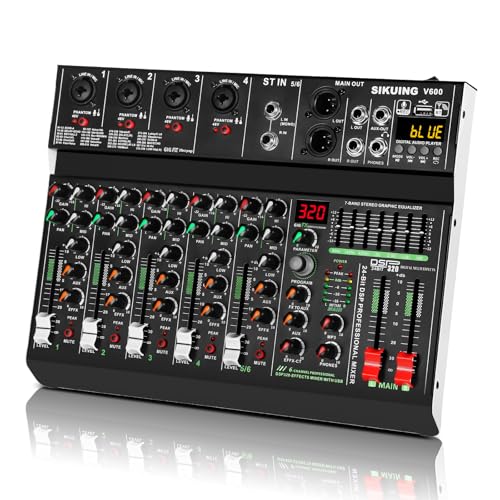
- Seven-band EQ with 320 DSP effects
- Six channels with 48V phantom power
- USB sound card and Bluetooth 5.0
Best For: Multi-microphone podcasting and live streaming
Connected Home Studio EQ

- 15-band, two-channel EQ
- RCA, 3.5mm, USB, and Bluetooth inputs
- Spectrum display with built-in microphone
Best For: Connected home audio and visual EQ setups
Portable Tone Shaper

- Three-band bass, midrange, and treble control
- Battery-powered headphone amp with gain switch
- 3.5mm and 6.35mm headphone connections
Best For: Portable podcast monitoring and simple analog tone shaping
Rackmount Studio Control
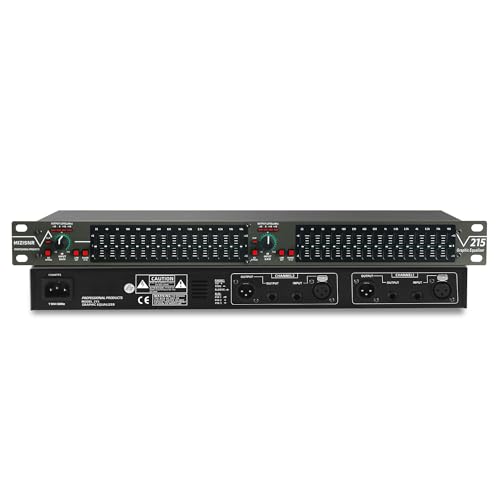
- Dual-channel 15-band graphic equalization
- Low-cut switch for rumble, wind noise, and hum
- XLR and 1/4-inch connectivity in a 1U rack chassis
Best For: Fixed podcast studios and detailed stereo signal shaping
Balanced Home-Studio EQ
Douk Audio T7 7-Band Equalizer

- Seven bands with ±6dB adjustment
- XLR and RCA input/output connectivity
- Compact aluminum enclosure with no volume control
Best For: Desktop podcast systems using balanced or unbalanced audio gear
Feature-Rich Rack EQ

- 31-band control with LED spectrum display
- 10 presets, bypass, and noise reduction
- Bluetooth, USB, XLR, and TRS connectivity
Best For: Rack-based podcast studios and complex audio systems
Compact Tone Shaper
Douk Audio EQ5 Bluetooth Preamp

- Five-band EQ for focused tonal adjustments
- Bluetooth 5.0 and dual VU meters
- Compact metal design with bypass and balance controls
Best For: Desktop podcast setups and simple monitoring chains
Dual-Channel Studio Control

- 15 bands per channel with ±12dB adjustment
- Low-cut filter for unwanted low-end noise
- XLR, TRS, bass output, and rack-mount design
Best For: Professional podcast studios and dual-channel systems
Compact Voice Shaper – 7-Band Podcast Equalizer
This compact unit is a straightforward option for creators seeking audio equalizers for podcasting with hands-on control over bass, mids, and treble. Its seven frequency bands, dual-channel design, and 3.5mm connections suit basic recording, streaming, and mobile voice setups.
Best For: Podcasters who want simple, physical EQ controls and headphone support in a compact aluminum-alloy unit.
Pros:
- Seven adjustable bands cover 60Hz through 15kHz with a ±12dB range.
- Dual-channel design includes a 3.5mm input and headphone-compatible output.
- Supports 5V to 12V DC power and uses an aluminum-alloy housing.
Cons:
- Its 3.5mm-focused connectivity may be limiting for larger studio systems.
- The product notes do not specify included power accessories.
Choose this model when you want basic tonal shaping without a larger mixer or rack unit. The seven-band layout is useful for quick voice adjustments, while the headphone circuitry supports monitoring during recording or streaming.
Detailed Studio Control – 31-Band Graphic Equalizer
For users who want detailed audio equalizers for podcasting, this graphic equalizer offers 31-band tuning, real-time frequency monitoring, and noise- and echo-reduction features. It is designed to fit into broader home, studio, live, and entertainment systems.
Best For: Podcasters and audio users who need fine frequency adjustments, spectrum monitoring, and multiple connection options.
Pros:
- 31 independently tunable bands provide detailed control from bass through treble.
- Built-in spectrum analyzer helps visualize frequency activity in real time.
- Supports optical, coaxial, USB, and Bluetooth connectivity for varied setups.
- Auto-save presets and 12 customizable modes simplify repeatable sound shaping.
Cons:
- The notes do not specify microphone inputs or phantom power for direct mic connection.
- Its broad feature set may be more than needed for a simple podcast chain.
This is a versatile choice when precise EQ work and system integration matter more than minimalism. Its preset-saving and monitoring features can help users refine vocal clarity and return to familiar settings.
All-in-One Podcast Mixer – 6-Channel DJ Audio Mixer
This mixer combines a seven-band graphic EQ with microphone, instrument, playback, and computer connectivity, making it a practical alternative to standalone audio equalizers for podcasting. It also adds DSP effects, Bluetooth playback, and USB recording functionality for more complete production setups.
Best For: Podcasters, streamers, and small production teams that need mixing, EQ, effects, and computer recording in one device.
Pros:
- Six channels accommodate microphones, instruments, smartphones, and computers.
- Seven-band EQ provides hands-on tonal adjustment.
- Includes 320 DSP effects such as reverb, delay, and chorus.
- USB sound-card functionality, Bluetooth 5.0, and 48V phantom power support flexible workflows.
Cons:
- It is a larger, more involved solution than a standalone equalizer.
- The supplied details do not identify specific individual channel EQ controls.
Consider this model if your podcast setup needs more than frequency shaping. Its channel count, phantom power, USB interface, and built-in effects make it suited to multi-source recording and live streaming, though solo users may not need every feature.
Connected Home Studio EQ – TNZ SGE6 Graphic Equalizer
The TNZ SGE6 is a flexible option among audio equalizers for podcasting, with 15-band EQ across two channels, RCA and 3.5mm I/O, and Bluetooth and USB inputs. Its built-in microphone, spectrum display, and preamp function make it suitable for home audio systems that also handle voice or streaming sources.
Best For: Home-studio users who want visible spectrum feedback, multiple playback inputs, and two-channel EQ in a slim unit.
Pros:
- Offers 15-band EQ for two channels and a 31-band music spectrum display.
- RCA and 3.5mm inputs and outputs support amplifiers, preamps, mixers, and hi-fi systems.
- Bluetooth 5.0, USB, DSP processing, and a built-in microphone expand input options.
- Adjustable display colors, brightness, speed, and gain add visual customization.
Cons:
- The supplied notes do not mention dedicated microphone inputs or phantom power.
- Its display-oriented features may be less useful for a minimal voice-only chain.
This model fits users who value connectivity and visual feedback alongside EQ. It can serve as an equalizer, preamp, or audio amplifier, but confirm that its RCA or 3.5mm connections match your microphone and recording equipment.
Portable Tone Shaper – Fosi Audio SK01
The Fosi Audio SK01 is a compact option for podcasting setups that need basic analog tone adjustment alongside headphone amplification. Its bass, midrange, and treble controls can help tailor monitoring sound, while the battery-powered design suits portable recording or editing sessions.
Best For: Podcasters who want a portable headphone amp with simple three-band tone controls and instrument compatibility.
Pros:
- Three-band bass, midrange, and treble adjustment
- Up to 2,400mW output in high-impedance mode, with a gain switch for different headphones
- Built-in 2,500mAh battery provides up to six hours of use
- Includes 3.5mm and 6.35mm headphone connections
Cons:
- Offers only three equalizer bands
- Designed primarily for headphone and instrument use rather than rack-based studio routing
The SK01 is a practical fit when portability and headphone monitoring matter more than extensive frequency-by-frequency control. Its tone-defeat and loudness functions also make quick listening adjustments straightforward.
Rackmount Studio Control – EQ-215 15-Band Equalizer
For podcast studios that need more detailed shaping, the EQ-215 provides dual-channel, 15-band graphic control. It is a stronger match for fixed audio systems where balanced connections, rack installation, and low-frequency noise reduction are useful parts of the signal chain.
Best For: Studio, live, or installed podcast systems needing detailed stereo equalization and low-cut filtering.
Pros:
- 15 adjustable bands per channel with a range of up to ±12dB
- Low-cut switch helps attenuate wind noise, floor rumble, and electrical hum
- Includes XLR balanced and 1/4-inch TRS unbalanced inputs and outputs
- Standard 1U rack-mount format with a bypass switch
Cons:
- Its 1U rack design is less convenient for portable podcasting
- More control than necessary for simple voice setups
The EQ-215 stands out when you want hands-on control across a broad range of frequencies and need to address rumble or hum before recording. Its dual-channel design is also suited to stereo signal paths.
Balanced Home-Studio EQ – Douk Audio T7 7-Band Equalizer
The Douk Audio T7 is a compact preamp-style equalizer for podcasters building a home stereo or computer-speaker setup. Its seven fixed frequency bands provide focused tonal adjustment, while XLR and RCA inputs and outputs make it adaptable to balanced and unbalanced equipment.
Best For: Home podcast studios that need compact seven-band EQ control with both XLR and RCA connectivity.
Pros:
- Seven frequency bands from 64Hz through 8kHz with ±6dB adjustment
- Supports simultaneous XLR and RCA output connections
- Reports a signal-to-noise ratio above 104dB and distortion as low as 0.003%
- Compact aluminum-alloy enclosure provides shielding against interference
Cons:
- Does not include a volume control knob
- Provides fewer bands and a narrower adjustment range than the 15-band EQ-215
The T7 is a sensible middle ground for a desk-based setup: more flexible than a simple tone control, but smaller and less installation-focused than a rack equalizer. Its lack of volume control means it should be paired with equipment that handles level adjustment.
Feature-Rich Rack EQ – 31-Band Digital Equalizer
For podcast producers building a more flexible rack-based setup, this 31-band digital equalizer offers detailed frequency control, real-time LED spectrum feedback, and multiple connectivity options. Its noise-reduction function, preset modes, and bypass switch can help streamline sound adjustments during setup and troubleshooting.
Best For: Studios, live applications, and podcasting setups that need extensive EQ control and rack-mount connectivity.
Pros:
- 31-band control with real-time LED spectrum indication.
- Includes 10 preset modes, EQ bypass, and independent high, mid, and bass adjustment.
- Supports Bluetooth 5.2, USB playback, XLR balanced, and 1/4-inch TRS connections.
- Includes intelligent noise reduction and an adjustable bass output.
Cons:
- The rack-mount design and broad feature set may be more than a simple podcast desk setup requires.
- It is corded and weighs 4.44 pounds.
This is the most adjustment-heavy option in the group. Choose it when visual monitoring, extensive frequency shaping, and broad system compatibility matter more than a compact footprint.
Compact Tone Shaper – Douk Audio EQ5 Bluetooth Preamp
For creators who want a compact way to refine monitoring or playback, this five-band equalizer combines independent band processing with Bluetooth 5.0 and a built-in VU meter. It is a practical choice among audio equalizers for podcasting when portability and straightforward tonal adjustment are priorities.
Best For: Compact desktop podcasting setups, computer speakers, and home stereo monitoring.
Pros:
- Five adjustable bands cover 75Hz, 400Hz, 800Hz, 4KHz, and 10KHz.
- Bluetooth 5.0 enables wireless audio streaming.
- Dual 45mm VU meters provide real-time signal monitoring.
- Compact all-metal case includes bypass, balance control, and gold-plated I/O interfaces.
Cons:
- Five bands provide less detailed control than the rack-mount models.
- Its 5V DC power requirement may add another power connection to a desktop setup.
The EQ5 Tone is suited to users who value a small footprint and visual level feedback. Its limited band count keeps operation approachable, though it is less appropriate for highly granular corrective EQ.
Dual-Channel Studio Control – 15-Band Rack Equalizer
This dual-channel 15-band graphic equalizer is designed for users who need independent control over two stereo channels. Its low-cut filter, bypass switch, rack-mount form factor, and balanced or unbalanced connections make it a strong fit for podcast studios with more structured signal-routing needs.
Best For: Professional podcast studios, live audio systems, and rack-based installations requiring dual-channel control.
Pros:
- Provides 15 adjustable bands per channel with a ±12dB range.
- Low-cut control helps reduce unwanted low-end noise.
- Includes bypass operation, XLR balanced inputs and outputs, and 1/4-inch TRS connections.
- Offers a dedicated adjustable bass output and includes XLR and TRS cables.
Cons:
- The 1U rack-mount format is less convenient for portable or minimal desktop setups.
- Its dual-channel controls may be unnecessary for basic single-microphone podcast chains.
With more control than a five-band desktop unit but a simpler layout than a 31-band model, this equalizer occupies a useful middle ground. It is particularly appealing when low-cut filtering and dual-channel integration are central requirements.
How We Picked These Audio Equalizers for Podcasting
We selected models across several podcasting setups rather than focusing on one type of hardware. The list includes compact equalizers for desktop systems, mixer-style units for multi-microphone recordings, and rack-mount graphic EQs for more permanent studios. We considered frequency-band control, input and output flexibility, tone-shaping range, monitoring features, noise-reduction claims, and connectivity such as RCA, 3.5mm, XLR, USB, and Bluetooth.
Because product specifications and included accessories can vary, confirm the exact connections, power requirements, and signal path before ordering. An equalizer cannot fix severe room echo, microphone placement problems, clipping, or a poor recording interface.
Quick Comparison
| Best For | Look For | Models in This Roundup |
|---|---|---|
| Simple voice tone adjustments | Compact controls and straightforward input/output | 7-band and 5-band units |
| Multi-person podcasts | Multiple channels, microphone inputs, and onboard effects | 6-channel DJ mixer |
| Detailed frequency shaping | 15- or 31-band graphic control | Rack-mount stereo equalizers |
| Computer or mobile listening setups | USB, Bluetooth, 3.5mm, or headphone support | Compact preamps and Bluetooth models |
| Studio integration | Balanced XLR, RCA, rack compatibility, and low noise | Douk Audio T7 and rack units |
Key Buying Factors for Audio Equalizers for Podcasting
Frequency Control
More bands provide finer adjustment, but they also make setup more complicated. A five- or seven-band unit is often sufficient for basic voice shaping. Fifteen- and 31-band models are better when you need to target room resonance, boxiness, sibilance, or persistent hum with greater precision.
Connections and Signal Flow
Match the equalizer to your equipment. RCA and 3.5mm connections suit many consumer and desktop systems, while XLR and balanced outputs are preferable for longer studio cable runs and compatible interfaces. Check whether the unit belongs before or after your mixer, audio interface, amplifier, or powered speakers.
Gain, Noise, and Headroom
Look for practical input and output-level controls, clear metering, and enough headroom to avoid clipping. Boosting several frequency bands can raise noise and overload the next device in the chain. Subtle cuts are usually safer than aggressive boosts for spoken-word recording.
Workflow Features
Bluetooth and USB can simplify playback or computer integration, but they are not automatically ideal for every microphone-recording setup. Built-in effects, microphone inputs, headphone amplification, and subwoofer outputs may be useful, while unnecessary features can add cost and complexity.
Who Should Buy Which Audio Equalizers for Podcasting?
Choose a compact 5- or 7-band equalizer if you want quick bass, midrange, and treble adjustments for a solo podcast, streaming desk, or computer speaker system.
Choose the 6-channel mixer if you record multiple speakers, need several inputs, or want mixing and EQ controls in one device. Verify microphone compatibility and phantom-power requirements before pairing it with condenser microphones.
Choose a 15-band unit for a dedicated home studio where you want more precise control without the learning curve of a 31-band design.
Choose a 31-band rack equalizer when detailed corrective EQ, permanent installation, or integration with a larger audio system matters most. These models are best for users comfortable with gain staging and manual frequency adjustments.
For the cleanest results, place the equalizer where it can shape the microphone signal without creating unnecessary conversion or gain stages. Start with a flat setting, make small cuts, and judge changes using headphones and recorded voice samples rather than relying only on live monitoring.