
Wireless video receivers can simplify live production by moving camera, computer, and monitor signals without adding long HDMI runs. The right system depends on more than advertised range: latency, output format, reliability, and receiver count all affect your stream.
We compared 10 options across UVC support, HDMI connectivity, transmission distance, multi-monitor flexibility, and practical streaming features to help you choose a setup that fits your workflow and budget.
Best 10 Wireless Video Receivers for Live Streaming Picks for 2026
Best Streaming Flexibility
Vrriis 1500ft Wireless Video System
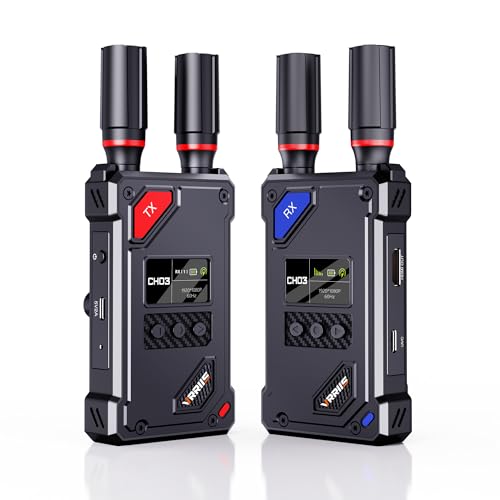
- UVC output works with OBS without a separate capture device
- 1500ft line-of-sight range and 0.05-second stated latency
- 20 manual channels plus HDMI loop-out monitoring
Best For: Live streaming from cameras to a computer
Best Multi-Display Setup
Wireless HDMI Kit with Two Receivers
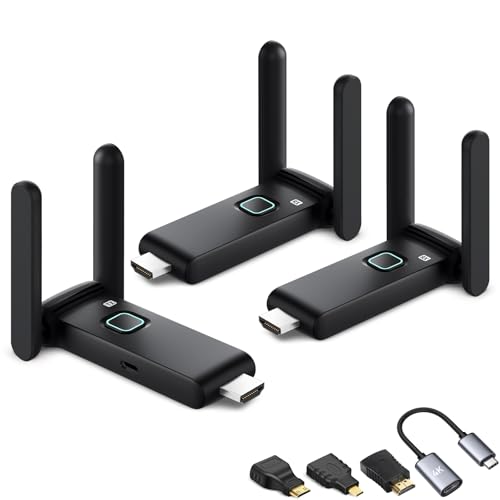
- Two receivers support synchronized displays
- 2.4/5.8GHz transmission reaches up to 165ft in open space
- Includes mini, micro, and USB-C HDMI adapters
Best For: Mirrored presentations and multi-screen viewing
Best 4K Home Streaming

- 4K at 30Hz receiver output
- 0.1-second stated latency with dual-band transmission
- Supports up to eight transmitters per receiver
Best For: 4K viewing, presentations, and flexible HDMI mirroring
Best Long-Range 4K Link
Tongtion 500ft Wireless HDMI Extender

- 4K support with 1080p at 60Hz
- 500ft open-field range and stated 60ms latency
- HDMI loop-out with USB-C, power-bank, and NP-F power options
Best For: Long-distance camera, event, and production links
Long-Range Low-Latency Pick

- 1080p/60fps transmission up to 300m
- 40ms latency for responsive monitoring
- Quiet 2W design with app-based controls
Best For: Live streams, events, and film shoots needing extended HDMI range
All-in-One Monitoring Pick
Wireless HDMI System with 7-inch Monitor
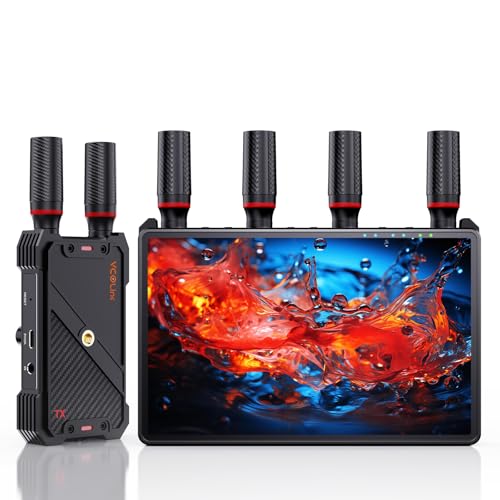
- Built-in 7-inch receiver monitor
- Up to five receivers from one transmitter
- 1312-foot line-of-sight range and loopout
Best For: Production teams needing shared and private monitoring
Church and Outdoor Event Pick

- 1080p/60Hz output with 4K input support
- One transmitter can serve up to four receivers
- Plug-and-play design with loopout and remote
Best For: Church services, outdoor shoots, and multi-screen events
Long-Range Home & Venue Pick
1300-Foot Wireless HDMI Extender

- 1080p at 60Hz with about 0.05-second latency
- 1300-foot advertised open-field range
- Loop out and IR remote support
Best For: HDMI-based home, venue, gaming, and presentation setups
Streaming-Ready Pro Receiver
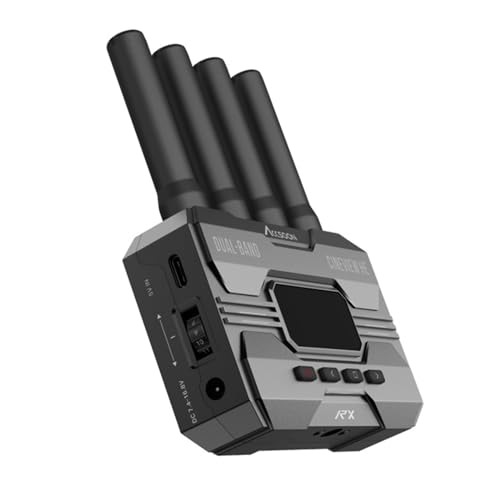
- UVC output for OBS, YouTube, and other platforms
- Dual-band 2.4/5GHz transmission
- 1200-foot range and under 0.06-second latency
Best For: Camera crews and computer-based live streaming
Flexible Monitoring Pick
Wireless HDMI System with Dual Outputs

- 1080p at 60Hz with about 0.05-second delay
- Dual receiver HDMI outputs plus transmitter loop-out
- Supports NP-F, USB-C, adapter, and portable power
Best For: Mobile production and multi-screen monitoring
Best Streaming Flexibility – Vrriis 1500ft Wireless Video System
For shoppers comparing wireless video receivers for live streaming, the Vrriis WL087 stands out for its dedicated UVC output, allowing the receiver to send video to a computer and platforms such as OBS through the included USB-C cable. It also provides manual channel selection, HDMI loop-out monitoring, and up to 1080p at 60Hz.
Best For: Camera operators and live streamers who want direct computer streaming without adding a separate capture device.
Pros:
- UVC output supports streaming to OBS without an additional capture device.
- Up to 1500 feet of line-of-sight range with stated 0.05-second latency.
- Twenty manually adjustable channels help manage interference.
- Supports NP-F batteries, USB-C power, and adapters.
Cons:
- Walls, metal, brick, and glass can significantly reduce coverage.
- NP-F batteries are not included.
- Adding more receivers can reduce transmission distance.
The WL087 is the most streaming-focused option here because its UVC output simplifies the connection to a computer. Its long open-field range and channel controls are useful for production setups, but indoor obstacles should be considered carefully.
Best Multi-Display Setup – Wireless HDMI Kit with Two Receivers
This wireless HDMI kit is a practical choice among wireless video receivers for live streaming when the same source needs to reach multiple screens. It includes two receivers, supports simultaneous synchronized displays, and works with laptops, cameras, TV boxes, projectors, and monitors.
Best For: Presentations, classrooms, meetings, churches, and home setups that need synchronized video on multiple displays.
Pros:
- Includes two receivers for multi-screen HDMI distribution.
- Supports 2.4GHz and 5.8GHz transmission with up to 165 feet in open conditions.
- Includes mini HDMI, micro HDMI, and USB-C-to-HDMI adapter options.
- Plug-and-play design requires no driver installation.
Cons:
- Range may fall to about 32 feet through walls or floors.
- Reported latency is up to three seconds, which may not suit fast live production.
- Best suited to mirrored displays rather than independent video feeds.
Its included receivers and broad adapter selection make this kit convenient for multi-screen distribution. However, the stated latency makes it a better fit for presentations and viewing than timing-sensitive camera monitoring or interactive streaming.
Best 4K Home Streaming – AIMIBO 4K Wireless HDMI Kit
The AIMIBO kit offers a straightforward option for wireless video receivers for live streaming, home theater, and screen mirroring. It supports 4K at 30Hz on the receiver, 1080p at 60Hz on the transmitter and receiver, and uses dual-band wireless transmission with a stated 0.1-second latency.
Best For: Home viewers, presenters, and streamers who want 4K playback and flexible HDMI compatibility.
Pros:
- Supports 4K at 30Hz for receiver output.
- Plug-and-play operation requires no Bluetooth, Wi-Fi, or app.
- Supports up to 165 feet without barriers and includes dual-band transmission.
- Can pair up to eight transmitters with one receiver for source switching.
Cons:
- Range can decrease to about 32 feet through walls or floors.
- 4K output is limited to 30Hz.
- The product is primarily an HDMI extender and does not specify a dedicated UVC streaming output.
AIMIBO is a versatile choice when 4K viewing and broad source compatibility matter more than direct computer capture. For live production, verify that its HDMI workflow matches your camera, display, or capture setup.
Best Long-Range 4K Link – Tongtion 500ft Wireless HDMI Extender
For production spaces that need distance and higher resolution, the Tongtion 263-B is a strong contender among wireless video receivers for live streaming. It supports 4K transmission, 1080p at 60Hz, HDMI loop-out, dual-band operation, and a stated 500-foot open-field range.
Best For: Filmmaking, outdoor events, hybrid meetings, gaming, and other setups requiring a long wireless camera-to-display link.
Pros:
- Supports 4K at 3840×2160 and 1080p at 60Hz.
- Stated 60ms latency is suited to presentations, gaming, and monitoring.
- Open-field transmission range reaches up to 500 feet.
- HDMI loop-out and USB-C, power-bank, and NP-F power options add flexibility.
Cons:
- Walls can reduce the advertised transmission distance.
- NP-F batteries are not included.
- The notes do not specify a UVC output for direct computer streaming.
The Tongtion combines the longest claimed range in this group with 4K support and low stated latency. It is especially appealing for camera and event workflows, though users who need direct USB streaming should confirm whether an external capture device is required.
Long-Range Low-Latency Pick – Synco XVision 300m
For creators comparing wireless video receivers for live streaming, the Synco XVision emphasizes reliable 1080p/60fps transmission, responsive monitoring, and quiet operation. Its HDMI inputs, outputs, and loopout make it suitable for more involved camera and event setups.
Best For: Live streaming, film production, large events, and shoots requiring long-range HDMI transmission.
Pros:
- Transmits 1080p/60fps video up to 300 meters, according to the supplied specifications.
- 40ms latency supports responsive real-time monitoring.
- Low-power 2W design operates without fan cooling for a quieter shooting environment.
- SYNCO Link App adds monitoring, image adjustments, screenshots, saving, and playback.
Cons:
- The system is HDMI-focused, so device compatibility depends on available HDMI connections.
- App-based features may add setup steps compared with a basic receiver-only workflow.
The XVision is a strong option when range, low latency, and quiet operation matter more than the smallest possible setup. Its display, automatic pairing memory, and app support also make it approachable for less experienced operators.
All-in-One Monitoring Pick – Wireless HDMI System with 7-inch Monitor
This system stands out among wireless video receivers for live streaming by combining a built-in 7-inch monitor with HDMI output and multi-receiver support. It is designed for crews that need both private on-device viewing and shared displays during production.
Best For: Film crews, studios, live events, and streaming setups that need several monitoring points.
Pros:
- Built-in 7-inch screen enables monitoring without an additional display.
- Supports 1080p/60Hz transmission up to 1312 feet line of sight with under 0.05-second latency, according to the supplied notes.
- One transmitter can broadcast to up to five receivers.
- Offers HDMI loopout, IR remote control, headphone monitoring, and flexible NP-F, power bank, or USB-C power.
Cons:
- An HDMI cable for external displays is not included.
- Smartphone or tablet use requires a Type-C-to-HDMI cable.
- The built-in monitor and multi-viewer features may be more equipment than a solo streamer needs.
Choose this kit if on-set collaboration and integrated monitoring are priorities. The built-in display reduces accessory requirements, while the multiple receivers and loopout support larger production teams.
Church and Outdoor Event Pick – BovBox WL-900S 820ft
The BovBox WL-900S is a practical choice among wireless video receivers for live streaming when you need plug-and-play operation, long-range camera monitoring, and multiple displays. It supports 1080p/60Hz output while accepting 4K input and can run from NP-F batteries or USB-C power banks.
Best For: Outdoor camera work, church presentations, live events, and streaming workflows sharing one feed with multiple screens.
Pros:
- Provides 1080p/60Hz output with support for 4K input.
- Offers an advertised range of 820 feet with one receiver and up to four receivers simultaneously.
- Under 0.06-second latency supports responsive monitoring and live production.
- Includes HDMI loopout, IR remote control, and flexible NP-F or USB-C power options.
Cons:
- The supplied range notes specify a shorter 623-foot range when using one transmitter with four receivers.
- It requires HDMI-connected source and display devices rather than a fully app-based workflow.
- The product information does not identify the included receiver display size or provide a detailed setup guide.
The WL-900S fits teams that need dependable HDMI distribution without apps, Bluetooth, Wi-Fi, or drivers. Its multi-receiver capability is particularly useful for sending a camera feed to directors, overflow rooms, or presentation screens.
Long-Range Home & Venue Pick – 1300-Foot Wireless HDMI Extender
For shoppers comparing wireless video receivers for live streaming, this plug-and-play HDMI extender is a practical choice for sending 1080p video from a laptop, DSLR, set-top box, or other HDMI source to a remote TV or projector. Its loop-out connection also supports a local monitoring screen.
Best For: Home entertainment, offices, conferences, church projections, and sports or gaming setups that need low-latency 1080p transmission.
Pros:
- Supports up to 1080p at 60Hz with approximately 0.05-second latency.
- Advertised 1300-foot open-field range using 2.4/5GHz transmission.
- Loop out supports local monitoring, while IR control enables remote source operation.
- Plug-and-play setup requires no software installation.
Cons:
- Walls, metal, brick, and glass can significantly reduce the stated range.
- It is designed around HDMI displays and sources rather than direct computer streaming software.
- Adding more receivers can reduce transmission distance.
This model stands out for straightforward point-to-point HDMI distribution and flexible monitoring. It is most suitable when your streaming or presentation workflow already uses HDMI equipment and you value long-range placement over app-based features.
Streaming-Ready Pro Receiver – CineView HE UVC Receiver
Among wireless video receivers for live streaming, the Accsoon CineView HE is tailored to camera crews that want to send a received video feed directly to a computer. Its UVC output can connect to streaming platforms such as OBS or YouTube without requiring a separate video capture device.
Best For: Camera operators, small production teams, and live streamers who need a low-latency wireless feed with direct USB-C UVC output.
Pros:
- UVC output sends received footage to a computer for software-based live streaming.
- 2.4GHz and 5GHz dual-band transmission is designed for stability and interference resistance.
- Advertised range reaches 1200 feet with latency below 0.06 seconds.
- One transmitter can connect with up to four receivers or supported mobile devices.
Cons:
- This listing is for the receiver only, so a compatible transmitter is required.
- A USB-C cable for the computer connection is user-provided.
- Its feature set is more production-oriented than a simple consumer TV extender.
The CineView HE is the most directly streaming-focused option in this group because its UVC output is intended for computer workflows. Choose it when wireless camera transmission and streamlined OBS or YouTube integration matter more than basic display extension.
Flexible Monitoring Pick – Wireless HDMI System with Dual Outputs
This wireless HDMI transmitter-and-receiver kit is worth considering when comparing wireless video receivers for live streaming and monitoring. It sends 1080p video up to 1300 feet in open conditions, adds transmitter loop-out, and provides dual HDMI output on the receiver for displaying the feed on two screens.
Best For: DSLR-based production, event monitoring, presentations, and installations that need multiple displays or flexible power options.
Pros:
- Supports 1080p at 60Hz with approximately 0.05-second delay.
- Transmitter loop-out and receiver dual HDMI outputs support convenient monitoring.
- Can use NP-F batteries, USB-C power, adapters, or compatible portable power supplies.
- IR support allows remote control of the HDMI source from the display location.
Cons:
- NP-F batteries are not included.
- The 1300-foot range applies to open-field conditions and can be reduced by obstacles.
- Transmission distance decreases as additional receivers are added.
This kit offers more installation and monitoring flexibility than a basic wireless HDMI link. Its dual receiver outputs and multiple power methods make it especially useful for mobile shoots or venues where several people need to view the same low-latency feed.
How We Picked the Best Wireless Video Receivers for Live Streaming
We focused on features that matter during real productions rather than range claims alone. Each selected system was evaluated for supported resolution and frame rate, stated latency, operating-band flexibility, connection options, and suitability for cameras, laptops, displays, and capture hardware.
We also considered workflow features such as HDMI loop-out, UVC output, manual channel selection, audio support, multi-receiver operation, included monitors, and portability. Advertised distance can vary significantly with walls, interference, antenna placement, and line of sight, so it should be treated as an ideal-condition figure.
Quick Comparison
| Best For | Features to Prioritize | Recommended Type |
|---|---|---|
| One camera to a streaming computer | UVC output, stable wireless link, low latency | UVC-capable transmitter and receiver |
| Multiple displays | Multi-receiver pairing, splitter support, loop-out | 1-to-2, 1-to-4, or 1-to-5 system |
| Long venue distances | Clear line of sight, dual-band operation, signal stability | Long-range HDMI extender kit |
| Filmmaking and mobile production | Compact hardware, battery flexibility, 1080p60 support | Portable wireless video transmission system |
| Monitoring on location | Included monitor, remote control, low delay | Receiver kit with integrated display |
Key Buying Factors for Wireless Video Receivers for Live Streaming
UVC and HDMI Compatibility
UVC output lets a compatible receiver appear to a computer as a video source, which can simplify streaming in software such as OBS. HDMI-only systems may still work well, but you will generally need a capture card or an HDMI-equipped monitor. Confirm the source output, receiver input, and required adapters before buying.
Latency and Image Quality
For live switching, presenters, and camera operators, lower delay is easier to work with. Check whether the claimed latency applies at 1080p60, 1080p30, or another mode. A system advertised as 4K may transmit only Full HD wirelessly, so verify both the input and output specifications.
Range, Interference, and Reliability
2.4GHz can offer useful reach but is often crowded by Wi-Fi and other devices. 5GHz may provide cleaner performance in some environments, though walls and distance can reduce its effectiveness. Dual-band systems offer more flexibility. For dependable events, test the complete route at the venue and keep a wired backup available.
Receiver Count and Expansion
If you need confidence monitors, a director’s display, or several screens, choose a system designed for multiple receivers. Check whether extra receivers are included, sold separately, or limited by pairing rules. HDMI loop-out is valuable when you want both wireless distribution and a local wired monitor.
Who Should Buy Which Wireless Video Receivers for Live Streaming?
Choose a UVC-out model if your priority is sending camera video directly to a laptop for live streaming with minimal extra hardware. Pick a dual-band, low-latency HDMI kit for a general-purpose venue setup involving a camera, monitor, or switcher. Long-range systems suit large rooms and event spaces, provided you have a clear signal path and realistic expectations about obstacles.
For production teams distributing one source to several screens, prioritize multi-receiver kits or wireless splitters. Mobile filmmakers should favor compact 1080p60 systems with flexible power options, while buyers who need on-set viewing may prefer a package that includes a dedicated monitor. In every case, match the receiver’s outputs to your actual streaming chain before choosing based on distance alone.