
If you want cleaner monitoring, smarter routing, and built-in vocal processing, an audio interface with onboard DSP can make recording and streaming much easier.
From compact creator interfaces to more flexible hybrid setups, this roundup focuses on practical picks that balance sound quality, features, and workflow.
Best 10 Audio Interface with Onboard DSP Picks for 2026
Creator-Grade USB Audio Interface

- 80dB gain for XLR mics
- Onboard voice enhancer, compressor, EQ
- Touch mute with LED level feedback
Best For: Streamers and voice creators
Budget Studio Starter
PreSonus AudioBox 96 25th Anniversary
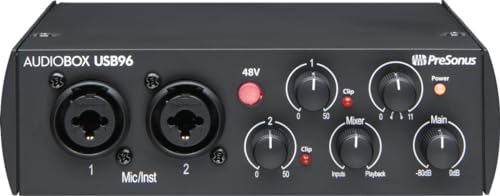
- Two Class-A mic preamps
- 24-bit/96 kHz recording support
- Zero-latency monitor blend control
Best For: Beginners and portable home studios
Feature-Packed Mixer Interface

- 6 channels with 4 XLR inputs
- 16 built-in DSP effects
- Bluetooth and USB playback support
Best For: Karaoke, small live mixes, and multi-input setups
Hybrid Creator Interface

- Dual USB ports for computer and phone/iPad
- 56dB gain with 24-bit/192kHz audio
- Loopback and routing software included
Best For: Podcasters and streamers needing hybrid connectivity
Studio-Ready USB-C Pick

- 32-bit/192kHz USB-C interface with 2-in/2-out audio
- Onboard DSP monitoring with reverb, channel strip, and amp effects
- Two Class-A D-PRE combo inputs plus MIDI I/O
Best For: Musicians and creators who need a durable, DSP-equipped 2-channel interface
Streaming DSP Control Pick

- Built-in DSP for EQ, compression, gate, noise suppression, and more
- Dual USB support moves up to 8 channels between devices
- Made for streaming, gaming, podcasting, and dual-PC setups
Best For: Creators who want mic processing and flexible routing for live production
Creator Workflow Pick
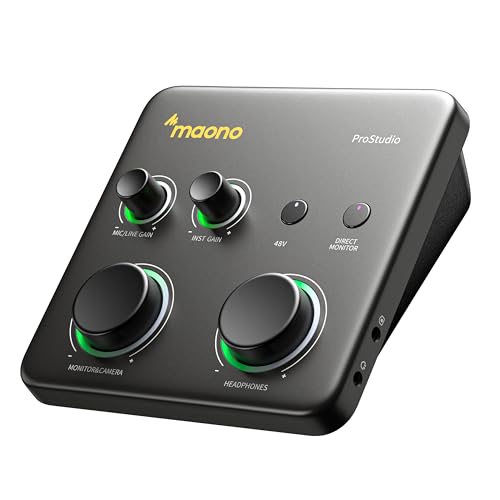
- 70dB gain and -130dB EIN support quiet, clean recording
- Auto Gain, loopback, and mute controls streamline streaming
- Dual USB/MFi connectivity works with computers, phones, and iPads
Best For: Solo creators who need flexible routing across mobile and desktop devices
Premium streaming DSP hub
White USB XLR Interface for Streaming

- Built-in DSP for EQ, compression, gate, and more
- Dual USB tech moves up to 8 audio channels between devices
- BEACN app tools streamline routing and remote control
Best For: Streamers and podcasters with dual-PC setups
Simple dual-input starter interface
Portable Dual-Input USB Interface

- Two combo inputs for mic, guitar, or line sources
- 48kHz recording with transparent Crystal Preamps
- USB/direct monitoring helps keep latency low
Best For: New creators who want an easy 2-input setup
Compact routing-friendly creator interface
Compact USB Interface for Creators

- 24-bit/192kHz capture with 106dB dynamic range
- Routing software adds virtual channels and loopback
- Low-noise preamp with 48V phantom power
Best For: Streamers and beginners building a small home studio
Creator-Grade USB Audio Interface – Elgato Wave XLR MK.2
If you want an audio interface with onboard DSP for streaming or voice work, the Elgato Wave XLR MK.2 is built around high-gain XLR mic support, low-latency monitoring, and built-in voice effects. It keeps the workflow simple while still giving you software-based routing and processing through Wave Link.
Best For: Streamers and voice creators who want strong mic gain, onboard effects, and tight software control.
Pros:
- Massive 80dB gain for demanding XLR microphones.
- Onboard voice enhancer, compressor, EQ, and Wave FX DSP chain support.
- Ultra-low-latency monitoring with 24-bit/48kHz audio resolution.
- Touch mute and customizable LED level feedback for quick control.
Cons:
- Requires Wave Link software for full routing features.
- Compatible software support is limited to Windows 11 and Apple Silicon Mac systems.
Overall, this is the most creator-focused option in the group if you value DSP processing and live-control features over traditional recording extras. It is especially compelling for users who want a clean desktop setup with precise monitoring and voice shaping tools.
Budget Studio Starter – PreSonus AudioBox 96 25th Anniversary
The PreSonus AudioBox 96 is a straightforward USB audio interface with onboard monitoring control, making it a practical pick for home recording setups that need basic flexibility. It focuses on clean conversion, mic preamps, and bundled software rather than built-in DSP effects.
Best For: Beginners and portable recorders who want an affordable 2-channel interface with software included.
Pros:
- Two Class-A mic preamps for simple stereo recording.
- 24-bit/96 kHz recording and playback with studio-grade converters.
- Mixer control for zero-latency monitoring blend.
- Includes a large software bundle such as Studio One Artist and Ableton Live Lite.
Cons:
- No onboard DSP effects are listed.
- 2-channel design is best for compact setups, not larger rigs.
This is a solid value option if your priority is reliable recording basics and bundled software instead of onboard processing. It fits well as an entry-level interface for musicians, podcasters, and mobile creators.
Feature-Packed Mixer Interface – 6 Channel DSP DJ Mixer
This audio interface with onboard DSP is really a compact mixing console, so it makes the most sense when you need multiple inputs plus built-in effects. It adds Bluetooth, USB playback, phantom power, EQ, and 16 DSP effects for karaoke, streaming, and live mixing tasks.
Best For: Karaoke hosts, small live setups, and users who need a multi-input mixer with built-in effects.
Pros:
- Six channels with 4 XLR inputs and stereo 1/4-inch channels.
- Built-in 16 DSP effects, including delay and reverb.
- 3-band EQ and gain controls on each channel.
- Bluetooth streaming plus USB/U-disk playback support.
Cons:
- Traditional analog design means setup can be less forgiving.
- 90-day manufacturer warranty is shorter than many interfaces.
For users who need more of a mixer than a simple interface, this model offers a lot of hardware control and effect options. It is best approached as a flexible live sound and recording hub rather than a plug-and-play creator interface.
Hybrid Creator Interface – MAONO P2 Dual XLR USB
If you need an audio interface with onboard DSP-style workflow tools, the MAONO P2 stands out for creators who switch between computer and mobile recording. It combines dual XLR inputs, loopback, routing software features, and low-latency monitoring in a compact desktop unit.
Best For: Podcasters, streamers, and mobile creators who want dual-device connectivity and flexible routing.
Pros:
- Dual USB ports with simultaneous computer and phone/iPad connectivity.
- 56dB dual XLR gain with 24-bit/192kHz recording.
- Loopback and ProStudio 2 routing tools for desktop audio workflows.
- Independent mute controls and low-latency direct monitoring.
Cons:
- Advanced workflow features may be more than casual users need.
- Best-in-class use depends on the included software and routing setup.
This is a strong choice if your workflow includes podcasting, streaming, and mobile content creation in one setup. The hybrid connectivity and loopback tools make it especially useful for creators who want more control over how audio is routed and monitored.
Studio-Ready USB-C Pick – Yamaha URX22C
If you want an audio interface with onboard DSP for compact music recording or streaming, the Yamaha URX22C is built around clean 2-in/2-out connectivity, low-latency monitoring, and practical software support. Its 32-bit/192kHz USB 3.0 design, Class-A D-PRE preamps, and included DSP effects make it a strong fit for users who want straightforward tracking with built-in processing.
Best For: Musicians and creators who want a durable 2-channel interface with onboard effects and MIDI I/O.
Pros:
- Latency-free DSP monitoring with REV-X reverb, Channel Strip, and Guitar Amp Classics
- Two XLR/TRS combo inputs with Class-A D-PRE mic preamps and +48V phantom power
- 32-bit/192kHz support plus MIDI I/O for flexible home studio setups
- Full-metal housing adds durability for regular desktop or mobile use
Cons:
- Only 2 analog input channels, so it is not aimed at larger multi-mic sessions
- DSP features are focused on monitoring and included effects rather than deep onboard routing
- Best suited to users who are comfortable with Yamaha/Steinberg software tools
This is a practical choice if you value reliable recording hardware and onboard processing in a simple format. The URX22C keeps the feature set focused while still covering the core needs of vocal, guitar, and small-project work.
Streaming DSP Control Pick – BEACN Studio (Dark)
The BEACN Studio is an audio interface with onboard DSP aimed at streamers, podcasters, and gamers who want more control over mic processing and routing. Its XLR-to-USB-C design combines a low-noise preamp, built-in EQ and compression tools, and dual-PC connectivity, making it a strong desktop hub for complex creator setups.
Best For: Streamers and podcasters who need DSP mic shaping plus flexible dual-PC audio routing.
Pros:
- On-board DSP includes EQ, compression, expander/gate, noise suppression, and low-frequency enhancement
- Proprietary dual USB technology can send up to 8 channels of digital audio between devices
- BEACN App and BEACN Link App simplify audio routing and remote app assignments
- Ultra-low-noise preamp and XLR-to-USB-C connection suit voice-focused recording
Cons:
- Designed around XLR mic workflows, so it is less general-purpose than multi-input studio interfaces
- Feature set depends heavily on the BEACN software ecosystem
- Best value is tied to dual-PC or streaming-centric setups rather than traditional band recording
If your priority is shaping voice audio and moving it cleanly between devices, this model stands out. It focuses less on broad I/O and more on practical creator tools that simplify live production.
Creator Workflow Pick – MAONO P1
The MAONO P1 is a creator-focused audio interface with onboard DSP-style routing tools built for people who record, stream, and move between devices often. With dual USB connectivity, auto gain, loopback, ASIO support, and ProStudio2 routing software, it prioritizes simple control over vocals, instruments, and desktop audio in a compact format.
Best For: Solo podcasters, streamers, and mobile creators who want flexible routing and fast setup.
Pros:
- Up to 70dB gain handles demanding dynamic microphones without an external booster
- Auto Gain, loopback, and independent mute controls help simplify streaming and recording
- ProStudio2 routing software can send app audio to dedicated channels and add VST effects
- Dual USB/MFi connectivity supports computers, phones, and iPads in one workflow
Cons:
- Its feature set is centered on solo creator workflows rather than multi-input studio recording
- No explicit onboard DSP processing block is listed like EQ or compression on the device itself
- Routing software is a major part of the experience, so it is less ideal for users wanting a bare-bones interface
For creators who want recording and streaming tools that reduce setup friction, the P1 offers a lot of utility in a small package. It is especially appealing if your workflow spans phone, tablet, and computer without much compromise.
Premium streaming DSP hub – White USB XLR Interface for Streaming
If you want an audio interface with onboard DSP for streaming, gaming, or podcasting, BEACN Studio is built around real-time voice processing and flexible multi-device routing. Its built-in DSP chain includes EQ, compression, expander/gate, noise suppression, and low-frequency enhancement, while the dual PC USB-C design helps move clean digital audio between setups.
Best For: Streamers and podcasters who want onboard processing plus dual-PC audio routing in one compact interface.
Pros:
- On-board DSP includes EQ, compression, expander/gate, noise suppression, and low-frequency enhancement.
- Proprietary dual USB technology sends up to 8 channels of clean digital audio between computers, consoles, and phones.
- BEACN App and BEACN Link App simplify audio routing and remote app assignments between PCs.
- Ultra-low-noise preamp and XLR-to-USB-C connection suit microphone-focused setups.
Cons:
- Best results depend on using the BEACN app ecosystem and setup workflow.
- The feature set is more focused on streaming control than simple plug-and-play recording.
Overall, BEACN Studio stands out if you need a modern interface that combines mic processing, routing, and dual-PC management. It is less about basic input/output and more about giving creators deep control over how audio is shaped and where it goes.
Simple dual-input starter interface – Portable Dual-Input USB Interface
The M-AUDIO M-Track Duo is a straightforward audio interface with onboard DSP alternatives in the form of practical monitoring and clean preamps rather than built-in effects. It focuses on reliable recording for vocals, guitar, and line signals, with 48kHz resolution, two combo inputs, phantom power, and a direct monitoring switch for low-latency use.
Best For: Beginners and budget-conscious creators who need a simple two-input interface for recording and streaming.
Pros:
- Two combo XLR/Line/Instrument inputs handle microphones, guitars, and other sources.
- 48kHz recording and transparent Crystal Preamps support clean capture.
- USB/Direct switch enables zero-latency monitoring.
- Includes MPC Beats software for basic production tools.
Cons:
- No onboard DSP effects or advanced routing features are listed.
- Limited to 2 channels, so it is not ideal for larger multi-mic setups.
This is a practical pick if you want a dependable, compact interface without extra complexity. It covers the core recording needs well, but it is aimed more at simplicity than at advanced onboard processing.
Compact routing-friendly creator interface – Compact USB Interface for Creators
The MAONO PS22 Lite is a compact audio interface with onboard DSP-style workflow support through routing software, loopback, and ASIO driver compatibility. It is designed for streaming, DAW recording, guitar, and vocal work, with a low-noise preamp, 24-bit/192kHz recording, and a dedicated instrument input for flexible home-studio use.
Best For: Streamers, beginners, and home-recording users who want a small interface with routing software and loopback.
Pros:
- 24-bit/192kHz recording and 106dB dynamic range support detailed capture.
- ProStudio Routing Software adds virtual channels and loopback for streaming.
- Mic input supports condenser and dynamic microphones with up to 56 dB of preamp gain and 48V phantom power.
- Dedicated instrument input and direct monitoring switch make it versatile for guitar and voice setups.
Cons:
- It is a compact two-channel-style interface, so it is not built for larger studio expansions.
- Advanced control depends on the included software and driver setup.
For creators who need a small interface that can handle recording and broadcast duties, the PS22 Lite offers a useful balance of features. Its routing tools and high-resolution audio make it a strong all-rounder for simple home and streaming rigs.
How We Picked the Best Audio Interface with Onboard DSP
We focused on interfaces that offer real workflow benefits, not just spec-sheet extras. Priority went to strong preamp gain, low-noise performance, reliable drivers, useful DSP tools, and creator-friendly features like loopback, mute control, and routing software.
We also looked at connectivity, software support, and whether the interface makes sense for vocals, streaming, podcasting, guitar tracking, or hybrid PC/mobile use.
Quick Comparison: What Matters Most
The best choice depends on your setup. If you stream or podcast, built-in effects and loopback can be more valuable than extra inputs. If you record instruments, clean gain and proper line/DI connectivity matter more. For desktop creators, compact controls and clear level feedback can improve day-to-day use.
Key Buying Factors for an Audio Interface with Onboard DSP
DSP Features You Will Actually Use
Look for processing you will benefit from consistently, such as compression, EQ, gate, reverb, auto gain, or voice shaping. An Audio Interface with Onboard DSP should reduce CPU load and simplify your signal chain, not add complexity.
Gain, Noise, and Headroom
Mic gain range is critical, especially if you use dynamic microphones. Higher gain with low noise is useful for spoken-word recording, while enough headroom helps prevent clipping when loud voices or instruments hit the input.
Routing and Loopback
If you stream or make podcasts, loopback and flexible routing are major advantages. They let you combine microphone audio, system sound, and app audio without clunky workarounds.
Inputs, Outputs, and Use Case Fit
Choose the channel count that matches your workflow. Solo creators usually do well with 1-2 inputs, while musicians or collaborators may need extra line or combo inputs. Also check whether you need guitar DI support, MIDI, or dual-PC connectivity.
Who Should Buy Which Audio Interface with Onboard DSP?
Buy a creator-focused model if your priority is streaming, voice chat, or podcast production. Choose a more traditional compact interface if you mainly record music and want simple, dependable operation. If you work across PC, phone, and tablet, prioritize broad compatibility and routing flexibility. For the best overall value, match the onboard DSP features to the tasks you use every week, not the ones you may never need.