
Choosing the right rackmount audio interface for studio work can make tracking faster, routing simpler, and monitoring more reliable. The best models balance clean preamps, enough inputs and outputs, and low-latency performance.
In this roundup, we focus on 10 options for home studios, project rooms, and larger production setups, with picks that suit everything from solo recording to full-band sessions.
Best 10 Rackmount Audio Interface for Studio Picks for 2026
Large-Session Rackmount Pick
Tascam US-16x08 for Big Sessions
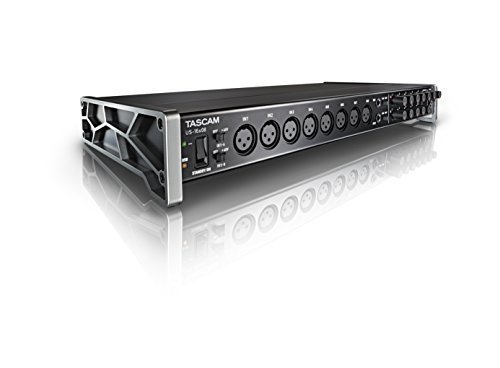
- 16 inputs with eight Ultra-HDDA mic preamps
- Eight line outputs plus front-panel level control
- DSP mixer with EQ and compression for monitoring
Best For: project studios tracking drums, bands, and larger multitrack sessions
Premium Networked Rackmount Choice

- Thunderbolt 3 interface with 16 x 16 Dante I/O
- HEXA Core processing for near-zero-latency UAD mixing
- 24-bit/192 kHz audio with Dual-Crystal Clocking
Best For: professional studios using Dante, Thunderbolt, and UAD plug-ins
Feature-Rich Studio Workhorse
Focusrite Scarlett 18i20 4th Gen

- 18-in/20-out USB interface with eight mic preamps
- Auto Gain and Clip Safe help manage recording levels
- Includes ADAT, S/PDIF, MIDI, and bundled software
Best For: studios needing flexible I/O, easy workflow tools, and expansion
Budget Rackmount Starter
Behringer UMC404HD 4x4 Interface

- 4x4 USB audio/MIDI interface for small setups
- Four MIDAS preamps with +48V phantom power
- 24-bit/192 kHz audio in a rugged metal chassis
Best For: small studios needing an affordable rack-friendly interface
Budget Recording Starter
M-Track Duo USB Audio Interface

- Two combo inputs for vocals and instruments
- Zero-latency monitoring with USB/direct switch
- Includes MPC Beats and Ableton Live Lite
Best For: Beginners and budget recording setups
Rack-Style Studio Hub
Volt 876 24x28 USB Audio Interface
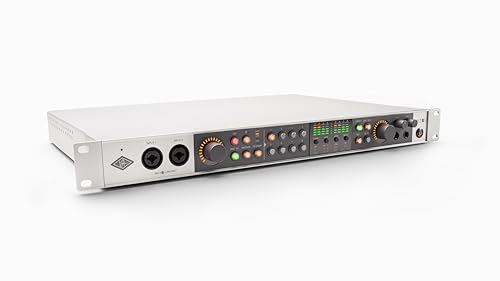
- 24x28 rack-style interface with USB-C connection
- Eight Vintage preamps and classic compressor tone
- 32-bit/192kHz conversion with UAD Console tools
Best For: Producers needing a rack-style high-I/O interface
Compact Starter Interface

- 1 XLR mic preamp and 1 Hi-Z instrument input
- 24-bit/192kHz recording with Air mode
- Includes major recording software and plugins
Best For: Solo recording, podcasts, and guitar/vocal setups
Dual-Input Upgrade
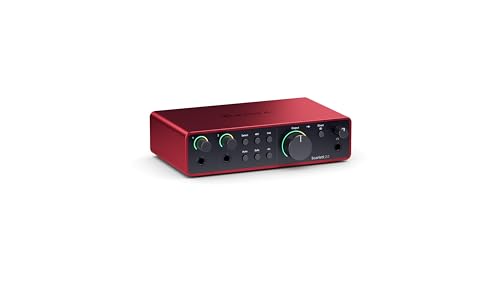
- 2 mic preamps and 2 Hi-Z instrument inputs
- Auto Gain, Clip Safe, and Air modes
- 120dB dynamic range with 24-bit/192kHz recording
Best For: Two-input studio recording and streamlined take capture
Minimalist Songwriter Pick

- 1 XLR mic preamp and 1 Hi-Z instrument input
- 120dB dynamic range with 24-bit/192kHz recording
- Improved Air mode for vocals and guitars
Best For: Solo writers and performers who want simple high-fidelity recording
Large-Session Rackmount Pick – Tascam US-16×08 for Big Sessions
If you need a rackmount audio interface for studio tracking with lots of analog I/O, the Tascam US-16×08 is built for larger sessions. It brings 16 input channels to your computer, including eight Ultra-HDDA mic preamps and eight line inputs, plus balanced outputs and onboard DSP mixing for practical monitoring.
Best For: Project studios that want a 16-input rack interface for drum tracking, band recording, and low-latency monitor mixes.
Pros:
- 16-input layout with eight mic preamps and eight line inputs for bigger recording setups
- Ultra-HDDA preamps offer up to 56dB of gain and are designed for clean, quiet operation
- DSP mixer includes four-band EQ and compression on each channel for monitor mixes
- Eight balanced line outputs support flexible routing, with two front-panel level controls
Cons:
- Windows-only compatibility may limit use in mixed-platform studios
- USB-based design is straightforward, but not aimed at premium networked or Thunderbolt workflows
- 90-day labor warranty is shorter than some competing interfaces
For studios that need a practical rackmount interface with plenty of inputs and built-in monitoring tools, this Tascam focuses on session capacity and usable recording features rather than premium connectivity extras.
Premium Networked Rackmount Choice – Apollo x16D with Dante
The Apollo x16D is a high-end rackmount audio interface for studio setups that need Thunderbolt 3 speed, Dante networking, and serious onboard processing. With 16 x 16 Dante I/O, HEXA Core processing, and near-zero-latency UAD plug-in mixing, it is geared toward demanding production and performance environments.
Best For: Professional studios and advanced rigs that want Dante connectivity, hardware processing, and elite conversion.
Pros:
- 16 x 16 Dante network I/O with Thunderbolt 3 connectivity for flexible integration
- HEXA Core processing supports UAD plug-ins with near-zero latency
- 24-bit/192 kHz resolution with Dual-Crystal Clocking for low jitter
- Includes monitor outs, word clock I/O, and stereo AES I/O for pro hardware setups
Cons:
- Premium feature set makes it a more specialized and complex choice
- Best fit depends on having a Dante or pro digital workflow in place
- 16.1-pound rack unit is heavier than simpler USB interfaces
If your studio is built around network audio and plug-in driven workflows, this Apollo offers one of the most advanced rackmount interface feature sets in the group.
Feature-Rich Studio Workhorse – Focusrite Scarlett 18i20 4th Gen
The Scarlett 18i20 is a versatile rackmount audio interface for studio recording, podcasting, and multitrack production. It combines eight mic preamps, dual Hi-Z inputs, ADAT, S/PDIF, MIDI, and word clock with 24-bit/192 kHz conversion, making it a strong all-around hub for busy setups.
Best For: Studios that want a flexible USB interface with lots of I/O, modern workflow tools, and bundled software.
Pros:
- 18 inputs and 20 outputs give you room for microphones, instruments, and studio routing
- Eight 4th Gen preamps with up to 69dB of gain for detailed capture
- Auto Gain and Clip Safe simplify level setting and help prevent distortion
- Includes Pro Tools Intro+, Ableton Live Lite, Cubase LE, and Hitmaker Expansion
Cons:
- More features may be than casual users need for simple stereo recording
- Rack-style footprint is larger than compact desktop interfaces
- Best value comes when you actually use the ADAT, word clock, and routing options
This is a strong pick when you want one rackmount interface to cover recording, monitoring, and expansion without stepping up to a more specialized pro networked system.
Budget Rackmount Starter – Behringer UMC404HD 4×4 Interface
The Behringer UMC404HD is a straightforward rack-style audio interface for studio users who want an affordable way to record microphones and instruments. It offers 4×4 USB audio/MIDI connectivity, four MIDAS-designed mic preamps, and 24-bit/192 kHz resolution in a compact metal chassis.
Best For: Small studios and home recordists who want an inexpensive rack-friendly interface for basic multitrack recording.
Pros:
- 4×4 USB audio/MIDI layout handles small recording and playback setups
- Four MIDAS-designed mic preamps include +48V phantom power
- 24-bit/192 kHz support offers solid resolution for the price
- Metal chassis is described as impact-resistant and built like a tank
Cons:
- Only four channels, so it is not suited to larger drum or band sessions
- Older Windows support wording suggests a more basic platform focus
- Lacks the advanced routing and onboard processing of higher-end rack interfaces
For simple studio capture on a tighter budget, the UMC404HD covers the essentials without adding features that many smaller setups will never use.
Portable 2-Channel Pick – 2X2 24-bit/192kHz Audio Interface
If you want a rackmount audio interface for studio-style tracking without the bulk, this compact 2×2 interface is built for simple, high-quality recording on Mac, PC, or iOS. It pairs bus-powered USB-C operation with 24-bit/192kHz conversion, two combo XLR/TRS inputs, and direct monitoring, making it a practical fit for a streamlined home setup.
Best For: Solo musicians, podcasters, and mobile creators who want a lightweight interface with clean sound and easy setup.
Pros:
- 24-bit/192kHz recording for detailed, low-noise capture
- Two combo XLR/TRS inputs with phantom power and Hi-Z support
- USB-C bus power keeps the setup portable and cable-light
- Direct monitor plus 3.5mm headphone output for zero-latency tracking
Cons:
- Only a 2-channel interface, so it is not meant for larger studio rigs
- No rackmount hardware or multi-channel expansion features listed
- Designed for portability rather than a full studio bay build
This is a good choice if your priority is clean recording quality and a straightforward workflow over rack integration. The illuminated gain knobs and one-cable design make it easy to live with, while the audio specs are strong enough for serious project work.
Budget Recording Starter – M-Track Duo USB Audio Interface
For buyers comparing a rackmount audio interface for studio use, the M-Track Duo is better viewed as a compact starter interface for recording, streaming, and podcasting. It offers two combo XLR/line/instrument inputs, transparent Crystal Preamps, and zero-latency monitoring, so it covers the basics well in a small footprint.
Best For: Beginners and budget-conscious creators who need a simple two-input interface for vocals, instruments, and streaming.
Pros:
- Two combo XLR/Line/Instrument inputs with phantom power
- Transparent Crystal Preamps for cleaner microphone capture
- USB/direct monitoring switch for zero-latency listening
- Includes MPC Beats software plus Ableton Live Lite support
Cons:
- 48kHz maximum sample rate is lower than some studio-focused options
- Not a rackmount design, so it may not suit integrated rack setups
- Best for simpler sessions rather than larger multi-channel recording needs
The M-Track Duo makes sense if you want an easy entry point with the essentials already in place. It is compact, flexible, and practical, but it is aimed more at everyday content creation than a fixed studio rack workflow.
Rack-Style Studio Hub – Volt 876 24×28 USB Audio Interface
If you are shopping for a rackmount audio interface for studio production, the Volt 876 is the most rack-style option here. It brings 24×28 I/O, eight Vintage preamps, 32-bit/192kHz conversion, and low-latency workflow tools, making it suited to a more serious studio or expanding hybrid setup.
Best For: Engineers and producers who want a rack-style interface with lots of I/O, premium conversion, and UA processing tools.
Pros:
- 24×28 channel count with a rack-mount style chassis
- Eight Vintage preamps and classic compressor voicing
- 32-bit/192kHz conversion on Mac, PC, iPad, and iPhone
- UAD Console features like auto-gain, session recall, and cue mixes
Cons:
- Heavy 13.9-pound unit is less portable than compact interfaces
- Higher-end feature set may be more than casual users need
- Single-unit description emphasizes studio use over travel-friendly operation
This is the strongest match if your keyword really means a studio-centered, rack-style interface with room to grow. The combination of high channel count, premium preamps, and deep software integration gives it a clear edge for larger recording workflows.
Compact Starter Interface – Scarlett Solo 3rd Gen
If you want a rackmount audio interface for studio-style recording but only need a simple 1-mic/1-instrument setup, the Focusrite Scarlett Solo 3rd Gen keeps things focused. It offers a single XLR mic preamp, one Hi-Z instrument input, and 24-bit/192kHz recording with Air mode for extra clarity on vocals and acoustic parts.
Best For: Solo artists, podcasters, and guitarists who want clean, easy-to-use recording on a compact budget-friendly interface.
Pros:
- High-performance mic preamp with switchable Air mode for added clarity
- 24-bit/192kHz recording with low-noise balanced outputs for clean playback
- Includes Pro Tools Intro+, Ableton Live Lite, Cubase LE, and Hitmaker Expansion
- Compact design with USB-C to USB-A cable included
Cons:
- Only one mic preamp and one instrument input
- Best suited to simple recording setups rather than multi-input tracking
This is a straightforward pick if you need dependable studio-quality sound without extra channels or complexity. It’s especially appealing for voice, guitar, and podcast work where a small footprint matters more than expansion.
Dual-Input Upgrade – Scarlett 2i2 4th Gen
For a rackmount audio interface for studio use in a small desktop setup, the Focusrite Scarlett 2i2 4th Gen gives you more flexibility than a solo model without getting complicated. It adds two mic preamps, two Hi-Z instrument inputs, 24-bit/192kHz recording, a 120dB dynamic range, and features like Auto Gain, Clip Safe, and Air modes to help you capture stronger takes.
Best For: Singer-songwriters, streamers, and podcasters who want two-input recording with helpful gain and clipping tools.
Pros:
- Two mic preamps and two Hi-Z instrument inputs for more flexible tracking
- Auto Gain helps set levels while Clip Safe helps prevent clipping
- 120dB dynamic range and the same converters used in Focusrite’s flagship interfaces
- Includes Pro Tools Intro+, Ableton Live Lite, Cubase LE, and Hitmaker Expansion
Cons:
- Still a 2-channel interface, so it won’t suit larger multi-mic sessions
- Not a rackmount unit in the traditional hardware sense
If you want a practical step up from a basic interface, the 2i2 4th Gen is the most versatile option here. It balances studio-quality sound with useful recording aids that can save time during takes.
Minimalist Songwriter Pick – Scarlett Solo 4th Gen
If your rackmount audio interface for studio searches are really about getting high-quality sound in the smallest setup possible, the Focusrite Scarlett Solo 4th Gen is a strong fit. It delivers one XLR mic preamp, one Hi-Z instrument input, 24-bit/192kHz recording, a 120dB dynamic range, and improved Air mode for bringing vocals and guitars forward in the mix.
Best For: Guitarists, vocalists, and solo producers who want a compact interface with modern recording tools.
Pros:
- 120dB dynamic range and 24-bit/192kHz recording for studio-quality sound
- Improved Air mode adds musical presence and harmonic drive
- Simple one-mic, one-instrument layout for fast setup
- Includes Pro Tools Intro+, Ableton Live Lite, Cubase LE, and Hitmaker Expansion
Cons:
- Only one XLR mic preamp and one instrument input
- Not designed for recording multiple sources at once
This model is best when you want the cleanest possible path from idea to recording without extra controls or channels. It’s a practical choice for writers and performers who value sound quality and simplicity over expansion.
How We Picked the Best Rackmount Audio Interface for Studio
We prioritized recording performance, I/O flexibility, driver stability, monitoring options, and overall value. For a Rackmount Audio Interface for Studio use, the most important factor is whether it matches your current workflow without forcing you into unnecessary complexity.
We also looked at how well each unit fits common studio needs such as multitrack recording, headphone monitoring, MIDI support, expansion potential, and integration with modern DAWs.
Quick Comparison
Smaller interfaces are usually best for solo artists, podcasters, and mobile rigs, while larger rack units make more sense for bands, drum tracking, and studios that need multiple monitor feeds or hardware inserts. Thunderbolt and USB models can both work well; the right choice depends on your computer, latency requirements, and available ports.
Key Buying Factors for a Rackmount Audio Interface for Studio
Inputs and Outputs
Count your microphones, instruments, monitors, and outboard gear before buying. If you record drums, live bands, or layered sessions, choose extra analog inputs and enough line outputs for cue mixes or external processing.
Connection Type
USB is the most universal option and works well for most setups. Thunderbolt often appeals to users who want lower latency and higher-end studio integration. If you plan to expand networking or routing, look for Dante or other digital audio support.
Preamp Quality and Conversion
Clean gain, low noise, and solid A/D conversion matter more than flashy specs. A good interface should sound transparent at the low end and remain detailed when pushed harder.
Monitoring and Workflow
Direct monitoring, multiple headphone outs, front-panel controls, and flexible routing software can save time every session. These features are especially helpful when tracking vocalists or handling multiple performers.
Rack Fit and Studio Practicality
Some interfaces are true rack units, while others use a rackmount-style chassis. Make sure the dimensions, power layout, and front-panel access suit your rack, desk, and cable management plan.
Who Should Buy Which Rackmount Audio Interface for Studio?
Solo creators, singer-songwriters, and podcasters can usually save money with smaller interfaces that still deliver strong sound quality. Home studios that record multiple sources at once should favor mid-size models with more inputs and outputs. Larger studios, hybrid setups, and engineers who need advanced routing should look at higher-channel rack units with stronger expansion options.
If your priority is simple, reliable recording, choose the smallest interface that covers your current channels. If you expect your studio to grow, stepping up to a more expandable rackmount interface now can prevent an upgrade later.