
If your PC, NAS, or small server is stuck on gigabit Ethernet, a 5GbE PCIe network adapter can deliver a noticeable jump in transfer speed without the cost of a full 10GbE build.
In this roundup, we focused on practical options that balance compatibility, driver support, and installation ease for everyday buyers.
Best 10 5GbE PCIe Network Adapter Picks for 2026
High-Speed 5GbE Pick

- Realtek RTL8126 controller with 5Gb/s support
- Windows and Linux compatibility
- Standard and slim brackets included
Best For: Users upgrading a desktop, workstation, or server to 5GbE
Budget 2.5/5Gb Option

- 2.5Gbps and 5Gbps PCIe support
- Auto-negotiates down to 1G and 100M
- RTL8125B-based multi-gig design
Best For: Buyers seeking a simple multi-gig adapter with 2.5G and 5G support
Trusted 2.5G Upgrade

- PCIe 2.0+ to 2.5G Ethernet adapter
- Supports VLAN tagging and jumbo frames
- Standard and low-profile brackets included
Best For: Windows users who want a dependable 2.5GbE PCIe adapter
Flexible 5G Multi-Gig

- Adaptive 1G, 2.5G, and 5G speed support
- RTL8126 chipset with low power and low latency claims
- Works with Windows, Linux, NAS, and soft routers
Best For: Mixed-use networking builds that need a versatile 5GbE card
10GbE Compact Upgrade
VunLink 10Gb PCIe Network Card

- 10G/5G/2.5G/1G auto-negotiation
- PCIe 4.0 x1 for compact builds
- Low CPU usage with hardware offload
Best For: Compact PCs, NAS builds, and users stepping beyond 5GbE
Flexible 5G Workhorse
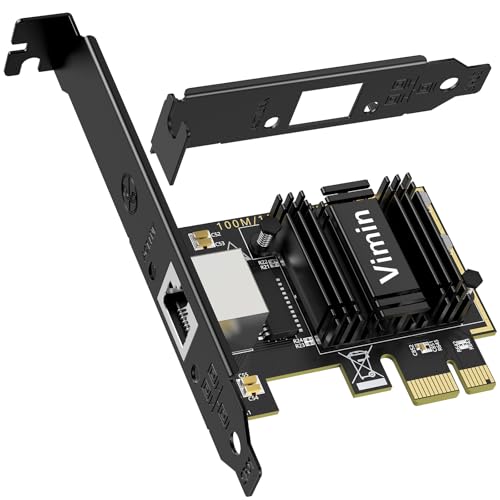
- RTL8126 chip with 5G/2.5G/1G/100M support
- PCIe x1/x4/x8/x16 compatibility
- Low-profile and standard brackets included
Best For: Desktops and workstations needing a versatile 5GbE upgrade
Trusted 2.5G Baseline
TP-Link TX201 PCIe Network Card

- 2.5Gbps with backward compatibility
- QoS and Wake on LAN support
- Includes low-profile and standard brackets
Best For: Users upgrading from gigabit who want an easy, reliable step up
Editor’s Choice
YuanLey 5G Base-T PCIe Network Card

- 5Gbps speeds with RTL8126 chipset
- Supports 5G/2.5G/1G/100Mbps auto-negotiation
- Includes full-height and low-profile brackets
Best For: Broad compatibility and Wake-on-LAN support
Best for Compact Builds
DERAPID RTL8126 5G Ethernet Adapter

- Realtek RTL8126 with up to 5Gbps throughput
- Includes standard and low-profile brackets
- Designed for desktops, servers, and compact PCs
Best For: Compact systems and home labs
Best Value

- Up to 5Gbps over PCIe with Ethernet support
- Standard and low-profile brackets included
- 2-year warranty with 24/7 technical support
Best For: Affordable upgrades with flexible mounting options
High-Speed 5GbE Pick – GiGaPlus RTL8126 PCIe NIC
If you want a 5GbE PCIe network adapter that can move a desktop, workstation, or server up to faster wired networking, this GiGaPlus card is built around the Realtek RTL8126 controller and supports 5Gb/s operation with automatic fallback to slower link speeds. It is a straightforward choice for users who want a simple RJ45 upgrade with WOL support, Linux and Windows compatibility, and standard or low-profile mounting options.
Best For: Desktop, workstation, or server users who want a basic 5GbE upgrade with broad OS support.
Pros:
- Realtek RTL8126 controller supports up to 5Gb/s Ethernet.
- Works with Windows 7/8/8.1/10/11 and Linux.
- Includes standard and slim brackets for different cases.
- Supports wake-on-LAN and backward links to 2.5G, 1G, and 100M.
Cons:
- Only fits PCIe slots, not legacy PCI slots.
- Compatibility details are focused on desktop-style systems.
This is a practical 5GbE PCIe network adapter for users who need a clean speed upgrade without extra features. Its value is in broad OS support, bracket flexibility, and simple 5G RJ45 connectivity.
Budget 2.5/5Gb Option – CHICHIYANG RTL8125B Adapter
This 2.5/5Gbps PCI network adapter uses the RTL8125B and is aimed at users who want multi-gig Ethernet without moving to a more specialized card. It supports 2.5Gbps and 5Gbps operation over a PCI Express bus and also negotiates down to 1G or 100M, making it a flexible option for users focused on simple wired upgrades.
Best For: Users who want a compact multi-gig PCI network adapter with 2.5G and 5G support.
Pros:
- Supports 2.5Gbps and 5Gbps speeds on a 1-lane PCI Express bus.
- Includes auto-negotiation for 1G and 100M modes.
- Designed around the RTL8125B transceiver and correction features.
Cons:
- Supplied compatibility information is limited compared with major-brand cards.
- Notes focus on laptop/Express Card wording, so fit may need double-checking.
For buyers prioritizing raw multi-gig support, this card covers the core bases at 2.5G and 5G. It is best considered when you want a straightforward adapter and can verify the interface details for your system.
Trusted 2.5G Upgrade – TRENDnet TEG-25GECTX
If you need a 5GbE PCIe network adapter alternative with a more established feature set at 2.5GbE, this TRENDnet card converts a PCIe 2.0 or later slot into a 2.5G Ethernet port. It supports 2.5Gbps, 1Gbps, and 100Mbps over Cat5e, includes VLAN and jumbo frame support, and ships with standard and low-profile brackets for flexible installation.
Best For: Users who want a reliable 2.5GbE PCIe adapter with strong brand support and Windows compatibility.
Pros:
- Converts PCIe 2.0 or later slots into a 2.5G Ethernet port.
- Supports VLAN tagging and jumbo frames up to 9KB.
- Includes standard and low-profile brackets.
- Backed by 3-year manufacturer protection.
Cons:
- Top speed is 2.5GbE, not 5GbE.
- Compatibility is listed for Windows and Windows Server only.
This is a strong pick if you do not need full 5GbE but do want dependable multi-gig networking from a known vendor. The feature set is practical for desktops that benefit from VLAN support, jumbo frames, and easy bracket choices.
Flexible 5G Multi-Gig – GOWENIC RTL8126 Adapter
This 5G PCIe network adapter is built for users who want a stable step up to multi-gig wired speeds from a Realtek RTL8126-based card. It supports adaptive 1000Mbps, 2500Mbps, and 5000Mbps operation, and the notes call out low power use, low latency, and suitability for desktops, servers, NAS devices, and soft routers.
Best For: Multi-purpose systems like desktops, NAS builds, servers, and soft routers that need 5G Ethernet.
Pros:
- Supports adaptive 1G, 2.5G, and 5G speeds.
- Uses the RTL8126 chipset with low power and low latency claims.
- Compatible with Windows and Linux.
- Includes a low-profile bracket for flexible installation.
Cons:
- No detailed bracket or accessory list is provided beyond the low-profile bracket.
- Compatibility notes are broad rather than model-specific.
For users who want a versatile 5GbE PCIe network adapter for more than just a desktop PC, this card is a practical fit. Its adaptive speed support and stated low-latency behavior make it especially relevant for mixed-use networking builds.
10GbE Compact Upgrade – VunLink 10Gb PCIe Network Card
If you want a 5GbE PCIe network adapter but are looking at the next step up, this VunLink card is a strong compact-systems option. It uses a Realtek RTL8127AT controller and supports 10G/5G/2.5G/1G auto-negotiation, so it can slot into a mix of newer and existing multi-gig setups without forcing a full cabling refresh.
Best For: Mini PCs, ITX builds, NAS boxes, and workstations that need 10GbE-class speed in a PCIe x1 slot.
Pros:
- Up to 10Gbps performance with 10G/5G/2.5G/1G/100Mbps support
- PCIe 4.0 x1 design fits compact systems and limited-slot builds
- Hardware offload is designed to reduce CPU usage during heavy transfers
- Includes standard and low-profile brackets for easier installation
Cons:
- 10GbE hardware may be more than many home networks currently need
- Full benefit depends on matching routers, switches, or NAS devices
- Best value is tied to systems that can actually use multi-gig speeds
Overall, this is a capable multi-gig adapter for users who want headroom beyond 5GbE and need a card that still fits compact hardware. Its x1 interface and broad OS support make it practical for home labs, NAS builds, and performance desktops.
Flexible 5G Workhorse – VIMIN 5G Base-T PCIe Card
This 5GbE PCIe network adapter is built for users who want a fast RJ45 upgrade with broad slot compatibility. The RTL8126 chip supports 5Gbps, 2.5Gbps, 1Gbps, and 100Mbps connections, while hardware acceleration and RSS/scalable I/O help keep performance steady under heavier loads.
Best For: Desktops, workstations, and server-style PCs that need a flexible 5GbE upgrade with strong OS support.
Pros:
- Supports 5G, 2.5G, 1G, and 100Mbps auto-speed connections
- Compatible with Windows 7 through 11 and Linux, plus VMware support
- Hardware acceleration and CPU load balancing help reduce bottlenecks
- Works in PCIe x1/x4/x8/x16 slots with low-profile and standard brackets
Cons:
- Best capabilities depend on a matching multi-gig network path
- No mention of bundled advanced management software or extras
- Primarily aimed at desktop-style systems rather than ultra-compact devices
For buyers focused specifically on a 5GbE PCIe network adapter, this VIMIN card is a balanced choice. It combines wide compatibility, flexible installation options, and practical acceleration features that suit high-throughput everyday use.
Trusted 2.5G Baseline – TP-Link TX201 PCIe Network Card
If you do not need full 5GbE speeds, this TP-Link adapter is a straightforward PCIe network card for a fast everyday upgrade. It tops out at 2.5Gbps, supports automatic negotiation down to 100Mbps, and adds QoS plus Wake on LAN for practical desktop and gaming use.
Best For: Budget-conscious users who want a reliable multi-gig step up from standard gigabit Ethernet.
Pros:
- Up to 2.5Gbps speeds with backward compatibility to 1Gbps and 100Mbps
- QoS helps prioritize gaming traffic and reduce congestion
- Wake on LAN adds convenient remote power management
- Includes both standard and low-profile brackets for flexible installs
Cons:
- Not a 5GbE adapter, so peak throughput is lower than faster multi-gig cards
- Only the simpler feature set is listed compared with higher-end NICs
- Best suited to users upgrading from gigabit rather than chasing top-end speeds
This is a solid practical choice if your goal is dependable speed without moving all the way to 5GbE or 10GbE. The wide OS support and included brackets make it easy to recommend for standard desktop upgrades.
Editor’s Choice – YuanLey 5G Base-T PCIe Network Card
If you want a straightforward 5GbE PCIe network adapter that works across a wide range of systems, this YuanLey card is built for practical upgrades. It delivers up to 5Gbps over RJ45, supports fallback speeds down to 100Mbps, and fits multiple PCIe slot sizes for easier installation in desktops, workstations, and servers.
Best For: Users who want a versatile 5GbE upgrade with broad OS support and WoL.
Pros:
- Realtek RTL8126 chipset with 5G/2.5G/1G/100Mbps auto-negotiation.
- Supports Windows, Linux, and VMware ESXi per the product notes.
- Includes full-height and low-profile brackets for flexible builds.
- Wake-on-LAN support is useful for remote startup and maintenance.
Cons:
- Full driver/setup details are not included in the listing notes.
- Performance depends on having a compatible multigig network path.
Overall, this is a solid all-around 5GbE PCIe network adapter for buyers who want compatibility and convenience as much as speed. The combination of broad slot support, multiple OS options, and included brackets makes it a good fit for mixed PC environments.
Best for Compact Builds – DERAPID RTL8126 5G Ethernet Adapter
This 5GbE PCIe network adapter is aimed at buyers who need fast wired networking in a compact or mixed-form-factor system. Using the Realtek RTL8126 controller, it supports up to 5Gbps and auto-negotiates down to 100Mbps, while the included brackets help it fit both desktop and smaller chassis setups.
Best For: Home labs, media centers, and compact PCs that need a 5GbE RJ45 upgrade.
Pros:
- Up to 5Gbps throughput for local transfers, streaming, and server use.
- Supports Windows 11/10, Windows Server, and Linux.
- Includes standard and low-profile brackets for flexible installation.
- Optimized heat dissipation is designed for stable extended use.
Cons:
- Compatible with PCIe slots only, not legacy PCI slots.
- Minimum supported OS version listed is Windows 10.
For shoppers who care about fit as much as speed, this card is a practical 5GbE PCIe network adapter option. The low-profile bracket, broad slot compatibility, and cooling-focused design make it especially sensible for smaller systems that still need dependable multigig networking.
Best Value – YEELIYA 5Gb PCIe Network Card
For buyers comparing value-focused 5GbE PCIe network adapter options, this YEELIYA card covers the essentials without unnecessary extras. It delivers up to 5Gbps over PCIe, supports Windows and Linux, and includes both standard and low-profile brackets for fitting different desktop and compact PC builds.
Best For: Budget-conscious users who want a simple 5GbE upgrade with useful extras.
Pros:
- Up to 5Gbps transfer rate for much faster wired networking than Gigabit.
- Supports PCIe x1, x4, x8, and x16 slots.
- Includes standard and low-profile brackets for flexible installation.
- Backed by a 2-year warranty plus 24/7 technical support.
Cons:
- Driver download is required to reach full 5Gbps speed on supported systems.
- The listing notes do not mention Mac or VMware support.
This is a sensible pick if you want a no-fuss 5GbE PCIe network adapter with practical installation options and a strong warranty. The feature set is focused on reliability and compatibility, making it a good match for everyday PC upgrades and small server builds.
How We Picked the Best 5GbE PCIe Network Adapter
We prioritized adapters that support common PCIe slots, use proven controller chips, and offer broad OS compatibility for Windows, Linux, and mixed home-lab setups. We also weighed low-profile bracket support, Wake-on-LAN, and backward compatibility with 1GbE and 2.5GbE networks.
Because many shoppers want a simple upgrade path, we favored models that are easy to install and suitable for desktops, workstations, and compact cases.
Quick Comparison
Most buyers in this roundup are choosing between value-focused 5GbE cards and more flexible multi-gig options. If your switch and cabling are ready, a dedicated 5GbE PCIe Network Adapter offers a strong speed boost for file transfers, backups, and shared storage. If you want more headroom for future networking gear, a 10GbE card may be worth considering.
Key Buying Factors for a 5GbE PCIe Network Adapter
Controller and Driver Support
Controller quality matters more than marketing claims. Look for well-supported chipsets with reliable drivers for your operating system, especially if you use Windows 11, older Windows versions, or Linux.
PCIe Slot and Case Fit
Check whether the card needs a PCIe x1, x4, or larger slot and confirm whether a low-profile bracket is included if you are installing it in a slim or small-form-factor case.
Cabling and Switch Compatibility
5GbE works best over Cat5e or better cabling, but actual results depend on cable quality, run length, and the speed of your router, switch, or NAS port. Backward compatibility is useful if the rest of your network is still 1GbE.
Extra Features
Wake-on-LAN, VLAN support, and energy-efficient operation can matter for office PCs, media servers, and always-on systems. These features are not essential for everyone, but they can improve convenience and manageability.
Who Should Buy Which 5GbE PCIe Network Adapter?
If you want the most affordable upgrade from gigabit, pick a straightforward 5GbE card with stable driver support. If your setup includes mixed devices or you expect to upgrade your network hardware later, a multi-gig adapter may offer better long-term value. Home lab users and NAS owners should pay extra attention to compatibility, low-profile fit, and wake features, while everyday desktop users can focus on simple installation and solid Windows support.
For most shoppers, the right 5GbE PCIe Network Adapter is the one that matches your case size, operating system, and network gear first, then delivers the speed you actually need.