
If you’re building a dual-PC streaming or recording setup, the right capture card can make the difference between a clean workflow and constant troubleshooting. The best models balance low latency, stable signal pass-through, and reliable recording quality.
In this roundup, we focus on capture cards that make dual-PC recording easier for creators who want dependable performance without overbuying features they won’t use.
Best 10 Capture Card for Dual PC Recording Picks for 2026
Premium Internal PCIe Pick
Elgato 4K Pro Internal Capture Card

- 8K60 passthrough with 4K60 HDR10 capture
- HDMI 2.1, VRR support, and ultra-low latency
- Up to 1080p240 recording for high-FPS gameplay
Best For: Dual-PC streamers needing premium internal capture
Budget USB Streaming Choice
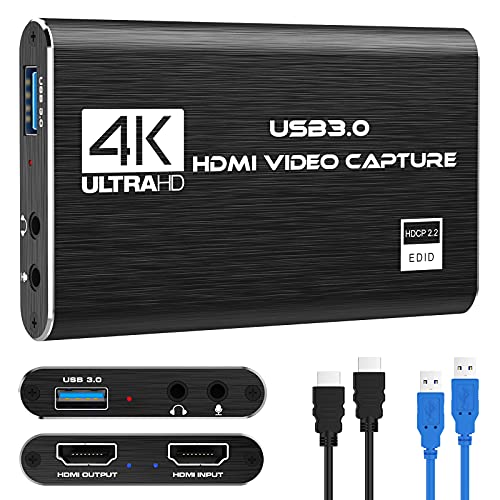
- Plug-and-play USB 3.0 capture with no driver needed
- HDMI loop-out for zero-delay monitoring
- Mic-in support for external commentary
Best For: Budget dual-PC recording and basic streaming
Modern USB-C Console and PC Pick

- 4K60 capture with HDR10 support on Windows
- 1440p120 or 1080p240 passthrough
- Near-zero latency plus analog audio input
Best For: Dual-PC setups needing a compact USB-C card
Value Loop-Out Option

- 4K 60Hz input with HDMI loop-out
- 1080p60 or 2K30 capture over USB 3.0
- Mic-in and wide software compatibility
Best For: Affordable dual-PC recording with loop-out support
Premium Internal 4K Capture

- 4K60 HDR10 capture with zero-lag passthrough
- Records high frame rates up to 240 fps
- Internal PCIe x4 card for Windows setups
Best For: Dedicated Windows dual-PC streamers who want premium 4K capture
Portable USB Streaming Pick
acer USB 3.0 Video Capture Card

- 4K input with 1080p@60Hz capture/output
- Plug-and-play with no extra drivers or power
- Built-in mic-in and wide OS/device support
Best For: Creators who want a portable, easy-to-use USB capture card
Dual PC 4K Value
VIXLW 4K Internal Capture Card

- 4K60 passthrough with ultra-low latency
- Supports single and dual PC setups
- Up to 240fps recording at 1080p
Best For: Windows dual-PC builders who want a focused internal 4K capture card
Budget-Friendly 1080p Pick
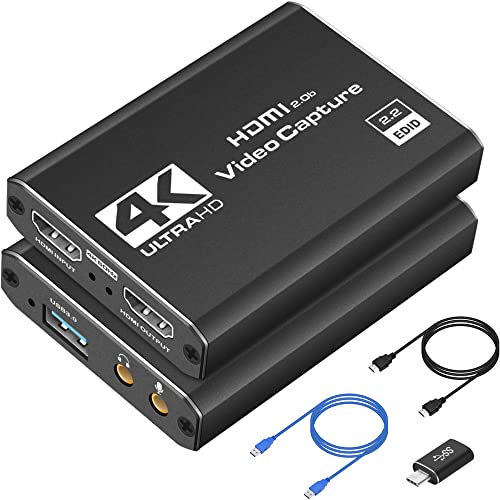
- Plug-and-play USB capture card
- 1080p 60FPS recording with HDMI input
- Low-latency and wide software support
Best For: Simple dual PC recording and beginner streaming
Premium HDMI 2.1 Option
AVerMedia Live Gamer Ultra 2.1

- 4K60 capture with HDMI 2.1
- 4K144 HDR/VRR passthrough
- Low latency with party chat support
Best For: High-end dual PC streaming and gaming setups
Dual-Input Creator Pick

- Dual 4K60 HDMI inputs
- 1080p 60FPS capture with low latency
- PIP/PBP layouts and audio I/O
Best For: Two-source recording, switching, and live production
Premium Internal PCIe Pick – Elgato 4K Pro Internal Capture Card
If you want a capture card for dual PC recording with high-end passthrough and low-latency monitoring, the Elgato 4K Pro is built for serious setups. It supports 8K60 passthrough, 4K60 HDR10 capture, HDMI 2.1, and up to 1080p240 recording, making it a strong fit for high-refresh gaming and broadcast workflows.
Best For: Dual-PC streamers and recorders who want an internal PCIe card with premium passthrough and high frame-rate support.
Pros:
- 8K60 passthrough with 4K60 HDR10 capture
- HDMI 2.1 in/out and up to 1080p240 recording
- VRR passthrough helps prevent screen tearing
- Ultra-low latency suits synced gameplay and broadcasting
Cons:
- Requires a PCIe slot and Windows 10 system
- Internal install is less flexible than USB capture cards
For builders who already run a dedicated streaming PC, this card delivers the modern connectivity and capture specs to keep gameplay smooth while recording or broadcasting from a second system.
Budget USB Streaming Choice – 4K HDMI USB 3.0 Capture Card
This capture card for dual PC recording is a practical USB option if you want simple setup and broad compatibility. It supports up to 1080p capture, HDMI loop-out for zero-delay gaming, and USB 3.0 connectivity so you can feed video into OBS, Twitch, YouTube, and similar apps.
Best For: Budget-conscious users who need a plug-and-play USB capture card for recording or streaming from a second PC.
Pros:
- Plug-and-play design with no driver or external power required
- HDMI loop-out provides no-delay gameplay monitoring
- Works with Windows and Mac OS
- Mic-in lets you add external commentary
Cons:
- Capture tops out at 1080p despite 4K input support
- Output is limited to up to 2K30Hz
For straightforward dual-PC workflows, it covers the basics well: capture, loop-out, and commentary input, all in a compact USB format.
Modern USB-C Console and PC Pick – Elgato 4K S Capture Card
The Elgato 4K S is a compact capture card for dual PC recording if you want a newer USB-C device with strong passthrough and low latency. It offers 4K60 capture, 1440p120 or 1080p240 passthrough, HDR10 support on Windows, and analog audio input for chat or commentary.
Best For: Creators who want a USB-C capture card for a dual-PC setup with modern passthrough and audio input.
Pros:
- 4K60 capture with HDR10 support on Windows
- 1440p120 or 1080p240 passthrough for high-refresh play
- Near-zero latency for smoother monitoring
- Analog 3.5mm audio input for commentary or chat
Cons:
- Best feature set is centered on Windows 11 and newer systems
- Video capture resolution is listed as 1080p in the details
If you want a streamlined external card for recording from a second PC without sacrificing modern passthrough features, this one hits a very usable middle ground.
Value Loop-Out Option – XIIXMASK USB 3.0 Capture Card
If you need a capture card for dual PC recording and want a value-focused USB option, this XIIXMASK model covers the essentials. It supports 4K 60Hz HDMI input and loop-out, with USB 3.0 output for 1080p60 or 2K30 capture, plus low-latency monitoring and broad software compatibility.
Best For: Users who want an affordable USB capture card with loop-out and mic-in for a dual-PC or streaming setup.
Pros:
- 4K 60Hz HDMI input and loop-out
- USB 3.0 capture up to 1080p60 or 2K30
- Mic-in support for live commentary
- Wide compatibility with OBS, VLC, Zoom, and multiple OS options
Cons:
- Does not record party chats
- Requires audio setup changes in OBS for sound to work correctly
This is a solid pick for buyers who value flexibility and basic real-time capture more than premium image quality or advanced hardware features.
Premium Internal 4K Capture – AVerMedia GC573 Live Gamer 4K
If you need a capture card for dual PC recording and want internal PCIe performance, the AVerMedia GC573 is built around high-end 4K60 HDR10 capture with ultra-low latency. It’s a strong fit for streamers who want clean passthrough, high-frame-rate recording, and Windows-based software workflows in OBS, Streamlabs, or XSplit.
Best For: Windows dual-PC streamers who want internal 4K60 HDR10 capture with premium passthrough.
Pros:
- Captures 4K60 HDR10 with zero-lag pass-through
- Supports high-frame-rate recording up to 240 fps
- Works with OBS, Streamlabs, and XSplit
- PCIe x4 internal design suits a dedicated recording rig
Cons:
- Windows-only support limits cross-platform use
- Requires a compatible PC and relatively strong system specs for 4K/HDR modes
- Internal installation is less convenient than USB models
For a dual PC recording setup, this model makes sense when image quality and low latency matter more than portability. The extra setup is offset by the ability to capture modern console and PC content at a very high level, with configurable resolution/frame-rate options through AVerMedia’s utility.
Portable USB Streaming Pick – acer USB 3.0 Video Capture Card
If you want a capture card for dual PC recording but prefer a simple external setup, this Acer USB 3.0 model focuses on easy plug-and-play use. It accepts 4K input and outputs smooth 1080p at 60Hz, with YUY2 color support, mic-in commentary, and broad compatibility across Windows, macOS, Linux, and a wide range of devices.
Best For: Streamers and creators who want a portable USB capture card with easy setup and built-in mic input.
Pros:
- Plug-and-play operation with no extra drivers or external power
- 4K input with smooth 1080p@60Hz output
- Mic-in support for direct commentary during streams
- Works with Windows, macOS, Linux, OBS, XSplit, and VLC
Cons:
- Captures at 1080p rather than full 4K recording
- USB-based design may not suit users wanting a fully internal dual-PC setup
- Performance depends on having a USB 3.0 port
This is a practical option if your priority is convenience over maximum capture resolution. It’s especially useful for mobile streaming, classroom recording, or a secondary PC setup where you want quick installation and broad device support without additional adapters.
Dual PC 4K Value – VIXLW 4K Internal Capture Card
For a capture card for dual PC recording that stays focused on internal performance, the VIXLW 4K Internal Capture Card offers 4K60 passthrough, ultra-low latency, and support for both single and dual PC setups. It’s designed for Windows users who want to play in native 4K60 while capturing up to 4K, with high-speed 240fps recording available at 1080p for fast action.
Best For: Windows dual-PC streamers who want 4K60 passthrough and low-latency recording.
Pros:
- Supports 4K capture with 4K60 passthrough
- Ultra-low latency design helps keep gameplay and broadcast in sync
- Records up to 240fps at 1080p for fast-motion content
- Built for single and dual PC setups with OBS and YouTube use cases
Cons:
- Windows-only support narrows compatibility
- Internal PCIe installation is less flexible than USB models
- No explicit multi-platform support beyond the listed apps and console/PC use
This is a straightforward pick if you want internal capture hardware without moving up to a more feature-heavy premium model. It gives dual-PC builders the core features that matter most: passthrough, low latency, and support for high-quality recording in a streamlined package.
Budget-Friendly 1080p Pick – 4K HDMI Capture Card USB 3.0
If you need a capture card for dual PC recording without a complicated setup, this USB 3.0 option keeps things simple. It supports plug-and-play use, works with OBS Studio, Streamlabs, and XSplit, and is built for smooth 1080p 60FPS capture from HDMI devices like PCs, consoles, and cameras.
Best For: Streamers and beginner creators who want an easy, portable capture card for dual PC recording and everyday gameplay capture.
Pros:
- Plug-and-play setup with no drivers needed
- 1080p 60FPS capture with 4K HDMI input support
- Low-latency performance for real-time streaming
- Works with OBS Studio, Streamlabs, and XSplit
Cons:
- Capture resolution is listed as 1080p, not 4K
- Requires a USB 3.0 port
- Best suited to basic single-source recording rather than advanced switching
For straightforward recording and streaming, this model offers a practical balance of compatibility, portability, and low-latency capture. It is a sensible choice when you want reliable results without stepping into a more complex or expensive setup.
Premium HDMI 2.1 Option – AVerMedia Live Gamer Ultra 2.1
For a capture card for dual PC recording where gaming performance matters, this AVerMedia model is designed around HDMI 2.1 and low latency. It captures in 4K60, supports 4K144 HDR/VRR passthrough, and works with OBS on Mac and PC for creators who want a premium recording workflow.
Best For: Serious streamers and dual-PC setups that need high-end passthrough, low latency, and 4K60 capture.
Pros:
- 4K60 capture with HDMI 2.1 support
- 4K144 HDR/VRR passthrough for smooth gameplay
- Low-latency capture for real-time recording and streaming
- Party chat support and 5.1 channel audio capture
Cons:
- Requires Windows 10 x64 / 11 x64 or later
- More specialized than a basic plug-and-play capture device
- Likely more than casual users need for simple recording tasks
This is the strongest choice here if your priority is preserving gaming quality while sending video to a recording PC. The HDMI 2.1 feature set, low latency, and chat/audio extras make it well suited to advanced streaming builds.
Dual-Input Creator Pick – Osee GoStream M2 Capture Card
If you want a capture card for dual PC recording and also need to manage two sources, the Osee GoStream M2 is built for flexibility. It offers dual 4K60 HDMI inputs, 1080p 60FPS capture, low latency, and built-in PIP/PBP layouts for switching or combining views during streaming or recording.
Best For: Creators who want two HDMI inputs, picture-in-picture options, and a versatile recording setup for gaming or live production.
Pros:
- Dual 4K60 HDMI inputs for two sources
- 1080p 60FPS capture with ultra-low latency
- PIP and PBP modes with multiple layouts
- Built-in mic and audio I/O ports for commentary
Cons:
- Windows is the primary supported operating system in the supplied details
- Capture output is 1080p rather than 4K
- May be more feature-rich than needed for basic single-source use
This model stands out when dual-source control matters more than pure simplicity. If your recording workflow needs switching, layout options, and audio input flexibility, it offers a practical all-in-one solution.
How We Picked the Best Capture Card for Dual PC Recording
We prioritized capture cards that fit real dual-PC workflows: stable HDMI input, low-latency performance, strong compatibility with OBS and common streaming software, and recording support that won’t bottleneck a dedicated gaming PC. We also considered whether each model is better suited to an internal PCIe install or a simpler USB setup, since that affects both performance and ease of use.
Quick Comparison
For most users, internal PCIe cards offer the cleanest and most consistent experience, especially when you want to capture a high-refresh gaming PC without adding extra USB overhead. USB capture cards are easier to set up and move between systems, but they are usually the better choice for straightforward 1080p60 recording rather than advanced high-refresh workflows. If your setup includes next-gen consoles plus a dual-PC rig, passthrough support and HDMI 2.1 compatibility become more important.
Key Buying Factors for Capture Card for Dual PC Recording
Resolution and Frame Rate
Match the card to your actual recording target. If you only need smooth commentary or basic gameplay capture, 1080p60 is often enough. If you want sharper footage or plan to edit heavily, look for 4K60 capture support. High-refresh passthrough can still matter even if you record at a lower frame rate.
Internal Vs. External Design
An internal PCIe card is usually the stronger choice for a Capture Card for Dual PC Recording because it tends to deliver more reliable throughput and a tidier desktop setup. USB cards are simpler to install and can work well for secondary rigs, portable setups, or users who want flexibility more than maximum performance.
Passthrough and Latency
Passthrough lets your gaming monitor receive the signal directly, reducing delay and preserving a responsive feel. Low-latency capture is especially important if the capture PC is also handling encoding, overlays, or live production.
Compatibility and Workflow
Check that the card works cleanly with your capture software, audio routing, and operating system. Dual-PC recording often fails because of audio setup, not video quality, so look for cards that support straightforward HDMI audio capture and simple driver installation.
Who Should Buy Which Capture Card for Dual PC Recording?
Choose an internal 4K capture card if you want the most stable long-term setup for serious streaming or recording. Choose a USB capture card if you need a plug-and-play option, a lower-cost entry point, or occasional use across multiple systems. If you play on a high-refresh monitor, prioritize passthrough and latency first, then decide how much resolution you truly need to record.
For most buyers, the best option is the one that matches your PC case, display setup, and recording goals—not just the highest spec on the box.