
If you want to stream or record without giving up smooth variable refresh rate gaming, a capture card with VRR passthrough is the right upgrade. It lets your console or PC keep responsive, tear-free gameplay while sending video to your capture setup.
Below, we focus on models that balance passthrough support, capture quality, latency, and platform compatibility so you can choose the right option for your setup.
Best 10 Capture Card with VRR Passthrough Picks for 2026
Premium external pick
HDMI 2.1 capture for smooth VRR gameplay

- VRR passthrough for tear-free play
- Up to 4K144 capture and 1080p240 recording
- USB 3.2 Gen 2 with ultra-low latency
Best For: Creators who want an external HDMI 2.1 capture card with VRR support
Easy external streaming option

- VRR pass-through at 1440p120 and 1080p120
- Up to 4K30 capture, 1080p240 support
- Plug-and-play external setup
Best For: Gamers who want simple external capture with 1440p120 VRR passthrough
High-end internal choice
Internal PCIe card with 8K passthrough

- 8K60 passthrough with VRR support
- 4K60 HDR10 capture and 1080p240 recording
- Dual-PC compatible PCIe design
Best For: PC gamers and streamers building a permanent internal capture setup
Budget-friendly feature set

- 4K60 HDR capture and passthrough
- VRR passthrough with near-zero latency
- 3.5mm audio plus wide OS support
Best For: Budget shoppers who want a versatile external VRR passthrough capture card
Internal 4K144 Pick
Live Gamer 4K 2.1 internal HDMI 2.1 capture card

- 4K144 HDR passthrough with ultra-low latency
- Captures up to 1080p240 and 1440p120
- PCIe Gen 3 x4 internal design
Best For: PC builders who want a high-refresh internal capture card with VRR passthrough
External VRR Value
BlueAVS USB-C VRR passthrough capture card

- HDR, VRR, and ALLM passthrough support
- Captures up to 4K60, 1440p144, and 1080p240
- UVC/UAC plug-and-play on major OSes
Best For: Gamers who want a simple external VRR passthrough capture card
Premium 4K60 Choice
Live Gamer Ultra 2.1 HDMI 2.1 capture card

- 4K144 HDR/VRR pass-through with low latency
- Captures 4K60 for streaming and recording
- Built-in party chat support and 5.1 audio capture
Best For: Streamers who want a premium HDMI 2.1 capture card with VRR passthrough and chat support
PORTTA Ultra-Low-Latency 4K Passthrough
4K60 HDR/VRR Capture for High-FPS Play

- 4K@60Hz capture with 1080p@240Hz passthrough
- VRR and HDR support for smoother gameplay
- Plug-and-play on Windows, macOS, and Linux
Best For: High-refresh console players who want 4K capture and VRR passthrough
AVerMedia True Low-Latency Capture
4K60 HDR/VRR with Ultra-Wide Support

- 4K60 HDR/VRR pass-through for smooth gameplay
- True low-latency capture for streaming and recording
- Plug-and-play on Windows, Mac, and iPadOS
Best For: Creators who want simple setup and smooth 4K60 passthrough
Zeroffi Flexible HDR/VRR Capture
4K60 VRR Passthrough with Audio Input
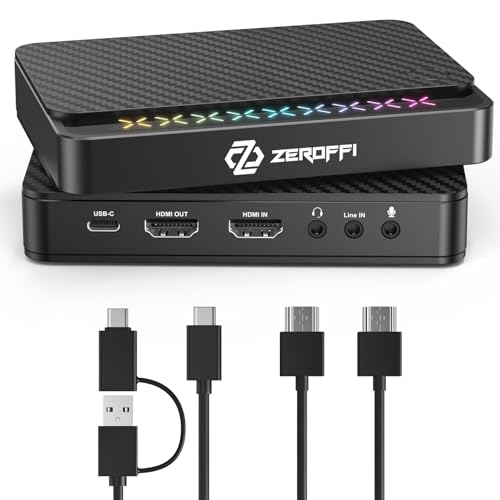
- 4K60 HDR and VRR passthrough with 1440p144 support
- USB 3.1 Type-C with ultra-low latency
- 3.5mm mic and line-in audio inputs
Best For: Streamers who want VRR passthrough and built-in audio input
Premium external pick – HDMI 2.1 capture for smooth VRR gameplay
If you want a capture card with VRR passthrough that keeps gameplay smooth while you stream or record, the Elgato 4K X is built for exactly that kind of setup. It supports HDMI 2.1, up to 4K144 capture, up to 1080p240 recording, and ultra-low latency through USB 3.2 Gen 2, so it suits fast consoles and high-refresh PC play.
Best For: Streamers and gamers who want HDMI 2.1 passthrough, VRR support, and very high frame-rate capture in a compact external card.
Pros:
- VRR passthrough helps prevent screen tearing during gameplay.
- HDMI 2.1 support enables up to 4K144 capture and 1080p240 recording.
- Ultra-low latency over USB 3.2 Gen 2 keeps gameplay and broadcast closely synced.
- Works with OBS, Streamlabs, Twitch Studio, Restream, Zoom, Teams, and more.
Cons:
- Requires a USB 3.2 Gen 2 port for best capture performance.
- USB 3.2 Gen 1 is supported only with reduced capture resolution.
Overall, this is a strong pick if you need a modern external capture solution for PS5, Xbox, Switch, PC, or Mac and want VRR passthrough as part of the package. It is especially appealing for creators who want high-end specs without moving to an internal PCIe card.
Easy external streaming option – 1440p120 VRR external capture
The AVerMedia Live Gamer Extreme 3 is a practical capture card with VRR passthrough for players who want smooth gameplay and a straightforward setup. It captures up to 4K30, supports up to 1080p240, and offers VRR pass-through at 1440p120 or 1080p120, making it a useful fit for high-refresh console gaming and streaming.
Best For: Streamers who want an easy-to-use external card with VRR support and a strong 1440p120 passthrough focus.
Pros:
- VRR pass-through is supported at 1440p120 and 1080p120.
- Up to 4K30 capture with high refresh rate support up to 1080p240.
- Plug-and-play design keeps setup simple.
- Includes USB-C to Type-A cable, HDMI 2.0 cable, and quick start guide.
Cons:
- Capture tops out at 4K30 rather than higher 4K frame rates.
- Minimum system requirement is a USB 3.2 Gen 1 Type-C port with Windows 11 or Mac.
This model makes sense if you care more about smooth passthrough and easy streaming than maximum capture resolution. Its VRR support at 1440p120 gives it a clear place for gamers who prioritize responsiveness on their main display.
High-end internal choice – Internal PCIe card with 8K passthrough
If you are shopping for a capture card with VRR passthrough and want an internal PCIe solution, the Elgato 4K Pro is the most powerful option in this group. It offers 8K60 passthrough, 4K60 HDR10 capture, HDMI 2.1, up to 1080p240 recording, and ultra-low latency, which makes it well suited to demanding gaming and dual-PC streaming setups.
Best For: PC builders and streamers who want an internal capture card with 8K passthrough, VRR support, and dual-PC compatibility.
Pros:
- 8K60 passthrough with VRR support for very high-end gaming setups.
- 4K60 HDR10 capture and up to 1080p240 recording.
- HDMI 2.1 in/out and ultra-low latency for responsive use.
- Compatible with dual-PC setups.
Cons:
- Requires a PCIe slot and a Windows 10 system.
- Internal installation is less flexible than an external USB capture device.
This is the best fit for users who want the strongest feature set and do not mind installing a PCIe card. If your goal is high-end passthrough plus VRR support in a permanent streaming rig, the 4K Pro is built for that role.
Budget-friendly feature set – Budget 4K60 VRR recording
This capture card with VRR passthrough targets budget-conscious creators who still want strong refresh-rate support. It captures up to 4K60 HDR, records up to 1080p240 or 2K144, and includes near-zero latency under 50ms, plus USB 3.2 Type-C connectivity and built-in 3.5mm audio in/out for commentary and monitoring.
Best For: Buyers who want an affordable external card with 4K60 HDR, VRR passthrough, and broad device compatibility.
Pros:
- Supports 4K60 HDR input and passthrough.
- Records up to 1080p240 or 2K144.
- VRR passthrough and sub-50ms latency help maintain smooth play.
- Includes 3.5mm audio in/out and works with many platforms, including Windows, macOS, Linux, Android, and iOS.
Cons:
- To reach the highest frame rates, the HDMI cabling and USB connection need to meet the stated requirements.
- HDCP must be disabled on PS4/PS5, and encrypted content is not supported.
- As a generic model, it lacks the brand ecosystem and software focus of premium options.
For users who want a feature-rich external solution without stepping into premium pricing, this card covers the essentials well. Its broad device support and VRR passthrough make it flexible for gaming, streaming, and even mobile capture.
Internal 4K144 Pick – Live Gamer 4K 2.1 internal HDMI 2.1 capture card
If you want a capture card with VRR passthrough built for a PCIe desktop setup, the AVerMedia Live Gamer 4K 2.1 focuses on high-refresh HDMI 2.1 gaming and low-latency capture. It supports 4K144 HDR pass-through plus up to 4K60 recording, with capture modes that reach 1080p240 and 1440p120 for fast-paced play.
Best For: Desktop streamers who want an internal HDMI 2.1 capture card with 4K144 passthrough and high refresh-rate support.
Pros:
- 4K144 HDR pass-through with ultra-low latency gameplay monitoring
- Supports 1080p240 and 1440p120 capture for high-refresh content
- Internal PCIe Gen 3 x4 design for a clean desktop install
- Includes HDMI 2.1 cable and plug-and-play installation
Cons:
- Windows 10/11 x64 required
- Internal installation is less convenient than USB models
- Not the most flexible choice for multi-device portable use
Overall, this is a strong pick if your priority is smooth VRR passthrough, high-refresh console support, and an internal capture solution that stays out of the way once installed.
External VRR Value – BlueAVS USB-C VRR passthrough capture card
This capture card with VRR passthrough is aimed at gamers who want an external USB-C option that handles modern refresh rates without giving up compatibility. It supports up to 4K60 capture, 1440p144, and 1080p240 passthrough, while also adding HDR, VRR, and ALLM for smooth console or PC play.
Best For: Streamers and console gamers who want a plug-and-play external capture card with VRR, HDR, and ultra-high refresh passthrough.
Pros:
- Supports HDR, VRR, and ALLM for tear-free passthrough
- Up to 4K60 capture with 1440p144 and 1080p240 support
- True UVC/UAC plug-and-play compatibility on Windows, macOS, and Linux
- Includes a 3.5mm audio port for voice chat and line-in mixing
Cons:
- Requires a USB 3.0/5Gbps port for best performance
- External design may be less ideal for a permanent desk setup
- Capture resolution tops out at 4K60 rather than 4K120/144 capture
For buyers who want an easy external setup with strong passthrough features, this BlueAVS model covers the essentials well and adds useful audio flexibility in a compact body.
Premium 4K60 Choice – Live Gamer Ultra 2.1 HDMI 2.1 capture card
If you need a capture card with VRR passthrough for a premium HDMI 2.1 gaming setup, the Live Gamer Ultra 2.1 is built around 4K60 capture and 4K144 HDR/VRR pass-through. It is designed for PS5, Xbox, and PC monitoring with low latency, while also adding live party chat support and 5.1 channel audio capture.
Best For: Console and PC streamers who want HDMI 2.1 passthrough, low latency, and integrated party chat support.
Pros:
- 4K144 HDR/VRR pass-through for smooth gameplay monitoring
- 4K60 capture with low-latency performance
- Built-in party chat support with headset connection and volume control
- Includes 5.1 channel audio capture and customizable RGB lighting
Cons:
- Windows 10/11 x64 required for operation
- Capture resolution is limited to 4K60
- More feature-rich than necessary if you only need basic recording
This model stands out if you want a polished HDMI 2.1 capture card with VRR passthrough and extra stream-friendly features like party chat handling and RGB lighting.
PORTTA Ultra-Low-Latency 4K Passthrough – 4K60 HDR/VRR Capture for High-FPS Play
If you want a capture card with VRR passthrough that can handle fast console gameplay without forcing you to give up smooth output, the PORTTA DX20R is built for that job. It captures up to 4K60 and supports passthrough up to 1080p240 and 2K120, while also advertising HDR and VRR support for cleaner-feeling play sessions.
Best For: Streamers and console players who want high refresh-rate passthrough plus 4K60 capture in a compact USB 3.0 setup.
Pros:
- Supports 4K@60Hz capture with passthrough up to 1080p@240Hz and 2K@144Hz.
- Includes VRR and HDR support for smoother, more flexible gaming output.
- Works plug-and-play with Windows, macOS, and Linux, with no driver installation required.
- CapHub utility adds video, audio mixing, firmware, and EDID/VRR mode controls on supported systems.
Cons:
- Advanced utility features are limited to Windows and macOS.
- Some display-control functions rely on the companion software rather than the hardware alone.
Overall, the DX20R is a strong fit if your priority is preserving high refresh-rate gameplay while capturing in 4K. Its mix of VRR support, broad OS compatibility, and extra software controls makes it a practical option for streamers who want flexibility without extra setup friction.
AVerMedia True Low-Latency Capture – 4K60 HDR/VRR with Ultra-Wide Support
For buyers comparing a capture card with VRR passthrough, the AVerMedia Live Gamer Ultra S Black stands out for its true low-latency design and 4K60 HDR/VRR pass-through. It is aimed at players who want smooth gameplay on PS5/Pro, Xbox, Switch 2, or PC while streaming and recording through common apps like OBS and Streamlabs.
Best For: Streamers who want easy plug-and-play setup with ultra-wide support and 4K60 HDR/VRR passthrough.
Pros:
- Supports 4K60 HDR/VRR pass-through for smoother gameplay output.
- True low-latency design is built for real-time streaming and recording.
- Plug-and-play setup with no extra drivers or external power required.
- Works with Windows 10/11, Mac 13/14, and iPadOS 17 or later.
Cons:
- Recording resolution tops out at 1080p for some streaming workflows.
- Best-known software support is centered on OBS, Streamlabs, Twitch, and similar tools.
This model is a sensible pick if you want a straightforward capture card that keeps passthrough smooth and setup simple. Its ultra-wide support and broad device compatibility make it especially appealing for creators who game across multiple platforms.
Zeroffi Flexible HDR/VRR Capture – 4K60 VRR Passthrough with Audio Input
If you need a capture card with VRR passthrough that also gives you extra recording flexibility, the Zeroffi USB 3.1 model is worth a look. It supports 4K60 HDR and VRR passthrough, along with 1440p144 and 1080p240 output modes, making it a strong fit for high-frame-rate console play and PC-style streaming setups.
Best For: Budget-minded streamers who want VRR passthrough, external audio input, and broad compatibility with common recording apps.
Pros:
- Supports 4K60 HDR and VRR passthrough, plus 1440p144 and 1080p240.
- USB 3.1 Type-C design aims for ultra-low latency and easy plug-and-play use.
- Includes 3.5mm microphone and line-in audio input for voice plus game audio.
- Compatible with OBS, Twitch Studio, XSplit, Zoom, Windows, and macOS.
Cons:
- HDCP-protected sources cannot be recorded.
- PlayStation users must disable HDCP before use.
- Warranty is limited to 3 months.
As a practical streaming tool, this Zeroffi card balances high-refresh passthrough with useful audio options. It is best suited to users who want straightforward capture hardware and do not mind handling HDCP settings before they start recording.
How We Picked the Best Capture Card with VRR Passthrough
We prioritized cards that support modern HDMI 2.1 features, reliable VRR passthrough behavior, and strong capture performance for current consoles and gaming PCs. We also weighed recording resolution, passthrough refresh rates, HDR support, latency claims, connection type, and whether the card fits external or internal builds.
Because setup goals vary, we favored options that work well for both streaming and local recording, not just benchmark-friendly specs.
Quick Comparison
External USB cards are usually the easiest to install and move between systems. Internal PCIe cards tend to offer cleaner desktop integration and can be a better fit for dedicated streaming PCs. If you game on PS5, Xbox Series X/S, or a powerful PC, choose a card that preserves your display mode first, then look at capture resolution as the next priority.
Key Buying Factors for a Capture Card with VRR Passthrough
Passthrough Resolution and Refresh Rate
Make sure the passthrough mode matches the way you actually play. A Capture Card with VRR Passthrough should support the refresh rates you use most, such as 120Hz, 144Hz, or higher, so your monitor can still take full advantage of VRR.
Capture Resolution Vs. Passthrough Quality
Don’t confuse what you play at with what you record at. Many cards pass through 4K120 or 4K144 while capturing at 4K60, 1440p120, or 1080p240. Choose the capture mode that matches your editing and streaming needs rather than paying for more than you’ll use.
HDR, ALLM, and Latency
HDR support matters if you want accurate console visuals, while low latency helps keep the signal chain responsive. ALLM can also be useful for reducing input lag on supported displays and devices. If you stream competitively, stable low-latency performance matters more than extra software features.
USB Vs. PCIe
USB capture cards are simpler to install and are ideal for laptops or shared setups. PCIe cards usually appeal to users building a permanent streaming PC and wanting a more integrated internal solution. Pick the format that fits your machine and cable management preferences.
Who Should Buy Which Capture Card with VRR Passthrough?
Buy an external USB model if you want an easy setup, portability, or compatibility across multiple computers. Choose an internal PCIe card if you have a dedicated desktop and want a more fixed, streamlined workflow. If you mostly play on PS5 or Xbox and care about competitive smoothness, prioritize VRR passthrough and high-refresh support over headline capture specs.
If you are building a creator-focused setup, a Capture Card with VRR Passthrough that also supports HDR and solid software compatibility will usually be the most future-proof choice.