
Looking for a capture card for Nintendo Switch 2? The right pick depends on how you play, stream, and record—whether you want simple 1080p60 capture or a more future-ready setup with stronger passthrough.
Below, we focus on cards that balance image quality, latency, compatibility, and ease of use so you can choose confidently without overpaying for features you will not use.
Best 10 Capture Card for Nintendo Switch 2 Picks for 2026
Premium 4K Capture
Elgato 4K S for Switch 2 and More

- 4K60 capture with HDR10 support on Windows
- 1440p120 or 1080p240 passthrough
- Analog 3.5mm audio input for commentary
Best For: Streamers who want premium capture quality and high-frame-rate passthrough
Budget-Friendly 1080p
Acer USB 3.0 Capture Card for Switch 2

- 1080p60 capture with 4K30 input support
- USB-A and Type-C connections
- No-driver plug-and-play setup
Best For: Beginners who want an easy, broadly compatible Switch 2 capture card
Portable Dock Combo
JSAUX Capture Card for Switch 2

- Capture card plus portable dock in one
- 4K60 HDMI passthrough with 1080p60 recording
- 100W USB-C PD charging for handheld play
Best For: Travel-friendly Switch 2 users who want docking, capture, and charging in one device
Simple All-Rounder
Acer 4K Loop-Out Card for Switch 2

- 4K input with 1080p60 output
- Mic-in for direct commentary
- Plug-and-play with broad device support
Best For: Streamers who want a simple, lightweight capture card with mic input
Yellow Plug & Play Option
1080P 60FPS Capture with 4K30 Passthrough

- 1080P 60FPS capture with 4K@30Hz passthrough
- Plug and play with OBS and streaming apps
- Includes USB-C adapter and mic-in support
Best For: Easy streaming setups with broad console and laptop compatibility
Audio-Flexible Streaming Pick
1080P60 / 2K30 Capture with 4K60 Pass-Through

- Up to 1080P 60FPS capture or 2K30 recording
- 4K@60Hz HDMI pass-through with low latency
- Mic in, audio in, and monitoring ports included
Best For: Creators who need flexible audio routing and responsive pass-through
Compact Dual-Interface Choice
2K30 Capture with 4K30 Loop-Out

- Captures up to 2K 30FPS and 1080P 60FPS
- USB-A/C dual interface for flexible connections
- Aluminum casing and low-latency loop-out
Best For: Budget-conscious users wanting simple capture and dual-port compatibility
Best with Extra Features
4K HDMI Capture Card with Mic-In
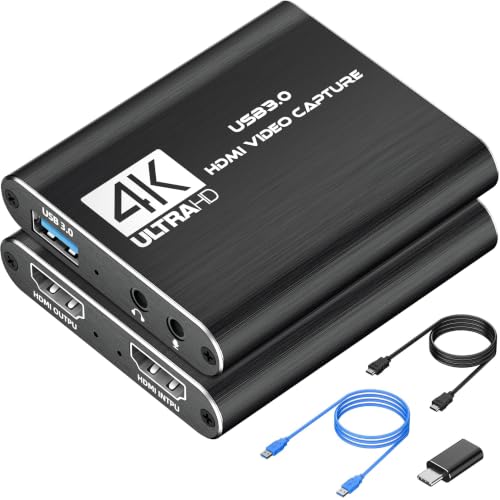
- 1080p capture with HDMI loop-out
- Plug-and-play, no drivers needed
- Mic-in for external commentary
Best For: Creators who want simple, affordable streaming and recording
Portable Streaming Choice
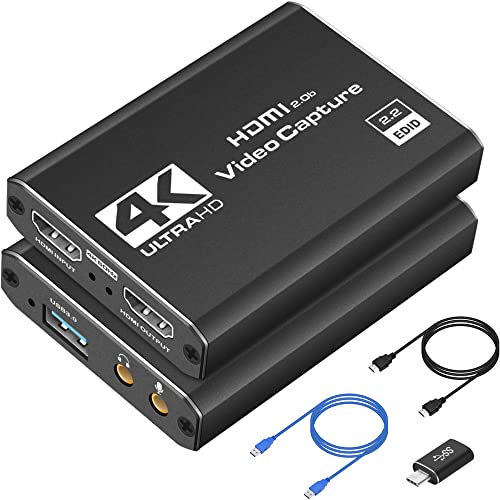
- 1080p 60FPS capture with loop-out
- Plug-and-play with no drivers
- Compact and easy to carry
Best For: Traveling creators and beginners
Low-Latency Performance Pick

- 4K input with 1080p/2K capture
- Ultra-low latency with real-time preview
- Mic-in for live commentary
Best For: Streamers who value stable, low-lag performance
Premium 4K Capture – Elgato 4K S for Switch 2 and More
If you want a capture card for Nintendo Switch 2 that is built for higher-end streaming setups, the Elgato 4K S focuses on strong image quality, low latency, and broad console support. It can capture in 4K60, supports HDR10 tone mapping on Windows, and offers high-frame-rate passthrough for smoother play on a compatible monitor or TV.
Best For: Streamers and creators who want 4K60 capture, HDR support, and near-zero-latency passthrough.
Pros:
- Captures up to 4K60 with HDR10 support on Windows
- Passthrough supports 1440p120 or 1080p240 for smooth gameplay
- Near-zero latency is ideal for live play while recording
- Includes analog audio input for chat or commentary
Cons:
- Video capture resolution is listed as 1080p in the product details
- HDR10 tone mapping is noted for Windows, so feature support is platform-specific
- Best suited to users with a more capable PC and USB-C setup
Overall, this is the most premium option in the group if you care about passthrough performance and strong capture quality. It is a solid fit for a Switch 2 streamer who wants flexibility across consoles and a cleaner audio setup.
Budget-Friendly 1080p – Acer USB 3.0 Capture Card for Switch 2
This capture card for Nintendo Switch 2 is aimed at simple, plug-and-play streaming and recording. It supports up to 4K30 input while capturing at 1080p60, and its USB-A/USB-C design makes it easy to connect to a wide range of laptops, desktops, and mobile devices without extra drivers.
Best For: Beginners and casual streamers who want an easy 1080p60 capture card with broad compatibility.
Pros:
- Captures smooth 1080p60 video with 4K30 input support
- Plug-and-play design needs no driver software
- Includes both USB-A and Type-C connectivity
- Works with OBS, QuickTime, Twitch, and YouTube
Cons:
- Recording maxes out at 1080p60 rather than 4K capture
- One-way HDMI-to-USB transmission only
- Needs a USB 3.0 port for best performance
For most Switch 2 owners, this is the simplest way to start capturing gameplay without overcomplicating the setup. It is a practical choice if you want reliable 1080p streaming and strong cross-device support.
Portable Dock Combo – JSAUX Capture Card for Switch 2
If you need a capture card for Nintendo Switch 2 that can travel well and double as a dock, the JSAUX unit is built around portability and flexible connections. It supports 4K60 HDMI passthrough, records at 1080p60, and includes USB-C input plus a 100W PD charging port for handheld play sessions.
Best For: Switch 2 players who want a portable dock-style capture solution with charging and passthrough.
Pros:
- Functions as both a capture card and portable dock
- Supports up to 4K60 HDMI passthrough
- Records and streams at 1080p60
- Includes 100W USB-C PD charging while you play
Cons:
- For Switch 2, it must connect through the bottom USB-C port
- The USB-C port is the video input source, which may be less familiar than HDMI-only setups
- USB A output tops out at 4K30 for recording and streaming
This is a smart pick if you value convenience on the road or want one device to cover capture, passthrough, and charging. The dock-like design makes it especially appealing for handheld-focused Switch 2 setups.
Simple All-Rounder – Acer 4K Loop-Out Card for Switch 2
For buyers looking for a straightforward capture card for Nintendo Switch 2, this Acer model keeps the setup simple while still covering the essentials. It accepts 4K input, outputs smooth 1080p60 video, supports low-latency capture, and adds a mic-in jack for commentary or voice chat.
Best For: Streamers who want a lightweight, plug-and-play capture card with mic input and broad device support.
Pros:
- 4K input with 1080p60 output for smooth capture
- Mic-in jack supports direct commentary without adapters
- Plug-and-play operation with no extra drivers
- Compatible with Switch 2, PS5/PS4, Xbox, PC, Mac, and Android
Cons:
- Recording resolution is limited to 1080p rather than 4K
- Product details list support on Linux and Windows only
- Does not include the higher-frame-rate passthrough of more premium cards
This is a good middle-ground option if you want an easy capture workflow and a built-in mic input. It should suit most Switch 2 streaming needs without adding setup complexity.
Yellow Plug & Play Option – 1080P 60FPS Capture with 4K30 Passthrough
If you want a capture card for Nintendo Switch 2 that keeps setup simple, this model is built around straightforward plug-and-play streaming. It records at 1080P 60FPS while passing a 4K@30Hz signal to your display, so you can play comfortably and still feed OBS, Streamlabs, or other streaming apps without a complicated install.
Best For: Streamers and console players who want easy 1080p60 capture with broad device support.
Pros:
- Captures up to 1080P at 60FPS with 4K@30Hz passthrough
- Plug and play with OBS, Streamlabs, YouTube Live, Twitch, and TikTok Live
- Works with Switch 2, PS5, Xbox, Steam Deck, and HDMI cameras
- Includes a USB-A to USB-C adapter for modern laptops and tablets
Cons:
- Capture is limited to 1080P and 720P, not higher-resolution recording
- Passthrough is 4K at 30Hz rather than 60Hz
- Best performance depends on using a USB 3.0 port
Overall, this is a practical choice if you value stable capture, easy setup, and wide compatibility over advanced resolution features. The aluminum housing and dedicated mic-in port add extra usefulness for longer streaming sessions.
Audio-Flexible Streaming Pick – 1080P60 / 2K30 Capture with 4K60 Pass-Through
This capture card for Nintendo Switch 2 is aimed at users who want flexible audio connections along with dependable USB 3.0 capture. It supports up to 1080P 60FPS or 2K30 recording, with HDMI pass-through up to 4K@60Hz in YUV420 mode, making it a solid fit for gameplay, live streaming, and recording.
Best For: Streamers who want multiple audio input and monitoring options with low-latency pass-through.
Pros:
- Supports up to 1080P 60FPS capture and 2K30 recording
- HDMI pass-through up to 4K@60Hz in YUV420 mode
- Includes mic input, audio input, headphone monitoring, and speaker output
- Works with OBS, Streamlabs, VLC, XSplit, Zoom, and Teams
Cons:
- Microphone input supports standard 3.5mm TRS mics only
- Pass-through and capture resolution can vary by mode and software bandwidth
- Requires capture software to display and record video
For creators who care about commentary and monitoring, this model stands out more than basic plug-and-play cards. Its broad compatibility and low-latency HDMI loop-out make it useful for both streaming and general recording workflows.
Compact Dual-Interface Choice – 2K30 Capture with 4K30 Loop-Out
If you want a capture card for Nintendo Switch 2 with a compact, durable design, this UGREEN model covers the essentials well. It captures up to 2K at 30FPS and supports 1080P 60FPS, while the 4K@30Hz input and loop-out help you monitor gameplay locally with low latency.
Best For: Users who want a small, durable capture card with USB-A and USB-C connectivity.
Pros:
- Captures up to 2K 30FPS and 1080P 60FPS
- Supports 4K@30Hz input and 4K@30Hz loop-out for local monitoring
- USB-A and USB-C dual interface adds flexibility for different devices
- Aluminum casing helps with durability and heat dissipation
Cons:
- 4K capture is not supported
- PS4 and PS5 require HDCP to be turned off
- Not compatible with Fire TV Stick
This is a sensible middle-ground option if you want a dependable capture card without paying for features you may not use. It should suit streamers who prioritize low-latency monitoring, broad OS support, and simple plug-and-play setup.
Best with Extra Features – 4K HDMI Capture Card with Mic-In
If you want a capture card for Nintendo Switch 2-style gameplay recording and streaming without a complicated setup, this USB 3.0 option keeps things simple. It captures up to 1080p, supports HDMI loop-out for zero-delay play, and works with popular streaming tools on Windows and Mac.
Best For: Streamers and players who want an easy plug-and-play capture card with mic commentary support.
Pros:
- Plug-and-play setup with no driver or external power supply required
- 1080p capture with HDMI loop-out for lag-free passthrough
- Mic-in support for adding external commentary
- Compatible with Windows, Mac, OBS, Twitch, YouTube, and more
Cons:
- Capture resolution tops out at 1080p
- Mic input only accepts 3.5mm TRS standard microphone headset
- Designed around USB 3.0, so a compatible port is required
This is a practical pick if you want straightforward capture and live streaming features without paying for extras you may not need. The lifetime warranty is also a helpful bonus for a budget-minded setup.
Portable Streaming Choice – 4K HDMI Capture Card USB 3.0
For a capture card for Nintendo Switch 2 streaming setups that needs fast setup and easy portability, this USB 3.0 model is built for plug-and-play use. It supports 1080p 60FPS capture, HDMI loop-out, and broad compatibility with OBS, Streamlabs, XSplit, Windows, and macOS.
Best For: Beginners and traveling creators who want a lightweight capture card for quick streaming or recording.
Pros:
- Plug-and-play operation with no drivers needed
- 1080p 60FPS capture for smooth gameplay footage
- HDMI loop-out helps you play with passthrough
- Compact, lightweight design for easy transport
Cons:
- Capture is listed at 1080p rather than true 4K recording
- Requires a USB 3.0 port
- No separate mic-in feature is listed beyond built-in microphone support
This is a strong fit if you want a simple, portable way to stream or record from a console without a drawn-out setup process. Its real-time preview and broad software support make it easy to drop into an existing creator workflow.
Low-Latency Performance Pick – XIIXMASK USB 3.0 Capture Card
If you need a capture card for Nintendo Switch 2 gameplay with strong stability and real-time monitoring, this USB 3.0 model is designed around low-latency capture. It supports 1080p 60FPS output, 2K 30FPS capture, 4K 60Hz input and loop-out, plus mic-in support for voice commentary.
Best For: Streamers who want stable, low-latency capture with extra resolution flexibility.
Pros:
- 4K 60Hz HDMI input and loop-out with 1080p 60FPS/2K 30FPS capture
- Ultra-low latency design with real-time preview
- Mic-in support for commentary during live streams
- Wide software and OS compatibility, including OBS, VLC, and Zoom
Cons:
- Capture output is still limited to 1080p 60FPS or 2K 30FPS
- Mic-in does not record party chats
- Windows is listed as the minimum system requirement in the details
For users who care more about dependable streaming behavior than flashy extras, this card offers a nice mix of stability and flexibility. The aluminum alloy body and cable layout are also positioned to help with heat dissipation and clearer picture quality.
How We Picked the Best Capture Card for Nintendo Switch 2
For this roundup, we prioritized capture cards that make sense for Nintendo Switch 2 players first: stable 1080p60 recording, low-latency passthrough, broad software support, and straightforward USB connectivity. We also weighed whether each option is practical for beginners, streamers, and players who may want to upgrade their setup later.
Quick Comparison
Most buyers will fall into one of three groups. Entry-level users usually want plug-and-play 1080p60 capture. Streamers and multitaskers often prefer stronger passthrough and better audio handling. Power users may look for a Capture Card for Nintendo Switch 2 with higher-end passthrough such as 4K60 support, HDR handling, or extra flexibility for other consoles and PCs.
Key Buying Factors for Capture Card for Nintendo Switch 2
Capture Resolution and Frame Rate
For gameplay recording and live streaming, 1080p60 is still the sweet spot for most people. It is sharp, widely supported, and easier on your PC than 4K capture. If you mainly want to archive clips or stream on YouTube or Twitch, this is usually enough.
Passthrough Quality
Passthrough matters if you play on a TV or monitor while capturing. Look for low-latency passthrough so the game feels responsive. 4K passthrough is useful even if the capture itself is 1080p, since it gives you room to use a sharper display and future-proof your setup.
Compatibility and Software Support
A good card should work cleanly with OBS, popular streaming tools, and common operating systems. If you want fewer setup headaches, choose a capture card with simple USB 3.0 or USB-C connectivity and broad device compatibility.
Audio Inputs and Stability
Some models include mic input or audio pass-through, which can be helpful for commentary. More importantly, look for stable drivers and reliable performance over long sessions. A cheap card that drops frames is not a bargain.
Who Should Buy Which Capture Card for Nintendo Switch 2?
If you want the easiest route, choose a basic 1080p60 USB capture card with plug-and-play setup. If you stream regularly, spend more on a model with stronger passthrough, better latency, and reliable software support. If you plan to use the same device across multiple systems, a higher-end option with 4K passthrough and broader compatibility is the smarter long-term buy.
In short, the best Capture Card for Nintendo Switch 2 is the one that matches your setup today while leaving a little headroom for tomorrow.