
1440p ultrawide gaming asks more from a graphics card than standard 1440p, especially if you want high settings, strong frame rates, and headroom for newer games. The best picks combine enough VRAM, modern display outputs, and cooling that can handle long sessions.
In this roundup, we focused on cards that make sense for a wide range of budgets and performance targets, from efficient value buys to higher-end options built for smoother, more consistent play.
Best 10 Graphics Card for 1440p Ultrawide Gaming Picks for 2026
Top Pick for Balanced 1440p

- RTX 5070 with DLSS 4 support
- 12GB GDDR7 and PCIe 5.0
- SFF-ready 2.5-slot cooling design
Best For: Balanced 1440p ultrawide gaming in a compact build
Best Value AMD 16GB

- 16GB GDDR6 for higher-res gaming
- WINDFORCE cooling with Hawk Fan
- PCIe 5.0 and 3-year warranty
Best For: Value-minded 1440p ultrawide gaming with extra VRAM
Compact NVIDIA Pick

- RTX 5060 with DLSS 4 and Reflex
- SFF-ready 2-slot compact design
- Triple-fan cooler with PCIe 5.0
Best For: Budget NVIDIA gaming and smaller builds
AMD High-Clock Option
- 16GB GDDR6 memory
- Boost clock up to 3320 MHz
- Compact dual-fan cooling
Best For: High-clock AMD gaming with a simpler cooler
1440p Value Pick
ASRock Intel Arc B580 Challenger 12GB OC

- 12GB GDDR6 memory for modern game textures
- Dual-fan cooler with 0dB Silent mode
- DisplayPort 2.1 and HDMI 2.1a connectivity
Best For: Budget-conscious 1440p ultrawide gamers who want modern outputs and quiet cooling.
High-Memory AMD Choice
XFX Swift Radeon RX 9060 XT 16GB

- 16GB GDDR6 offers the most VRAM here
- Triple-fan cooling for gaming loads
- Boost clock up to 3320 MHz
Best For: AMD buyers who want extra VRAM for 1440p ultrawide gaming.
Premium NVIDIA Performance Pick

- Blackwell architecture with DLSS 4 support
- Three-fan cooling in a 3.125-slot design
- Military-grade components and PCB coating
Best For: Enthusiasts wanting a durable NVIDIA card for demanding ultrawide gaming.
Budget 1440p Powerhouse
ASRock RX 9060 XT Challenger 16GB OC

- 16GB GDDR6 memory
- RDNA 4 with 3290 MHz boost
- DP 2.1a and HDMI 2.1b outputs
Best For: Gamers wanting a compact 16GB AMD card for 1440p ultrawide play
DLSS-Focused 1440p Pick

- DLSS 4 support
- 16GB GDDR7 memory
- 3x DP 2.1b plus HDMI 2.1b
Best For: Gamers who want NVIDIA features and a balanced 16GB 1440p card
Quiet All-Rounder
- 16GB GDDR6 memory
- Compact 2.5-slot design
- 0dB tech and Dual BIOS
Best For: Gamers wanting a quiet, compact AMD option for 1440p ultrawide
Top Pick for Balanced 1440p – ASUS RTX 5070 Prime
If you’re looking for a graphics card for 1440p ultrawide gaming that can handle modern settings without taking up much room, the ASUS Prime RTX 5070 is the most balanced option here. Its Blackwell architecture, DLSS 4 support, and 12GB of GDDR7 give it the right mix of speed and efficiency for a strong all-around build, while the SFF-ready 2.5-slot design keeps it practical for tighter cases.
Best For: Gamers who want a compact, well-cooled NVIDIA card for smooth 1440p ultrawide play.
Pros:
- RTX 5070 performance with DLSS 4 support
- 12GB GDDR7 and PCIe 5.0 interface
- 3-fan cooling with Axial-tech fans and phase-change thermal pad
- SFF-ready 2.5-slot design improves case compatibility
Cons:
- 12GB memory is less than the 16GB cards in this group
- May be more card than needed for lighter 1440p gaming
This is the best rounded pick if you want a modern NVIDIA card with stronger headroom than entry-level options and a size that still works in many builds. It should be especially appealing if you value DLSS 4 and a cleaner fit in smaller systems.
Best Value AMD 16GB – GIGABYTE RX 9060 XT Gaming OC
The GIGABYTE Radeon RX 9060 XT Gaming OC 16G is a strong graphics card for 1440p ultrawide gaming if you want 16GB of VRAM and a current-gen PCIe 5.0 design. Its WINDFORCE cooling, Hawk Fan, and server-grade thermal conductive gel suggest a card built to stay composed under gaming load, while the 16GB GDDR6 buffer adds useful breathing room.
Best For: Players who want a 16GB AMD card with solid cooling and good value-oriented specs.
Pros:
- 16GB GDDR6 is helpful for higher-resolution gaming
- WINDFORCE cooling with Hawk Fan
- PCIe 5.0 and 2700 MHz GPU clock speed
- 3-year manufacturer warranty
Cons:
- AMD model may not appeal if you specifically want NVIDIA features
- Product notes do not list detailed ultrawide performance expectations
This is a sensible choice when you want plenty of memory and a straightforward cooling setup without stepping into a higher-priced tier. For a 1440p ultrawide setup, the 16GB frame buffer is the main draw.
Compact NVIDIA Pick – PNY RTX 5060 Epic-X ARGB OC
The PNY GeForce RTX 5060 Epic-X ARGB OC is the smaller, lower-cost option in this roundup for a graphics card for 1440p ultrawide gaming, but its 8GB memory makes it better suited to lighter settings or games that are less demanding. It still brings NVIDIA Blackwell architecture, DLSS 4, Reflex, and a triple-fan design, so it has the right feature set for responsive play and modern NVIDIA support.
Best For: Budget-focused buyers who want NVIDIA features in a compact 2-slot card.
Pros:
- RTX 5060 with DLSS 4 and Reflex support
- 2-slot, SFF-ready design for easier fitting
- Triple-fan cooler in a compact form factor
- PCIe 5.0 and GDDR7 memory
Cons:
- 8GB VRAM is the smallest buffer in this group
- Less ideal for demanding 1440p ultrawide settings than 16GB options
If you want NVIDIA features and a tidy card size, this is the most approachable pick here. Just keep the 8GB limit in mind if your ultrawide gaming library includes heavier modern titles.
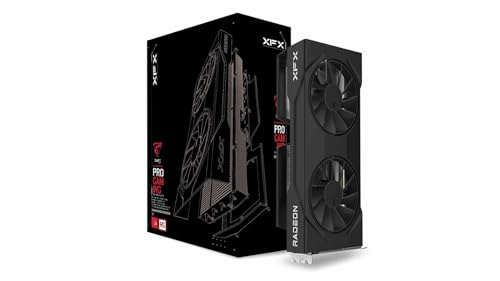
AMD High-Clock Option – XFX RX 9060 XT Swift OC
The XFX Swift RX 9060 XT OC Gaming Edition is another graphics card for 1440p ultrawide gaming that leans on a 16GB GDDR6 memory configuration and a very high boost clock rating. It uses a dual-fan cooling solution and is listed with a boost clock up to 3320 MHz, which makes it the most aggressively clocked AMD option in this group on paper.
Best For: Gamers who want a high-boost AMD card with 16GB of VRAM in a simpler dual-fan design.
Pros:
- 16GB GDDR6 memory helps with higher-resolution gaming
- Boost clock up to 3320 MHz
- Dual-fan cooling keeps the design compact
- PCIe x16 interface and 3-year manufacturer warranty
Cons:
- Display maximum resolution is listed as 3840×2160 rather than ultrawide-specific support
- Only two fans, so cooling overhead may be lower than triple-fan cards
This is the pick for buyers who want a straightforward AMD card with a high advertised boost clock and 16GB of memory. It looks especially appealing if you prefer a more compact cooler and don’t need the extra bulk of larger triple-fan models.
1440p Value Pick – ASRock Intel Arc B580 Challenger 12GB OC
If you want a graphics card for 1440p ultrawide gaming without jumping to a much pricier tier, the ASRock Intel Arc B580 Challenger is built around Intel’s Xe2-HPG architecture and 12GB of GDDR6 memory. Its 2740 MHz GPU clock, XeSS 2 support, and DisplayPort 2.1 outputs make it a practical fit for modern high-resolution play, especially if you also care about quiet operation and multi-monitor flexibility.
Best For: Gamers looking for a 1440p-capable card with 12GB VRAM, modern display outputs, and quieter dual-fan cooling.
Pros:
- 12GB GDDR6 on a 192-bit bus gives it useful headroom for modern game textures.
- Dual-fan cooling includes 0dB Silent mode for quiet operation under low load.
- DisplayPort 2.1 and HDMI 2.1a support up to four displays.
- XeSS 2 and DirectX 12 Ultimate support help with current-game compatibility.
Cons:
- Requires a recommended 650W power supply.
- At 249 mm long and 2 slots wide, fit should be checked before buying.
- PCIe 4.0 x8 may matter to buyers prioritizing maximum platform compatibility.
This is a balanced option if your priority is strong 1440p ultrawide suitability, generous memory for the class, and modern connectivity rather than chasing the most premium build size or power envelope.
High-Memory AMD Choice – XFX Swift Radeon RX 9060 XT 16GB
The XFX Swift Radeon RX 9060 XT is a straightforward graphics card for 1440p ultrawide gaming when you want extra memory headroom. With 16GB of GDDR6, a boost clock up to 3320 MHz, and a triple-fan cooling solution, it’s geared toward smooth desktop gaming at higher settings while keeping display support simple through HDMI and DisplayPort.
Best For: Players who want 16GB VRAM and a triple-fan cooler for a roomy 1440p ultrawide gaming setup.
Pros:
- 16GB GDDR6 is the largest memory pool in this group.
- Boost clock up to 3320 MHz gives it strong advertised speed.
- Triple-fan cooling is built for sustained gaming loads.
- Supports desktop PCs with HDMI and DisplayPort output.
Cons:
- Listed display maximum is 4K UHD, so buyers focused on higher-end extras may want more detail on feature support.
- Bulkier triple-fan design may not suit compact cases.
- Less explicitly detailed connectivity than the other cards here.
If your main concern is memory capacity for modern games at 1440p ultrawide, this card stands out on spec sheet alone. It’s a sensible pick for users who prefer AMD and want a cooler with more thermal overhead.
Premium NVIDIA Performance Pick – ASUS TUF Gaming RTX 5070 OC
The ASUS TUF Gaming GeForce RTX 5070 OC is the most premium-feeling graphics card for 1440p ultrawide gaming in this group, with NVIDIA’s Blackwell architecture, DLSS 4 support, and fast GDDR7 memory. Its 3.125-slot cooler, three Axial-tech fans, and military-grade build features make it a strong choice if you want high-end performance plus durability-focused construction.
Best For: Enthusiasts who want a durable NVIDIA card with modern features and a larger cooling design for demanding ultrawide play.
Pros:
- DLSS 4 and Blackwell architecture support modern NVIDIA gaming features.
- 12GB GDDR7 and PCIe 5.0 deliver a current-gen spec set.
- Three Axial-tech fans and a large fin array are designed for strong airflow.
- Military-grade components and protective PCB coating add durability-focused touches.
Cons:
- 3.125-slot design is large and may not fit every build.
- At 13 inches long, case clearance should be checked carefully.
- 12GB VRAM is solid, but lower than the 16GB option in this roundup.
For buyers who want a higher-end NVIDIA option for 1440p ultrawide gaming, this card offers the most complete blend of modern features, cooling hardware, and rugged build details.
Budget 1440p Powerhouse – ASRock RX 9060 XT Challenger 16GB OC
If you want a graphics card for 1440p ultrawide gaming with a lot of headroom for modern textures, this ASRock Radeon RX 9060 XT Challenger 16GB OC is built around a next-gen RDNA 4 GPU, 16GB of GDDR6, and a boost clock up to 3290 MHz. It also brings DisplayPort 2.1a and HDMI 2.1b connectivity, so it’s ready for a broad range of high-resolution displays.
Best For: Gamers who want a compact, 16GB card with strong 1440p-oriented specs and future-ready display outputs.
Pros:
- 16GB GDDR6 on a 128-bit bus gives it the memory capacity modern games can use at high settings.
- Boost clock up to 3290 MHz and RDNA 4 architecture are aimed at smooth 1440p gaming.
- Dual-fan cooler with 0dB Silent Cooling helps keep everyday operation quiet.
- Two DisplayPort 2.1a and one HDMI 2.1b output support multi-display setups.
Cons:
- Requires a 550W recommended PSU, so it is not the best fit for very modest builds.
- 2-slot, 249 mm length means you should check case clearance first.
- Uses a single 8-pin power connector, which may matter for older PSU layouts.
For builders focused on 1440p ultrawide gaming, this card stands out for its generous 16GB memory pool and modern output support. Just make sure your case and power supply can accommodate it before buying.
DLSS-Focused 1440p Pick – ASUS Dual RTX 5060 Ti 16GB OC
This ASUS Dual NVIDIA GeForce RTX 5060 Ti 16GB GDDR7 OC Edition is a practical graphics card for 1440p ultrawide gaming if you want NVIDIA features like DLSS 4 and a modern Blackwell-based design. With 16GB of GDDR7 memory, PCIe 5.0 support, and three DisplayPort 2.1b outputs, it is positioned for high-resolution gaming builds that also need strong display flexibility.
Best For: Players who want NVIDIA’s DLSS 4 and a balanced 16GB card for high-resolution gaming.
Pros:
- DLSS 4 support is the standout feature for boosting performance in supported games.
- 16GB GDDR7 memory offers modern bandwidth for demanding textures and game settings.
- Three DisplayPort 2.1b ports plus HDMI 2.1b make it easy to connect high-end monitors.
- Axial-tech cooling and 0dB Technology support quieter operation at lighter loads.
Cons:
- 2.5-slot design may be a tighter fit in smaller cases.
- More of a feature-rich balanced card than a no-compromise flagship option.
- Best value depends on how much you will actually use DLSS 4.
For a graphics card for 1440p ultrawide gaming, this ASUS model makes sense if you value NVIDIA’s software advantages and want 16GB of next-gen memory. It is especially appealing for buyers who prioritize compatibility with current display standards and quieter cooling.
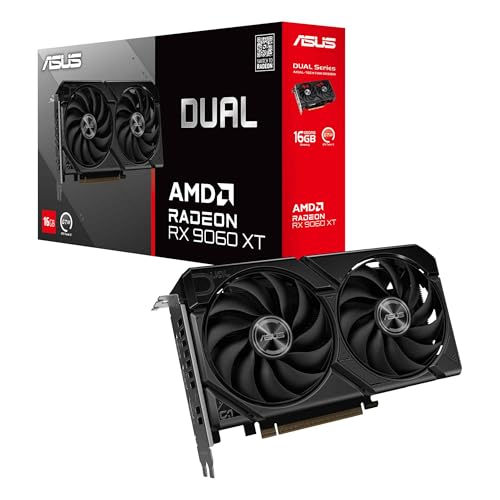
Quiet All-Rounder – ASUS Dual RX 9060 XT 16GB
The ASUS Dual Radeon RX 9060 XT 16GB is a straightforward choice if you need a graphics card for 1440p ultrawide gaming and want a compact, quiet design. It uses AMD’s RX 9060 XT GPU with 16GB of GDDR6 memory, a boost clock of 3250 MHz, dual Axial-tech fans, and 0dB technology for silent light-load operation.
Best For: Builders who want a compact AMD card with quiet cooling and solid 16GB capacity.
Pros:
- 16GB GDDR6 memory is well suited to modern high-resolution game assets.
- 2.5-slot, 8-inch design improves compatibility in many desktop builds.
- 0dB technology can keep the card silent during light gaming or idle use.
- Dual BIOS switch lets you choose between Quiet and Performance profiles.
Cons:
- Only two DisplayPort 2.1a outputs are listed, which is less flexible than triple-port designs.
- It is a 2-fan card, so heavy sustained loads may rely more on case airflow.
- No bundled extras or premium cooling features are highlighted beyond the dual-fan setup.
This is a sensible pick if you want AMD’s 16GB memory capacity in a relatively compact, quieter package. It looks especially appealing for buyers who care more about fit and simple operation than flashy extras.
How We Picked the Best Graphics Card for 1440p Ultrawide Gaming
For a Graphics Card for 1440p Ultrawide Gaming, performance alone is not enough. We prioritized models with enough memory for modern textures, good thermals, sensible power draw, and current-gen connectivity such as HDMI 2.1 and DisplayPort 2.1 where available. We also weighed price-to-performance, since ultrawide owners often want high settings without overspending on unnecessary tier jumps.
Quick Comparison
At a high level, the 10 cards in this roundup split into three groups: value-oriented 16GB options for high-quality 1440p ultrawide play, midrange NVIDIA cards for stronger ray tracing and upscaling support, and higher-tier RTX 5070-class models for users who want more headroom for demanding games or higher refresh rates. Intel’s Arc option is the most budget-conscious wildcard, best for buyers who value a lower entry price and solid feature support.
Key Buying Factors for a Graphics Card for 1440p Ultrawide Gaming
VRAM Capacity
For ultrawide resolutions, 12GB is the practical floor, while 16GB is the safer long-term choice. Extra VRAM helps with larger textures, open-world games, and heavier mods, especially at higher quality settings.
Raster Performance Vs. Ray Tracing
If you mainly play competitive or traditional rasterized games, AMD and Intel options can deliver strong value. If ray tracing matters, NVIDIA cards usually offer the advantage thanks to stronger RT performance and broader support for upscaling features.
Cooling, Size, and Power
Many modern cards are physically large, so case clearance matters. Check slot thickness, cooler length, and power supply requirements before buying. Smaller SFF-ready cards can fit more compact builds, while triple-fan models often run cooler and quieter.
Display Output and Future-Readiness
Look for DisplayPort 2.1 or HDMI 2.1 if you want better flexibility for ultrawide monitors and future display upgrades. These ports matter less for raw FPS, but they help protect your setup as you move to newer panels.
Who Should Buy Which Graphics Card for 1440p Ultrawide Gaming?
Choose a 16GB Radeon RX 9060 XT model if you want the best balance of value and ultrawide-friendly memory. Pick an RTX 5060 Ti 16GB if you care more about NVIDIA features, including stronger ray tracing and DLSS support. Step up to an RTX 5070 if you want extra performance headroom for high-refresh ultrawide gaming. Buyers on a tighter budget can consider the Intel Arc B580, especially if their games and workflow fit its strengths.
For most people shopping a Graphics Card for 1440p Ultrawide Gaming, the sweet spot is simple: get at least 12GB of VRAM, aim for 16GB if your budget allows, and choose the fastest card you can afford without compromising cooling or power compatibility.