
Studio monitors with digital input are a smart pick if you want cleaner signal paths, simpler desk setups, and fewer adapters between your gear and your speakers.
In this roundup, we focus on options that balance accurate sound, modern connectivity, and everyday usability for music production, editing, and casual critical listening.
Best 10 Studio Monitors with Digital Input Picks for 2026
Compact Digital-Friendly Pick
Rockville ASM4 4" Studio Monitors

- Optical input for digital sources
- Bluetooth 5.0 plus RCA, AUX, and TS inputs
- DSP tuned 4-inch compact monitor pair
Best For: Small desks, TV audio, and beginner studio setups
Reference-Style Budget Choice
Edifier MR4 4" Powered Monitors
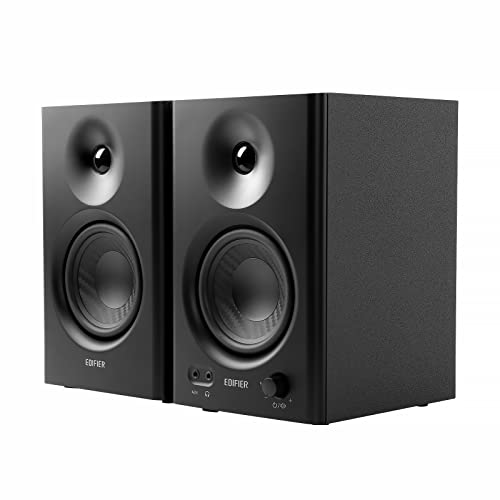
- Almost-flat tuning for creator use
- TRS, RCA, AUX, and headphone output
- Dual monitor/music modes with tone controls
Best For: Budget-conscious users who value wired reference sound
Ultra-Compact Pro Monitor Set

- Compact 3.5-inch powered monitor pair
- XLR/TRS combo, RCA, and stereo mini inputs
- Room control and high trim for setup correction
Best For: Small studios that need compact pro-style analog monitors
Most Versatile Digital Input Option
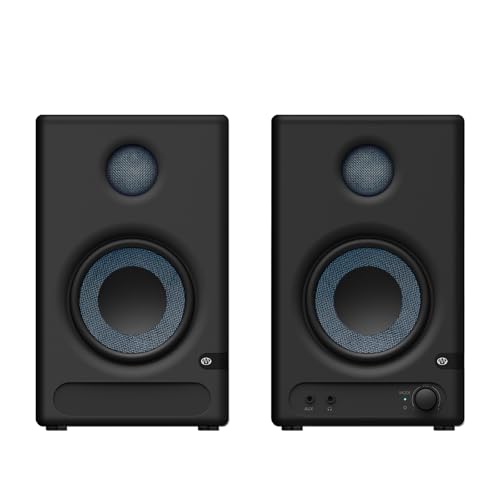
- HDMI ARC and USB-C digital inputs
- Bluetooth plus TRS, RCA, and AUX support
- Music/Monitor modes with treble and bass control
Best For: Modern desktop setups needing lots of digital connection choices
Premium Nearfield Pick
KRK ROKIT 5 Generation Five Pair

- Custom-designed Class D amplifiers
- DSP room tuning and isolation pads
- XLR and 1/4-inch TRS analog input
Best For: Producers who want compact nearfield monitors with room tuning
Most Versatile Desktop Choice

- 3-way active design with room compensation
- XLR, TRS, RCA, AUX, and Bluetooth 6.0
- 110W RMS output in compact MDF cabinets
Best For: Home studio users who want broad connectivity and easy tuning
Trusted Studio Standard

- Updated HF and LF transducers
- Boundary EQ for wall or desk placement
- Wide sweet spot for off-axis listening
Best For: Mixers who want a proven nearfield monitor for desktop use
Ultra-Nearfield Precision
Kali Audio LP-UNFW 4" White Pair

- USB-C, TRS, RCA, and Bluetooth 5.1 inputs
- 3D imaging waveguide for stereo clarity
- Boundary EQ helps with desk or wall placement
Best For: compact studios needing flexible digital input and accurate nearfield monitoring
Budget Dual-Mode Desk Monitor

- USB input with built-in 24-bit DAC
- RCA, AUX, TRS, and Bluetooth 5.3 connectivity
- Front headphone output for easy monitoring
Best For: budget desktop users who want digital USB audio and multiple inputs
Hi-Res Desktop Monitor

- Hi-Res Audio with 52Hz to 40kHz response
- Balanced TRS, RCA, AUX, and Bluetooth inputs
- App-based EQ and Monitor/Music/Custom modes
Best For: home studios and desktop editing setups that need flexible input options
Compact Digital-Friendly Pick – Rockville ASM4 4" Studio Monitors
If you want studio monitors with digital input for a small desk setup, the Rockville ASM4 is a flexible entry-level option. The optical input makes it easy to connect TVs and digital sources, while the 4-inch two-way design keeps the footprint manageable for home studios, editing bays, and everyday listening.
Best For: Desktop users, beginner producers, and anyone who wants optical input plus Bluetooth in a compact pair.
Pros:
- Optical input adds straightforward digital connectivity for TVs and other source devices.
- Bluetooth 5.0, RCA, 3.5mm, and 1/4-inch TS inputs make it easy to switch between gear.
- DSP tuning aims for a balanced response, with a rear port for fuller low end.
- Compact MDF cabinet with front volume control fits well on crowded desks.
Cons:
- 4-inch drivers are best for near-field use rather than larger-room monitoring.
- Digital connection options are centered on optical, not USB or HDMI.
Overall, the ASM4 is a practical pick if digital input support matters more than maximum output or deep bass. It offers a strong mix of convenience and monitoring features for small spaces.
Reference-Style Budget Choice – Edifier MR4 4" Powered Monitors
The Edifier MR4 is a straightforward choice if you are comparing studio monitors with digital input and want a more reference-style tuning approach. It does not include a digital optical or USB input, but its balanced TRS, RCA, and AUX connections make it a solid wired monitor for music production and everyday desktop use.
Best For: Creators who want a budget-friendly nearfield monitor with a tuned, almost flat response.
Pros:
- Professionally tuned, almost flat curve is aimed at artists and music creators.
- 1-inch silk dome tweeter and 4-inch woofer deliver clear, smooth sound.
- Balanced TRS input is useful for mixers and other pro audio devices.
- Front headphone output and dual-mode design add useful workflow flexibility.
Cons:
- No built-in digital input such as optical, HDMI, or USB-C.
- 42-watt maximum output is modest compared with larger powered monitors.
If your priority is accurate desktop monitoring over digital convenience, the MR4 stays focused on the essentials. It is a sensible fit for users who want simple wired connections and controllable sound shaping.
Ultra-Compact Pro Monitor Set – Yamaha HS3 Pair
The Yamaha HS3 is a compact monitor pair for users who want a smaller studio monitor format with reliable analog connectivity. It does not include a digital input, but it does offer XLR/TRS combo, RCA, and stereo mini inputs, making it easy to integrate into a desktop production setup.
Best For: Small studios and desktop setups that need a trusted compact monitor with pro-style analog inputs.
Pros:
- Pair of compact 3.5-inch powered monitors for tight workspaces.
- XLR/TRS combo inputs support more flexible pro audio connections.
- Room control and high trim controls help adapt the sound to your space.
- Includes speaker cable, stereo mini-to-RCA cable, and anti-slip pads.
Cons:
- No digital input option like optical, USB, or HDMI.
- 3.5-inch woofer size limits low-end output compared with larger monitors.
The HS3 is best viewed as a compact, practical monitoring tool rather than a feature-heavy multimedia speaker. If you already work from analog sources, it offers a tidy and professional desktop solution.
Most Versatile Digital Input Option – Mufoli MF01 4" Monitors
If you specifically want studio monitors with digital input, the Mufoli MF01 stands out with HDMI ARC and USB-C on top of Bluetooth and wired analog options. That makes it a strong all-around pick for a desktop setup that needs to handle music production, TV audio, gaming, and daily listening without extra adapters.
Best For: Buyers who want the widest mix of digital and analog inputs in a compact 4-inch monitor.
Pros:
- HDMI ARC and USB-C give it two useful digital connection options.
- Also supports Bluetooth, TRS, RCA, and AUX for broad compatibility.
- Switchable Music and Monitor modes help match the speaker to the task.
- Treble and bass controls plus headphone output add more setup control.
Cons:
- Single-speaker listing means you may need to confirm the full package details.
- 4-inch drivers are compact, so larger rooms may want more output.
For shoppers focused on digital connectivity, the MF01 is the most flexible option in this group. Its mix of HDMI ARC, USB-C, and traditional inputs makes it easy to build into a modern desk or entertainment setup.
Premium Nearfield Pick – KRK ROKIT 5 Generation Five Pair
If you want studio monitors with digital input-ready workflow flexibility around your desk, the KRK RP5G5 ROKIT 5 Generation Five is a strong nearfield option for music production and mixing. This powered pair focuses on cleaner imaging, lower distortion, and room-aware tuning features that help it fit into a practical home or project studio setup.
Best For: Producers and engineers who want a compact powered monitor pair with DSP room tuning and broad analog compatibility.
Pros:
- Custom-designed Class D amplifiers help maintain audio integrity while keeping operating temperatures down.
- Low-diffraction baffle design is aimed at reducing distortion and improving stereo imaging.
- DSP-driven room tuning and included isolation pads help support better placement and setup.
- XLR and 1/4-inch TRS combo analog input offers wide compatibility with audio devices.
Cons:
- It does not list a true digital input, so you will need an analog connection.
- 5-inch woofers are best for nearfield use rather than very deep low-end monitoring.
Overall, this KRK pair is built for users who care about mix clarity, setup flexibility, and reliable nearfield performance. It is a sensible choice if you value tuning tools and pro-style connectivity in a compact desktop monitor.
Most Versatile Desktop Choice – Edifier MR5 Studio Monitors
The Edifier MR5 is a flexible pick if you are comparing studio monitors with digital input support alongside modern convenience features. It combines a 3-way active design, room compensation tools, and multiple wired and wireless connection options, making it a practical match for home studios and mixed-use listening setups.
Best For: Home studio users who want compact monitors with broad connectivity and built-in room adjustment tools.
Pros:
- 3-way active crossover with woofer, mid driver, and silk dome tweeter for detailed reproduction.
- XLR, TRS, RCA, AUX, Bluetooth 6.0, and headphone output provide very broad connectivity.
- Room compensation controls and app-based EQ help tailor sound to your space.
- 110W RMS output and compact MDF cabinets suit nearfield desks and mid-sized rooms.
Cons:
- It is still a compact 5-inch-class design, so it is not meant for heavy sub-bass duties.
- Wireless features add convenience, but wired monitoring remains the better fit for critical work.
For buyers who want one speaker set that can handle studio gear, computers, and casual playback, the MR5 is the most adaptable option here. Its tuning controls and connection variety make it especially easy to integrate into a busy desk setup.
Trusted Studio Standard – JBL 305P MkII Monitor
The JBL 305P MkII is a well-known nearfield monitor for anyone shopping studio monitors with digital input expectations but willing to use a wired analog setup. Its updated transducers, boundary EQ, and wide sweet spot are designed to give you a more neutral and reliable listening experience at a desk or in a small studio.
Best For: Mixers and home studio users who want a proven nearfield monitor with broad off-axis consistency.
Pros:
- Updated HF and LF transducers are tuned for better transient response and lower harmonic distortion.
- Boundary EQ helps restore neutral low-frequency response when placed near walls or on a work surface.
- Broad sweet spot supports mix decisions even when listening off-axis.
- Compact 5-inch design fits desktop and nearfield production setups.
Cons:
- It uses wired connectivity only, so there is no digital or wireless input.
- Sold individually, so you need to buy a second speaker for a stereo pair.
If you want a straightforward studio monitor with a strong reputation for balanced nearfield performance, the 305P MkII is easy to recommend. It is especially appealing when you want a dependable monitor for desktop production and mixing.
Ultra-Nearfield Precision – Kali Audio LP-UNFW 4" White Pair
If you want studio monitors with digital input for a compact desk setup, the Kali Audio LP-UNFW is built for accurate ultra-nearfield listening. It combines USB-C, TRS, RCA, Bluetooth, and boundary EQ so you can monitor closely and still adapt the response to your room or placement.
Best For: Producers, editors, and creators who need compact monitors with flexible digital and analog connectivity.
Pros:
- USB-C support plus TRS, RCA, and Bluetooth 5.1 make it easy to connect computers and other devices.
- 3D imaging waveguide is designed for clearer stereo separation and spatial accuracy.
- Boundary EQ helps tailor performance when placed on a desk or near walls.
- 160W bi-amped power and a 4.5-inch woofer deliver full-range output in a compact cabinet.
Cons:
- Compact size means it is not aimed at larger room monitoring.
- Plastic enclosure may feel less premium than MDF or metal builds.
- Wireless convenience is available, but it still remains a powered wired speaker pair.
This is a strong choice if you need reliable close-up monitoring with a rare mix of digital and analog inputs. The feature set is especially practical for small studios where placement flexibility and clean connectivity matter.
Budget Dual-Mode Desk Monitor – Ortizan C7 Black Pair
The Ortizan C7 is a practical pick if you’re shopping for studio monitors with digital input on a tighter budget and need several connection options. It adds a built-in 24-bit DAC with USB, along with RCA, 3.5mm AUX, TRS, and Bluetooth 5.3 for simple switching between production and everyday use.
Best For: Budget-conscious creators, gamers, and casual users who want a versatile desktop speaker pair with USB audio support.
Pros:
- Built-in 24-bit DAC supports digital USB audio with reduced signal loss.
- RCA, 3.5mm AUX, TRS, and Bluetooth 5.3 offer broad device compatibility.
- Flat-response tuning is intended for accurate monitoring.
- Front headphone output makes quick monitoring changes convenient.
Cons:
- 3.5-inch woofer size limits low-end authority compared with larger monitors.
- ABS, metal, and wood construction is more utilitarian than premium.
- Best suited to near-field and smaller spaces rather than larger studios.
For desk-based setups, the C7 gives you a lot of connectivity for the money, especially if USB input matters. It is a sensible all-rounder for near-field listening, though its compact driver size keeps expectations grounded.
Hi-Res Desktop Monitor – Edifier MR3 Black Pair
The Edifier MR3 is a well-rounded option for studio monitors with digital input if you want balanced TRS connectivity alongside Bluetooth and standard analog inputs. With Hi-Res Audio certification and app-based sound control, it is aimed at accurate monitoring, editing, and everyday desktop listening.
Best For: Home studio users, editors, and guitar players who want compact monitors with flexible inputs and app tuning.
Pros:
- Hi-Res Audio certification and a 52Hz to 40kHz response support detailed listening.
- Balanced TRS, RCA, AUX, and Bluetooth inputs cover a wide range of setups.
- Monitor, Music, and Custom modes add useful flexibility.
- EDIFIER ConneX app allows EQ adjustments and personalized control.
Cons:
- 18W x 2 RMS output is modest compared with larger studio monitors.
- Plastic enclosure is less dense than MDF-based alternatives.
- Best for near-field use rather than filling bigger rooms.
The MR3 stands out for users who want a compact monitor pair with digital-friendly connectivity and useful software control. It balances accurate sound with practical features, making it easy to integrate into a home workspace.
How We Picked These Studio Monitors with Digital Input
We looked for models that combine practical digital connectivity with the core traits buyers expect from studio monitors: clear mids, controlled bass, usable nearfield imaging, and reliable amplification. We also favored speakers that are easy to integrate with computers, audio interfaces, streaming boxes, and compact home studios.
Quick Comparison
If you want the simplest setup, prioritize speakers with optical, USB-C, or HDMI ARC inputs. If you already use an interface, TRS and RCA inputs still matter because they offer flexible analog backup. For desktop production, smaller 4-inch monitors can save space, while 5-inch models usually give you more low-end extension and a fuller sense of balance.
Key Buying Factors for Studio Monitors with Digital Input
Input Types and Workflow
Digital inputs can reduce conversion steps and make connection easier, but the best choice depends on your source gear. Optical is great for TVs and some computers, USB-C suits modern laptops, and HDMI ARC is useful for mixed media setups. Many buyers should still value analog inputs for compatibility with interfaces and mixers.
Size, Bass, and Room Fit
Smaller speakers are often better on crowded desks, but they may need a subwoofer or careful placement if you want deeper bass. Larger drivers can sound more complete, though they may expose more room issues in untreated spaces. Match the cabinet size to your desk depth and listening distance.
Accuracy and Tuning Controls
For production work, look for monitors that stay even through the midrange and offer enough tuning control to compensate for placement near walls or corners. Bass and treble adjustments, room compensation, or voicing modes can help you get closer to a dependable listening reference.
Build, Power, and Everyday Convenience
Consider whether the controls are easy to reach, whether the speakers include a remote or app support, and how the power output fits your room size. More watts do not automatically mean better sound, but they can help a monitor play cleanly at moderate levels without strain.
Who Should Buy Which Studio Monitors with Digital Input?
Choose compact 4-inch models if you want a desktop-friendly setup for editing, streaming, or casual production. Go with 5-inch options if you want a more complete low end for beat-making, mixing, or general studio work. If your priority is simple all-in-one connectivity, look for Studio Monitors with Digital Input that also include strong analog backups, so your setup stays flexible as your gear changes.