
If you need dependable live video in a fixed installation, a rackmount streaming encoder can be the backbone of your workflow. These units are built for studios, houses of worship, campuses, event spaces, and production racks where stability matters more than novelty.
In this roundup, we focused on practical performance: input options, streaming protocols, video quality, network flexibility, and installation-ready features that make a real difference day to day.
Best 10 Rackmount Streaming Encoder Picks for 2026
Premium Rackmount 4K Production Hub
Epiphan Pearl-2 Rackmount Streaming Encoder

- 4K recorder, streamer, switcher, splitter, and scaler
- Two 12G-SDI plus four HDMI inputs
- NDI, SRT, HLS, RTMP, RTMPS support
Best For: Multi-source 4K productions needing recording and remote control
Affordable HDMI IPTV Streamer
J-Tech Digital HDMI IPTV Encoder

- 4K 60Hz HDMI input with 1080p 60Hz output
- H.264, H.265, and MJPEG compression
- PoE, audio embedding, and custom OSD
Best For: Churches and AV teams needing simple Ethernet-based HDMI streaming
Versatile Multi-Source Rack Encoder
Epiphan Video Pearl 2 Rackmount
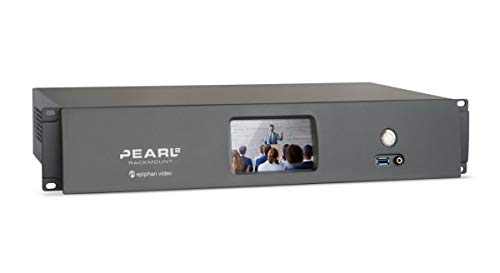
- Supports up to six sources from SD to 4K
- Streams one 4K or up to six 1080p programs
- Built-in layout editor and local streaming server
Best For: Multi-camera productions needing custom layouts and dual delivery
Broadcast-Grade SDI Streamer
Blackmagic Design Streaming Encoder 4K
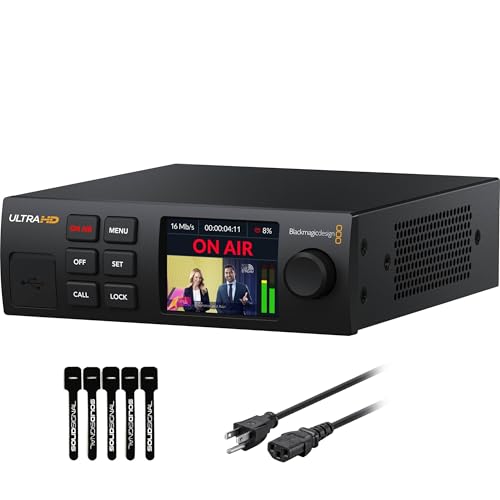
- H.264/H.265 encoding up to 2160p60
- 12G-SDI input with standards conversion
- Ethernet and mobile failover with captions
Best For: Pro AV and broadcast workflows needing SDI plus failover
Premium 4K HDMI Streaming Encoder
Magewell Ultra Encode HDMI Plus

- 4K HDMI input up to 4096×2160p30
- Streams via RTMP, SRT, NDI|HX, HLS, and more
- Records internally, to USB, or network storage
Best For: HDMI live production with 4K encoding, IP streaming, and recording
Multi-Protocol SDI IP Encoder
URayCoder HEVC H.265 SDI Encoder

- SDI input with up to 4 simultaneous streams
- Supports HTTP, RTSP, RTMP(S), SRT, HLS, UDP, and more
- Includes text, logo, time, and video adjustment tools
Best For: SDI broadcast and IPTV workflows with multiple protocol outputs
Compact HDMI Live Streaming Encoder
UNISHEEN H.265/H.264 1080p60 Encoder
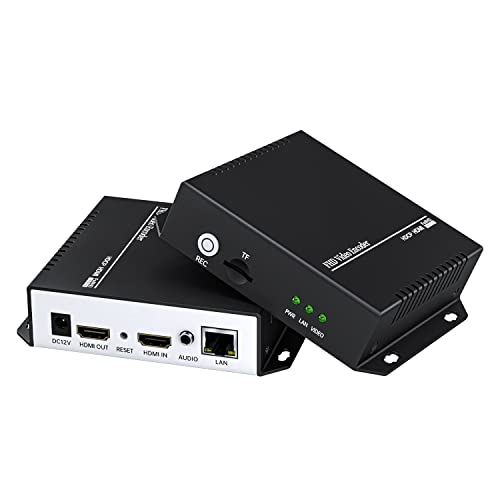
- HDMI input with up to 1080p60 output
- Supports H.264/H.265 plus one-key recording
- Includes SRT, RTSP, RTMPS, UDP, and NVR support
Best For: Compact HDMI streaming and recording at 1080p60
4K Multi-Protocol Pick
HEVC H265/H264 HDMI to Ethernet Encoder
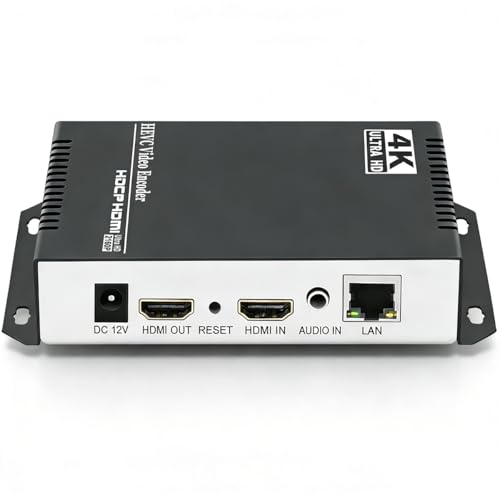
- 4K HDMI input with H.265/H.264 encoding
- Wide protocol support including SRT and WebRTC
- Multi-stream output for several live platforms
Best For: Streamers and AV teams needing flexible 4K encoding
Multi-Input Broadcast Hub

- Four HDMI inputs plus four audio inputs
- Up to 16 total output feeds
- Built-in LCD for live status monitoring
Best For: Multi-source broadcasters and IPTV head-end installs
Compact 1080P Value Pick

- 1080P60 hardware encoding with H.265/H.264
- Broad protocol support for IP distribution
- Compact, low-power design for 24/7 use
Best For: Users wanting a small, easy 1080P60 encoder
Premium Rackmount 4K Production Hub – Epiphan Pearl-2 Rackmount Streaming Encoder
If you need a rackmount streaming encoder that can do more than simple live output, the Epiphan Pearl-2 is built for full production workflows. It combines encoding, switching, scaling, splitting, and recording in one unit, with broad input support and remote management for tighter control in AV or broadcast setups.
Best For: Multi-source 4K productions that need recording, switching, and flexible remote management in one rackmount system.
Pros:
- Supports 4K recording, streaming, switching, splitting, and scaling in one device
- Two 12G-SDI and four HDMI inputs provide flexible source connectivity
- Works with NDI, SRT, HLS, RTMP, and RTMPS streaming workflows
- Includes a 4-inch touch screen plus web UI and remote device management
Cons:
- More complex than a basic single-source encoder
- At 12.1 pounds, it is not a lightweight portable option
- Likely more encoder than needed for simple one-camera streams
The Pearl-2 stands out when your streaming setup needs real production flexibility instead of just encoding. Its combination of inputs, layout tools, and management options makes it a strong fit for teams handling mixed video sources and professional presentations.
Affordable HDMI IPTV Streamer – J-Tech Digital HDMI IPTV Encoder
The J-Tech Digital HDMI IPTV Encoder is a practical rackmount streaming encoder alternative for teams that want flexible protocol support without a complex broadcast system. It takes a 4K 60Hz HDMI input, outputs 1080p 60Hz stream-ready video, and adds audio embedding, PoE, and custom on-screen branding.
Best For: Churches, live events, and AV setups that need a simple Ethernet-based HDMI encoder with multi-protocol streaming.
Pros:
- Supports H.264, H.265, and MJPEG compression options
- Works with RTSP, RTP, RTMP, RTMPS, HTTP, UDP, TS, HLS, and ONVIF
- Includes analog 3.5mm audio input for embedding synchronized audio
- PoE support simplifies installation with a single network cable
Cons:
- Outputs 1080p 60Hz rather than native 4K streaming output
- Single HDMI input limits multi-camera production use
- Depends on a compatible PoE network switch for power over Ethernet
This encoder makes sense when you want a straightforward streaming appliance with broad protocol support and easy deployment. It is especially appealing for users who value network simplicity and custom branding over advanced multi-input production features.
Versatile Multi-Source Rack Encoder – Epiphan Video Pearl 2 Rackmount
The Epiphan Video Pearl 2 Rackmount is a strong fit when you need a rackmount streaming encoder that can juggle multiple live sources at once. It supports SD through 4K inputs, lets you build custom layouts, and can stream to major platforms while also serving local viewers.
Best For: Live productions that need multiple inputs, custom layouts, and simultaneous streaming to both online and local audiences.
Pros:
- Handles up to six sources, including HDMI, 4K HDMI, 12G-SDI, and IP cameras
- Can encode one 4K program or up to six 1080p Full HD programs
- Supports live streaming to YouTube, Facebook, and other CDNs or portals
- Includes embedded audio support plus XLR/RCA inputs for pro audio gear
Cons:
- Large rack unit at 15 pounds and 20 x 4 x 11 inches
- May be more capable than needed for simple single-source streams
- Requires some setup to make full use of custom layout and editor tools
This model is best when your workflow benefits from switching, compositing, and streaming flexibility in one box. It is especially useful for teams that want polished output with picture-in-picture, overlays, and layout control.
Broadcast-Grade SDI Streamer – Blackmagic Design Streaming Encoder 4K
The Blackmagic Design Streaming Encoder 4K is a compact rackmount streaming encoder built for direct 4K or HD delivery without a separate encoding PC. With SDI input, monitor outputs, mobile failover, and broadcast-focused control features, it suits users who want a self-contained streaming box for professional live production.
Best For: Broadcast and pro AV workflows that need SDI streaming with backup internet, captions, and device control.
Pros:
- Supports H.264 and H.265 streaming up to 2160p60
- 12G-SDI input with standards conversion and SDI loop output
- Ethernet plus 5G/4G mobile support with automatic failover
- Includes closed captions, timecode passthrough, REST API control, and webcam output
Cons:
- Designed around SDI devices, so it is not ideal for HDMI-only setups
- More specialized than basic encoders for simple streaming needs
- Requires familiarity with broadcast-style workflows to unlock its full value
This encoder is a compelling choice when reliability and integration matter as much as video quality. Its failover support and broadcast control features make it a practical option for mission-critical streams.
Premium 4K HDMI Streaming Encoder – Magewell Ultra Encode HDMI Plus
If you need a rackmount streaming encoder for HDMI-based live production, the Magewell Ultra Encode HDMI Plus is built for flexible contribution workflows. It supports 4K HDMI input up to 4096×2160p30, offers HDMI loop-through for local monitoring, and can stream through multiple modern protocols at once.
Best For: Live production teams, AV operators, and hybrid broadcast setups that want 4K HDMI encoding with NDI|HX, recording, and network flexibility.
Pros:
- Encodes up to 4K/30 from HDMI with loop-through for monitoring or pass-through.
- Supports multi-protocol streaming including RTMP, RTMPS, SRT, NDI|HX, HLS, and TS over UDP/RTP.
- Can stream and record at the same time to internal storage, USB, or network locations.
- Includes PoE, Wi‑Fi, web UI, HTTP API, and built-in controls for flexible deployment.
Cons:
- Best suited to HDMI workflows rather than SDI sources.
- Advanced feature set may be more than basic single-stream users need.
Overall, this is a strong choice when you want one compact encoder to handle streaming, recording, and IP integration without giving up local monitoring or control options.
Multi-Protocol SDI IP Encoder – URayCoder HEVC H.265 SDI Encoder
For a rackmount streaming encoder built around SDI contribution, this URayCoder unit focuses on flexible IP delivery and stream customization. It accepts SDI sources and can output up to four simultaneous streams, each with different protocols, which is useful when feeding multiple destinations at once.
Best For: SDI-based broadcast, IPTV, and multi-destination streaming setups that need broad protocol support and flexible stream output.
Pros:
- Accepts SDI input and supports up to four simultaneous video streams.
- Works with many protocols, including HTTP, RTSP, RTMP(S), SRT, HLS, UDP, RTP, and ONVIF.
- Includes stream customization such as text, scrolling text, logo, time, crop, rotate, flip, and mirror.
- Offers SDK, API, CGI control documents, and lifetime support.
Cons:
- Designed for SDI output sources, so it is not the right fit for HDMI-only setups.
- The feature set is broad, which may be more than simple one-stream applications require.
This model stands out when you need a single encoder to serve several platforms or transport methods from one SDI source. Its protocol range and output flexibility make it a practical match for more technical streaming workflows.
Compact HDMI Live Streaming Encoder – UNISHEEN H.265/H.264 1080p60 Encoder
This rackmount streaming encoder option is geared toward compact HDMI live streaming setups that still need flexible control over the image. It supports up to 1080p60, uses H.264/H.265 compression, and adds processing tools like rotation, flipping, mirroring, clipping, and enhancement.
Best For: Users who want a small HDMI encoder for 1080p60 live streaming with recording and image adjustment tools.
Pros:
- Supports HDMI input with up to 1080p60 output.
- Uses H.264/H.265 compression and supports one-key recording.
- Includes rotation, flip, mirror, clip, deinterlacing, noise reduction, and sharpening.
- Supports SRT, RTSP, RTMPS, UDP, and NVR workflows.
Cons:
- Top resolution is 1080p60, so it is not a 4K encoder.
- Best suited to HDMI sources rather than SDI or other inputs.
For smaller live production jobs, this encoder offers a useful balance of streaming formats, recording support, and on-device video adjustments. It is a sensible pick when 1080p performance matters more than high-end broadcast extras.
4K Multi-Protocol Pick – HEVC H265/H264 HDMI to Ethernet Encoder
If you need a rackmount streaming encoder style solution for pushing HDMI sources to multiple platforms, this URayCoder unit stands out for its 4K input support, dual H.265/H.264 encoding, and wide protocol coverage. It is built for live streaming setups that need flexible output formats, on-screen branding, and straightforward browser-based management.
Best For: Streamers and AV teams that want 4K HDMI encoding with broad protocol support and multi-platform delivery.
Pros:
- Supports 4K UHD input up to 3840×2160 at 30fps, with higher frame rates at lower resolutions.
- Compatible with RTSP, RTMP(S), SRT, HLS, UDP, FLV, WebRTC, TRTC, ICECAST, and more.
- Can output up to 4 video streams and push to platforms like YouTube, Facebook, Twitch, and Vimeo.
- Includes OSD-style customization such as text, logos, timestamps, cropping, rotation, flipping, and mirroring.
Cons:
- Single HDMI input design may not suit multi-camera workflows.
- Advanced customization can be more than casual users need.
- Rack-style deployment is not emphasized as a dedicated rackmount chassis.
Overall, this is a strong fit if you want a feature-rich encoder with broad streaming compatibility and extensive stream customization. It is especially appealing for users who value simple setup, stable transmission, and long-term support.
Multi-Input Broadcast Hub – 4-Channel 4K HDMI Encoder
This rackmount streaming encoder option is aimed at users who need multiple HDMI sources in one box, with four inputs, a live status screen, and up to 16 total output feeds. It is a practical pick for broadcast-style workflows, IPTV head-end use, and anyone who wants to manage several streams from a single encoder.
Best For: Multi-source live broadcasters and IPTV setups that need high feed counts from one encoder.
Pros:
- Four HDMI inputs and four external audio inputs support multi-source streaming.
- Can deliver up to 16 feeds total, with up to 4 platforms per channel.
- Supports H.265, H.264, MJPEG, and protocols including HTTP, RTSP, RTMP, RTMPS, SRT, RTP, UDP, and HLS.
- Built-in LCD screen lets you monitor working status in real time.
Cons:
- Larger multi-channel feature set may be more than needed for simple single-source streaming.
- Maximum 4K support is limited to 2 channels at 4K/30Hz and 2 channels at 1080P/60Hz.
- Best suited to managed AV or broadcast installs rather than portable use.
For production environments that need several HDMI sources encoded at once, this model offers a lot of flexibility. The combination of four inputs, broad protocol support, and a built-in status display makes it a strong control-room style choice.
Compact 1080P Value Pick – H.265/H.264 HDMI Encoder
If you want a compact rackmount streaming encoder alternative for straightforward IP video distribution, this UNISHEEN unit keeps the focus on reliable 1080P60 encoding and broad protocol compatibility. It is designed for users who want an easy browser-based setup, low power operation, and a small footprint that can still fit into a rack-oriented workflow.
Best For: Users who need a compact 1080P60 encoder for streaming, monitoring, or digital signage.
Pros:
- Hardware H.265/H.264 encoding at 1080P60 with reduced bandwidth compared with H.264-only setups.
- Supports SRT, RTMP, RTSP, RTMPS, UDP, HTTP, HLS, WebRTC, TRTC, Icecast, and SHOUTcast.
- Browser-based configuration avoids software installs and works from a modern web browser.
- Compact 90 x 54 x 29 mm design and low power use suit 24/7 operation.
Cons:
- Single HDMI input limits it to one source at a time.
- Top resolution is 1080P60, so it is not for 4K workflows.
- More compact than a true rackmount chassis, so it may need shelf or bracket support in racks.
This encoder makes sense when you value simplicity, protocol breadth, and a small form factor over multi-input expansion. It is especially practical for live broadcasts, remote monitoring, and signage where 1080P60 is enough.
How We Picked These Rackmount Streaming Encoders
We prioritized models that fit real-world rack or rack-adjacent deployments, with a strong mix of reliability, format support, and control options. The best picks support common live-streaming workflows without adding unnecessary complexity.
We also looked for useful pro features such as HDMI or SDI connectivity, PoE support, multi-protocol streaming, recording, loop-through output, and compatibility with modern delivery standards like SRT, RTMP, RTSP, HLS, and WebRTC where available.
Quick Comparison
For high-end turnkey installations, premium rack systems from Epiphan and Blackmagic stand out. If you want a more affordable standalone encoder, several HDMI and SDI units in this roundup offer broad protocol support and simple operation. For multi-source workflows, the 4-channel option is the most flexible, while single-input models are better for straightforward streaming jobs.
Key Buying Factors for a Rackmount Streaming Encoder
Inputs and Signal Type
Match the encoder to your sources first. HDMI works well for cameras, computers, and switchers; SDI is often the better choice for longer cable runs and more robust production environments. If your rack feeds multiple sources, look for models that support more than one input or a multichannel design.
Streaming Protocols
A good Rackmount Streaming Encoder should support the protocol your platform or workflow needs. RTMP remains common for broadcast platforms, while SRT is increasingly important for secure, low-latency contribution. RTSP, HLS, and WebRTC can add flexibility for internal distribution, monitoring, or browser-based viewing.
Video Quality and Resolution
Choose a model that matches your capture and delivery needs. Many buyers only need reliable 1080p60, but 4K support can be valuable for future-proofing, higher-quality archiving, or repurposing content across multiple outputs.
Installation Features
Look for PoE, rack-friendly chassis design, clear front-panel controls, and stable networking options. These details matter in permanent installs where access may be limited and uptime is important.
Who Should Buy Which Rackmount Streaming Encoder?
Choose a premium all-in-one unit if you need the most polished experience, higher-end monitoring, and better fit for critical environments. Choose a budget-friendly HDMI or SDI encoder if you mainly need dependable one-source streaming at a lower cost. Choose a multichannel model if you want to manage several feeds from one device. For most buyers, the right Rackmount Streaming Encoder is the one that balances input type, protocol support, and ease of deployment for the exact system you already run.