
The best multitrack recorders make it easier to capture complete ideas without relying entirely on a computer. From compact songwriting tools to full-featured mixer-recorders, today’s options cover rehearsals, live sessions, podcasts, and home-studio production.
This roundup compares 10 standout models by track count, inputs, portability, workflow, and recording features so you can choose the right setup for your projects.
Best 10 Multitrack Recorders Picks for 2026
Studio Workhorse
Tascam DP-24SD 24-Track Portastudio

- Up to 24 tracks
- Eight XLR inputs
- Effects and mastering onboard
Best For: Home studios needing high track capacity and multiple microphone inputs
Portable Songwriting Hub

- Eight tracks with touchscreen editing
- Drum loops, synths, and MIDI built in
- Battery powered for mobile recording
Best For: Songwriters and musicians recording ideas away from a computer
All-in-One Mixer
Tascam Model 12 Multitrack Studio

- 12-channel mixer and recorder
- 12-in/10-out USB interface
- Compressor and EQ on inputs
Best For: Users wanting physical mixer control with DAW connectivity
Touchscreen Project Builder
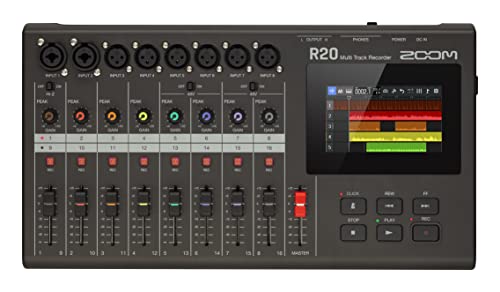
- Up to 16 tracks, eight simultaneous
- Six XLR inputs plus combo inputs
- Touchscreen editing and built-in sounds
Best For: Bands and producers building full demos without a computer
Best Pocket Multitrack Recorder

- Six-track recording with two-track simultaneous capture
- Built-in stereo condenser microphones
- Battery-powered and portable
Best For: Mobile songwriting and simple multitrack demos
Best Mixer-Recorder Combo

- 12-channel digital mixer with multitrack recording
- Up to 14 tracks at 24-bit/96kHz
- Physical faders and +70dB preamps
Best For: Bands, live performances, and project studios
Best Feature-Rich Portable Recorder
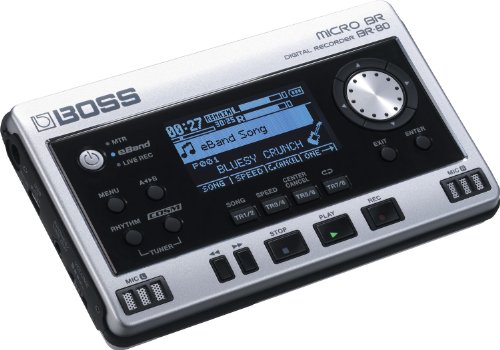
- MTR, eBand, and Live Recorder modes
- 64 V-Tracks with eight-track playback
- Built-in effects, rhythms, and stereo microphone
Best For: Guitarists and songwriters who want recording and practice tools
Best Flexible Multitrack Recorder

- 32-bit float recording helps prevent clipping
- Four-track layering with bounce and undo
- Battery-powered with USB audio interface
Best For: Mobile songwriting and quick layered demos
Best Classic Feature-Packed Recorder
BOSS BR-600 Digital Multitrack Recorder

- Eight simultaneous playback tracks
- 64 V-Tracks for flexible arrangements
- Built-in effects, drums, microphone, and battery power
Best For: Portable guitar-based songwriting
Best Multitrack Mixer Recorder

- Eight-channel mixer with 12-track recording
- Four headphone outputs and three monitor mixes
- Simultaneous SD card and USB recording
Best For: Bands, podcasts, and live multi-person sessions
Studio Workhorse – Tascam DP-24SD 24-Track Portastudio
The Tascam DP-24SD is a substantial choice for musicians who want a dedicated multitrack recorder with up to 24 tracks, eight XLR inputs, onboard effects, mastering tools, and a color screen. Its larger footprint and 13.7-pound weight make it better suited to a permanent or semi-permanent studio setup than highly portable recording.
Best For: Home studios and musicians needing many tracks, multiple microphone inputs, and hands-on recording features.
Pros:
- Supports up to 24-track recording.
- Provides eight XLR inputs for microphone-heavy sessions.
- Includes onboard effects, mastering, and a color screen.
Cons:
- Much heavier and larger than portable multitrack recorders.
- Its listed 3.5 mm headphone jack may be less convenient for some studio setups.
The DP-24SD is a strong fit when track count and input capacity matter more than portability. Choose it for a dedicated recording workspace rather than quick, battery-powered songwriting.
Portable Songwriting Hub – Zoom R12 8-Track Recorder
The Zoom R12 is a compact multitrack recorder for musicians who want touchscreen editing without a computer. It combines eight-track recording with two XLR/TRS inputs, onboard effects, drum loops, FM synth sounds, MIDI support, and USB-C connectivity in a lightweight battery-powered unit.
Best For: Mobile musicians, songwriters, and producers who want to capture and develop ideas away from a computer.
Pros:
- Records up to eight tracks with touchscreen editing and mixing.
- Includes 150 drum loops and 18 FM synth instruments.
- Runs for up to five hours on four AA batteries.
- Offers USB-C audio interface and DAW control functionality.
Cons:
- Two inputs provide less simultaneous recording capacity than larger units.
- Battery runtime is limited to approximately five hours.
The R12 prioritizes portability and creative convenience. Its built-in rhythms, synths, and touchscreen workflow make it especially useful for sketching complete arrangements wherever inspiration strikes.
All-in-One Mixer – Tascam Model 12 Multitrack Studio
The Tascam Model 12 combines a 12-channel mixer, digital multitrack recording, USB audio interfacing, and DAW control in one corded-electric workstation. It is designed for users who prefer physical mixer controls while also connecting recording sessions to a computer.
Best For: Home studios, rehearsal spaces, and creators who need mixer-style control alongside computer-based recording.
Pros:
- Combines a 12-channel mixer with multitrack recording.
- Provides 12-in/10-out USB connectivity for DAW use.
- Includes a compressor and three-band EQ on all input modules.
- Offers dual headphone outputs with individual volume and source selection.
Cons:
- Requires corded power, limiting use away from a mains-powered setup.
- At 13.3 pounds, it is less portable than compact recorder designs.
The Model 12 is a practical hybrid for anyone who wants tactile mixing and computer integration in the same device. Its channel count and monitoring options make it well suited to organized studio or rehearsal workflows.
Touchscreen Project Builder – Zoom R20 16-Track Recorder
The Zoom R20 is a tabletop multitrack recorder built for computer-free production, offering up to 16 tracks and recording of up to eight tracks simultaneously. Its touchscreen interface, six XLR inputs, built-in effects, rhythms, and synth sounds make it suitable for developing full demos directly on the device.
Best For: Bands and producers who need several inputs and a hands-on touchscreen workflow for complete projects.
Pros:
- Supports up to 16 tracks and eight simultaneous recordings.
- Provides six XLR inputs plus two XLR/TRS combo inputs.
- Enables touchscreen editing with drag, drop, swipe, and pinch controls.
- Includes effects, 150 rhythm patterns, and an 18-sound onboard synth.
Cons:
- Its maximum sample rate is listed as 44.1 kHz.
- It is designed as a tabletop unit rather than a battery-powered recorder.
The R20 offers a useful middle ground between a simple idea recorder and a computer-based setup. It is a compelling option when simultaneous inputs, track capacity, and direct touchscreen editing are the main priorities.
Best Pocket Multitrack Recorder – Tascam DP-006
The Tascam DP-006 is a compact choice for musicians who want multitrack recorders that are easy to carry and quick to set up. It records up to six tracks at CD-quality 16-bit/44.1kHz resolution, includes two built-in omnidirectional condenser microphones, and runs on four included AA batteries.
Best For: Songwriters and mobile recording setups that need straightforward multitrack recording without a computer.
Pros:
- Records up to six tracks with two-track simultaneous recording and six-track playback.
- Built-in stereo microphones support quick songwriting and idea capture.
- Portable battery-powered design with 4GB of storage and WAV recording.
Cons:
- Recording resolution is limited to 16-bit/44.1kHz.
- The 2.5mm headphone jack may be less convenient than a standard 3.5mm connection.
- Its compact feature set is focused on basic recording rather than live mixing.
The DP-006 makes sense when portability and simplicity matter most. Its six-track capacity is suitable for developing song ideas, while the built-in microphones and AA-battery operation make it practical for recording away from a studio.
Best Mixer-Recorder Combo – Zoom LiveTrak L12next
The Zoom LiveTrak L12next combines a 12-channel digital mixer with a multitrack recorder, making it a strong option for musicians who need recording and hands-on live control in one unit. It can record up to 14 tracks at 24-bit/96kHz and mix to a 32-bit-float master.
Best For: Bands, rehearsals, live performances, and project studios that need multiple inputs, physical faders, and detailed monitoring control.
Pros:
- Records up to 14 tracks at 24-bit/96kHz.
- Studio-grade preamps provide up to +70dB of gain, with Hi-Z, PAD, and +48V phantom power.
- Physical 60mm faders and channel controls support hands-on mixing.
- Wireless control is available through the L12next Control App with the required BTA-1 adapter.
Cons:
- It requires corded electric power rather than batteries.
- The wireless control app requires an additional BTA-1 adapter.
- Its larger mixer-style design may be more equipment than a solo songwriter needs.
The L12next is the most capable option here for multi-input recording and live workflow control. Its high-resolution recording, hands-on channel controls, and mixer functions make it better suited to ensembles and performance-focused setups than ultra-portable recorders.
Best Feature-Rich Portable Recorder – Roland BR-80
The Roland BR-80 is a versatile portable option among multitrack recorders, offering MTR, eBand, and Live Recorder modes. It records to SD or SDHC cards up to 32GB, includes a built-in stereo condenser microphone, and adds backing patterns, COSM amps, effects, and USB audio-interface functionality.
Best For: Guitarists and songwriters who want multitrack recording alongside practice tools, built-in effects, and play-along features.
Pros:
- Provides 64 V-Tracks and eight simultaneous playback tracks.
- Three operating modes cover multitrack, eBand, and live recording.
- Built-in stereo microphone supports immediate audio capture.
- Includes COSM amps, effects, backing patterns, and USB audio-interface use.
Cons:
- SD or SDHC media is required and is not included.
- It uses a single AAA battery, unlike the larger battery packs used by some portable recorders.
- The included warranty is listed as 90 days.
The BR-80 stands out for its range of creative and practice-oriented features rather than for mixer-style control. It is a practical fit for players who want to record ideas, practice with eBand material, and shape sounds with onboard amps and effects.
Best Flexible Multitrack Recorder – Zoom R4 Multi-Track Recorder
The Zoom R4 is a compact choice among multitrack recorders for musicians who want to capture ideas quickly without managing gain levels. It records up to four tracks, supports layering and bouncing, and includes combo inputs, effects, rhythms, and battery or USB-C power.
Best For: Songwriters and mobile musicians who want a simple, clip-resistant recorder for building layered demos.
Pros:
- 32-bit float recording helps avoid clipping without manual gain adjustments.
- Two XLR/TRS combo inputs accept microphones, instruments, keyboards, and other sources.
- More than 80 built-in rhythm patterns support writing and practice.
- Works as a 2-in/2-out USB audio interface and runs on AA batteries or USB-C.
Cons:
- Recording is limited to four tracks at a time.
- Its built-in microphone operates in stereo, which may not suit every recording setup.
The R4 stands out for portable, low-fuss recording. Its bounce workflow lets you free channels for additional layers, while the USB interface function adds flexibility for computer or smartphone sessions.
Best Classic Feature-Packed Recorder – BOSS BR-600 Digital Multitrack Recorder
The BOSS BR-600 is a portable option among multitrack recorders, combining eight simultaneous playback tracks with 64 V-Tracks for flexible arrangements. Its built-in microphone, drum machine, effects, and battery operation make it suited to recording away from a studio.
Best For: Guitarists and songwriters who want onboard effects, rhythm programming, and portable multitrack playback.
Pros:
- Provides eight simultaneous playback tracks and 64 V-Tracks.
- Includes a guitar and effects processor with vocal effects and pitch correction.
- Built-in drum machine features velocity-sensitive pads.
- Built-in stereo microphone and battery power support mobile recording.
Cons:
- The included CompactFlash card has 128MB of storage.
- Supplied recording time is listed as 2 hours and 16 minutes.
- It requires four 9V batteries for battery operation.
The BR-600 offers a broad set of songwriting tools in a compact format. Its older CompactFlash-based storage and limited included capacity are worth considering, but the effects and drum features add useful standalone functionality.
Best Multitrack Mixer Recorder – Zoom LiveTrak L-8
The Zoom LiveTrak L-8 is a mixer-recorder built for larger sessions than many compact multitrack recorders. It captures up to 12 tracks simultaneously at 24-bit/96kHz, offers six preamps, multiple headphone mixes, and can record to an SD card and computer at the same time.
Best For: Bands, podcasters, and live-session creators who need several inputs and individualized monitoring.
Pros:
- Eight-channel layout with six combo inputs and two stereo inputs.
- Captures 12 tracks simultaneously at up to 24-bit/96kHz.
- Four headphone outputs and three independent monitor mixes support group recording.
- Records to SD card and computer simultaneously via USB.
Cons:
- Its mixer-style design is less minimal than a basic handheld recorder.
- Battery-powered operation may require separate batteries, while the included components list also includes an AC adapter.
The L-8 is the strongest fit here for multi-person recording and podcast production. Its multiple inputs, custom monitor mixes, and dual recording paths make it practical for rehearsals, live work, and sessions requiring hands-on mixing.
How We Picked the Best Multitrack Recorders
We evaluated these Multitrack Recorders around the features that most affect real-world use: simultaneous inputs, total track capacity, portability, monitoring, onboard effects, editing workflow, storage, battery operation, and computer connectivity. We also considered whether each unit is best suited to songwriting, live recording, band rehearsals, podcasting, or a more traditional studio setup.
Track count alone does not determine performance. A recorder with fewer tracks may be more convenient for mobile demos, while a mixer-based model may be better for capturing a group or managing a live production.
Quick Comparison
| Best For | Recommended Type | What to Prioritize |
|---|---|---|
| Portable songwriting | Compact standalone recorder | Built-in microphones, battery life, and simple overdubbing |
| Small bands | Multitrack mixer-recorder | Input count, monitor control, and live mixing |
| Home studios | Standalone portastudio | Track capacity, editing, effects, and reliable storage |
| Podcasting and streaming | USB mixer-recorder | Channel control, routing, and computer connectivity |
Key Buying Factors for Multitrack Recorders
Inputs and Simultaneous Recording
Count the sources you expect to record at once, not just the number of playback tracks. Microphone preamps, XLR/TRS combo inputs, phantom power, and instrument-ready connections determine how easily a recorder handles vocals, guitars, keyboards, and drum microphones.
Track Count and Workflow
More tracks provide room for overdubs, but a straightforward interface can be more valuable than maximum capacity. Consider whether you prefer physical controls, a touchscreen or color display, computer-free operation, or integration with a DAW.
Portability and Power
Battery operation and built-in microphones are useful for writing away from a studio, recording rehearsals, or capturing ideas quickly. Larger tabletop units generally provide more connections and hands-on control but require more space and setup.
Effects, Mixing, and Connectivity
Onboard effects can speed up monitoring and demo production, while dedicated outputs and USB audio support expand mixing options. If you plan to use a computer, verify the channel count and whether the device works as a USB audio interface or DAW controller.
Who Should Buy Which Multitrack Recorders?
Choose a compact recorder if you want fast songwriting, field recording, or simple overdubs with minimal equipment. Models with built-in microphones and battery power are especially practical for mobile use.
Choose a larger standalone portastudio if you want computer-free recording, extensive overdubbing, and dedicated mixing controls for a home studio.
Choose a mixer-recorder if you regularly record several performers, run live sessions, or need hands-on channel control for music and spoken-word production.
Choose a modern portable multitrack unit if flexible track bouncing, built-in effects, quick setup, and occasional computer integration matter more than a large number of physical inputs.