
A strong mesh network can help gaming PCs stay connected across larger homes, reducing weak-signal zones and improving wireless performance for downloads, streaming, and multiplayer play.
These 10 systems span affordable Wi-Fi 5 and Wi-Fi 6 kits through faster Wi-Fi 6E and Wi-Fi 7 options, so you can match your network to your internet plan, home layout, and gaming setup.
Best 10 Mesh Wifi Systems for Gaming PCs Picks for 2026
Best Balanced Coverage
TP-Link Deco X55 AX3000 3-Pack

- Wi-Fi 6 coverage up to 6,500 square feet
- Three Gigabit ports per unit for wired devices
- Supports up to 150 connected devices
Best For: Homes needing broad coverage and flexible wired gaming connections
Best Wi-Fi 7 Value
NETGEAR Orbi 370 Series 3-Pack

- Wi-Fi 7 speeds up to 5 Gbps
- Covers up to 6,000 square feet
- Includes 2.5-Gigabit Ethernet support
Best For: Gamers seeking newer Wi-Fi 7 technology and multi-gig networking
Best High-Performance Pick
TP-Link Deco 7 Pro BE14000 3-Pack

- Tri-band Wi-Fi 7 with 6 GHz support
- Up to 8,100 square feet of coverage
- 10 Gbps, 2.5 Gbps, and 1 Gbps ports per unit
Best For: Enthusiasts with multi-gig internet and demanding gaming networks
Best Budget-Friendly Coverage

- Covers up to 4,500 square feet
- Includes a Gigabit Ethernet port for wired devices
- Wi-Fi speeds up to 1.2 Gbps
Best For: Budget setups needing basic coverage and one nearby wired gaming connection
Best Wi-Fi 7 Upgrade

- Wi-Fi 7 with up to 5,000Mbps combined throughput
- Up to 6,600 sq. ft. and 150+ devices
- 2.5Gbps Ethernet with expandable Deco mesh
Best For: Gaming-PC households upgrading to Wi-Fi 7
Best Budget Coverage
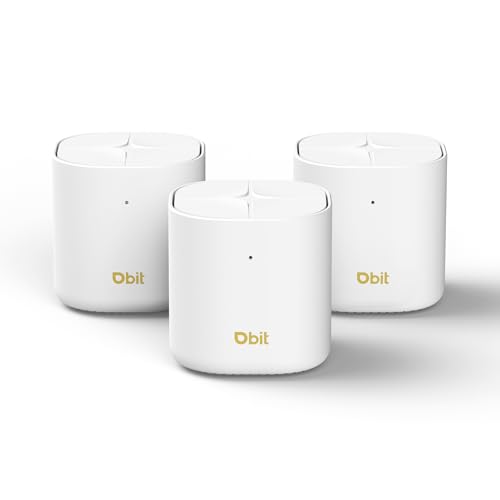
- Three units cover up to 6,500 sq. ft.
- Six Gigabit Ethernet ports for wired devices or backhaul
- Wi-Fi 6 support for up to 150 devices
Best For: Large homes seeking affordable gaming coverage
Best for Low-Interference Gaming

- Tri-band Wi-Fi 6E with a 6GHz band
- 2.5Gbps WAN/LAN port plus two Gigabit LAN ports
- Up to 5,500 sq. ft. and 200 connected devices
Best For: Wi-Fi 6E gamers in congested homes
Best with Extra Features
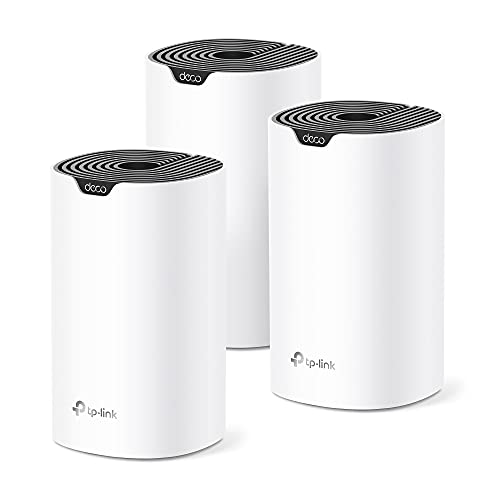
- Covers up to 5,500 square feet
- Six Gigabit Ethernet ports total
- Supports up to 100 devices
Best For: Budget-conscious homes needing broad coverage for gaming PCs
Best for Large Homes
NETGEAR Orbi Wi-Fi 6 AX5200 4-Pack

- Covers up to 10,000 square feet
- Tri-band Wi-Fi 6 up to 5.2Gbps
- Supports up to 75 devices
Best For: Large, busy homes with gaming and streaming devices
Best Legacy Tri-Band Option

- Covers up to 5,000 square feet
- Tri-band design with MU-MIMO
- Product is listed as no longer produced
Best For: Buyers evaluating a discounted, older tri-band mesh system
Best Balanced Coverage – TP-Link Deco X55 AX3000 3-Pack
The TP-Link Deco X55 is a practical choice among mesh wifi systems for gaming pcs when you need broad coverage, plenty of device capacity, and straightforward setup. Its Wi-Fi 6 connection covers up to 6,500 square feet, while Ethernet backhaul and three Gigabit ports per unit can help gaming PCs maintain a stable wired connection.
Best For: Homes that need wide Wi-Fi 6 coverage and flexible wired connections for gaming PCs and other devices.
Pros:
- Up to 6,500 square feet of coverage with a three-unit system
- Three Gigabit Ethernet ports on each Deco unit
- Supports up to 150 connected devices and wired Ethernet backhaul
- Deco app offers guided setup, QoS, and basic security features
Cons:
- Dual-band Wi-Fi does not offer a dedicated third wireless band
- A modem is required for most internet providers
The Deco X55 is a sensible middle-ground option for gamers who value coverage and wired flexibility more than cutting-edge Wi-Fi 7 features. Connect a gaming PC by Ethernet where possible, then use the mesh nodes to improve the rest of the home.
Best Wi-Fi 7 Value – NETGEAR Orbi 370 Series 3-Pack
The NETGEAR Orbi 370 Series is a forward-looking pick among mesh wifi systems for gaming pcs. Its Wi-Fi 7 platform delivers advertised speeds up to 5 Gbps, supports plans up to 2.5 Gbps, and uses enhanced backhaul to help keep multiple devices connected across up to 6,000 square feet.
Best For: Gamers who want Wi-Fi 7 support, multi-gig connectivity, and simple whole-home management.
Pros:
- Wi-Fi 7 speeds advertised up to 5 Gbps
- Coverage of up to 6,000 square feet with the three-pack
- 2.5-Gigabit Ethernet support for compatible internet plans
- App-based setup and management with automatic security features enabled
Cons:
- NETGEAR Armor security requires a subscription after the 30-day trial
- Dual-band design may be less flexible than tri-band alternatives
- Designed for use in the United States only
Orbi 370 makes sense if you want newer wireless technology without moving to a higher-end tri-band system. Its multi-gig Ethernet and enhanced backhaul are useful for busy households, though actual performance still depends on placement, connected devices, and your internet plan.
Best High-Performance Pick – TP-Link Deco 7 Pro BE14000 3-Pack
The TP-Link Deco 7 Pro is the most performance-focused option here for mesh wifi systems for gaming pcs. Its tri-band Wi-Fi 7 design includes 6 GHz connectivity, Multi-Link Operation, and ports rated up to 10 Gbps, making it especially suitable for multi-gig internet and high-bandwidth home networks.
Best For: Enthusiasts with multi-gig internet, Wi-Fi 7 devices, and demanding gaming or streaming setups.
Pros:
- Tri-band Wi-Fi 7 with advertised speeds up to 8,647 Mbps on 6 GHz
- Up to 8,100 square feet of coverage and support for more than 200 devices
- Each unit includes 10 Gbps, 2.5 Gbps, and 1 Gbps WAN/LAN ports
- Supports 10-Gbps wired backhaul and includes a USB 3.0 port
Cons:
- Its advanced capabilities may exceed the needs of ordinary broadband plans
- Full performance requires compatible Wi-Fi 7 devices and multi-gig networking
- A modem must be purchased separately
Deco 7 Pro is the strongest fit for a future-ready gaming network, particularly when the gaming PC can use a high-speed wired connection. It is harder to justify for basic internet service, but its tri-band design, 6 GHz band, and 10-Gbps ports provide substantial headroom.
Best Budget-Friendly Coverage – NETGEAR Orbi RBK13 3-Pack
The NETGEAR Orbi RBK13 is an older, simpler option among mesh wifi systems for gaming pcs, but it can still suit homes that need basic whole-home coverage. The Wi-Fi 5 system covers up to 4,500 square feet and provides a Gigabit Ethernet port for a nearby gaming PC, console, or streaming device.
Best For: Budget-conscious households seeking dependable coverage and a straightforward wired connection for one nearby gaming device.
Pros:
- Three-unit system covers up to 4,500 square feet
- Gigabit Ethernet port supports a nearby wired gaming PC or console
- Advertised wireless speeds up to 1.2 Gbps
- Works with cable, satellite, fiber, and DSL providers when paired with a modem or gateway
Cons:
- Uses older Wi-Fi 5 technology
- Only one Gigabit Ethernet port is listed for the system units
- NETGEAR Armor and Smart Parental Controls include 30-day trials
RBK13 is best considered a basic coverage upgrade rather than a high-end gaming network. It can work well when the gaming PC is wired to a nearby unit and your internet plan does not require newer Wi-Fi standards or multi-gig Ethernet.
Best Wi-Fi 7 Upgrade – Deco 7 BE5000
For gamers building around newer Wi-Fi 7 devices, this Deco 7 system is one of the more capable mesh WiFi systems for gaming PCs. Its dual-band BE5000 design combines high theoretical throughput with 2.5Gbps Ethernet, while the mesh layout helps extend coverage across larger homes.
Best For: Gaming-PC households that want Wi-Fi 7 support, multi-gig wired networking, and broad whole-home coverage.
Pros:
- Wi-Fi 7 performance with up to 5,000Mbps combined wireless data rate.
- Up to 6,600 square feet of coverage for more than 150 devices.
- 2.5Gbps Ethernet and Wi-Fi 7 can support faster mesh backhaul when using at least two Deco units.
- Deco app management, AI-assisted roaming, WPA3 security, and useful QoS features.
Cons:
- Dual-band design may be less flexible than a tri-band system for wireless backhaul.
- A separate modem is required, and real-world speeds vary with distance, walls, and interference.
- Premium HomeShield features may require additional service terms.
The Deco 7 is a strong forward-looking choice for a gaming PC setup, especially when the main PC can use Ethernet and the home has multiple Wi-Fi 7 clients. Its expandable Deco platform also makes it practical for growing coverage over time.
Best Budget Coverage – DBIT AX1800 3-Pack
The DBIT AX1800 is a practical option among mesh WiFi systems for gaming PCs when broad coverage and wired connections matter more than top-end wireless speeds. Its three-unit design covers up to 6,500 square feet and includes six Gigabit Ethernet ports for PCs, consoles, or wired backhaul.
Best For: Large homes and multi-story layouts needing affordable Wi-Fi 6 coverage for gaming, streaming, and many connected devices.
Pros:
- Three units provide up to 6,500 square feet of coverage.
- Wi-Fi 6 AX1800 speeds support gaming, streaming, and downloads.
- Six total Gigabit Ethernet ports enable wired PC connections or backhaul.
- App controls, a pairing button, WPA3 encryption, and support for up to 150 devices.
Cons:
- Gigabit Ethernet is slower than the 2.5Gbps ports on the other listed systems.
- AX1800 dual-band performance is less future-ready than Wi-Fi 6E or Wi-Fi 7.
- Wireless conditions and home construction can reduce the stated coverage and speeds.
For a gaming PC connected by Ethernet, this three-pack offers a sensible balance of coverage and stability. It is particularly appealing for homes with dead zones, though demanding users with multi-gig internet may prefer a faster system.
Best for Low-Interference Gaming – Deco XE75 Pro Wi-Fi 6E
The TP-Link Deco XE75 Pro is a compelling middle ground for mesh WiFi systems for gaming PCs. Its tri-band Wi-Fi 6E design adds a 6GHz band that can reduce congestion from older devices, while the default 6GHz backhaul can help maintain connections between the two mesh nodes.
Best For: Gamers with Wi-Fi 6E devices, multi-gig internet, or homes where network congestion affects wireless performance.
Pros:
- Tri-band Wi-Fi 6E combines 6GHz, 5GHz, and 2.4GHz networks for up to 5,400Mbps.
- The 6GHz band can serve as a dedicated-style backhaul or connect compatible Wi-Fi 6E devices.
- One 2.5Gbps WAN/LAN port and two Gigabit LAN ports support wired gaming equipment.
- Up to 5,500 square feet of two-node coverage and support for up to 200 devices.
Cons:
- 6GHz signals generally have less range and wall penetration than lower-frequency bands.
- Only Wi-Fi 6E-compatible devices can take full advantage of the 6GHz client network.
- A separate modem is required for most internet service providers.
The XE75 Pro makes the most sense when reducing wireless interference is a priority. Its 6GHz backhaul and 2.5Gbps port are useful for demanding setups, but placement still matters because 6GHz coverage can be more limited through walls.
Best with Extra Features – TP-Link Deco S4 AC1900 3-Pack
If you need mesh wifi systems for gaming pcs across a larger home without spending on newer Wi-Fi standards, the TP-Link Deco S4 3-pack offers broad dual-band coverage and Gigabit Ethernet ports. Its single network name supports seamless roaming, while wired Ethernet backhaul can help improve speeds for stationary gaming setups.
Best For: Budget-conscious households seeking whole-home coverage for gaming PCs and up to 100 connected devices.
Pros:
- Three units cover up to 5,500 square feet.
- AC1900 dual-band speeds support up to 100 devices.
- Six total Gigabit Ethernet ports and wired Ethernet backhaul support.
- Simple app setup with useful parental controls.
Cons:
- Uses Wi-Fi 5 rather than Wi-Fi 6.
- Dual-band design may offer less dedicated mesh backhaul capacity than tri-band systems.
The Deco S4 is a practical choice when coverage and wired connectivity matter more than having the latest wireless generation. For the lowest-latency gaming, connect the PC to a nearby Deco unit with Ethernet when possible.
Best for Large Homes – NETGEAR Orbi Wi-Fi 6 AX5200 4-Pack
For large homes with multiple gaming PCs, consoles, and streaming devices, the NETGEAR Orbi RBK754P combines tri-band Wi-Fi 6 with coverage up to 10,000 square feet. Its router and satellites include Gigabit Ethernet ports, giving wired gaming devices a direct connection option.
Best For: Large households that need high-capacity coverage for gaming, streaming, and many connected devices.
Pros:
- Tri-band AX5200 Wi-Fi 6 supports speeds up to 5.2Gbps.
- Coverage reaches up to 10,000 square feet for up to 75 devices.
- Router and satellites provide multiple Gigabit Ethernet ports.
- Includes WPA2/WPA3 security and a 30-day NETGEAR Armor trial.
Cons:
- Internet service compatibility is listed up to 1Gbps.
- NETGEAR Armor requires a subscription after the trial period.
- Designed for use in the U.S. only.
The RBK754P is the strongest fit here for expansive homes and busy networks. Tri-band Wi-Fi 6 gives it more capacity than older dual-band options, while Ethernet ports make it easier to prioritize fixed gaming PCs.
Best Legacy Tri-Band Option – NETGEAR Orbi AC3000 RBK50
NETGEAR Tri-Band Whole Home Mesh WiFi System with 3Gbps Speed (RBK50) – No Longer Produced
Check Price On AmazonThe NETGEAR Orbi RBK50 is an older tri-band mesh system that still offers up to 5,000 square feet of coverage and advertised speeds up to 3Gbps. For gaming PCs in homes with several active devices, its tri-band design and MU-MIMO support are aimed at maintaining performance as network demand increases.
Best For: Buyers considering a legacy tri-band system for established homes with moderate coverage needs.
Pros:
- Tri-band networking is designed to maintain speed with multiple devices.
- Provides up to 5,000 square feet of coverage.
- Supports MU-MIMO and beamforming for simultaneous wireless data streams.
- NETGEAR Armor includes a 30-day free trial.
Cons:
- The product is listed as no longer produced.
- It offers older AC3000-class performance compared with newer Wi-Fi 6 systems.
- The supplied specifications list a 3 Mbps LAN port bandwidth, so port details should be verified before purchase.
The RBK50 can make sense only when its availability and pricing are compelling. Because it is no longer produced, newer systems such as the Wi-Fi 6 Orbi are generally the safer choice for long-term support and current gaming hardware.
How We Picked the Best Mesh Wifi Systems for Gaming PCs
We focused on systems that can serve demanding home networks, prioritizing wireless standards, coverage, backhaul capability, Ethernet connectivity, device capacity, and overall value. Wi-Fi 6 and newer models generally offer better efficiency in crowded homes, while tri-band systems can provide a dedicated or less congested band for mesh communication. We also included older and budget-friendly kits where their coverage or pricing may still make sense.
Product claims such as coverage and maximum speeds are ideal figures. Real-world results depend on walls, interference, client hardware, placement, wired backhaul, and the speed of your internet connection.
Quick Comparison
| What to Compare | Why It Matters for Gaming |
|---|---|
| Wi-Fi generation | Newer standards can improve throughput, efficiency, and performance with compatible devices. |
| Band configuration | Tri-band designs can reduce congestion between nodes and connected devices. |
| Ethernet ports | Useful for wiring a gaming PC, console, access point, or mesh node. |
| Coverage and expandability | Helps eliminate dead zones, but node placement matters more than headline square footage. |
| Wired backhaul | Connects nodes by Ethernet for more consistent latency and available wireless bandwidth. |
Key Buying Factors for Mesh Wi-Fi Systems for Gaming PCs
Latency and Stability
Gaming does not require enormous download speeds, but it benefits from consistent latency and low packet loss. Place the nearest node in an open area with a clear connection to the main router, and use Ethernet for the PC whenever possible.
Speed and Wi-Fi Compatibility
Choose Wi-Fi 6 or newer if you have a fast broadband plan, many connected devices, or newer laptops and phones. Wi-Fi 7 can offer higher capacity, but you may not see its full benefit unless your clients and internet service support it.
Backhaul and Ports
A tri-band kit may maintain better mesh performance under load. If your home has Ethernet cabling, wired backhaul is often the most reliable option. Check each model’s port speeds before connecting a multi-gigabit plan or high-speed local storage.
Security and Management
Review the included security tools, parental controls, firmware support, subscription requirements, and mobile-app usability. Automatic updates and a straightforward guest network are valuable for long-term ownership.
Who Should Buy Which Mesh Wifi Systems for Gaming PCs?
Choose an affordable Wi-Fi 5 or Wi-Fi 6 kit for smaller homes, moderate broadband, and basic gaming needs. Choose a tri-band Wi-Fi 6 or Wi-Fi 6E system for busy households, wireless gaming PCs, or homes where nodes cannot be connected by Ethernet. Choose Wi-Fi 7 if you have multi-gigabit service, newer client devices, and want more headroom for several high-bandwidth users. For the lowest possible gaming latency, buy the system that supports Ethernet backhaul and connect the gaming PC by cable.