
Choosing computer speakers for music production is about more than loud sound. You want honest mids, controlled bass, and enough detail to catch mix problems early.
Below, we’ve rounded up 10 options that balance accuracy, desk-friendly size, and real-world usability for home studios, creator setups, and casual production spaces.
Best 10 Computer Speakers for Music Production Picks for 2026
Budget Studio Starter

- 50W powered stereo pair
- 3.5-inch woofers with silk-dome tweeters
- TRS, RCA, aux, and headphone jack
Best For: Small desks and entry-level home studios
Compact High-Resolution Pick

- 66W RMS compact desktop speakers
- Hi-Res Audio with LDAC support
- USB-C, AUX, and Bluetooth 5.3
Best For: Small desks and multi-device music setups
Midfield Monitoring Upgrade
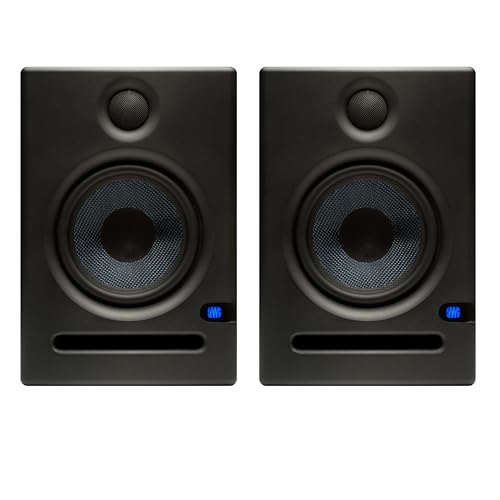
- 5.25-inch woofer with solid low-end
- 80W Class AB with good headroom
- XLR, 1/4-inch, and RCA inputs
Best For: Home studios needing stronger near-field monitoring
Value Hi-Fi Desktop Pair
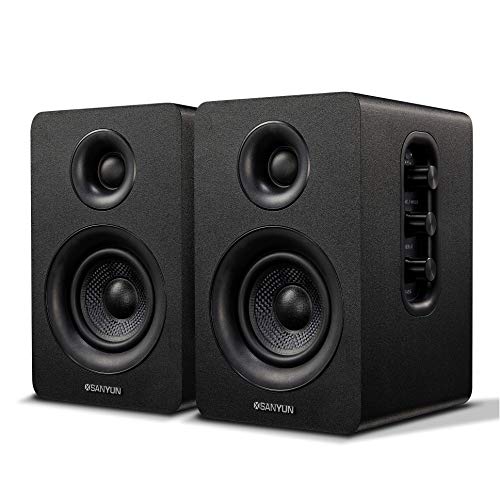
- 60W pair with 3-inch carbon fiber drivers
- USB DAC plus Bluetooth 5.0 and AUX
- Bass, treble, and volume controls
Best For: Budget desktop setups that need tone control
True Studio Monitoring
Edifier MR4 4-inch active reference monitors
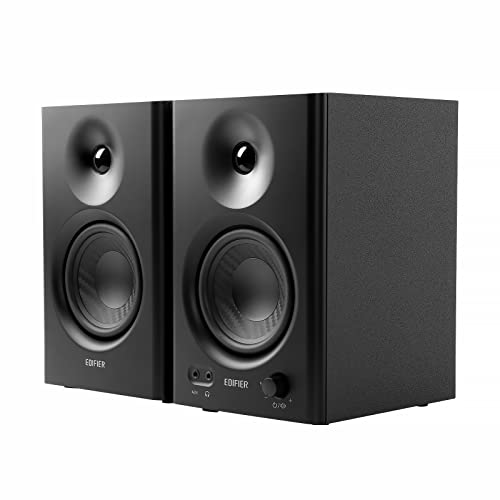
- Almost-flat tuning suits music production and editing.
- TRS, RCA, AUX, and headphone output add flexibility.
- Monitor and music modes cover work and casual listening.
Best For: Artists and home-studio users wanting affordable nearfield reference speakers
Nearfield Mix Control
JBL 305P MkII 5-inch powered studio monitor

- Updated transducers target cleaner transient response and lower distortion.
- Boundary EQ helps when the speaker sits on a desk or near walls.
- Broad sweet spot supports mix decisions off-axis.
Best For: Producers wanting a 5-inch nearfield monitor with placement tuning
Compact Desktop Reference
Mackie CR3.5 3.5-inch creative reference monitors

- Tone knob shapes sound from neutral to more bass and sparkle.
- Location switch helps tune desktop or bookshelf placement.
- TRS, RCA, and 3.5 mm inputs fit many devices.
Best For: Small desktops and home studios needing compact, adjustable monitors
Classic Budget Bookshelf Pick
Edifier R1280T Powered Bookshelf Speakers
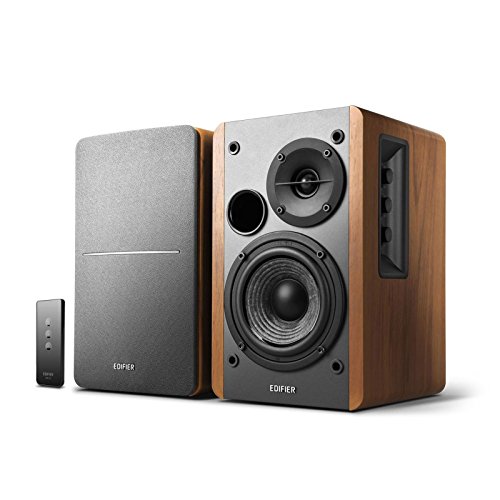
- Dual AUX inputs for easy multi-device hookup
- Bass and treble knobs on the active speaker
- 42W RMS with wood MDF cabinet
Best For: Affordable wired desktop monitoring with simple EQ control
Feature-Rich Wireless Studio Option
Ortizan C7 Dual-Mode 2.0 Studio Monitors

- TRS balanced input for mixers and pro gear
- USB DAC with 24-bit digital audio support
- Bluetooth 5.3 plus RCA and AUX inputs
Best For: Compact music-production setups that need flexible connectivity
Balanced Hi-Res Monitor Choice
Edifier MR3 Powered Studio Monitors

- Hi-Res Audio with 52Hz to 40kHz response
- Balanced TRS, RCA, AUX, and headphone output
- App-based EQ with Music, Monitor, and Custom modes
Best For: Home studios needing accurate sound and flexible wired inputs
Budget Studio Starter – PreSonus Eris 3.5
If you want computer speakers for music production without jumping straight to larger monitors, the PreSonus Eris 3.5 is a practical desktop-friendly option. It’s a powered stereo pair with balanced TRS, RCA, and front aux inputs, so it fits easily into a small home setup for tracking, editing, and casual mixing.
Best For: Small desks, beginner studio setups, and users who need compact near-field monitoring with flexible inputs.
Pros:
- 50W built-in amplification delivers clear output for desktop listening.
- 3.5-inch woven-composite woofers and silk-dome tweeters are tuned for balanced near-field sound.
- High- and low-frequency controls help tailor the speakers to your room.
- Front headphone jack and multiple inputs make daily use convenient.
Cons:
- 3.5-inch drivers are better for close-range use than for deep bass needs.
- Designed for compact setups, so they won’t replace larger studio monitors for bigger rooms.
Overall, the Eris 3.5 is a straightforward entry point if you need accurate desktop speakers that can connect to almost anything on your desk. It keeps the footprint small while still giving you the tuning and connectivity most home creators need.
Compact High-Resolution Pick – Edifier M60
The Edifier M60 is a compact choice for computer speakers for music production when you want more modern connectivity in a small footprint. With 66W RMS output, Hi-Res Audio support, USB-C, AUX, and Bluetooth 5.3 with LDAC, it’s built for desktop users who move between wired and wireless sources.
Best For: Small workspaces, multi-device desks, and users who want compact speakers with high-resolution playback.
Pros:
- 66W RMS output gives it more headroom than many compact desktop speakers.
- Hi-Res Audio certification and LDAC support are useful for detailed playback.
- USB-C, AUX, and Bluetooth 5.3 make it flexible for different setups.
- Bundled angled aluminum stands help aim sound toward ear level on a desk.
Cons:
- 3-inch drivers keep it in the compact category rather than full studio-monitor territory.
- Touch controls may not appeal to users who prefer physical knobs and switches.
For creators who value clean desktop integration and modern input options, the M60 is an easy fit. It’s especially appealing if you want a small speaker system that can still handle high-quality digital audio without taking over the desk.
Midfield Monitoring Upgrade – PreSonus Eris E5
If you’re shopping for computer speakers for music production and want a more serious monitoring step up, the PreSonus Eris E5 brings a larger 5.25-inch woofer and 80W Class AB bi-amplification. It’s aimed at near-field monitoring, with balanced XLR and 1/4-inch inputs plus unbalanced RCA for straightforward studio connections.
Best For: Home studios and producers who want more low-end presence and headroom from a near-field monitor pair.
Pros:
- 5.25-inch woven-composite woofers provide stronger low-end performance.
- 80W Class AB amplification offers solid volume and headroom.
- Balanced XLR and 1/4-inch inputs plus RCA support common studio gear.
- Acoustic tuning controls help adapt the sound to your room.
Cons:
- Larger cabinets take up more desk or stand space than compact monitors.
- Best suited to near-field studio use rather than ultra-small workspaces.
The Eris E5 is the most monitoring-focused option in this group, especially if you want more reach in the lows and enough connection flexibility for a small studio. It’s a sensible upgrade when compact speakers start to feel limited.
Value Hi-Fi Desktop Pair – Sanyun SW208
The Sanyun SW208 is a compact bookshelf-style option for computer speakers for music production if you want adjustable sound and simple desk connectivity. It combines USB, 3.5mm AUX, and Bluetooth 5.0 with onboard volume, bass, and treble controls, making it easy to shape the sound for everyday desktop use.
Best For: Budget-minded users who want compact speakers with manual tone controls and flexible inputs.
Pros:
- 60W output and 3-inch carbon fiber drivers provide a strong desktop listening profile.
- Built-in 24-bit DAC over USB helps preserve digital audio detail.
- Separate bass and treble knobs let you tailor the sound by ear.
- Bluetooth 5.0, USB, and AUX support make it easy to connect multiple devices.
Cons:
- Smaller 3-inch drivers limit low-end extension versus larger studio monitors.
- Designed more as a compact bookshelf speaker than a dedicated reference monitor.
For a flexible desktop pair with easy tone shaping, the SW208 offers a lot of features in a small package. It’s a practical option if you want lively computer speakers that can still serve a music-production desk without requiring extra hardware.
True Studio Monitoring – Edifier MR4 4-inch active reference monitors
If you want computer speakers for music production that stay close to a neutral reference sound, the Edifier MR4 is a practical place to start. Its 4-inch woofer, silk dome tweeter, and MDF cabinet are tuned for clear, smooth playback, with monitor and music modes to fit both mixing and casual listening.
Best For: Artists, producers, and home-studio users who want an affordable near-flat desktop monitor with flexible inputs.
Pros:
- Professionally tuned toward an almost flat response for music creation and monitoring.
- 1-inch silk dome tweeter and 4-inch woofer aim for clear, smooth detail.
- Monitor/music modes let you switch between accurate review and everyday listening.
- TRS, RCA, AUX, and front headphone output make it easy to connect a computer or mixer.
Cons:
- Single 4-inch design is better for nearfield desktop use than larger rooms.
- No dedicated wireless focus is highlighted in the supplied product notes.
Overall, the MR4 stands out as a straightforward studio-style desktop speaker set for creators who value balanced sound and simple connectivity. It is best treated as an honest work tool first, with enough flexibility for daily music listening too.
Nearfield Mix Control – JBL 305P MkII 5-inch powered studio monitor
For computer speakers for music production that are built around a proper studio-monitor approach, the JBL 305P MkII is aimed squarely at nearfield mixing. Its updated transducers, broad sweet spot, and Boundary EQ help it stay more neutral on a desk or near a wall, which is useful when you need a dependable desktop reference.
Best For: Producers who want a larger 5-inch powered monitor with strong mix-friendly placement control.
Pros:
- Updated HF and LF transducers are designed for better transient response and lower distortion.
- Boundary EQ helps restore a more neutral low-end response on a work surface or near walls.
- Broad sweet spot makes off-axis listening and mix checks easier.
- 5-inch powered design gives you a more substantial nearfield monitor format.
Cons:
- Sold individually, so you need two units for a stereo pair.
- Focused on wired studio use rather than extra desktop convenience features.
The 305P MkII is a strong fit when accuracy and placement control matter more than compact size. If your desk can handle a 5-inch monitor and you want a serious production-oriented speaker, this one is built for the job.
Compact Desktop Reference – Mackie CR3.5 3.5-inch creative reference monitors
If you need computer speakers for music production in a smaller desktop setup, the Mackie CR3.5 keeps things simple and flexible. It combines a silk dome tweeter and 3.5-inch woven woofer with a tone knob and location switch, so you can move between a more transparent studio feel and a bass-boosted listening profile.
Best For: Small desks, home studios, and users who want a compact monitor with quick sound-shaping controls.
Pros:
- Tone knob lets you move from studio-like response to added bass and sparkle.
- Location switch optimizes the speaker for desktop or bookshelf placement.
- TRS, RCA, and 3.5 mm inputs cover interfaces, PCs, consoles, and mobile devices.
- Built-in headphone output adds convenient private listening.
Cons:
- 3.5-inch woofer is best suited to compact spaces rather than larger rooms.
- Bass extension is limited compared with bigger studio monitors unless you add the optional subwoofer.
The CR3.5 is a good pick when desk space is tight but you still want monitor-style sound and useful controls. It works best as a compact all-rounder for creation, casual listening, and everyday desktop audio.
Classic Budget Bookshelf Pick – Edifier R1280T Powered Bookshelf Speakers
If you’re shopping for computer speakers for music production on a budget, the Edifier R1280T is a practical near-field option with simple wired connectivity and onboard tone controls. The dual AUX inputs make it easy to keep a computer and another source connected at the same time, while the wood cabinet helps them fit naturally into a desktop studio.
Best For: Home producers who want an affordable, wired desktop speaker setup with easy volume and EQ access.
Pros:
- 2 x AUX inputs let you connect two devices without constantly swapping cables.
- Side-panel bass and treble controls make quick tonal adjustments easy.
- 42 watts RMS output is solid for a compact desktop or bookshelf setup.
- Wood MDF enclosure gives it a more traditional studio-friendly look.
Cons:
- Frequency response is listed at 80 hertz, so it is not a full-range reference monitor.
- No balanced input options for more advanced studio gear.
- Designed as a powered bookshelf speaker rather than a dedicated monitor system.
This is a sensible entry-level choice if you want straightforward speakers for music production and general desktop listening. The R1280T focuses on convenience, basic tonal control, and a wired setup that is easy to live with.
Feature-Rich Wireless Studio Option – Ortizan C7 Dual-Mode 2.0 Studio Monitors
The Ortizan C7 is aimed at users who want computer speakers for music production with a flexible connection set and a more monitor-focused sound approach. It combines Bluetooth 5.3, USB digital input, RCA, AUX, and a 6.35mm TRS balanced input, making it easy to build a compact desktop studio around one pair of speakers.
Best For: Creators who want a versatile near-field setup with balanced input support and wireless convenience.
Pros:
- 6.35mm TRS balanced input works well with mixers and other pro gear.
- Built-in 24-bit DAC over USB helps reduce signal loss for digital playback.
- Flat-response tuning is designed for clearer, more accurate monitoring.
- Multiple inputs plus Bluetooth 5.3 make switching sources simple.
Cons:
- 3.5-inch woofer size may limit low-end output compared with larger monitors.
- Bluetooth is convenient, but wired connections are still the better pick for critical monitoring.
- Best suited to compact setups rather than larger rooms.
For a small studio or desk-based workflow, the C7 offers unusually broad connectivity for the category. Its balanced input and tuned response make it a strong option when you want one speaker pair to cover production, gaming, and everyday listening.
Balanced Hi-Res Monitor Choice – Edifier MR3 Powered Studio Monitors
The Edifier MR3 is a strong pick if you want computer speakers for music production with a more accurate, monitor-style sound and modern input options. It offers balanced TRS, RCA, AUX, headphone output, and Bluetooth with multi-point connection, plus Hi-Res Audio certification and adjustable listening modes for different tasks.
Best For: Home studios and creators who want accurate desktop monitors with app-based sound control.
Pros:
- Hi-Res Audio certification and a 52Hz to 40kHz response support detailed monitoring.
- Balanced TRS, RCA, AUX, and headphone output provide flexible studio connections.
- Music, Monitor, and Custom modes help tailor the sound to the task.
- EDIFIER ConneX app adds EQ and finer control over the speakers.
Cons:
- 18W x 2 RMS is modest compared with bigger desktop speakers.
- Plastic enclosure may not feel as premium as wood-cabinet alternatives.
- Floor-standing mount type is less typical for a desk-first monitor setup.
The MR3 is built for users who care about cleaner signal paths and more precise control than basic multimedia speakers usually offer. If your workflow includes recording, editing, or guitar practice, it gives you a well-rounded near-field setup with modern convenience.
How We Picked the Best Computer Speakers for Music Production
We focused on models that make sense for near-field listening, where accuracy matters more than raw volume. That means favoring speakers with balanced frequency response, usable low-end extension, and features that help placement on a desk or studio stand.
We also looked at connectivity, amplification, cabinet design, and controls that matter in day-to-day use. For Computer Speakers for Music Production, small differences in tuning and placement flexibility can have a big impact on how reliably you hear your mix.
Quick Comparison: What Matters Most
Smaller 3-inch to 4-inch models are usually best for compact desks and close listening, while 5-inch monitors often provide fuller bass and a more complete picture of low-end content. If you produce bass-heavy music, the larger options may reduce the need to constantly second-guess sub-bass balance.
Bluetooth can be convenient, but wired USB, AUX, or balanced inputs are typically better when you care about consistency and lower latency. For serious production, prioritize sound accuracy over extra wireless features.
Key Buying Factors for Computer Speakers for Music Production
Driver Size and Low-End Extension
Driver size affects how much bass you’ll hear, but bigger is not always better on a small desk. A 3.5-inch or 4-inch speaker can work well in tight spaces, while 5-inch designs are often a stronger fit if you need more dependable low-end monitoring.
Accuracy Over Coloration
Some speakers are tuned for a more enjoyable listening experience rather than a neutral one. For production, look for a flatter, more revealing sound so you can make better EQ, compression, and balance decisions.
Connectivity and Signal Path
Check whether the speaker supports USB, 3.5mm, RCA, TRS, or XLR inputs, depending on your interface and workflow. If you use an audio interface, wired connections usually deliver the cleanest and most stable result.
Placement Controls and Desktop Fit
Front-panel volume, tone controls, room switches, and location settings can help compensate for a desk placed close to a wall. Compact cabinets also matter if your monitors must sit near a laptop, display, or MIDI controller.
Who Should Buy Which Computer Speakers for Music Production?
If you’re building a first home setup or need an affordable everyday monitor, a smaller powered pair can be a smart starting point. If you mix regularly and need more trustworthy bass and stereo imaging, step up to a 5-inch class model.
Casual creators who also game, stream, or watch movies may prefer a more versatile speaker with Bluetooth and a warmer sound. Producers who want the most useful feedback while editing, mixing, or arranging should choose the most neutral option they can fit and afford.