
Recording in an untreated room can make even a good mic sound harsh, boxy, or noisy. The right choice depends less on “best overall” and more on how well the microphone handles reflections, background noise, and your actual use case.
This roundup focuses on microphones that make sense in imperfect spaces, whether you need accurate room measurements, cleaner voice capture, or a forgiving option for streaming, podcasting, and music production.
Best 10 Microphone for Untreated Rooms Picks for 2026
Calibration USB Meter
UMIK-1 USB Measurement Calibrated Microphone

- Unique calibration file for each unit
- Plug-and-play USB on major platforms
- Works with Dirac Live, REW, and Smaart
Best For: simple room correction and SPL monitoring
Budget Room EQ Pick

- Ultra-linear condenser with flat response
- True omnidirectional pattern for room EQ
- Runs on +15 to +48 V phantom power
Best For: budget room equalization and acoustic testing
Acoustic Test Tool
Superlux ECM999 Measurement Microphone

- Flat 20 Hz to 20 kHz response
- Handles up to 132 dB SPL
- Includes case, clip, and windscreen
Best For: room calibration and sound analysis
Install-Ready Boundary Mic
Shure MX393/O Condenser Microphone

- Flat response with omnidirectional pickup
- Low-profile boundary design for installs
- Balanced output helps on long cable runs
Best For: discreet fixed installations and conference use
Studio Condenser Choice
RØDE NT1 Signature Series Large-Diaphragm Condenser Microphone
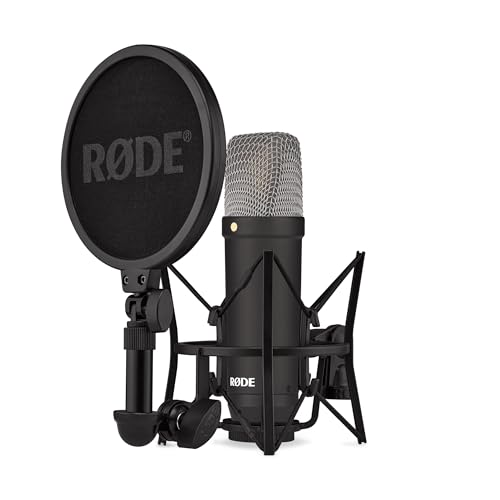
- Extremely low 4dBA self-noise for clean recordings
- Cardioid condenser with included shock mount and pop filter
- Requires an audio interface and XLR connection
Best For: Vocals, streaming, and podcasting with an interface
Room-Noise Rejection Pick
RØDE PodMic Cardioid Dynamic Broadcast Microphone

- Dynamic cardioid capsule rejects room noise and background sound
- Integrated swing-mount and internal pop filter
- XLR only; requires an audio interface
Best For: Podcasting and voice recording in untreated spaces
Voice-Isolating XLR Pick
Shure MV7X for podcasting and vocal recording

- Dynamic cardioid helps cut room noise
- Integrated shock mount reduces vibration
- XLR-only for interface and mixer setups
Best For: Podcasters and vocal creators in untreated rooms
Flexible USB Studio Choice
Blue Yeti USB mic with Blue VO!CE

- Four pickup patterns for flexible use
- USB plug-and-play on Mac or PC
- Onboard controls for fast adjustments
Best For: Creators who want an easy, flexible USB mic
Dual-Mode Budget Dynamic
FIFINE AM8 for gaming and vocal recording

- Cardioid dynamic pickup rejects off-axis sound
- USB and XLR connection options
- Mute, gain, and monitoring controls
Best For: Gamers and beginner creators in untreated rooms
Calibration USB Meter – UMIK-1 USB Measurement Calibrated Microphone
If you need a microphone for untreated rooms, the UMIK-1 is built for measurement-first work rather than recording vocals. Its unique calibration file and plug-and-play USB connection make it easy to use with room EQ and analysis software on Windows, Mac, Linux, and iDevices.
Best For: Home theater owners, hobbyists, and calibrators who want a simple USB measurement mic for room correction.
Pros:
- Unique calibration file for each unit helps with more precise SPL monitoring and room measurements.
- USB, driverless setup works across Windows, Mac, Linux, and iDevices.
- Compatible with acoustic tools like Dirac Live, REW, and Smaart.
- Includes mini tripod, USB cable, windscreen, and padded case.
Cons:
- Omnidirectional measurement design is not meant for typical vocal recording use.
- USB-only connection may not suit XLR-based studio rigs.
For untreated rooms, the UMIK-1 is a practical choice when you want straightforward setup and software compatibility more than studio mic versatility. The included accessories also make it convenient to carry and position during calibration sessions.
Budget Room EQ Pick – BEHRINGER ECM8000
The BEHRINGER ECM8000 is a straightforward microphone for untreated rooms when you want a true omnidirectional measurement mic with a flat response. It is designed for room equalization, high-resolution studio use, and live applications, and it runs on phantom power from +15 to +48 V.
Best For: Budget-minded users who need an XLR measurement mic for room EQ and acoustic testing.
Pros:
- Ultra-linear condenser design with exceptionally flat frequency response.
- True omnidirectional pattern suits room equalization and measurement work.
- Works with phantom power from +15 to +48 V.
- Compact, simple XLR setup for interfaces and mixers.
Cons:
- XLR connection means you need phantom power and compatible gear.
- Supplied notes do not mention a calibration file or included accessories.
If your priority is basic room measurement over extra features, the ECM8000 stays focused on the essentials. It is a practical fit for untreated rooms where flat response and omnidirectional capture matter most.
Acoustic Test Tool – Superlux ECM999 Measurement Microphone
The Superlux ECM999 is a solid microphone for untreated rooms when you want a measurement mic built for calibration, sound analysis, and speaker testing. Its omnidirectional condenser design, flat 20 Hz to 20 kHz response, and XLR connection make it well suited to room correction setups.
Best For: Home theater and studio users who want a measurement mic with included accessories and phantom power support.
Pros:
- Flat 20 Hz to 20 kHz response is designed for room calibration and acoustic testing.
- Handles up to 132 dB SPL for quiet and high-volume measurements.
- Works with 12V to 52V phantom power and XLR-based systems.
- Includes carrying case, mic clip, and windscreen.
Cons:
- XLR cable is required but not included.
- Calibration file details are tied to the packaging information slip.
For untreated rooms, the ECM999 gives you the features needed for practical measurement without overcomplicating the setup. The included accessories are helpful if you plan to move it between calibration sessions.
Install-Ready Boundary Mic – Shure MX393/O Condenser Microphone
The Shure MX393/O is less of a traditional room-measurement mic and more of an install-focused option for untreated rooms where a low-profile boundary design is useful. Its flat frequency response, omnidirectional pickup, and balanced transformerless output are aimed at clean, unobtrusive capture and long cable runs.
Best For: Fixed installations, conference setups, and situations where a discreet omni boundary mic is preferred.
Pros:
- Flat frequency response across the vocal range for uncolored sound.
- Low-profile boundary design stays unobtrusive in an installation.
- Balanced transformerless output improves noise immunity over long cable runs.
- Includes programmable membrane on/off switch and LED indicator.
Cons:
- Boundary form factor is not the typical choice for standard room calibration workflows.
- Requires phantom power to operate.
If your untreated room setup calls for a discreet installed microphone rather than a dedicated measurement tool, the MX393/O has the right form factor. It is best viewed as a specialty pick for integrated audio and conference applications.
USB-C Measurement Pick – Dayton Audio iMM-6C Calibrated Measurement USB-C Microphone
If you need a microphone for untreated rooms, the Dayton Audio iMM-6C is built for measurement rather than performance. Its calibrated flat response and true omnidirectional pattern make it a practical choice for checking room acoustics, speaker response, or tuning a setup from a smartphone or tablet with USB-C.
Best For: Room measurements, calibration, and acoustic testing from a USB-C phone or tablet.
Pros:
- Calibrated flat frequency response for critical measurement work
- True omnidirectional pickup helps capture room behavior consistently
- USB-C compatibility works with smartphones, tablets, and laptops
- Headphone/line out pass-through jack supports test signals or monitoring
Cons:
- Designed for measurement, not vocal recording or streaming
- Requires a USB-C device to use directly
For untreated rooms, this mic is about accuracy and repeatability, not adding polish to the sound. If your goal is to measure what the room is doing and make informed adjustments, the iMM-6C is the most specialized option here.
Studio Condenser Choice – RØDE NT1 Signature Series Large-Diaphragm Condenser Microphone
When choosing a microphone for untreated rooms, the RØDE NT1 Signature Series is the condenser option to consider if you want a detailed vocal sound and can control the space as much as possible. Its cardioid pattern and extremely low 4dBA self-noise make it a strong fit for clean recordings, while the included shock mount, pop filter, and XLR cable help get you set up quickly.
Best For: Vocals, streaming, and podcasting in a controlled recording setup with an audio interface.
Pros:
- Exceptionally low 4dBA self-noise
- Cardioid pickup helps focus on the front of the mic
- Shock mount, pop filter, and XLR cable are included
- Built with premium components and backed by a 10-year warranty
Cons:
- Requires an audio interface and XLR connection
- Condenser design can be less forgiving in untreated rooms than a dynamic mic
This is the most refined sounding microphone in the group, but it rewards better room control and recording technique. If you can manage reflections and want a very quiet studio condenser, it is a compelling pick.
Room-Noise Rejection Pick – RØDE PodMic Cardioid Dynamic Broadcast Microphone
If you want a microphone for untreated rooms, the RØDE PodMic is the safest vocal choice in this lineup because its dynamic cardioid capsule is designed to reject room noise and background sound. It uses XLR only, so it works best with an audio interface or RØDECaster, but the tradeoff is a more forgiving broadcast-style capture in less controlled spaces.
Best For: Podcasting, streaming, and broadcast-style voice recording in noisy or untreated spaces.
Pros:
- Dynamic cardioid capsule helps reject room noise and background sound
- Integrated swing-mount and internal pop filter simplify setup
- Broadcast-grade build with internal shock mount
- Rich, balanced voice tone for spoken-word use
Cons:
- XLR only and requires an audio interface
- Not a plug-and-play USB microphone
For untreated rooms, this is the most forgiving recording mic of the three. If your priority is reducing room pickup and getting a clean voice sound with simple broadcast hardware, the PodMic is the practical pick.
Voice-Isolating XLR Pick – Shure MV7X for podcasting and vocal recording
If you need a microphone for untreated rooms, the Shure MV7X is built around dynamic, cardioid voice capture that helps reduce room noise and background distractions. Its integrated shock mount also helps cut down unwanted vibrations, making it a practical choice for spoken-word recording when you want cleaner vocals without extra studio treatment.
Best For: Podcasters, streamers, and vocal recordists who want focused voice isolation with XLR flexibility.
Pros:
- Dynamic cardioid design helps reject off-axis noise in less controlled spaces.
- Integrated shock mount reduces vibration handling for cleaner recordings.
- XLR-only output works with interfaces and mixers for more control.
- All-metal build and yoke mount suit regular studio use.
Cons:
- Requires an audio interface or mixer because it is XLR-only.
- No built-in USB plug-and-play option for quick direct use.
The MV7X is a strong fit if your room is not acoustically treated and you want a broadcast-style mic that favors voice clarity over ambient detail. It is especially appealing for creators who already use XLR gear and want a durable, focused microphone.
Flexible USB Studio Choice – Blue Yeti USB mic with Blue VO!CE
The Blue Yeti is a versatile microphone for untreated rooms if you want an easy USB setup and the ability to adjust pickup behavior. Its four patterns, onboard gain controls, and adjustable desktop stand make it simple to position and tune for streaming, calls, or recording when your space is not ideal.
Best For: Streamers, podcasters, and PC creators who want plug-and-play flexibility.
Pros:
- Four pickup patterns offer flexibility for different recording scenarios.
- Blue VO!CE software adds vocal effects and HD audio processing.
- Onboard controls make quick adjustments easy during use.
- USB plug-and-play setup is convenient for Mac or PC.
Cons:
- As a condenser mic, it may pick up more room sound than a dynamic mic.
- Desktop stand setup may need careful positioning in noisy spaces.
The Blue Yeti is best when convenience and versatility matter more than maximum rejection of room reflections. For untreated rooms, its usefulness comes from setup flexibility and control, though it is less isolation-focused than a dynamic broadcast mic.
Dual-Mode Budget Dynamic – FIFINE AM8 for gaming and vocal recording
If you want a microphone for untreated rooms with more noise rejection, the FIFINE AmpliGame AM8 uses a directional cardioid dynamic design that is meant to reject unwanted off-axis sound. It also gives you a choice between USB and XLR, so you can start simple and later move to a more advanced setup.
Best For: Gamers and beginner creators who want dynamic voice isolation with USB/XLR flexibility.
Pros:
- Cardioid dynamic capsule helps isolate voice from ambient noise.
- USB mode offers quick plug-and-play convenience.
- XLR mode adds upgrade potential with interfaces or mixers.
- Built-in mute, gain, and monitoring controls are useful for live use.
Cons:
- RGB and some controls are unavailable when using XLR.
- XLR cable is not included.
The AM8 is a practical option for untreated rooms because it focuses on direct voice capture and includes tools that help manage recording on the fly. It is especially appealing if you want one mic that can handle both casual USB use and a more refined XLR setup later.
How We Picked the Best Microphone for Untreated Rooms
We prioritized models that are practical in real-world spaces with minimal acoustic treatment. That means looking at polar pattern, self-noise, off-axis rejection, intended use, connection type, and how much room sound each mic is likely to capture. For measurement models, accuracy and calibration matter most. For voice and content creation, we favored designs that can reduce room reflections and background noise without demanding a fully treated studio.
Quick Comparison
Measurement microphones like the UMIK-1, ECM8000, ECM999, MX393/O, and iMM-6C are best when your goal is room analysis or calibration. For spoken-word recording in a difficult space, dynamic microphones such as the PodMic, MV7X, and AM8 usually offer better rejection of room noise than sensitive condensers. Condenser options like the NT1 and Blue Yeti can sound detailed, but they generally reward better placement and more careful gain staging in an untreated room.
Key Buying Factors for a Microphone for Untreated Rooms
Polar Pattern and Off-Axis Rejection
A cardioid or supercardioid pattern can help reduce reflections and side noise. Omnidirectional mics are usually better for measurement than for vocal recording in bad rooms because they pick up more of the space around them.
Mic Sensitivity and Room Noise
Highly sensitive condensers can capture more detail, but they also reveal echo, computer noise, and HVAC rumble. If your room is not treated, a dynamic mic often gives a cleaner, more controlled result for voice.
Connection and Workflow
USB mics are simple and convenient, while XLR models offer more flexibility with interfaces and signal chains. For measurement tasks, compatibility with your device and calibration software is essential.
Use Case Match
The best Microphone for Untreated Rooms depends on the job. Measurement-focused buyers should choose calibrated omnidirectional models. Streamers and podcasters should lean toward dynamic voice mics. Musicians who want more detail may prefer a condenser, but only if they can manage placement and input levels carefully.
Who Should Buy Which Microphone for Untreated Rooms?
If you need room correction or testing, choose a calibrated measurement mic. If you want the most forgiving vocal capture in a noisy or reflective room, a dynamic broadcast or podcast mic is usually the safer pick. If you need an all-purpose USB option for casual streaming or content creation, a well-designed USB mic can still work well as long as you keep it close and control gain. For music recording, an NT1-style condenser can deliver excellent detail, but it is the least forgiving option here if your room sounds harsh.
In short, the best Microphone for Untreated Rooms is the one that matches your space, your source, and your workflow—not just the one with the most features.