
If your desk is short on space, the right monitor can make a big difference. A compact display keeps your setup clean without sacrificing everyday comfort, sharpness, or versatility.
These picks for computer monitors for small desks focus on size, value, and practical features like VESA support, slim stands, portable designs, and efficient connectivity.
Best 10 Computer Monitors for Small Desks Picks for 2026
Compact Office Pick
Acer 21.5in FHD 100Hz Office Monitor

- 21.5-inch Full HD display with a compact footprint
- 100Hz refresh rate with Adaptive-Sync support
- Near bezel-less design works well in multi-monitor setups
Best For: Small desks, office use, and smoother everyday viewing
Smallest-Footprint Choice
ViewSonic 19 Inch Compact Office Monitor

- 19-inch size fits very small desks
- HDMI and VGA support modern and legacy devices
- Flicker-Free and Blue Light Filter improve comfort
Best For: Very tight desks and basic office or school tasks
Balanced Everyday Display
Philips 24 Inch FHD 100Hz Monitor

- 23.8-inch Full HD screen balances size and usability
- 100Hz VA panel with strong contrast
- Three-sided near bezel-free design looks clean on desks
Best For: Daily office work and readers who want a compact 24-inch screen
Desk-Saving Gaming Pick

- 22-inch Full HD display fits smaller desks
- 144Hz refresh rate with 1ms response time
- Built-in speakers help keep the setup clutter-free
Best For: Compact gaming setups and clutter-conscious workspaces
Compact 22-Inch Desk Fit
KOORUI 22" FHD 120Hz VA Monitor

- 21.5-inch viewable 1080p display
- 120Hz with Adaptive-Sync
- TÜV low blue light and VESA support
Best For: Small desks, students, and everyday home office use
Fast 24-Inch Everyday Option
Dell SE2426H 23.8" IPS 144Hz Monitor
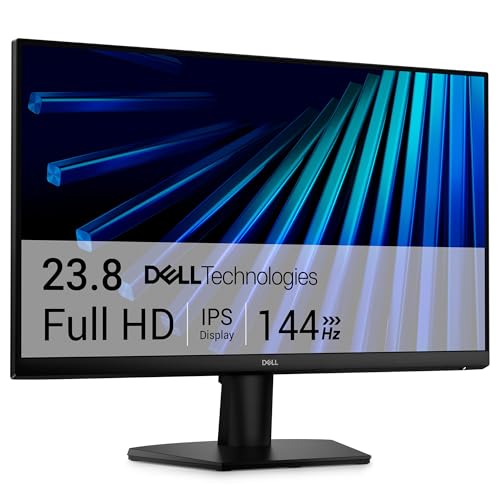
- 23.8-inch Full HD display
- 144Hz refresh rate with 1ms MPRT
- IPS panel with wide 178° viewing angles
Best For: Small desks, everyday use, and smooth streaming or light gaming
Ultra-Portable Space Saver
WGK 15.6" FHD Portable Monitor

- 15.6-inch Full HD IPS portable display
- 2.7 lb design with built-in stand
- USB-C and Mini HDMI plug-and-play
Best For: Tiny desks, travel, and portable second-screen setups
Compact 24-inch pick for smoother everyday use

- 23.8-inch FHD size suits smaller desks
- 144Hz and 1ms MPRT for smoother motion
- Built-in speakers and full stand adjustability
Best For: People who want a compact monitor with smooth performance and easy ergonomic setup
Portable second-screen option for tight spaces

- 15.6-inch portable design saves desk space
- USB-C and mini HDMI support flexible setup
- FHD IPS panel with HDR and built-in speakers
Best For: Laptop users needing a lightweight, easy-to-store second screen
Compact Office Pick – Acer 21.5in FHD 100Hz Office Monitor
If you want computer monitors for small desks that still feel comfortable to use every day, this Acer 21.5-inch model is a practical fit. Its 1080p VA panel keeps text sharp, while the near bezel-less design helps it feel less bulky on a tight workspace.
Best For: Small desks, home offices, and users who want a compact monitor with smoother motion than standard 60Hz options.
Pros:
- 21.5-inch Full HD panel keeps the footprint modest while preserving clear text and detail.
- 100Hz refresh rate and Adaptive-Sync support can make scrolling and video playback feel smoother.
- 1ms response time helps reduce smearing and ghosting in fast-moving scenes.
- ZeroFrame design is useful if you want to place multiple screens side by side.
Cons:
- At 21.5 inches, it may feel small if you prefer a larger work area.
- Connectivity is limited to HDMI and VGA.
- Only one HDMI port is listed.
This is a solid choice when desk space matters but you still want a sharper, faster-feeling display than basic budget office monitors. It balances compact sizing with useful office and light gaming features.
Smallest-Footprint Choice – ViewSonic 19 Inch Compact Office Monitor
For computer monitors for small desks, this 19-inch ViewSonic is one of the most space-conscious options here. Its WXGA resolution and compact widescreen design make it a straightforward pick for basic office tasks, school work, or legacy setups where size and simplicity matter most.
Best For: Tight workspaces, legacy compatibility, and users who prioritize a compact screen over higher resolution.
Pros:
- 19-inch size is well suited to very small desks and limited setups.
- HDMI and VGA inputs support both modern and older devices.
- Flicker-Free technology and a Blue Light Filter add comfort for longer sessions.
- ViewMode presets make it easy to switch between text, web, movie, and other modes.
Cons:
- 1366 x 768 resolution is lower than Full HD models.
- 60Hz refresh rate is basic.
- It is better suited to simple productivity than detailed creative work.
This monitor makes sense if your main goal is to save space and keep the setup uncomplicated. It is the most compact option in this group, though the lower resolution is the trade-off for that smaller size.
Balanced Everyday Display – Philips 24 Inch FHD 100Hz Monitor
If you want computer monitors for small desks but still need a larger, more comfortable workspace, this Philips 24-inch display is a strong middle ground. It keeps the footprint reasonable while offering Full HD clarity and a three-sided near bezel-free design that looks clean on crowded desks.
Best For: Users who want a compact-but-not-too-small monitor for office work, reading, and everyday viewing.
Pros:
- 23.8-inch Full HD panel offers a comfortable amount of screen space without going oversized.
- 100Hz refresh rate can make general use and motion feel smoother.
- VA panel provides deeper blacks and brighter whites for better contrast.
- EasyRead mode is helpful for lengthy documents and reading-heavy work.
Cons:
- It is still larger than the 19- and 21.5-inch alternatives for very tight desks.
- Only general feature details are provided, so advanced ergonomics are not highlighted in the notes.
This is a sensible pick if you want a desk-friendly monitor that does not feel cramped during daily work. The mix of 24-inch size, Full HD resolution, and cleaner bezel design makes it versatile for most small-office setups.
Desk-Saving Gaming Pick – Sceptre 22-Inch 144Hz Monitor
Among computer monitors for small desks, this Sceptre 22-inch model stands out if you want faster motion without giving up too much space. It pairs a compact size with a 144Hz refresh rate, built-in speakers, and a near bezel-free design that helps the monitor feel less intrusive on a crowded desk.
Best For: Small desks, casual gaming, and users who want integrated speakers to reduce clutter.
Pros:
- 22-inch Full HD screen keeps the monitor relatively compact.
- 144Hz refresh rate and 1ms response time are suited to smoother gaming motion.
- Built-in speakers can help reduce desk clutter.
- Blue-Light Shift and matte screen are useful for longer viewing sessions.
Cons:
- It is primarily a gaming-oriented monitor, so some buyers may not need the higher refresh rate.
- Only one HDMI port is listed.
- The notes do not mention height adjustment or other stand flexibility beyond wall mounting.
This is a smart pick if you want a compact monitor that still feels responsive for play or fast-moving content. The built-in speakers and minimal bezel design also make it easy to keep a small desk looking tidy.
Compact 22-Inch Desk Fit – KOORUI 22" FHD 120Hz VA Monitor
If you want computer monitors for small desks, this 22-inch KOORUI keeps the footprint modest while still giving you a full HD workspace for documents, classes, browsing, and everyday office tasks. The slim bezel design helps the setup feel cleaner, and the included tilt adjustment makes it easier to position in tight spaces.
Best For: Students, remote workers, and home office users who need a space-saving 1080p monitor with smoother-than-standard scrolling.
Pros:
- 21.5-inch viewable area with 1920 x 1080 resolution for clear everyday work
- 120Hz refresh rate with Adaptive-Sync for smoother scrolling and video playback
- TÜV-certified low blue light and flicker-free design for long sessions
- VESA 100 x 100mm support helps with arms, wall mounts, or dual-monitor setups
Cons:
- HDMI and VGA only; DisplayPort is not supported
- USB-C or Thunderbolt devices need a separate USB-C to HDMI adapter
- Smaller 21.5-inch viewable area may feel compact if you want extra screen real estate
Overall, this is a practical pick if desk space is limited and you want a straightforward monitor that balances size, eye comfort, and smoother motion. It is especially appealing for simple productivity setups where a small, clean footprint matters.
Fast 24-Inch Everyday Option – Dell SE2426H 23.8" IPS 144Hz Monitor
For computer monitors for small desks, this Dell 23.8-inch model gives you a slightly larger screen without going oversized, making it a good fit when you want a compact desktop setup with room to work. Its IPS panel, thin bezels, and 144Hz refresh rate make it a flexible choice for everyday use, streaming, and light gaming.
Best For: Users who want a compact 24-inch-class monitor with IPS color consistency and very smooth motion.
Pros:
- 23.8-inch Full HD screen fits small desks better than many larger monitors
- 144Hz refresh rate and 1ms MPRT for fluid motion
- IPS technology with 178°/178° viewing angles for consistent color
- Ultra-thin bezels help keep the setup looking clean and compact
Cons:
- Tilt-only stand, so ergonomic adjustment is limited
- Not as compact as a 22-inch or portable display if space is extremely tight
- Best motion benefits depend on a device and use case that can take advantage of high refresh rates
This Dell is a strong middle ground if you need a monitor that still feels manageable on a small desk but offers a more premium look and smoother everyday motion. It is a practical all-rounder for mixed work and entertainment.
Ultra-Portable Space Saver – WGK 15.6" FHD Portable Monitor
If your priority is maximum desk space, this 15.6-inch portable monitor is one of the most flexible computer monitors for small desks because it adds a second screen without taking over your workspace. It is easy to carry, supports plug-and-play connections over USB-C or HDMI, and includes a built-in stand for quick positioning.
Best For: Tight workspaces, travel setups, and users who want a lightweight second screen.
Pros:
- 15.6-inch Full HD IPS screen with 178° viewing angle
- Very lightweight at 2.7 pounds, making it easy to move and store
- Dual USB-C ports and Mini HDMI for simple plug-and-play use
- Built-in stand and VESA support add flexibility for desk placement
Cons:
- 60Hz refresh rate is more basic than standard desktop monitors
- May need a 5V2A charger for stable operation in some setups
- Smaller 15.6-inch size is better as a secondary screen than a main desktop monitor
This WGK model makes the most sense when desk space is at a premium and portability matters more than a large permanent display. As a secondary screen, it can be a very practical way to expand productivity without clutter.
Compact 24-inch pick for smoother everyday use – Dell 24 Plus Monitor
If you want computer monitors for small desks without giving up a comfortable screen size, this 23.8-inch Dell keeps the footprint manageable while still offering a sharp FHD view. It leans into smooth motion, built-in sound, and flexible adjustment, making it a practical fit for work, casual gaming, and general use.
Best For: Users who want a compact desktop monitor with 144Hz smoothness, built-in speakers, and strong ergonomic adjustment.
Pros:
- 23.8-inch FHD panel fits better on tight desks than larger monitors
- 144Hz refresh rate and 1ms MPRT support smoother viewing
- Integrated dual 3W speakers reduce the need for external audio
- Height, tilt, pivot, and swivel adjustability help fine-tune placement
Cons:
- HDMI connectivity is simple, but the notes do not mention USB-C
- Built-in speakers are convenient, but not a replacement for dedicated audio gear
Overall, this is a strong small-desk choice if you want a monitor that stays compact but still feels premium in daily use. The adjustable stand and eye-comfort focus make it especially practical for longer sessions.
Portable second-screen option for tight spaces – Anyuse 15.6" Portable Monitor
Among computer monitors for small desks, a portable display like this Anyuse model is useful when you need an extra screen without committing permanent space. Its 15.6-inch FHD IPS panel, thin body, and USB-C plug-and-play design make it easy to bring out when you need it and put away when you do not.
Best For: Laptop users who need a lightweight portable second screen that can be set up quickly on a cramped desk.
Pros:
- 15.6-inch portable format is easy to place and store on small desks
- FHD IPS screen with 178° viewing angle and HDR support
- Two Type-C ports and one mini HDMI port for flexible connections
- Built-in speakers add convenience for meetings and casual use
Cons:
- Requires a compatible USB-C port with DP Alt Mode for full plug-and-play use
- Best as a secondary display rather than a main desktop monitor
This is a smart space-saving choice if your desk is too small for a full-size monitor setup. It is especially appealing for work-from-home, travel, and presentation use where portability matters as much as screen quality.
Budget-friendly small desk monitor – SKitphrati 15.6 Inch Monitor
If you are shopping for computer monitors for small desks, this 15.6-inch SKitphrati display keeps the footprint minimal while still delivering a full HD workspace. The VA panel, 99% sRGB color coverage, and simple HDMI/VGA connectivity make it a straightforward choice for compact home offices and basic everyday use.
Best For: Buyers who want an affordable small monitor that fits a little table or cramped workstation.
Pros:
- 15.6-inch size is specifically suited to very small desks
- FHD resolution with 99% sRGB color coverage for solid image quality
- HDMI and VGA ports support older and newer devices
- 75Hz refresh rate is a modest step above standard 60Hz displays
Cons:
- 75Hz and 5ms specs are more basic than gaming-focused monitors
- No built-in speakers are mentioned in the supplied notes
This model makes sense when desk space is the priority and you want a simple, easy-to-place monitor. It is not the most feature-rich option, but the compact size and broad compatibility are the main selling points.
How We Picked These Computer Monitors for Small Desks
We focused on displays that fit comfortably on compact workspaces while still offering a useful screen size for daily tasks, streaming, light gaming, and hybrid home-office use. Priority went to models with space-saving stands, narrow bezels, VESA compatibility, portable form factors, and easy connections such as HDMI or USB-C.
We also favored screens that balance size with comfort. For small desks, a monitor should be easy to position at a workable viewing distance, not overpower the tabletop, and avoid unnecessary bulk in the base or rear housing.
Quick Comparison
In general, 15.6-inch portable monitors are the most desk-friendly when every inch matters. 19- to 22-inch displays are a strong middle ground for basic productivity and mixed-use setups. If you want more workspace without crowding a small desk, 23.8- to 24-inch monitors can still work well, especially when they use slim stands or VESA mounting.
Key Buying Factors for Computer Monitors for Small Desks
Screen Size and Desk Depth
Measure your desk before buying. A 24-inch monitor can be fine on a small desk, but only if you have enough viewing distance and a stand that does not eat up too much surface area. If your desk is especially shallow, a 15.6-inch or 19-inch model may be the smarter choice.
Stand Footprint and Mounting
Look closely at the base shape. Thin, centered stands are usually easier to fit than wide legs or deep feet. VESA mounting is especially useful for Computer Monitors for Small Desks because it frees up surface space and makes it easier to place the screen at eye level.
Resolution and Image Quality
For these sizes, Full HD is usually the sweet spot. It provides enough clarity for office work, browsing, and video calls without pushing price or power consumption too high. If you plan to read text for long periods, a sharp panel and good viewing angles matter more than raw refresh rate.
Ports and Flexibility
Check that the monitor matches your devices. HDMI is the most universal, while USB-C can simplify portable and laptop-based setups. Built-in speakers can reduce clutter, though external audio is often better if sound quality matters.
Who Should Buy Which Computer Monitors for Small Desks?
If you want the smallest possible footprint, choose a portable 15.6-inch display. If you need a primary everyday monitor for office work, a 21.5- to 22-inch screen is often the best balance. If you want extra room for multitasking and can spare a little more desk space, a 23.8- to 24-inch monitor is the strongest all-around option.
For gamers on compact setups, look for higher refresh rates and low-latency features. For hybrid workers and students, prioritize comfort, connectivity, and a stand that keeps the desk feeling open and organized.