
Cassette recorders can give podcast creators a tactile backup format, a lo-fi sound, or a simple way to capture interviews without relying on a phone app. The best choice depends on whether you need clean tape transfers, portable field recording, or basic voice memos.
These 10 models range from full-size dual cassette decks with USB connectivity to compact battery-powered recorders with built-in microphones. Use the guide below to match features, connectivity, and recording convenience to your workflow.
Best 10 Cassette Recorders for Podcasts Picks for 2026
Best Professional-Style Deck
Tascam 202MKVII Double Cassette Recorder

- Dual cassette deck with USB connectivity
- Full-size design for dedicated setups
- Includes one-year parts warranty
Best For: Home studios and cassette archiving
Best Portable Digital Converter
K7 Cassette Player and MP3 Recorder

- Records voice to MP3 on a 16GB SD card
- Built-in microphone and speaker
- Rechargeable and lightweight
Best For: Mobile voice notes and tape conversion
Best All-In-One Connectivity
QFX RETRO-39BT Cassette Recorder

- Records between USB and cassette
- Supports Bluetooth, FM, mic, and line-in
- Runs on AC power or four C batteries
Best For: Multi-source recording and playback
Best Compact Conversion Toolkit
SEMIER Cassette-to-MP3 Recorder

- Converts tapes to SD card or via USB
- Built-in mic, LCD, speaker, and headphones jack
- USB-C or four AA battery power
Best For: Portable Type I tape conversion
Best One-Touch Pick
Jensen MCR-100 Cassette Recorder

- One-touch recording
- Automatic level control
- Auxiliary input and built-in microphone
Best For: Beginners recording spoken notes, interviews, or podcast ideas
Best Portable Interview Option
Proscan PRC124AMZ Cassette Recorder

- Free-standing microphone included
- External microphone jack
- One-touch recording with level control
Best For: Mobile interviews, classes, and conference recordings
Best Radio-and-Recording Combo
Mersoco T201BUS Cassette Recorder
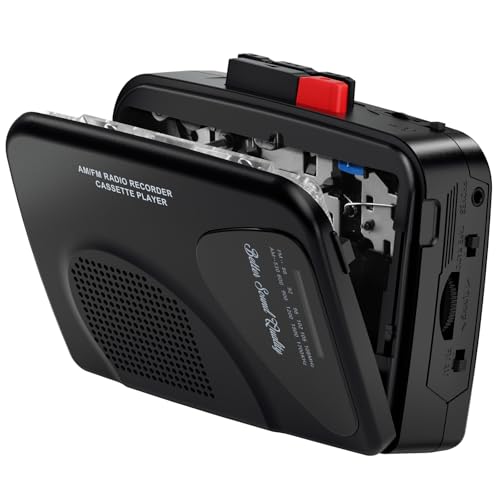
- AM/FM radio built in
- Voice-activated recording
- Battery or 5V DC power
Best For: Portable notes, radio capture, and casual outdoor recording
Best Compact Pick
TOMASHI Portable Cassette Recorder

- Compact and lightweight design
- Built-in microphone and speaker
- Automatic stop protects tapes
Best For: Portable voice notes and simple interviews
Best Simple Controls

- Built-in microphone for voice recording
- Battery or AC-powered operation
- Headphone jack and aux input
Best For: Beginners and accessible everyday recording
Best Recording Flexibility
Deluxe Products Cassette Recorder

- Mic and aux recording options
- Includes external mic and cables
- AC adapter included
Best For: Microphone or device-to-cassette recording
Best Professional-Style Deck – Tascam 202MKVII Double Cassette Recorder
Tascam 202MKVII Double Cassette Deck Recorder with USB Port, Dual Cassette Deck
Check Price On AmazonFor shoppers comparing cassette recorders for podcasts, the Tascam 202MKVII is the most deck-oriented option here. Its dual cassette design and USB connectivity make it a practical fit for a more permanent recording setup, though its 14.5-pound size is better suited to a studio or desk than mobile use.
Best For: Home studios, archival setups, and users who want a full-size dual cassette deck with USB connectivity.
Pros:
- Dual cassette deck design.
- USB connectivity for compatible devices such as smartphones.
- Full-size deck construction with a one-year parts warranty and 90 days of labor coverage.
Cons:
- Heavy at 14.5 pounds and relatively large at approximately 22 x 15 x 9 inches.
- Designed as a cassette deck rather than a compact, built-in-microphone recorder.
The 202MKVII stands out when you want traditional deck hardware and dual-cassette functionality. Its footprint and weight make it less convenient for portable podcast recording, but they may be worthwhile for a dedicated workspace.
Best Portable Digital Converter – K7 Cassette Player and MP3 Recorder
For portable cassette recorders for podcasts, the K7 combines tape playback with digital MP3 recording. Its built-in microphone, included 16GB SD card, rechargeable battery, and compact 0.22-kilogram body make it convenient for quick voice notes, interviews, and on-the-go tape conversion.
Best For: Mobile users who want a lightweight cassette player that records voice directly to an SD card.
Pros:
- Built-in microphone and speaker for recording and playback.
- Converts cassette audio to MP3 files stored on the included 16GB SD card.
- Rechargeable 1000mAh battery, USB-C charging, earphones, and 3.5mm headphone jack.
Cons:
- Does not record audio onto cassette tapes.
- Its built-in microphone is intended for simple recordings rather than a multi-microphone podcast setup.
The K7 is a convenient choice when digital storage matters more than recording back onto tape. It is especially appealing for lightweight recording and cassette-to-MP3 tasks, but users needing cassette recording should choose another model.
Best All-In-One Connectivity – QFX RETRO-39BT Cassette Recorder
The QFX RETRO-39BT is a flexible option among cassette recorders for podcasts, offering cassette, USB, Bluetooth, FM radio, line-in, and microphone support. It can record from USB to cassette or capture audio from cassette, Bluetooth, FM, a microphone, or line-in to USB.
Best For: Users who want broad source compatibility, built-in playback, and both AC and battery power.
Pros:
- Supports USB-to-cassette recording and recording from several sources to USB.
- Includes Bluetooth playback, FM radio, USB, line-in/out, and external microphone support.
- Portable carrying handle, built-in 3.5-inch speaker, and AC or four C-battery operation.
Cons:
- At 1.7 pounds, it is less compact than a pocket-style cassette converter.
- Four C batteries are required for battery operation and are not included.
This is the most versatile choice for mixing older and newer audio sources. Its connectivity suits varied recording workflows, while the larger body and battery requirements make it better for flexible transport than ultralight travel.
Best Compact Conversion Toolkit – SEMIER Cassette-to-MP3 Recorder
The SEMIER is a compact choice for cassette recorders for podcasts and personal audio projects. It records through its built-in microphone, saves audio to an SD card, and supports two cassette-to-MP3 workflows: direct SD-card conversion or USB transfer using the included Audacity software.
Best For: Users who want a small cassette converter with SD-card recording, USB transfer, and flexible power options.
Pros:
- Supports cassette-to-MP3 conversion to the included 16GB SD card or through USB and Audacity.
- Built-in microphone, 2W speaker, LCD, and 3.5mm headphone jack.
- Compact 6.3 x 3.9 x 1.2-inch design with USB-C power or four AA batteries.
Cons:
- Does not support Type IV or metal tapes.
- Four AA batteries are needed when not using USB-C power.
The SEMIER offers a strong feature mix for digitizing tapes and making simple recordings without a large deck. Its tape compatibility limitation is important, but for Type I tapes it provides useful storage and transfer choices in a portable design.
Best One-Touch Pick – Jensen MCR-100 Cassette Recorder
For shoppers comparing cassette recorders for podcasts, the JENSEN MCR-100 offers straightforward one-touch recording, a built-in condenser microphone, and automatic level control. Its auxiliary input also lets you connect compatible audio sources, making it useful for simple analog recording setups.
Best For: Beginners recording spoken notes, interviews, lectures, or simple podcast ideas.
Pros:
- One-touch recording is simple to operate.
- Automatic level control helps maintain consistent recording volume.
- Includes a built-in microphone, headphone jack, auxiliary input, and retractable handle.
- Can run from the included 120V AC adapter.
Cons:
- Mono microphone operation is more limited than a stereo setup.
- The listed warranty is limited to 90 days.
- Its cassette-based workflow is better suited to basic recording than modern digital podcast production.
The MCR-100 is a practical choice when ease of use matters most. Automatic level control and one-touch operation reduce setup work, while the auxiliary input adds flexibility for recording from other devices.
Best Portable Interview Option – Proscan PRC124AMZ Cassette Recorder
PROSCAN Cassette Player & Recorder with Microphone, Headphone Jack, Aux in, Black
Check Price On AmazonThe PROSCAN PRC124AMZ is one of the more practical cassette recorders for podcasts when portability and flexible microphone options are priorities. It combines one-touch recording with a free-standing microphone, an external microphone jack, and automatic level control.
Best For: Mobile interviews, classroom recordings, conferences, and users who want an included microphone option.
Pros:
- One-touch recording supports quick interview and lecture capture.
- Includes a free-standing microphone and external microphone jack.
- Automatic level control is designed to support clear, consistent recordings.
- Carry handle, headphone jack, AUX input, and AC/DC operation add flexibility.
Cons:
- At about 1.74 pounds, it is less lightweight than the most compact cassette recorders.
- The analog cassette format is not designed for direct digital podcast editing.
- Its plastic construction may be less suitable for rough handling than a more rugged recorder.
Choose the PROSCAN when a supplied microphone and external microphone connection are more important than minimizing size. Its one-touch controls and automatic level control make it well suited to uncomplicated spoken-word recording.
Best Radio-and-Recording Combo – Mersoco T201BUS Cassette Recorder
The Mersoco T201BUS combines cassette recording with AM/FM radio, making it a versatile option among cassette recorders for podcasts and field notes. It can record external sounds or radio broadcasts to cassette, and it supports voice-activated recording through its VAS function.
Best For: Users who want a compact recorder for spoken notes, radio capture, study material, or outdoor use.
Pros:
- Records external sounds and AM/FM broadcasts to cassette.
- Voice activation is available through the VAS system.
- Portable design supports two AA batteries or a 5V DC supply.
- Includes 3.5mm earphones and a USB-to-DC power cable.
Cons:
- AA batteries are required for battery-powered use.
- A 5V power adapter is not included.
- Its stated frequency response and cassette format are oriented toward basic recording rather than polished podcast audio.
The T201BUS stands out for flexibility rather than dedicated podcast features. Its radio tuner, VAS recording, dual power options, and included earphones make it convenient for casual recording away from a desk.
Best Compact Pick – TOMASHI Portable Cassette Recorder
If you want compact cassette recorders for podcasts or quick voice notes, the TOMASHI offers a straightforward portable setup. It includes a built-in microphone, speaker, headphone jack, and simple play, stop, fast-forward, rewind, and record controls.
Best For: Portable voice notes, language practice, and simple interview recording.
Pros:
- Compact, lightweight design for easy carrying.
- Built-in microphone supports convenient voice recording.
- Speaker and headphone listening options are included.
- Automatic stop helps reduce unnecessary tape and mechanism wear.
Cons:
- Requires two AA batteries or a USB power supply, which are not included.
- Its single built-in speaker is suited to basic listening rather than detailed monitoring.
The TOMASHI is a practical choice when portability and simple controls matter most. It is better suited to basic analog recording than to a full podcast production workflow.
Best Simple Controls – Coby Cassette Tape Recorder
For shoppers comparing cassette recorders for podcasts, the Coby emphasizes easy operation and flexible placement. Its built-in microphone records voice notes, lectures, or interviews, while battery or AC power supports use at home or away from an outlet.
Best For: Beginners, seniors, and straightforward voice recording at home or on the go.
Pros:
- Combines cassette playback and recording in one device.
- Built-in microphone avoids the need for extra equipment.
- Battery or AC power provides flexible use.
- Headphone jack and aux input support private or external listening.
Cons:
- Requires four C batteries when used without AC power.
- Its listed dimensions and 1.4-pound weight make it less compact than a pocket-style recorder.
The Coby is a sensible pick for users who value clear controls and versatile power options. It works well for basic spoken-word recording, though its larger design may be less convenient for highly mobile podcasting.
Best Recording Flexibility – Deluxe Products Cassette Recorder
The Deluxe Products model stands out among cassette recorders for podcasts because it can record through an included external microphone, its built-in condenser microphone, or an aux connection. That makes it useful for capturing spoken audio and transferring sound from compatible phones, laptops, or tablets to cassette.
Best For: Users who want microphone and aux recording options with included accessories.
Pros:
- Includes an external microphone, aux cable, and AC adapter.
- Supports recording from a microphone or compatible aux-connected device.
- Built-in speaker provides convenient cassette playback.
- Carrying handle and battery option improve portability.
Cons:
- Four C batteries are not included.
- Aux recording requires the connected device to have a headphone-out jack.
- The larger shoebox-style design is less compact than a pocket recorder.
This is the most flexible option of the three for creating cassette recordings from different sources. Its included accessories reduce setup friction, although the larger body makes it better for tabletop or carry-handle use than pocket portability.
How We Picked the Best Cassette Recorders for Podcasts
We focused on the features that matter when recording spoken audio: microphone availability, recording controls, playback reliability, power options, portability, and ways to move audio to another device. The selection includes dedicated cassette decks, portable tape recorders, and models that convert tapes to MP3 through USB, SD storage, or included memory.
Because cassette hardware varies widely, we also considered intended use. A full-size deck is better for controlled transfers and repeated playback, while a compact unit is more practical for interviews, rehearsal notes, or intentionally lo-fi podcast segments.
Quick Comparison
| Type | Best for | Features to prioritize |
|---|---|---|
| Full-size cassette deck | Studio transfers and archiving | USB output, dual wells, stable power |
| Portable cassette recorder | Interviews and field use | Built-in microphone, batteries, speaker |
| MP3 conversion player | Digitizing tapes | USB or SD recording, included storage |
| Basic tape recorder | Voice notes and simple production | One-touch recording, headphone jack, low cost |
Key Buying Factors for Cassette Recorders for Podcasts
Recording and Microphone Controls
Check whether the built-in microphone is intended for close speech or casual room recording. A simple one-touch button is convenient, but it may offer little control over levels. If you plan to record interviews, look for a headphone jack, an external microphone input, or an auxiliary input where available.
Digital Conversion and File Transfer
Choose USB or SD conversion if you need to edit cassette audio in podcast software. Confirm whether the device creates standard MP3 files and whether storage is included. A traditional deck may offer better tape handling, but it usually requires separate cables and recording hardware for digitization.
Power, Portability, and Monitoring
Battery operation is useful for mobile recording, while AC power suits a permanent setup. Built-in speakers help with quick playback, but headphones are preferable for checking speech quality and tape noise. Compact recorders are easier to carry but may have smaller controls and less consistent mechanics.
Tape Compatibility and Sound Expectations
These machines are generally designed for standard compact cassettes, not professional multitrack formats. Tape condition, motor stability, microphone quality, and room acoustics will affect results. For polished podcast dialogue, treat a cassette recorder as a characterful capture or backup tool rather than a replacement for a modern digital recorder.
Who Should Buy Which Cassette Recorders for Podcasts?
Choose a full-size USB cassette deck if you are archiving a collection, transferring interviews, or want steadier desktop operation. Choose an MP3 or SD conversion model if convenient digital access matters more than advanced tape controls. Choose a portable recorder with a built-in microphone for quick interviews, field notes, and deliberately retro production. Choose a basic recorder if you mainly need inexpensive voice capture, playback, or a backup recording format.
Before buying, verify the included accessories, storage capacity, power adapter, tape direction controls, and return policy. Those details often matter more to a podcast workflow than cosmetic features.