
Digitizing negatives, slides, and home movies can preserve memories while making them easier to share, print, and back up. The best film scanners for home use balance image quality, format support, ease of use, and sensible pricing.
This roundup compares 10 options, including compact all-in-one scanners, dedicated 35mm models, and Super 8 and 8mm film converters. Use the guide below to match the right scanner to your collection and workflow.
Best 10 Film Scanners for Home Use Picks for 2026
Best All-in-One Viewer
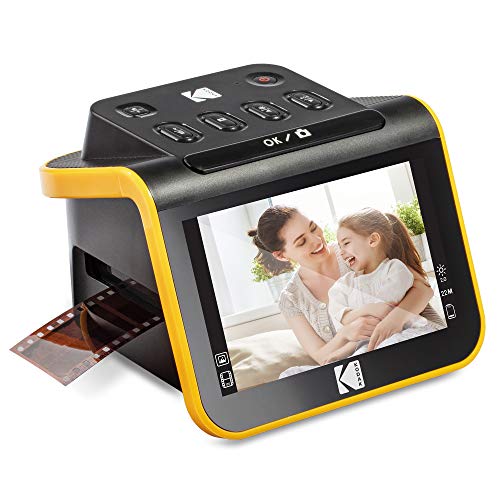
- Handles 135, 110, 126 film, and 50mm slides
- 5-inch LCD with gallery mode
- Direct SD-card saving and one-touch editing
Best For: Home users wanting simple, screen-based film digitization
Best for Advanced Color Work
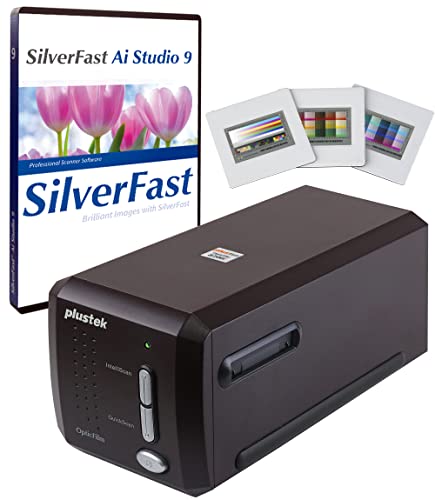
- CCD scanner for 35mm slides
- Includes SilverFast 9 and IT8 target
- Advanced infrared and HDRi processing
Best For: Enthusiasts seeking detailed 35mm scanning control
Best for Fast Format Flexibility

- Supports multiple negative, slide, and Super 8 formats
- Scans in less than five seconds each
- Built-in 5-inch display and direct image controls
Best For: Families digitizing varied film collections quickly
Best Large-Screen Workflow

- Tiltable 7-inch LCD for easier viewing
- Quick-feeding tray supports continuous scanning
- Supports 135, 110, and 126 film
Best For: Home users digitizing mixed collections in larger batches
Best for Super 8 and 8mm Reels
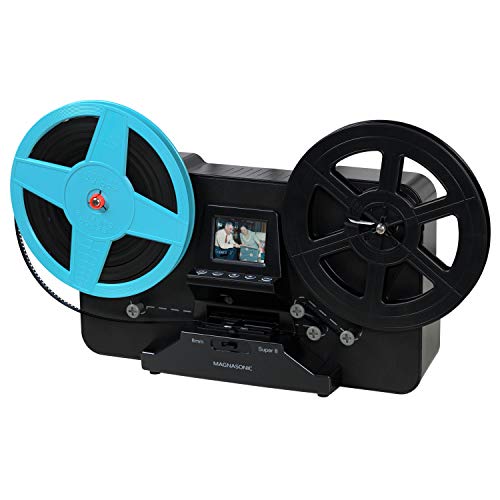
- Converts 3-, 5-, and 7-inch reels to MP4
- Standalone operation with no computer required
- Built-in display and RCA TV output
Best For: Home movie reel digitization
Best Touchscreen Slide and Negative Scanner

- 7-inch touchscreen for previewing and editing
- 13MP sensor for color and black-and-white originals
- Supports 135, 126, and 110 film formats
Best For: Simple home scanning of slides and negatives
Best Professional-Quality 35mm Scanning
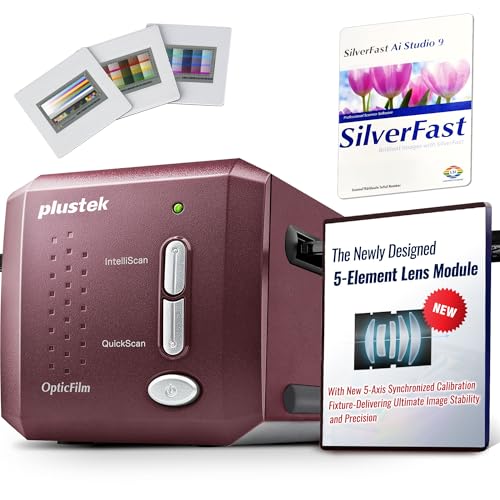
- Scans 35mm film at up to 7200 dpi
- Includes infrared dust and scratch removal
- Comes with SilverFast software and IT8 calibration
Best For: Serious 35mm film digitization
Versatile Format Pick
KODAK SCANZA Film & Slide Scanner
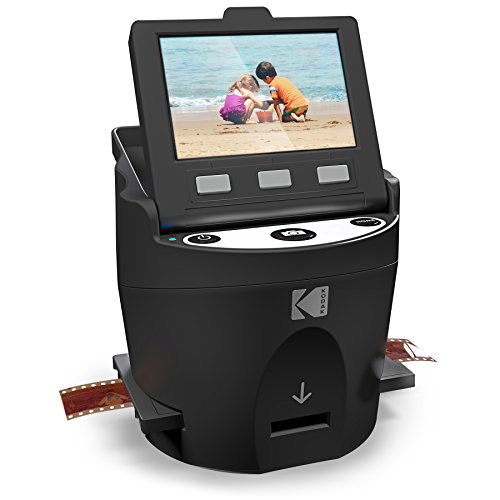
- Scans 35mm, 126, 110, Super 8, and 8mm formats
- 3.5-inch adjustable LCD with one-touch scanning
- Includes adapters, cables, and cleaning brush
Best For: Mixed-format home film collections
Large-Screen Value Pick

- 16MP and 22MP scan output options
- 5-inch LCD for preview and alignment
- SD-card storage and HDMI output
Best For: Computer-free home scanning with a larger display
Premium Display Pick

- Up to 24MP output with a CMOS sensor
- Large 7-inch LCD for comfortable previews
- Includes SD card and supports multiple film formats
Best For: Large-screen, higher-resolution home scanning
Best All-in-One Viewer – KODAK Slide N Scan 22MP
For film scanners for home use, the KODAK Slide N Scan is a convenient choice when you want to digitize several common film formats without relying heavily on a computer. Its large screen, direct SD-card saving, and simple controls make it practical for family archives and casual sharing.
Best For: Home users scanning 135, 110, and 126 negatives plus 50mm slides who want an integrated display and straightforward editing.
Pros:
- Supports 135, 110, and 126 film, plus 50mm slides.
- Large 5-inch LCD with gallery mode for previewing and sharing scans.
- One-touch controls adjust color, brightness, size, and date/time.
- Can save directly to SD or SDHC cards up to 32GB.
Cons:
- SD card is not included.
- Listed minimum system requirement is Windows 7, and computer connectivity is USB-based.
This model emphasizes convenience over advanced manual scanning controls. The included film adapters and direct-to-card workflow make it a useful fit for routine home digitization.
Best for Advanced Color Work – Plustek OpticFilm 8300i Ai
Among film scanners for home use, the Plustek OpticFilm 8300i Ai is aimed at users who want more control over 35mm scanning and color calibration. Its CCD sensor, high listed resolution, infrared features, and bundled SilverFast software support a more technical archiving workflow.
Best For: Enthusiasts and serious home archivists scanning 35mm slides who value calibration tools and detailed software adjustments.
Pros:
- Designed for 35mm slides and uses a CCD optical sensor.
- Includes SilverFast 9 Ai Studio and Plustek Quick Scan Plus.
- Bundles an ISO 12641-2-compliant advanced IT8 calibration target.
- Supports infrared iSRD, HDRi, 16-bit histogram, Multi-Exposure, and NegaFix features.
Cons:
- Focused on 35mm media rather than multiple film formats.
- Software features may require more time to learn than one-touch scanners.
- Requires USB connection and a compatible Windows or Mac computer.
This is the most calibration- and software-oriented option in the group. It makes the most sense when image control and repeatable color work matter more than a standalone display.
Best for Fast Format Flexibility – Magnasonic FS71 24MP
The Magnasonic FS71 is a practical pick for film scanners for home use when speed and broad format support are priorities. It scans several negative and slide types, saves JPEGs to an SD card, and offers basic adjustments directly on the device without requiring editing software.
Best For: Families digitizing mixed collections of 35mm, 110, 126, and Super 8 film with a quick, computer-free workflow.
Pros:
- Supports 35mm, 110, 126, and Super 8 negatives, plus 135, 126, and 110 slides.
- Scans images in less than five seconds each according to the supplied notes.
- Large 5-inch LCD supports viewing scans directly on the unit.
- Includes brightness, RGB color, flip, and mirror adjustments without extra software.
Cons:
- SD card and HDMI cable are not included.
- Its listed connection options may still be needed for computer or TV viewing beyond the built-in display.
The FS71 balances format coverage and ease of use well. Its direct controls and fast-loading trays make it especially suitable for larger batches of varied family film.
Best Large-Screen Workflow – KODAK Slide N Scan Max
The KODAK Slide N Scan Max stands out among film scanners for home use with its tiltable 7-inch display and quick-feeding tray. It is designed for users who want to preview, edit, and save scans with minimal repositioning and without needing a computer for every batch.
Best For: Home archivists who want a larger viewing screen, direct SD/SDHC storage, and support for mixed 135, 110, and 126 film collections.
Pros:
- Tiltable 7-inch LCD provides a larger preview and editing area.
- Quick-feeding tray supports continuous scanning without repositioning each frame.
- Handles 135mm, 110mm, and 126mm film formats.
- One-touch editing simplifies resizing, conversion, and image adjustments.
Cons:
- SD/SDHC card is not included and capacity is limited to 32GB.
- Listed connection type is USB, so external viewing options may be less extensive than models with HDMI.
The Max model is a strong convenience-focused choice for people who expect to scan many frames and want a screen that is easier to share around the home. Its format support is useful for mixed collections, though it is not positioned as a professional calibration scanner.
Best for Super 8 and 8mm Reels – Magnasonic FS81 Film Scanner
If you want film scanners for home use that handle movie reels without a computer, the Magnasonic FS81 is a straightforward option. It converts 3-, 5-, and 7-inch Super 8/8mm reels into 1080p MP4 video, with built-in controls for brightness, sharpness, and framing.
Best For: Home users digitizing Super 8 or 8mm movie reels for convenient playback and storage.
Pros:
- Converts 3-, 5-, and 7-inch Super 8/8mm reels to MP4 video.
- Works without a computer or editing software.
- Includes a 2.3-inch screen, RCA video output, and SD card support up to 32GB.
Cons:
- Scans video only and does not capture sound.
- SD card is not included.
- Designed for Super 8/8mm movie film rather than still-photo negatives or slides.
The FS81 emphasizes simple, standalone operation. Its reel-size compatibility and direct SD-card recording make it practical for casual home archiving, provided your films do not require audio capture.
Best Touchscreen Slide and Negative Scanner – HP FilmScan HPFS700
Among film scanners for home use, the HP FilmScan HPFS700 is suited to users who want previewing and basic editing on the scanner itself. Its 7-inch touch display, 13-megapixel CMOS sensor, and support for 135, 126, and 110 film formats make it flexible for family film collections.
Best For: Families and home archivists digitizing slides and negatives with minimal computer involvement.
Pros:
- Large 7-inch color touch display for previewing and editing.
- Built-in tools adjust cropping, size, color, and brightness.
- Supports 135, 126, and 110 film through the quick-feed tray and 50mm adapter.
- Transfers files by USB or displays them on a TV through HDMI.
Cons:
- Its listed 1200 dpi resolution is lower than the Plustek model in this roundup.
- Designed for slides and negatives rather than Super 8/8mm movie reels.
- Requires external storage details to be checked before purchase if you need a specific file-storage workflow.
The HP stands out for accessibility: the touchscreen, gallery mode, and on-device adjustments reduce the need for software expertise. It is a convenient choice for mixed-format photo-film scanning and sharing.
Best Professional-Quality 35mm Scanning – Plustek OpticFilm 9000i Ai
For film scanners for home use aimed at serious photographers, the Plustek OpticFilm 9000i Ai prioritizes detail, calibration, and restoration tools. It scans 35mm negatives and slides at up to 7200 dpi, includes infrared dust and scratch removal, and works with Windows and macOS.
Best For: Photographers and film enthusiasts who want high-resolution 35mm scans and advanced color control.
Pros:
- True optical resolution up to 7200 dpi with 48-bit color depth.
- Five-axis optical calibration supports consistent focus and alignment.
- SilverFast iSRD uses infrared scanning to help remove dust and scratches.
- Includes SilverFast Ai Studio, QuickScan Plus, and an IT8 calibration target.
Cons:
- Limited to 35mm negatives and slides.
- Requires a computer with compatible Windows or macOS software.
- Its advanced workflow may be more than casual home users need.
The OpticFilm 9000i Ai is the most workflow-focused option here. Its high optical resolution, infrared correction, and calibration accessories make it a strong fit when scan quality and restoration flexibility matter more than plug-and-play simplicity.
Versatile Format Pick – KODAK SCANZA Film & Slide Scanner
For home users digitizing several types of older media, the KODAK SCANZA is a flexible choice among film scanners for home use. It supports 35mm, 126, 110, Super 8, and 8mm negatives and slides, with one-touch scanning and a built-in display for previewing images.
Best For: Households with mixed film formats that want a compact scanner with broad compatibility and simple controls.
Pros:
- Supports 35mm, 126, 110, Super 8, and 8mm negatives and slides.
- Includes multiple film inserts and adapters for flexible scanning.
- Has a bright, adjustable 3.5-inch tilting LCD and one-touch operation.
- Includes USB, HDMI, AC, and video cables plus a film-cleaning brush.
Cons:
- An SD card is not included.
- It does not convert film formats outside those specifically listed.
The SCANZA stands out when format compatibility matters more than a larger preview screen. Its included adapters and direct JPEG workflow make it practical for organizing a varied home film collection.
Large-Screen Value Pick – PORTTA 22MP Film Scanner
The PORTTA is designed for straightforward home digitization without a computer. As one of the film scanners for home use with a 5-inch preview screen, it lets you align, adjust, and save 135, 126, 110, and Super 8 photo film directly to an SD card.
Best For: Users who want a larger preview display, direct SD-card storage, and simple scanning away from a computer.
Pros:
- Offers 16MP standard and 22MP enhanced scan options.
- Uses a large 5-inch LCD for real-time preview and alignment.
- Saves images to SD cards up to 128GB and provides HDMI output.
- Includes brightness, color, and orientation adjustment tools.
Cons:
- The listed film compatibility does not include 8mm motion-picture film; Super 8 is specified for photo use.
- SD-card storage is supported, but the supplied notes do not state that a card is included.
With its larger screen and no-computer workflow, the PORTTA makes previewing and saving scans convenient. It is a practical fit for casual home projects where easy controls and direct storage are priorities.
Premium Display Pick – BEONEGLOBAL ClearScan P7
The BEONEGLOBAL ClearScan P7 combines a large 7-inch display with up to 24MP output for users who want comfortable previewing while digitizing film at home. It supports 35mm, 110, 126, Super 8, and 8mm formats and saves scans to the included SD card.
Best For: Users who prioritize a large viewing screen, higher-resolution output, and an out-of-box scanning setup.
Pros:
- Offers up to 24MP scans using a 1/2.3-inch CMOS sensor.
- Provides a bright 7-inch LCD for previewing and reviewing images.
- Supports 35mm, 110, 126, Super 8, and 8mm film and slides.
- Includes an SD card and provides one-touch scanning and image adjustments.
Cons:
- The supplied notes do not specify the included SD card’s capacity.
- Its larger screen and body may take more space than smaller home scanners.
The ClearScan P7 is a strong choice when screen size and higher listed resolution are central to the buying decision. Its included SD card and simplified controls also reduce setup friction for first-time home users.
How We Picked the Best Film Scanners for Home Use
We focused on scanners suited to personal archives rather than commercial labs. Our evaluation criteria included supported film formats, advertised optical or interpolated resolution, preview-screen size, scanning speed, connection options, included software, and overall ease of use. We also considered whether each model is designed for quick family-photo digitization, careful 35mm scanning, or home-movie conversion.
Resolution claims are not directly comparable across every product, so buyers should look beyond megapixels. Sensor quality, dust and scratch handling, film alignment, exposure control, and software can have a major effect on the final file.
Quick Comparison
| Best For | Look For | Most Suitable Type |
|---|---|---|
| Fast everyday scanning | Large screen, simple controls, SD storage | All-in-one slide and negative scanner |
| High-detail 35mm work | Dedicated optics, alignment, advanced software | Dedicated film scanner |
| Mixed vintage formats | 35mm, 110, 126, Super 8, and 8mm support | Multi-format scanner |
| Viewing scans on a television | HDMI output and built-in display | Display-equipped home scanner |
| Home movies | Frame-by-frame film transport and video export | Super 8/8mm film scanner |
Key Buying Factors for Film Scanners for Home Use
Film-Format Compatibility
Start by inventorying your collection. Many models handle 35mm negatives and slides, while fewer support 110 and 126 formats. Super 8 and standard 8mm film require a specialized movie-film scanner, so still-photo scanners cannot replace them.
Image Quality and Resolution
Higher advertised resolution can capture more detail, but it does not guarantee sharper files. Dedicated 35mm scanners generally offer better control than basic one-button models. Look for reliable film holders, consistent alignment, exposure adjustments, and software that produces clean, editable files.
Workflow and Storage
Built-in screens and direct SD-card saving make all-in-one units convenient for large batches. USB transfer is useful when you want to organize and edit files on a computer. HDMI is a bonus for viewing images on a television, but it is not essential for scanning.
Ease of Use
For occasional scanning, simple menus and automatic exposure may matter more than advanced controls. If you are digitizing hundreds of frames, prioritize fast loading, dependable holders, batch-friendly software, and a comfortable preview screen.
Who Should Buy Which Film Scanners for Home Use?
Choose an all-in-one model if you want the simplest way to digitize family slides and negatives without complicated software. A larger display is especially helpful for reviewing images before saving them. Choose a dedicated Plustek-style film scanner if detail, color control, and careful 35mm archiving matter more than speed or broad format support.
Buy a multi-format model if your collection includes several still-film sizes. For reels of Super 8 or 8mm footage, select a purpose-built movie-film scanner instead of a slide scanner. Finally, consider a model with HDMI or a larger LCD if sharing scans in a living room or checking framing without a computer is important.