
A reliable USB Wi-Fi adapter can give an older desktop or laptop a faster, more stable wireless connection without opening the computer or installing an internal card. The right model depends on your router, USB ports, operating system, and performance needs.
We compared 10 USB 3.0 Wi-Fi adapters across Wi-Fi generations, advertised speeds, antenna design, band support, and everyday usability to help you choose a practical upgrade.
Best 10 USB 3.0 Wifi Adapters Picks for 2026
Best High-Gain Pick
TP-Link Archer T3U Plus AC1300

- AC1300 dual-band WiFi
- Adjustable high-gain antenna
- MU-MIMO and broad OS support
Best For: Desktop users prioritizing reception and antenna adjustment
Best WiFi 6 Value

- AX1800 speeds up to 1.8 Gbps
- Flippable high-gain antenna
- Designed for Windows 10 and 11
Best For: Streaming, calls, and gaming on busy Windows networks
Best Compact Option
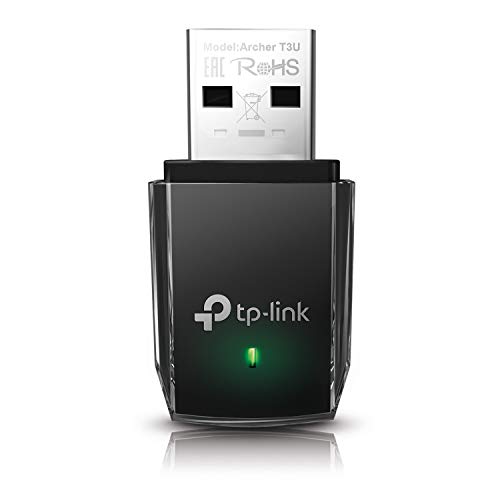
- Compact and portable design
- AC1300 dual-band WiFi
- MU-MIMO and beamforming support
Best For: Portable desktop or laptop wireless upgrades
Best Premium Speed
NETGEAR Nighthawk A8000 WiFi 6E

- Tri-band AXE3000 performance
- 6 GHz support for WiFi 6E routers
- Adjustable antenna with cradle
Best For: Windows users with WiFi 6E routers and demanding workloads
Best Budget Long-Range Pick
Nineplus AC1300 Dual-Band Adapter

- AC1300 dual-band connectivity
- Two 5dBi high-gain antennas
- Windows support through XP
Best For: Budget-conscious Windows users needing better range
Best for Wi-Fi 6E Performance
TP-Link AXE3000 Tri-Band Adapter
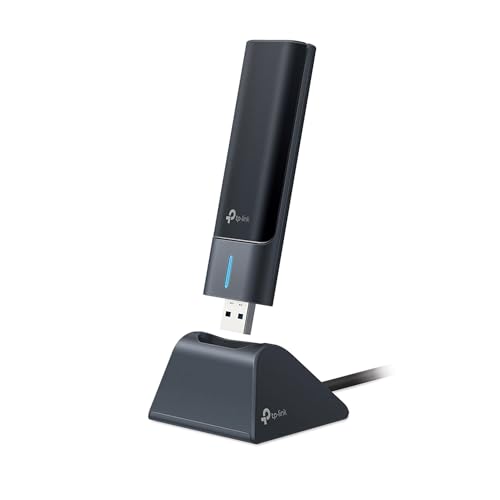
- Adds the 6 GHz Wi-Fi 6E band
- Speeds up to 1,200 Mbps per high-speed band
- Includes a flexible 1.2-meter USB cable
Best For: Windows 11 users with compatible Wi-Fi 6E networks
Best Dual-Band Upgrade

- Wi-Fi 6 dual-band connectivity
- Two adjustable high-gain antennas
- MU-MIMO, OFDMA, and WPA3
Best For: Windows 10/11 users upgrading for coverage and multitasking
Best Wi-Fi 6 Upgrade
TP-Link AX1800 USB WiFi 6 Adapter

- AX1800 dual-band Wi-Fi 6
- High-gain 5dBi antenna and 1m cable
- Windows 10/11 with WPA3
Best For: Windows users upgrading to faster Wi-Fi 6
Best Budget Pick
TP-Link AC600 USB WiFi Adapter

- AC600 dual-band 802.11ac
- Adjustable high-gain 5dBi antenna
- Supports Windows 7 through 11
Best For: Affordable everyday Wi-Fi on older PCs
Best Wi-Fi 7 Performance
TP-Link BE6200 USB Wi-Fi 7 Adapter

- Tri-band Wi-Fi 7 with 6GHz support
- Up to 6,200 Mbps combined rate
- Two antennas and USB 3.0 cradle
Best For: Wi-Fi 7 router owners seeking maximum throughput
Best High-Gain Pick – TP-Link Archer T3U Plus AC1300
For shoppers comparing USB 3.0 WiFi adapters, the TP-Link Archer T3U Plus stands out for its adjustable high-gain antenna and dual-band AC1300 connectivity. It supports up to 867 Mbps on 5 GHz and 400 Mbps on 2.4 GHz, although actual performance depends on the router and network.
Best For: Desktop users who need stronger reception and flexible antenna positioning.
Pros:
- Adjustable, high-gain external antenna can improve reception and transmission.
- Dual-band AC1300 speeds support both 5 GHz and 2.4 GHz networks.
- MU-MIMO technology can improve network throughput and efficiency.
- Supports Windows 11/10/8.1/8/7/XP and macOS 10.9–10.15.
Cons:
- The large external antenna is less portable than a compact dongle.
- It does not exceed the maximum speed of the connected router.
- Mac support is limited to versions 10.9–10.15.
The Archer T3U Plus is a practical choice when range and signal positioning matter more than a discreet design. Its two-year manufacturer warranty is an additional advantage for desktop upgrades.
Best WiFi 6 Value – NETGEAR Nighthawk A7500
The NETGEAR Nighthawk A7500 is one of the more capable USB 3.0 WiFi adapters for upgrading a Windows PC. Its WiFi 6 AX1800 design reaches up to 1.8 Gbps across dual bands and uses a flippable external antenna to help find a stronger signal.
Best For: Windows 10 and 11 users who want a fast, stable adapter for streaming, calls, or gaming.
Pros:
- WiFi 6 dual-band performance reaches up to 1.8 Gbps.
- USB 3.0 provides up to 10 times the data speed of USB 2.0.
- Flippable high-gain antenna can improve range and signal reliability.
- Works with any WiFi router or mesh system and supports WPA3 security.
Cons:
- Compatible operating systems are limited to Windows 10 and 11.
- Its larger design is less convenient than a compact travel dongle.
- Maximum speeds depend on the router and network conditions.
Choose the A7500 if you want a straightforward WiFi 6 upgrade without installing an internal network card. It is especially well suited to busy homes where connection stability matters.
Best Compact Option – TP-Link Archer T3U AC1300
The TP-Link Archer T3U is a compact choice among USB 3.0 WiFi adapters, offering AC1300 dual-band connectivity in a portable design. It supports 2.4 GHz and 5 GHz networks, plus MU-MIMO and beamforming for a more responsive wireless connection.
Best For: Users who want a small adapter for desktops or laptops that is easy to carry.
Pros:
- Compact, portable design fits easily into a travel setup.
- AC1300 dual-band connectivity supports both 2.4 GHz and 5 GHz.
- USB 3.0 is rated for up to 10 times the speed of USB 2.0.
- Supports MU-MIMO and beamforming for improved connection performance.
Cons:
- It lacks the external high-gain antenna found on the Archer T3U Plus.
- Mac support is listed only through macOS X 10.9–10.14.
- Wireless performance still depends on the connected router.
The Archer T3U makes sense when portability and a low-profile design are priorities. It offers useful dual-band and MU-MIMO features without the bulk of a desktop-oriented antenna.
Best Premium Speed – NETGEAR Nighthawk A8000 WiFi 6E
The NETGEAR Nighthawk A8000 is a premium USB 3.0 WiFi adapter built for Windows 10 and 11 PCs that can use WiFi 6E. Its AXE3000 tri-band design reaches up to 3 Gbps and adds the less crowded 6 GHz band when paired with a compatible WiFi 6E router.
Best For: Windows users with a WiFi 6E router who want low-latency performance for demanding activities.
Pros:
- Tri-band WiFi 6E supports 2.4, 5, and 6 GHz bands.
- AXE3000 performance is rated up to 3 Gbps.
- Flippable high-gain antenna and included cradle help optimize reception.
- Supports WPA3 and remains compatible with WiFi 6E, WiFi 6, and WiFi 5 networks.
Cons:
- The 6 GHz band requires a WiFi 6E router.
- Compatibility is limited to Windows 10 and 11.
- It is larger and less discreet than a basic USB adapter.
The A8000 is the strongest fit for users who already have compatible WiFi 6E equipment and want access to the 6 GHz band. Without a WiFi 6E router, its main advantage is unavailable.
Best Budget Long-Range Pick – Nineplus AC1300 Dual-Band Adapter
If you need usb 3.0 wifi adapters for an older desktop or laptop, the Nineplus AC1300 is a budget-friendly upgrade. Its dual-band connection, two 5dBi antennas, and USB 3.0 interface are designed to improve speed and reception for everyday browsing, streaming, gaming, and video meetings.
Best For: Windows users who want an affordable dual-band adapter with external high-gain antennas and broad coverage.
Pros:
- AC1300 dual-band speeds up to 867 Mbps on 5 GHz and 400 Mbps on 2.4 GHz.
- Two 5dBi antennas help improve signal reception and range.
- USB 3.0 supports faster transfers and remains backward compatible with USB 2.0.
- Supports Windows 11, 10, 8.1, 8, 7, and XP, with two-year support.
Cons:
- Does not support Mac OS, Chromebook, or Linux.
- Windows 7 may require manual driver installation.
The Nineplus is a practical choice when price, antenna reach, and compatibility with older Windows systems matter more than the newest wireless standard. Check your operating system before buying.
Best for Wi-Fi 6E Performance – TP-Link AXE3000 Tri-Band Adapter
Among usb 3.0 wifi adapters, the TP-Link Archer TXE50UH stands out for adding Wi-Fi 6E connectivity to compatible Windows computers. It uses the newer 6 GHz band alongside 5 GHz and 2.4 GHz, with a USB 3.0 cable and cradle that make placement more flexible.
Best For: Windows 11 users with a Wi-Fi 6E router who want higher bandwidth and potentially lower interference.
Pros:
- Tri-band Wi-Fi 6E supports 6 GHz, 5 GHz, and 2.4 GHz connections.
- Rated speeds reach 1,202 Mbps on 6 GHz and 5 GHz, and 574 Mbps on 2.4 GHz.
- MU-MIMO and OFDMA are designed to improve multi-device efficiency.
- Includes a 1.2-meter USB 3.0 cable, cradle, and WPA3 security.
Cons:
- Compatibility is listed for Windows 11 and Windows 10 only.
- Wi-Fi 6E benefits require a compatible router and client environment.
This is the most advanced option in the group, but its value depends on having Wi-Fi 6E equipment and a supported Windows system. The included cable can help position the adapter away from desktop interference.
Best Dual-Band Upgrade – TP-Link AX1800 Adapter
The TP-Link Archer TX30U Plus is a strong choice for shoppers comparing usb 3.0 wifi adapters for a Windows desktop or laptop. It combines Wi-Fi 6 dual-band performance with two adjustable high-gain antennas, beamforming, and WPA3 security for a capable everyday connection.
Best For: Windows 10 and 11 users who want a modern dual-band adapter for streaming, gaming, video calls, and multi-device homes.
Pros:
- Wi-Fi 6 speeds reach up to 1,201 Mbps on 5 GHz and 574 Mbps on 2.4 GHz.
- Two high-gain antennas and beamforming support stronger coverage.
- MU-MIMO and OFDMA help improve performance with multiple connected devices.
- USB 3.0, WPA3 security, adjustable antennas, and a preloaded internal driver.
Cons:
- Supports Windows 10 and Windows 11 only.
- Actual speeds vary with distance, obstacles, and network conditions.
The TX30U Plus balances newer Wi-Fi 6 features with a straightforward dual-band design. It is a sensible middle ground for users who want better coverage and multi-device handling without specifically needing the 6 GHz band.
Best Wi-Fi 6 Upgrade – TP-Link AX1800 USB WiFi 6 Adapter
For shoppers comparing USB 3.0 WiFi adapters, the TP-Link Archer TX20U Plus is a strong Windows-focused upgrade. It combines Wi-Fi 6, dual-band connectivity, a high-gain 5dBi antenna, and a flexible 1-meter USB 3.0 cable for easier desktop placement.
Best For: Windows 10 and 11 desktop or laptop users who want faster Wi-Fi 6 performance for streaming, gaming, and downloads.
Pros:
- AX1800 dual-band speeds up to 1,201 Mbps on 5GHz and 574 Mbps on 2.4GHz.
- High-gain antenna, beamforming, MU-MIMO, and OFDMA support can improve range and reduce congestion.
- WPA3 security and a 1-meter USB 3.0 cable add useful performance and placement flexibility.
Cons:
- Compatible with Windows 10 and 11 only; Linux and Mac are not supported.
- Actual speeds depend on the connected router and network conditions.
The Archer TX20U Plus is a practical choice when you want a modern Wi-Fi upgrade without installing an internal card. Pairing it with a Wi-Fi 6 or newer router will help it reach its intended performance.
Best Budget Pick – TP-Link AC600 USB WiFi Adapter
The TP-Link Archer T2U Plus is a compact, affordable option among USB 3.0 WiFi adapters for users who need a straightforward dual-band connection. Its adjustable high-gain antenna supports up to 433 Mbps on 5GHz and 200 Mbps on 2.4GHz.
Best For: Budget-minded desktop and laptop users seeking a simple AC600 adapter with broad Windows compatibility.
Pros:
- Dual-band 802.11ac connectivity for web use, streaming, and gaming.
- Adjustable 5dBi antenna can be rotated toward the router to improve reception.
- Supports Windows 11, 10, 8.1, 8, 7, and XP, with a two-year manufacturer warranty.
Cons:
- Slower than the Wi-Fi 6 and Wi-Fi 7 alternatives in this roundup.
- Setup requires downloading the appropriate driver from TP-Link.
- Listed operating-system support is centered on Windows, despite MacOS appearing in the product details.
If you need an inexpensive way to add dual-band Wi-Fi to an older computer, the Archer T2U Plus offers useful range and compatibility. It is best suited to everyday networking rather than demanding high-throughput applications.
Best Wi-Fi 7 Performance – TP-Link BE6200 USB Wi-Fi 7 Adapter
For maximum wireless performance, the TP-Link Archer TBE401UH stands out among USB 3.0 WiFi adapters with tri-band Wi-Fi 7 support. It can access the 6GHz band and pairs two high-gain antennas with a detachable cradle for flexible positioning.
Best For: Windows 10 and 11 desktop or laptop users with a Wi-Fi 7 router who want high-throughput streaming, downloads, or low-latency gaming.
Pros:
- BE6200 tri-band performance with claimed speeds up to 2,882 Mbps on 6GHz, 2,594 Mbps on 5GHz, and 688 Mbps on 2.4GHz.
- Wi-Fi 7 features include 160MHz channels, Multi-RUs, 4K-QAM, OFDMA, and MU-MIMO.
- Two high-gain antennas, beamforming, and a 3.9-foot USB 3.0 cradle cable support flexible placement.
Cons:
- Compatible with Windows 10 and 11 only.
- Its Wi-Fi 7 and 6GHz benefits require a compatible tri-band Wi-Fi 7 router.
- Advanced performance may be unnecessary for basic browsing or older routers.
The Archer TBE401UH is the forward-looking choice for users building around Wi-Fi 7. It offers the highest stated capacity here, but the required router and compatible Windows system are important considerations before buying.
How We Picked the Best USB 3.0 Wifi Adapters
We selected these USB 3.0 Wi-Fi adapters based on wireless standard, theoretical throughput, supported frequency bands, antenna design, compatibility, and the type of user each model serves. The lineup includes affordable AC600 and AC1300 options, Wi-Fi 6 and Wi-Fi 6E adapters, and a newer Wi-Fi 7 model.
Advertised speeds are maximum link rates rather than guaranteed internet speeds. Real-world performance depends on your router, network plan, distance, interference, USB port, drivers, and local wireless conditions.
Quick Comparison
| Best For | Recommended Type | What to Look For |
|---|---|---|
| Basic browsing and streaming | AC600 or AC1300 | Dual-band support and dependable drivers |
| Busy home networks | Wi-Fi 6 | OFDMA, improved efficiency, and dual-band performance |
| Newer routers and less congestion | Wi-Fi 6E | Access to the 6 GHz band |
| High-end future-ready setups | Wi-Fi 7 | Compatible router, current drivers, and a fast USB 3.0 connection |
Key Buying Factors for USB 3.0 Wi-Fi Adapters
Wireless Standard and Router Compatibility
Match the adapter to your router whenever possible. Wi-Fi 6 and Wi-Fi 7 adapters can connect to older networks, but their advanced features require a compatible router. Wi-Fi 6E models need a 6 GHz-capable router and may have additional operating-system or regional requirements.
Speed, Bands, and Antennas
Dual-band adapters use 2.4 GHz for longer range and 5 GHz for faster nearby connections. Tri-band models add 6 GHz, which can reduce congestion but usually has shorter range. External or high-gain antennas can improve placement flexibility and reception, especially for desktops located under a desk or far from the router.
USB Port and Driver Support
USB 3.0 helps prevent the adapter interface from becoming a bottleneck, particularly with faster Wi-Fi 6E and Wi-Fi 7 models. Plug the adapter into a USB 3.0 port rather than a slower USB 2.0 port when available. Before buying, confirm support for your version of Windows and check whether the manufacturer provides current drivers.
Who Should Buy Which USB 3.0 Wifi Adapters?
Choose an AC600 model for basic browsing, email, streaming, and low-cost replacement needs. AC1300 adapters are a better middle ground for faster dual-band service and general desktop use. Choose Wi-Fi 6 when multiple devices share the network, online gaming and video calls matter, or your router already supports the standard.
Wi-Fi 6E is best for users with a compatible 6 GHz router who want a cleaner band and high throughput nearby. A Wi-Fi 7 adapter makes the most sense for a premium, recently upgraded network and long-term use; it offers limited value if your router and internet plan remain older. For any model, prioritize stable drivers, sensible antenna placement, and a clear line toward the router over headline speed alone.