
Choosing among the best audio mixers with Dante for streamers depends on more than channel count. Your ideal setup may prioritize simple content creation, advanced network routing, multitrack recording, or scalable live production.
This roundup covers compact creator mixers, full digital consoles, Dante interfaces, stageboxes, and affordable streaming options so you can match the system to your workflow, budget, and future expansion plans.
Best 10 Audio Mixers with Dante for Streamers Picks for 2026
Compact Creator Hub
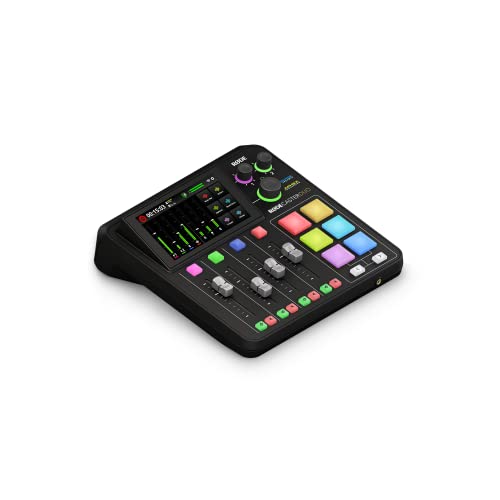
- Two combo inputs with high-gain Revolution Preamps
- Four faders, six SMART pads, and touchscreen control
- Integrated APHEX processing and headset connectivity
Best For: Podcasters, streamers, and solo creators wanting an all-in-one USB studio
Dante Mixing Powerhouse

- 16x16 Dante interface and 22-channel configuration
- 96kHz operation with 16 Yamaha preamps
- Nine-inch touchscreen and eight XLR outputs
Best For: Streamers and live-production users needing networked Dante mixing
Gaming Stream Controller
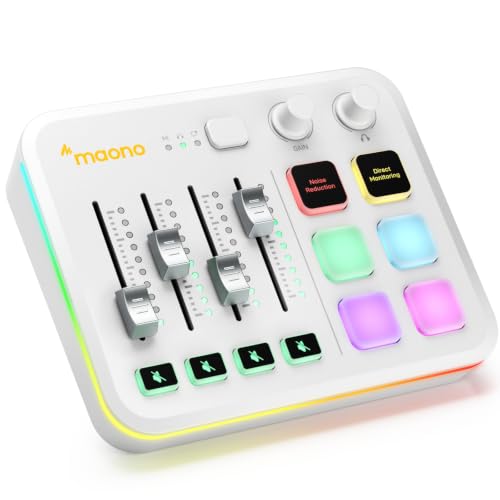
- Four assignable faders for mic, game, music, and chat
- Three submixes for separate creator, audience, and team mixes
- XLR input, 48V phantom power, and dual USB-C
Best For: Windows gamers and streamers needing quick multi-source control
Network Audio Interface
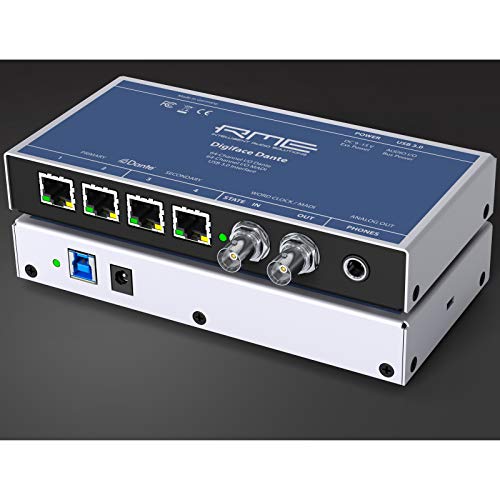
- 128-in/128-out Dante, MADI, and USB 3.0 connectivity
- Up to 24-bit/192kHz operation
- TotalMix FX support with headphone output
Best For: Advanced computer-based streaming and high-capacity Dante routing
Best Adaptive Mixer
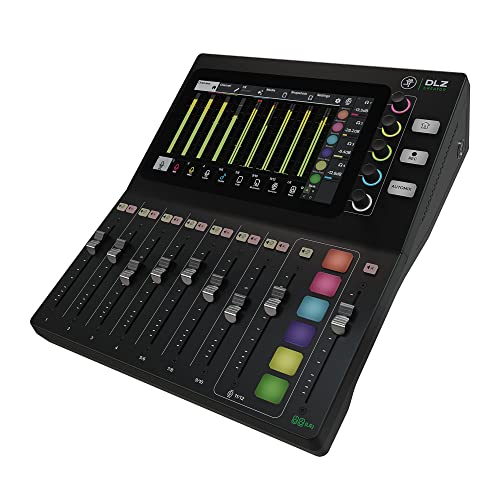
- Three touchscreen control modes
- AutoMix for up to four microphones
- USB-C and SD multitrack recording
Best For: Creators producing podcasts, interviews, and live streams
Best Dante XLR Interface

- Two-channel XLR-to-Dante conversion
- Up to 96kHz/24-bit audio
- PoE or USB-C powered
Best For: Adding two XLR sources to a Dante network
Best Analog Streaming Mixer

- 12 channels with Onyx preamps
- Bluetooth playback and USB-C recording
- 24 GigFX+ effects with tap tempo
Best For: Streamers and small bands wanting conventional hands-on mixing
Stage-Box Expansion

- 16 inputs and 8 outputs
- Dante Ethernet with 96kHz audio
- Designed for Yamaha TF and DM3 workflows
Best For: Expanding compatible Yamaha Dante systems
Professional Dante Control

- 38-input, 24-output digital mixer
- Built-in 16x16 Dante networking
- Motorized faders, effects, recording, and USB-C audio
Best For: Complex streaming and live-production systems
Entry-Level Gaming Control

- USB/XLR dynamic microphone bundle
- Slider fader and basic streaming controls
- RGB and monitoring features work via USB
Best For: Beginner PC streamers without Dante requirements
Compact Creator Hub – RØDECaster Duo
The RØDECaster Duo is a compact all-in-one option for creators comparing audio mixers with Dante for streamers, although this model uses USB connectivity rather than Dante. It combines two Neutrik combo inputs, physical faders, SMART pads, touchscreen control, and APHEX processing in a desktop production studio.
Best For: Podcasters, streamers, musicians, and solo content creators who want a compact, feature-rich production setup.
Pros:
- Two combo inputs with high-gain, low-noise Revolution Preamps.
- Four broadcast-quality faders, six SMART pads, and a touchscreen with haptic feedback.
- Includes APHEX effects such as Aural Exciter and Big Bottom.
- Supports headset monitoring and recording through its 3.5mm TRRS connection.
Cons:
- Does not include Dante connectivity.
- Provides four listed channels, which may be limiting for larger productions.
- Requires corded power.
The RØDECaster Duo is a strong choice when hands-on creator controls and integrated processing matter more than networked Dante audio. Its compact format suits desks where podcasting and streaming are the main priorities.
Dante Mixing Powerhouse – Yamaha DM3-D
The Yamaha DM3-D is the most direct fit for shoppers seeking audio mixers with Dante for streamers. This ultracompact digital console combines a 16×16 Dante interface with 22 channels, 96kHz operation, professional preamps, multiple mix buses, and a 9-inch touchscreen.
Best For: Streamers, live-production users, and creators who need Dante networking, substantial channel capacity, and detailed digital mixing.
Pros:
- Built-in 16×16 Dante interface for networked audio workflows.
- 22-channel configuration with 16 mono channels and stereo and effects returns.
- Six mono or three stereo mixes, two matrices, and a stereo bus support flexible routing.
- Offers 16 Yamaha preamps and eight XLR analog outputs.
Cons:
- More involved than a basic desktop streaming mixer.
- Uses corded power and wired connectivity.
- Its professional feature set may be more than a simple solo setup requires.
For streamers building a Dante-based system, the DM3-D provides the strongest combination of network audio, channel count, routing, and physical outputs in this selection. The touchscreen and compact design help keep its professional capabilities manageable.
Gaming Stream Controller – MAONO G3
The MAONO G3 targets Windows gamers and solo creators comparing audio mixers with Dante for streamers, but it is a USB mixer rather than a Dante device. Its four faders, three submixes, dual USB-C connections, XLR input, and software-based routing focus on quick control of voice, game, chat, and music.
Best For: Windows-based gamers, streamers, and solo creators managing voice, game audio, chat, and music from one desk.
Pros:
- Maps sources such as mic, game, music, chat, and alerts to four physical faders.
- Three submixes can create separate mixes for the user, audience, and teammates.
- XLR input includes 48V phantom power, direct monitoring, and up to 57dB of preamp gain.
- Dual USB-C connectivity supports dual-PC streaming workflows.
Cons:
- Does not provide Dante connectivity.
- Its MAONO Arena routing is designed for Windows PCs.
- Four physical faders may not suit larger or more complex productions.
The G3 is a practical choice for streamers who prioritize fast gaming controls over Dante networking. Its submixes and dual-PC design are especially useful when different listeners need different combinations of game, chat, music, and commentary.
Network Audio Interface – RME Digiface Dante
The RME Digiface Dante is a specialized choice for shoppers comparing audio mixers with Dante for streamers. Rather than functioning as a traditional fader-based mixer, it provides 128-in/128-out Dante, MADI, and USB 3.0 connectivity, plus TotalMix FX support and headphone output in a compact computer interface.
Best For: Streamers and audio users who need high-capacity Dante-to-computer connectivity and software-based routing.
Pros:
- Provides 128 inputs and 128 outputs across Dante, MADI, and USB 3.0 connectivity.
- Supports up to 24-bit/192kHz operation.
- Includes TotalMix FX software support for computer-based routing and mixing.
- Bus-powered design and headphone output suit computer-centered systems.
Cons:
- Does not offer physical faders or conventional mixer controls.
- Its high channel capacity may be unnecessary for a basic single-stream setup.
- Listed operating-system support specifies Windows, while the product is also described for Mac/PC.
The Digiface Dante is best viewed as a Dante interface and routing hub rather than an all-in-one streaming console. It makes sense for advanced computer-based systems where extensive network audio I/O and software control are more important than hands-on faders.
Best Adaptive Mixer – Mackie DLZ Creator
For streamers looking at audio mixers with Dante for streamers, the Mackie DLZ Creator is a flexible content-production mixer with a touchscreen, USB-C multitrack recording, and hands-on controls. While the supplied specifications do not identify Dante connectivity, its guided operating modes and AutoMix features make it practical for podcasting, YouTube, and live streaming.
Best For: Creators who want guided controls and automated microphone level management for podcasts, interviews, and live streams.
Pros:
- Three control modes—Easy, Enhanced, and Pro—adapt the touchscreen workflow to different experience levels.
- AutoMix manages levels for up to four microphones when multiple people speak.
- Supports multitrack recording or streaming to a computer via USB-C and recording directly to an SD card.
- Provides up to four customized headphone mixes for hosts and guests.
Cons:
- The supplied notes do not list Dante networking.
- At 9.1 pounds and 15 inches deep, it may be more mixer than a compact streaming desk requires.
The DLZ Creator is a strong choice when ease of use, multi-person mixing, and self-contained recording matter more than native Dante integration. Streamers specifically requiring Dante should verify their network-audio needs before buying.
Best Dante XLR Interface – ToVi Dante XLR Encoder
For streamers building audio mixers with Dante for streamers into a networked setup, the ToVi Dante XLR Audio Encoder converts two analog XLR channels into Dante audio streams. Its selectable input sensitivity, PoE or USB-C power, and support for up to 96kHz/24-bit audio make it useful for adding XLR sources to a Dante-based system.
Best For: Streamers and live-production users who need to place two XLR audio sources onto a Dante network.
Pros:
- Converts two balanced or unbalanced XLR inputs to Dante network audio.
- Supports PCM audio up to 96kHz/24-bit with configurable latency settings.
- Offers five selectable input-sensitivity levels for different mixers, microphones, amplifiers, and consumer devices.
- Can be powered by PoE or USB-C and supports transmission up to 328 feet over compatible CAT cabling.
Cons:
- It is a two-channel encoder rather than a complete mixing console.
- The supplied notes do not mention onboard mixing controls, effects, or headphone outputs.
The ToVi is the most directly Dante-focused option in this group, but it should be viewed as a network interface for two XLR channels rather than an all-in-one streamer mixer. Pair it with a Dante-enabled mixer or receiving device for a complete workflow.
Best Analog Streaming Mixer – Mackie ProFX12v3+
The Mackie ProFX12v3+ is an analog 12-channel mixer for streamers who want straightforward connections for microphones, instruments, phones, and computers. It includes Bluetooth playback, USB-C recording, Onyx preamps, and built-in effects, but the supplied notes do not list Dante networking.
Best For: Streamers and small bands seeking a conventional mixer with wireless playback, USB recording, and onboard effects.
Pros:
- Works with microphones, instruments, phones, and computers out of the box.
- Offers Bluetooth playback and multi-mode USB recording through USB-C.
- Includes 24 GigFX+ effects with tap tempo.
- Provides 12 channels and Onyx microphone preamps.
Cons:
- The supplied specifications identify it as an analog mixer and do not list Dante support.
- It may be less suitable for streamers who require native network-audio routing.
The ProFX12v3+ is a practical traditional mixer for flexible streaming and small-band use. Choose it for accessible physical mixing and effects; choose a Dante-equipped solution if network integration is a core requirement.
Stage-Box Expansion – Yamaha Tio1608-D2
The Yamaha Tio1608-D2 is a Dante-enabled stage box rather than a complete streaming mixer, making it a practical choice for streamers who need to place multiple XLR inputs and outputs on a Dante network. It offers 16 inputs, 8 outputs, 96kHz operation, and compatibility with Yamaha TF mixers with Dante cards.
Best For: Streamers and live-production users expanding a compatible Yamaha Dante mixing system.
Pros:
- Provides 16 XLR inputs and 8 outputs in a 3U rack format.
- Supports Dante Ethernet connectivity and a 96kHz maximum sample rate.
- Includes recallable D-PRE preamplifiers and QUICK CONFIG Mode for Yamaha DM3 and TF series systems.
Cons:
- Requires compatible Yamaha mixing equipment for its intended workflow.
- It is a stage box, not a standalone streaming mixer with onboard faders.
- Its 12.6-pound, 3U design may be excessive for compact desktop setups.
Choose the Tio1608-D2 when your streaming setup is built around Yamaha TF or compatible Dante-equipped systems and you need substantial remote I/O. For a simple one-microphone desk setup, its rack-oriented design is likely more than necessary.
Professional Dante Control – Allen & Heath Qu-5D
The Allen & Heath Qu-5D is a full digital mixer for streamers and live-production users who want audio mixers with Dante for streamers plus hands-on control. Its 38-input platform, built-in 16×16 Dante networking, 96kHz processing, touchscreen, motorized faders, and USB recording features support complex setups.
Best For: Professional streamers, live productions, houses of worship, and AV installations needing extensive routing and tactile control.
Pros:
- Combines 38 inputs, 24 outputs, 12 configurable mixes, and four matrix outputs.
- Built-in 16×16 Dante networking supports integration with Dante-equipped systems.
- Offers 96kHz XCVI processing, six multi-FX engines, USB-C 32×32 audio, and SD multitrack recording.
- Provides a 7-inch touchscreen, 17 motorized faders, customizable layers, SoftKeys, and remote apps.
Cons:
- At 28.1 pounds, it is better suited to a dedicated production space than a minimal desk.
- Its extensive feature set may be more than a basic streamer needs.
- Dante networking is built in at 16×16 rather than matching the mixer’s full 38-input count.
The Qu-5D is the strongest all-in-one option here for a demanding streaming or production workflow. Its Dante, recording, effects, and control features provide room to grow, although smaller creators may not need its full professional feature set.
Entry-Level Gaming Control – FIFINE Ampligame KS5W
The FIFINE Ampligame KS5W is a compact gaming audio bundle with a dynamic XLR/USB microphone and PC mixer. It is aimed at creators who want straightforward voice, game-audio, and headphone controls, but it is not a Dante mixer and should not be selected when Dante networking is required.
Best For: Beginner PC streamers, gamers, podcasters, and voice-over users seeking an accessible USB/XLR bundle.
Pros:
- Includes a dynamic microphone and mixer for a ready-to-use streaming setup.
- Supports both USB and XLR microphone connections.
- Provides a slider fader, gain control, mute function, headphone monitoring, and RGB modes when using USB.
- Works with Windows, macOS, and Linux and supports software such as Audacity, Adobe Audition, and FL Studio.
Cons:
- Does not provide Dante connectivity.
- The mixer is listed as one channel, limiting expansion for more involved audio systems.
- RGB, mute, monitoring, and volume controls are available only with the USB connection.
The KS5W is a sensible low-complexity choice for USB-focused gaming and streaming, especially when microphone and basic level controls matter more than networked audio. For a roundup specifically centered on audio mixers with Dante for streamers, treat it as a non-Dante alternative rather than a direct match.
How We Picked the Best Audio Mixers with Dante for Streamers
We compared these 10 products by looking at Dante integration, input and output flexibility, computer connectivity, monitoring options, control methods, recording support, and suitability for streaming workflows. Because these products serve different roles, the list includes complete mixers as well as Dante interfaces, converters, and stage I/O that can expand a compatible system.
We also considered setup complexity. A creator who wants fast control over microphones, game audio, calls, and music may prefer an integrated mixer, while a production team may benefit more from a networked console or Dante endpoint.
Quick Comparison
| Best For | Look For | Product Types |
|---|---|---|
| Solo streamers | USB connectivity, easy routing, physical controls | Compact creator and gaming mixers |
| Podcast and content studios | Multiple headphone mixes, recording tools, presets | Integrated digital production mixers |
| Networked setups | Dante I/O, clocking, routing software | Dante interfaces and converters |
| Live productions | High channel counts, remote I/O, scene recall | Digital consoles and stageboxes |
Key Buying Factors for Audio Mixers with Dante for Streamers
Dante Capability and Compatibility
Check whether Dante is built into the mixer or provided through a separate interface. Confirm channel counts, sample-rate support, network requirements, and compatibility with your existing Dante devices. A converter may solve a specific XLR-to-network need, but it will not replace a full mixer.
Inputs, Outputs, and Routing
Count microphones, instruments, computers, phones, playback sources, and monitor outputs before buying. Streamers often need separate mixes for the audience, the host, guests, and headphones. Flexible routing is especially important when sending clean feeds to streaming software or recording isolated tracks.
Computer Integration and Control
USB recording, software control, Bluetooth, onboard processing, and physical faders can significantly change the experience. Physical controls are useful during live broadcasts, while software control helps with complex Dante networks and remote operation.
Expansion and Setup
Consider whether you need remote stage I/O, additional Dante endpoints, redundant networking, or higher channel capacity later. Also budget for a managed network switch, suitable cabling, Dante Controller configuration, and training when the system is more advanced.
Who Should Buy Which Audio Mixers with Dante for Streamers?
Choose a compact creator-focused mixer if you want quick control of voice, game audio, music, and calls with minimal setup. A podcast-oriented digital mixer is better for multiple speakers, repeatable scenes, and dedicated headphone feeds.
Choose a Dante interface or XLR converter when you already own a preferred mixer or microphone system and mainly need to place analog audio on a Dante network. For bands, venues, and larger streaming productions, a Dante-enabled console paired with a compatible stagebox offers the most scalable approach.
Finally, prioritize affordability and straightforward USB operation if you are building your first streaming rig. Dante is valuable for networked expansion, but beginners should not pay for complex routing they will not use.