
The right wireless microphone can give singers, presenters, and performers freedom to move without sacrificing vocal clarity. The best systems balance dependable range, interference resistance, battery life, and simple setup.
We compared 10 wireless microphone systems across major use cases, including solo vocals, duets, bands, houses of worship, karaoke, and larger stage productions. Use the guide below to narrow your choices by channel count, microphone type, frequency flexibility, and venue size.
Best 10 Wireless Microphone for Stage Performances Picks for 2026
Balanced Vocal Choice

- E835 vocal capsule
- Antenna-switching diversity
- Up to 10 channels
Best For: Vocalists wanting simple, recognizable Sennheiser live sound
Flexible Dual-Mic Setup

- Two UHF handheld microphones
- Auto Scan frequency selection
- Up to 328-foot line of sight
Best For: Duets and events needing two adjustable wireless channels
Premium Rechargeable Pick

- SM58 vocal capsule
- Dual-band digital wireless
- Up to 12-hour rechargeable runtime
Best For: Performers seeking premium digital wireless with rechargeable power
Four-Channel Performance Kit

- Four handheld microphones
- Individual volume controls
- Four XLR outputs
Best For: Fixed venues and events needing four wireless performers
Dual-Vocal Stage Choice

- Two PG58 handheld microphones with dual-channel receiver
- Up to 300 ft line-of-sight range
- Up to 14 hours of transmitter battery life
Best For: Duets, bands, and multi-performer stages
Easy Vocal Setup

- 825 Evolution Series vocal microphone capsule
- Automatic frequency management and synchronization
- Supports up to 10 simultaneous channels
Best For: Solo vocalists and presenters
Party-Ready Dual Mics
JBL Wireless Two Microphone System
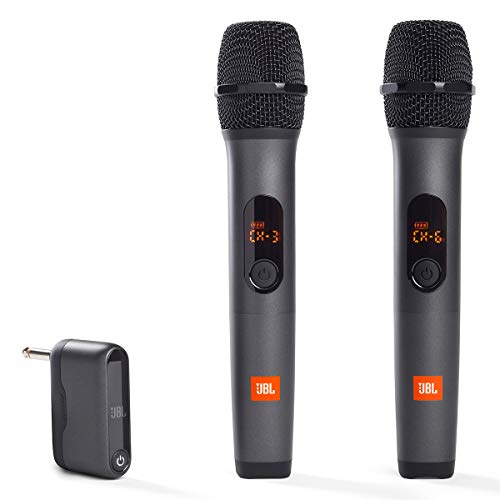
- Two microphones with dual-channel receiver
- Plug-and-play operation for quick setup
- Compatible with numerous JBL PartyBox speakers
Best For: PartyBox karaoke and casual events
Best for Groups
Aveek 4-Pack Wireless Microphone System

- Four handheld microphones for group performances
- Up to 262 feet of stated wireless range
- Rechargeable batteries rated for up to 40 hours
Best For: Bands, karaoke groups, churches, weddings, and outdoor events
Best for Hands-Free Use
Phenyx Pro Handheld, Headset, and Lapel System
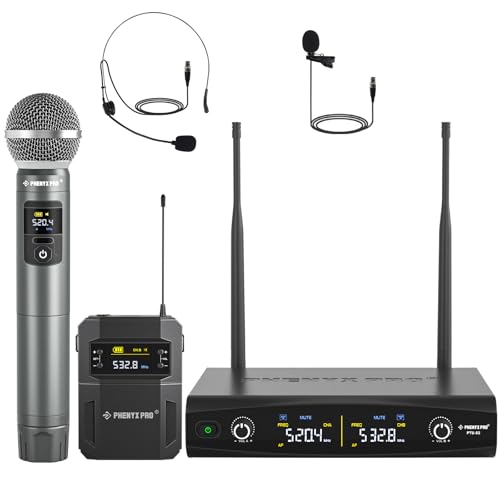
- Includes handheld, headset, and lapel microphones
- 30 tunable frequency groups in the 500MHz band
- Two XLR outputs plus a mixed 1/4-inch output
Best For: Presenters, performers, instructors, and event hosts
Best Dual-Handheld Setup
Phenyx Pro PTU-52-2H Wireless System

- Two handheld UHF microphones for duets and shared use
- 30 tunable frequency groups for channel flexibility
- XLR and mixed 1/4-inch outputs for audio equipment
Best For: Duets, karaoke, public speaking, and two-person events
Balanced Vocal Choice – Sennheiser XSW 1-835-A
The Sennheiser XSW 1-835-A is a straightforward wireless microphone for stage performances, pairing the brand’s E835 vocal capsule with antenna-switching diversity reception. Automatic frequency management and synchronization help simplify setup for singers, presenters, and small live systems.
Best For: Vocalists and performers who want recognizable Sennheiser vocal sound with an uncomplicated single-microphone setup.
Pros:
- E835 Evolution Series capsule is designed for live vocal sound.
- Antenna-switching diversity reception helps support reliable operation.
- Automatic frequency management and synchronization streamline setup.
- Supports up to 10 simultaneous channels.
Cons:
- This package provides one handheld microphone and one receiver channel.
- It uses selectable UHF frequencies, so frequency planning may still matter in crowded environments.
Choose this system when vocal clarity and simple operation matter more than having multiple microphones in the box. Its included AA batteries and XLR connectivity make it practical for compatible amplifiers, speakers, and live sound setups.
Flexible Dual-Mic Setup – Phenyx Pro PTU-71-2H
The Phenyx Pro PTU-71-2H is a practical wireless microphone for stage performances when two handheld microphones are needed. Its auto-scan function, selectable UHF frequencies, IR synchronization, and stated 290- to 328-foot line-of-sight range give performers useful setup flexibility.
Best For: Duets, weddings, churches, karaoke, DJ events, and presentations requiring two wireless handheld microphones.
Pros:
- Dual-channel receiver includes two handheld microphones.
- Auto Scan identifies less-interference frequencies, while a lock function preserves the selected frequency.
- Offers 2×100 selectable UHF frequencies and supports multiset operation of up to 16 transmitters.
- Includes mute controls, battery indicators, metal construction, and replaceable microphone heads.
Cons:
- Requires an amplifier, PA system, speaker, or other compatible audio equipment for output.
- Its stated long-range performance is based on line-of-sight use.
- The included 1/4-inch cable may require an adapter depending on the connected equipment.
This is a strong value-oriented option for users who need two microphones without assembling separate systems. Auto scanning and a broad selection of frequencies make it easier to adapt to different venues, while the cardioid pickup pattern helps reject surrounding sound.
Premium Rechargeable Pick – Shure GLXD24+/SM58
The Shure GLXD24+/SM58 is a premium wireless microphone for stage performances, combining the familiar SM58 vocal capsule with GLX-D+ dual-band digital wireless technology. Automatic scanning across the 2.4 and 5.8 GHz bands, automatic pairing, and rechargeable power make it well suited to repeat performances.
Best For: Singers and performers who prioritize digital wireless clarity, rechargeable convenience, and the established SM58 vocal format.
Pros:
- Includes an SM58 vocal microphone capsule for a familiar stage-oriented setup.
- Dual-band operation scans both 2.4 and 5.8 GHz for a cleaner channel.
- Provides up to 12 hours of runtime, with USB-C and receiver charging options.
- Automatic pairing and frequency management simplify operation.
Cons:
- It is not backwards compatible with GLX-D or GLX-D Advanced systems.
- The system’s signal-to-noise ratio is listed as 70 dB, lower than some supplied alternatives.
- The Frequency Manager required for up to 16 half-rack systems is sold separately.
The GLXD24+/SM58 stands out for performers who want less battery-management hassle and a polished digital workflow. Its license-free frequency range and automatic channel selection are useful for mobile use, provided the receiver’s connectivity and compatibility fit the rest of the sound system.
Four-Channel Performance Kit – Phenyx Pro PTU-5000-4H
The Phenyx Pro PTU-5000-4H is designed for stage performances and events that need four wireless handheld microphones at once. Fixed UHF frequencies, individual volume controls, an LCD frequency display, and four XLR outputs make it a practical plug-and-go system for compatible sound equipment.
Best For: Small performances, conferences, churches, weddings, karaoke, and other fixed setups needing four microphones.
Pros:
- Includes four handheld microphones and a four-channel receiver.
- Dynamic cardioid cartridges help focus pickup and reject unwanted noise.
- Individual volume controls and four XLR outputs support separate vocal balancing.
- All-metal construction, memory settings, and snap-on BNC antennas support repeated setup.
Cons:
- Fixed frequencies limit flexibility compared with selectable-frequency systems.
- It is not intended for multiset operation.
- Requires an amplifier, mixer, PA system, or speaker for sound output.
This kit makes the most sense when four microphones are needed and the system will remain in one venue or use a consistent frequency plan. Its individual controls and multiple XLR outputs are especially useful when each performer needs separate level adjustment.
Dual-Vocal Stage Choice – Shure BLX288/PG58
For performers who need a wireless microphone for stage performances with two vocalists, the Shure BLX288/PG58 provides a complete dual-channel setup. Its two PG58 cardioid handheld microphones, QuickScan frequency selection, and stated 300-foot line-of-sight range make it a practical choice for live vocals, provided the J11 frequency band is authorized in your region.
Best For: Bands, duets, karaoke hosts, and multi-performer stage setups needing two handheld vocal microphones.
Pros:
- Includes two PG58 cardioid handheld transmitters and a dual-channel receiver.
- Offers up to 300 feet of line-of-sight transmission and up to 14 hours of transmitter battery life.
- QuickScan frequency selection supports fast setup, with up to 12 compatible systems per band.
Cons:
- Uses the J11 596–620 MHz band, so regional authorization should be verified before purchase.
- The complete system is relatively bulky at 5.1 pounds and includes a larger receiver package.
The BLX288/PG58 is the strongest fit here when two singers need dependable handheld coverage and straightforward stage setup. Confirm frequency compatibility locally before ordering.
Easy Vocal Setup – Sennheiser XSW 1-825
Sennheiser Pro Audio XSW 1-825-A Vocal Wireless Microphone, A Range 548-572 MHz, Black, medium
Check Price On AmazonThe Sennheiser XSW 1-825 is a practical wireless microphone for stage performances when clear live vocals and simplified setup are priorities. It pairs an Evolution Series 825 microphone capsule with antenna-switching diversity reception, automatic frequency management, and synchronization.
Best For: Solo singers, presenters, and small live setups that want automatic frequency assistance and a familiar handheld format.
Pros:
- Uses a Sennheiser 825 Evolution Series microphone capsule for live vocal sound.
- Automatic frequency management and synchronization simplify setup.
- Selectable UHF frequencies and support for up to 10 simultaneous channels offer flexibility.
- Antenna-switching diversity reception helps support wireless operation.
Cons:
- This listing describes a single handheld vocal set rather than a dual-microphone system.
- The A range is specified as 548–572 MHz, so frequency suitability should be checked locally.
The XSW 1-825 is a sensible single-microphone option for vocalists who value automatic setup features and Sennheiser’s 825 capsule. Its channel capacity also leaves room for compatible expansion.
Party-Ready Dual Mics – JBL Wireless Two Microphone System
For casual performers seeking a wireless microphone for stage performances, parties, or karaoke, the JBL Wireless Two Microphone System emphasizes quick operation and compatibility with JBL PartyBox speakers. The package includes two microphones, a dual-channel receiver, and a USB-C cable, with replaceable AA microphone batteries.
Best For: JBL PartyBox owners, karaoke sessions, casual performances, and events where plug-and-play operation matters.
Pros:
- Includes two wireless microphones and a dual-channel receiver.
- Designed for simple setup: turn on the receiver and microphones to get started.
- Compatible with numerous JBL PartyBox models listed by the manufacturer.
- Microphones use replaceable AA batteries, while the receiver is rechargeable.
Cons:
- Compatibility is centered on specified JBL PartyBox speakers rather than general stage audio equipment.
- The receiver’s stated playback time is up to 6 hours.
- The supplied notes list a USB connector rather than XLR outputs, which may limit traditional mixer integration.
The JBL system is most convenient for PartyBox-based events and informal vocal use. It is less suitable for a conventional stage rig unless your equipment is compatible with its receiver connection.
Best for Groups – Aveek 4-Pack Wireless Microphone System
For group vocals, events, or larger performances, the Aveek system is a practical wireless microphone for stage performances. It includes four handheld dynamic microphones, a receiver with a standard 1/4-inch output, and rechargeable batteries rated for up to 40 hours of use per microphone.
Best For: Bands, group performances, karaoke, church services, weddings, and outdoor events using a PA system, mixer, powered speaker, or compatible karaoke machine.
Pros:
- Four microphones support group singing and shared performances.
- Up to 262 feet of stated wireless range provides room to move around larger venues.
- Built-in rechargeable batteries offer up to 40 hours of use and Type-C charging.
- Cardioid dynamic pickup is designed for focused vocal reproduction.
Cons:
- The receiver is not compatible with laptops, iPads, cellphones, or AV receivers.
- The receiver randomly assigns a channel when pairing with a microphone.
- The system is designed around a 1/4-inch connection rather than a direct USB connection.
The four-mic configuration is the main advantage here, especially when several performers need wireless freedom at once. Confirm that your audio equipment accepts the included 1/4-inch receiver output before buying.
Best for Hands-Free Use – Phenyx Pro Handheld, Headset, and Lapel System
The Phenyx Pro PTU-52-1H1B combines a handheld microphone with headset and lapel options, making it a flexible wireless microphone for stage performances and presentations. Its UHF receiver offers 30 tunable frequency groups, automatic pairing, and multiple outputs for common PA equipment.
Best For: Performers, presenters, instructors, church speakers, and event hosts who need either handheld or hands-free operation.
Pros:
- Includes a handheld mic, headset mic, and lapel lavalier for flexible use.
- Thirty tunable frequency groups help accommodate frequency changes and multi-system use.
- Operating distance is rated up to 200 feet in open line of sight.
- Two XLR outputs and one mixed 1/4-inch output support mixers, speakers, and amplifiers.
Cons:
- It provides two microphone channels rather than the four included with the Aveek system.
- Wireless range is specified for open-space line-of-sight conditions.
- The system uses included AA batteries rather than rechargeable microphone batteries.
This is the more versatile choice when a performance setup may alternate between singing, speaking, and hands-free delivery. The headset and lapel options add flexibility without requiring a separate microphone system.
Best Dual-Handheld Setup – Phenyx Pro PTU-52-2H Wireless System
For two singers or speakers sharing a stage, the Phenyx Pro PTU-52-2H is a straightforward wireless microphone for stage performances. It pairs two handheld UHF microphones with a receiver, frequency selection, and outputs suited to mixers, PA systems, speakers, and amplifiers.
Best For: Duets, karaoke, public speaking, church services, weddings, and other events where two people need handheld microphones.
Pros:
- Two handheld microphones are included for duets and shared speaking duties.
- Thirty tunable frequency groups support frequency changes and multi-system operation.
- Automatic pairing and frequency-hopping technology are designed for quick setup.
- Two XLR outputs and one mixed 1/4-inch output offer flexible connections.
Cons:
- It does not include headset or lapel microphones for hands-free use.
- The stated 200-foot operating distance applies to open-space line-of-sight conditions.
- The microphones use AA batteries, so replacements may be needed during extended use.
The PTU-52-2H is a sensible match for two-person performances where both users prefer conventional handheld microphones. Its tunable UHF design and multiple outputs make it easier to integrate into an existing stage audio setup.
How We Picked the Best Wireless Microphone for Stage Performances
We focused on systems suited to live use rather than casual desktop recording. Key considerations included wireless stability, operating range, receiver design, microphone handling, channel capacity, setup simplicity, and the reputation of each brand or product line. We also included both single- and multi-microphone systems so performers can match the equipment to their act.
Frequency details matter, but compatibility and local regulations should come first. A system that performs well in one venue may require different frequency planning in another, especially when several wireless devices operate simultaneously.
Quick Comparison
| Best For | What to Look For | Recommended System Type |
|---|---|---|
| Solo singers | Clear vocal capsule and straightforward controls | Single handheld system |
| Duets and small acts | Two microphones and independent channels | Dual handheld system |
| Bands and venues | Multiple channels and coordinated operation | Four-channel system |
| Events and group activities | High microphone count and long operating range | Four-pack wireless system |
Key Buying Factors for a Wireless Microphone for Stage Performances
Frequency and Interference Management
Choose a system with enough frequency flexibility for your venue. Tunable or auto-scan models can be easier to coordinate than fixed-frequency equipment, while digital systems may help reduce interference in crowded wireless environments.
Range and Venue Size
Advertised range is measured under ideal conditions. Walls, people, metal structures, and other radio equipment can reduce performance. For most clubs and small venues, a reliable moderate-range system is sufficient; larger stages benefit from stronger receiver placement and more planning.
Microphone Capsule and Vocal Sound
Handheld capsules differ in sensitivity, presence, feedback resistance, and handling noise. Dynamic vocal microphones are common for stage work because they tolerate loud sound levels and help reject some ambient noise.
Channel Count and Expansion
Buy only as many channels as you need, but leave room for future growth if your act is expanding. Dual and four-channel systems can be more economical than adding separate receivers later, provided their frequencies can be coordinated.
Power, Controls, and Connectivity
Check battery type, expected runtime, receiver outputs, antenna design, and available volume controls. Balanced outputs are useful for longer cable runs, while simple front-panel controls speed up sound checks.
Who Should Buy Which Wireless Microphone for Stage Performances?
Solo Performers
Choose a single handheld system with a familiar vocal capsule and uncomplicated receiver. It is easier to transport and quicker to troubleshoot.
Duos, Hosts, and Worship Teams
A dual handheld setup is the practical choice when two people need to speak or sing at the same time. Look for independent channel controls and dependable frequency coordination.
Bands and Production Teams
Choose a multi-channel system when several performers need wireless microphones. Prioritize frequency flexibility, receiver organization, and the ability to coordinate all channels without overlap.
Schools, DJs, and Event Organizers
A four-microphone package can suit announcements, karaoke, ceremonies, and group activities. Confirm that the receiver has enough outputs and that the system’s range fits the actual venue.
Before buying, verify frequency availability in your region, input compatibility with your mixer or powered speaker, and replacement battery or microphone costs. Those details often matter as much as headline range or channel count.