
3D printing can release odors, volatile organic compounds, and fine particles, especially when printing resin, ABS, ASA, or other enclosed-workspace materials. A suitable air purifier can help reduce what lingers around your printer, but the right choice depends on filtration, airflow, fit, and noise.
We compared 10 affordable options for resin and FDM printers, including compact carbon units and larger HEPA-equipped systems. Use the guide below to match filtration and compatibility features to your printer and workspace.
Best 10 3d Printer Air Purifiers Under 300 Picks for 2026
Compact Resin Odor Pick
Mini Activated Carbon Purifiers

- Two rechargeable purifiers
- Targets resin odors with activated carbon
- Quiet 10 dB operation
Best For: Small resin-printing setups needing portable odor control
Enclosed Printer Filtration Pick

- Pre-filter, HEPA H13, and carbon stages
- Up to 60 m³/h airflow
- Designed for Bambu Lab P1S/X1C
Best For: Enclosed-printer workspaces needing particle and VOC filtration
Large Resin Printer Pick
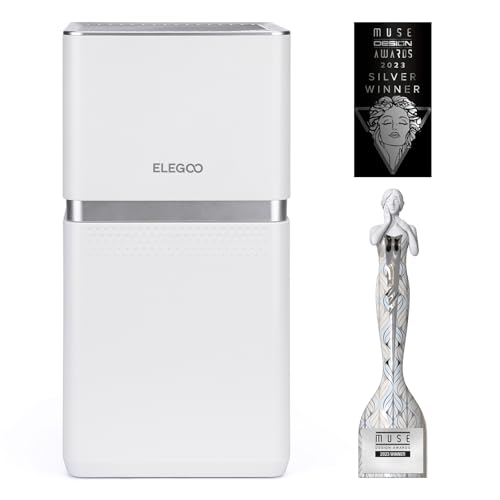
- Large activated-carbon purifier
- Two speeds and automatic mode
- VOC and filter-life reminders
Best For: ELEGOO Saturn or Mars setups with available floor or enclosure space
Quiet Resin Specialist
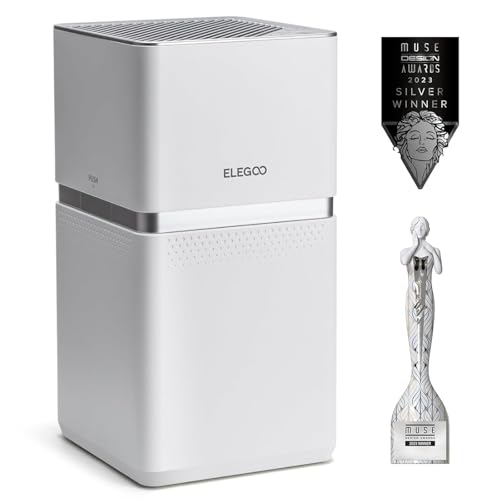
- Activated-carbon filtration for compatible resin printers
- VOC sensor gives filter-replacement reminders
- 35 dB operation with 6W power draw
Best For: ELEGOO resin-printer owners seeking quiet, low-power VOC filtration
Versatile Enclosed-Printer Filter

- HEPA H13, activated carbon, and pre-filter stages
- Supports PLA, PETG, ABS, ASA, and nylon
- Up to 60 m³/h airflow for enclosed printers
Best For: Multi-material printing in homes, studios, classrooms, and professional spaces
High-Capture K2 Extractor
BD-60C 3D Printer Air Purifier

- Four-stage HEPA and activated-carbon filtration
- Variable-speed control and included smoke pipe
- Ready for Creality K2 and K2 Pro printers
Best For: Creality K2 and K2 Pro users needing a complete extractor kit
Compact Resin Odor Control
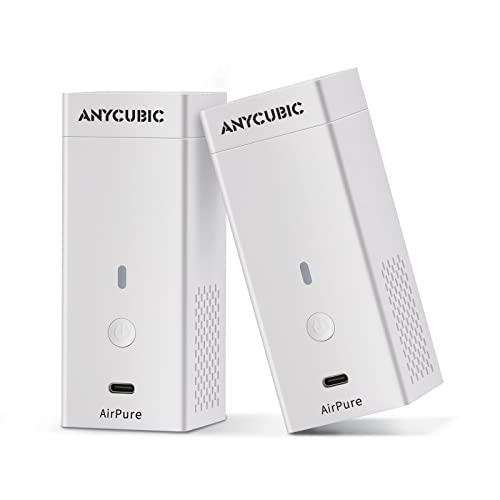
- Compact 4.5-inch purifier fits near small printers
- Activated carbon targets resin odors
- Quiet, replaceable-filter two-pack
Best For: Compact resin-printing stations and multi-printer setups
Enclosed-Printer Filtration
BD-60B 3D Printer Air Purifier

- Four-stage HEPA and carbon filtration
- Adjustable speed for compatible printers
- Includes hose, hoods, and replacement pre-filters
Best For: Supported Bambu Lab and ELEGOO printer enclosures
Resin Fume Extraction
BD-60E Resin 3D Printer Air Purifier

- HEPA and activated carbon target resin fumes
- Large carbon load is intended for VOC adsorption
- Includes exhaust accessories for supported models
Best For: Supported ELEGOO and ANYCUBIC resin printers
Compact Resin Odor Pick – Mini Activated Carbon Purifiers
For shoppers comparing 3d printer air purifiers under 300, this two-pack is a simple option for reducing resin odors around compatible LCD, DLP, and MSLA printers. Each compact unit uses activated carbon and can run for at least 24 hours after charging.
Best For: Resin printer users who want a small, rechargeable odor-control solution for one or more printers.
Pros:
- Activated carbon targets irritating resin odors.
- Two compact purifiers are included.
- Rechargeable 2,000mAh battery offers at least 24 hours of continuous operation.
- Quiet 10 dB operating level.
Cons:
- Designed around resin odors rather than broad particle filtration.
- Carbon filters typically need replacement every three to six months.
- Replacement carbon must be purchased separately.
This is a practical, low-noise choice when odor control and portability matter most. Its activated-carbon design is better suited to resin-printing spaces than buyers seeking a full HEPA-based filtration system.
Enclosed Printer Filtration Pick – HEPA H13 Carbon System
Among 3d printer air purifiers under 300, this system stands out for enclosed printers because it combines a pre-filter, HEPA H13 media, and activated carbon. It is supplied with a connector for Bambu Lab P1S and X1C printers, with adapter options for other enclosed models.
Best For: Bambu Lab and other enclosed-printer owners who want particle and odor filtration in a compact system.
Pros:
- Three-stage filtration includes a pre-filter, HEPA H13, and activated carbon bed.
- HEPA H13 is specified to capture more than 99.97% of ultrafine particles down to 0.3 microns.
- Centrifugal fan provides airflow up to 60 m³/h.
- Tool-free quick-swap filter modules simplify maintenance.
Cons:
- Default connector is specifically for Bambu Lab P1S and X1C.
- Other printer models may require adapter kits or printed connectors.
- The supplied notes do not specify filter replacement intervals.
With broader filtration than a carbon-only unit, this is a strong fit for enclosed ABS, ASA, Nylon, PLA, or PETG workflows. Confirm connector compatibility before buying, especially when using a printer outside the listed adapter ecosystem.
Large Resin Printer Pick – ELEGOO Marsmate Air Purifier
For larger resin-printing setups within the 3d printer air purifiers under 300 category, the ELEGOO Marsmate uses activated carbon in a full-size housing. It offers low and high fan modes, automatic switching, and a sensor-based reminder for VOC levels or filter life.
Best For: ELEGOO Saturn and Mars users who have room for a larger, dedicated resin-printing purifier.
Pros:
- Large 8.26-by-9.72-by-16.14-inch design is intended to provide more substantial purification.
- Two fan speeds plus automatic switching offer flexible operation.
- VOC and filter-life reminders help signal maintenance needs.
- Specified operating noise is up to 35 dB.
Cons:
- Its 14-pound size requires considerably more space than compact purifiers.
- Filtration is based on activated carbon rather than a listed HEPA stage.
- Compatibility is strongest with specified ELEGOO resin printers and models with expansion interfaces.
Marsmate makes the most sense when a compact carbon unit feels undersized and the printer area can accommodate its larger footprint. Check the printer’s expansion-interface requirements before relying on compatibility with another brand.
Multi-Filament Enclosure Pick – HEPA H13 Carbon Filter System
This system is a compelling option among 3d printer air purifiers under 300 for enclosed printers running materials such as ABS, ASA, Nylon, PLA, or PETG. Its three-layer design combines particle filtration with activated-carbon VOC and odor adsorption, while printable adapters broaden compatibility.
Best For: Enclosed-printer owners who want one filtration system for varied filament materials and straightforward filter changes.
Pros:
- Pre-filter, HEPA H13, and thick activated-carbon bed address dust, ultrafine particles, VOCs, and odors.
- Specified airflow reaches 60 m³/h with outlet velocity up to 10 m/s.
- Default connector supports Bambu Lab P1S and X1C.
- Quick-swap filter modules require no tools.
Cons:
- Not recommended for open-frame printers without an enclosure.
- Other printer models may need printable adapters.
- It reduces contaminants but does not replace room ventilation, particularly for ABS, ASA, or Nylon.
This is the more versatile choice for users who print multiple filament types in an enclosed chamber. Its filtration scope is broad, but it should be used alongside suitable room ventilation rather than as a standalone safety measure.
Quiet Resin Specialist – ELEGOO MARSMATE Air Purifier
For shoppers comparing 3d printer air purifiers under 300, the ELEGOO MARSMATE is a purpose-built option for compatible resin printers. It uses activated carbon filtration, operates at a stated 35 dB, and draws just 6 watts, making it suitable for quieter workspaces.
Best For: ELEGOO resin-printer owners who prioritize low noise, low power use, and VOC monitoring.
Pros:
- Designed for a wide range of ELEGOO resin printers, including Mars and Saturn models.
- Built-in VOC sensor provides a reminder when the filter needs replacement.
- Large activated-carbon filter and low 6-watt operating power.
- Stated 35 dB noise level supports quieter printing environments.
Cons:
- Compatibility depends on a printer having a suitable extension port.
- The activated-carbon filter is specified for use of up to two months.
- Its relatively large 8.26 x 9.72 x 16.14-inch body may require substantial desk space.
The MARSMATE stands out when quiet operation and resin-printer compatibility matter most. Confirm your printer connection and allow room for its taller enclosure before buying.
Versatile Enclosed-Printer Filter – Mintion V1 Filter System
Among 3d printer air purifiers under 300, the Mintion V1 is a flexible choice for enclosed FDM printers using materials such as ABS, ASA, nylon, PETG, or PLA. Its three-stage system combines a pre-filter, HEPA H13 filter, and activated carbon filter, with airflow rated up to 60 m³/h.
Best For: Makers, studios, classrooms, and professional workspaces using enclosed printers and varied filament types.
Pros:
- Three-stage filtration targets both ultrafine particles and VOCs.
- Supports common filaments including PLA, PETG, ABS, ASA, and PA nylon.
- Compatible with multiple printer brands through an optional printed adapter.
- Includes a power adapter, sealing cap, screws, tools, and instructions.
Cons:
- Factory pre-configuration is for P1S/X1C, so other printers may need an adapter.
- The supplied details do not state a specific noise rating.
- Filter replacement remains an ongoing maintenance requirement.
The Mintion V1 offers the broadest material and brand flexibility of these picks. It is especially practical if you want one external filtration system for an enclosed printer and regularly switch filaments.
High-Capture K2 Extractor – BD-60C 3D Printer Air Purifier
BlueDate 3D printer Air Purifier Compatible With CREALITY K2,K2 Pro FDM 3D Printer
Check Price On AmazonFor 3d printer air purifiers under 300, the BD-60C is a dedicated smoke extractor for the Creality K2 and K2 Pro. Its multi-stage filter setup combines pre-filters, HEPA filtration, and activated carbon, while variable speed control lets you adjust airflow for different printing conditions.
Best For: Creality K2 and K2 Pro owners who want a ready-to-use extractor with included ducting and replacement pre-filters.
Pros:
- Four-stage filtration is designed to capture particles and odors from materials including ABS, PETG, and PC.
- Includes a smoke pipe, two magnetic suction hoods, power supply, and five pre-filters.
- Stepless speed adjustment supports different airflow and noise preferences.
- Compact metal housing requires no self-printed parts for K2 or K2 Pro installation.
Cons:
- It is not compatible with the Creality K2 Plus.
- Other printer models require a 3D-printed exhaust-port adapter.
- The stated 55 dB noise level is higher than the MARSMATE’s listed rating.
The BD-60C is the most targeted option here for Creality K2-series users and provides a complete extraction kit out of the box. Check the exact printer model before ordering, especially if you own a K2 Plus or a different brand.
Compact Resin Odor Control – Anycubic Mini Purifier 2-Pack
For shoppers comparing 3d printer air purifiers under 300, the Anycubic Mini Purifier is a compact option designed primarily for resin-printing odors. This two-pack uses activated carbon filters, runs quietly, and can sit directly on or near compatible LCD and DLP printers.
Best For: Resin 3D printer users who want a small, portable odor purifier for Anycubic or other compatible LCD/DLP setups.
Pros:
- Compact 4.5 x 1.8 x 1.8-inch design fits easily around a printer.
- High-density activated carbon is intended to absorb resin odors.
- Low operating noise is rated at 40 dB or less, with a replaceable filter.
- Two units are included for use with multiple printers or printing areas.
Cons:
- Its filtration capability is listed for odors rather than a broad range of particles.
- The small filter is designed for a relatively limited 10-square-meter area.
- Filter replacement is needed approximately every three to six months, depending on use.
The Anycubic Mini Purifier is best viewed as a lightweight, close-range resin odor solution rather than a room-scale air cleaner. Its two-unit package, quiet operation, and replaceable carbon filters make it practical for compact printer stations.
Enclosed-Printer Filtration – BD-60B 3D Printer Air Purifier
Among 3d printer air purifiers under 300, the BD-60B is a larger fume-extraction unit for compatible Bambu Lab and ELEGOO printers. Its staged filtration combines pre-filters, HEPA filtration, and activated carbon to address both particulate matter and printing odors.
Best For: Users with supported Bambu Lab or ELEGOO printers who want connected smoke and fume extraction with adjustable airflow.
Pros:
- Four-stage filtration uses pre-filter, HEPA, and activated-carbon layers.
- HEPA filtration is rated to capture 99.97% of particles as small as 0.3 microns.
- Stepless speed control lets users adjust airflow and noise.
- Includes a smoke pipe, pipe joint, magnetic suction hoods, power supply, and five pre-filters.
Cons:
- Compatibility is model-specific, and the Bambu Lab P2S requires a separately printed riser bracket.
- The 10.6-pound metal unit is less portable than compact purifier designs.
- Its listed noise level reaches 55 dB.
The BD-60B offers a more complete extraction setup than a small, freestanding odor filter, but buyers should verify printer compatibility before ordering. Its adjustable motor and layered filtration are useful for users who want to route fumes away from a supported printer enclosure.
Resin Fume Extraction – BD-60E Resin 3D Printer Air Purifier
For resin users researching 3d printer air purifiers under 300, the BD-60E combines HEPA filtration with a large activated-carbon filter and ducted extraction. It is designed for specified ELEGOO and ANYCUBIC photopolymer printers and includes the components needed for a plug-and-play setup.
Best For: Resin-printing users with supported ELEGOO or ANYCUBIC models who need connected VOC, odor, and particulate filtration.
Pros:
- Combines HEPA filtration with activated carbon for particles and gaseous pollutants.
- Large 4.4-pound activated-carbon load is designed to adsorb VOCs.
- Stepless speed adjustment supports different airflow and noise preferences.
- Includes an exhaust pipe, pipe joint, connector seats, power supply, and user manual.
Cons:
- Compatibility is limited to listed ELEGOO and ANYCUBIC models unless an adapter is 3D printed.
- The 10.6-pound unit is relatively large for a desktop accessory.
- Noise is listed at 55 dB.
The BD-60E is a focused choice for resin workflows where ducted extraction and VOC filtration matter more than minimal size. Confirm the printer model and exhaust-port fit first, especially if your machine is not among the listed compatible models.
How We Picked the Best 3d Printer Air Purifiers Under 300
We focused on the features that matter most near a 3D printer: activated carbon for odors and VOCs, HEPA filtration for airborne particles, usable airflow, noise, installation, and printer compatibility. The selection includes compact purifiers for resin printer enclosures, replacement-style filter systems for enclosed FDM machines, and models designed for specific ecosystems such as Bambu Lab, ELEGOO, Anycubic, and Creality.
Marketing claims vary, so treat stated TVOC-removal percentages and coverage figures as manufacturer estimates rather than guarantees. An air purifier supplements—not replaces—ventilation, sealed handling, proper resin precautions, and the printer maker’s safety guidance.
Quick Comparison
| Best For | Look For | Typical Advantage |
|---|---|---|
| Resin printers | Dense activated carbon and compact fit | Helps manage strong resin odors near the vat |
| Enclosed FDM printers | HEPA H13 plus carbon and adequate airflow | Addresses particles and some material fumes |
| Small workspaces | Low noise and minimal power draw | Less distracting during long prints |
| Printer-specific setups | Verified dimensions, mounting, and power | Easier installation and better enclosure fit |
Key Buying Factors for 3d Printer Air Purifiers Under 300
Filter Type
Activated carbon is the priority for resin and filament odors because it adsorbs many gaseous compounds. HEPA H13 filtration is more relevant when you want to capture fine airborne particles. A combination of both is the most versatile option, although filter quality, thickness, sealing, and replacement availability also matter.
Airflow and Placement
A purifier should move air through the filter rather than simply circulate it nearby. Check the stated airflow rate and place the unit where it can draw contaminated air from the enclosure or printer area without blocking vents. A compact unit may be ideal inside a resin printer, while a higher-flow system may suit a larger FDM enclosure.
Compatibility and Power
Confirm the purifier’s dimensions, connector, voltage, mounting method, and intended printer models. Universal adapters can improve flexibility, but printer-specific designs may fit more securely. Do not assume that a unit marketed for one Bambu Lab, ELEGOO, Anycubic, or Creality model fits every printer from that brand.
Noise and Maintenance
Ultra-quiet operation is useful for offices, bedrooms, and overnight printing, but lower noise can sometimes mean lower airflow. Check whether filters are replaceable, how often they should be changed, and whether replacements are easy to obtain. A saturated carbon filter will become less effective even if the fan still runs.
Who Should Buy Which 3d Printer Air Purifiers Under 300?
Choose a compact carbon purifier if you mainly print resin and need odor control in or beside a small enclosure. Choose a HEPA-and-carbon filter system for enclosed FDM printing with materials such as ABS, ASA, PA, or PETG, particularly when particle filtration is a priority. Choose a printer-specific model when clean installation and reliable fit matter more than cross-platform flexibility.
For a shared room or workshop, prioritize the strongest practical combination of sealed enclosure, external ventilation, HEPA filtration, and activated carbon. For occasional PLA printing, a quieter and simpler unit may be sufficient, while frequent resin or engineering-material printing justifies better airflow and readily available replacement filters.