
Finding a supportive office chair can be difficult when standard designs leave your feet dangling, your knees unsupported, or the backrest positioned too high. The best ergonomic office chairs for short people provide a closer fit without sacrificing adjustability or everyday comfort.
This roundup compares 10 promising options for home offices, study spaces, and long work sessions. Use the buying guide below to narrow your choices by body fit, support features, materials, and budget.
Best 10 Ergonomic Office Chairs for Short People Picks for 2026
Personalized Padded Support
Brown Leather Chair with Lumbar Pillow
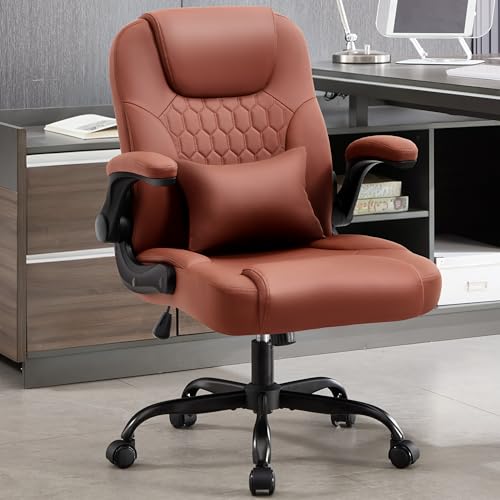
- Extra adjustable lumbar pillow
- Flip-up padded armrests
- 400-pound weight recommendation
Best For: Users wanting a cushioned chair with added lumbar support
Best Petite Fit Range
ProtoArc Flexer Sliding-Seat Chair
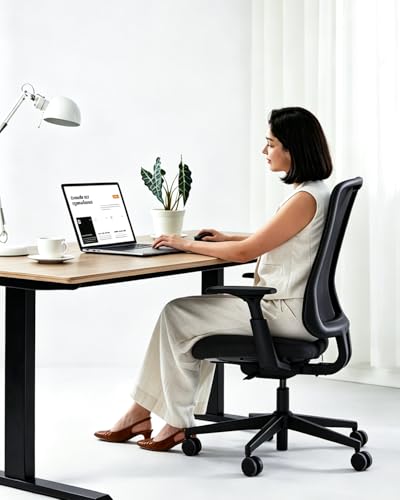
- Fits users from 5'1" to 6'0"
- 1.6-inch sliding seat adjustment
- Five-year manufacturer warranty
Best For: Shorter users needing adjustable seat depth
Compact Comfort Pick
Leather Dual-Support Office Chair

- 3.94-inch height adjustment
- Contoured back and double-layer cushion
- Flip-up arms for small spaces
Best For: Shorter users in compact home offices or study spaces
Adjustable Mesh Pick
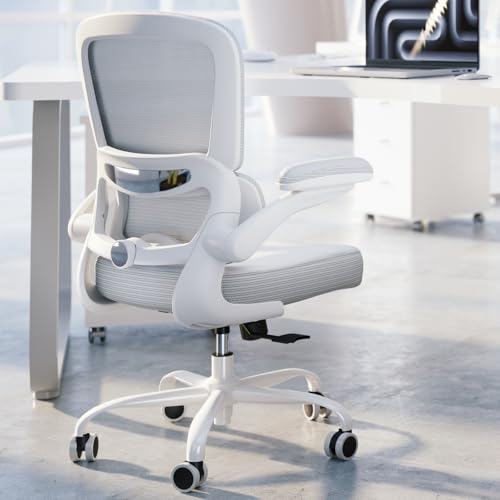
- Stated fit range starts around 5'1"
- Adjustable lumbar support
- Breathable mesh back and 330-lb capacity
Best For: Petite-to-average users wanting airflow and lumbar adjustment
Layered Cushion Pick
Heroset Dual-Support Desk Chair

- Dual-layer foam seat for pressure distribution
- Dual-layer headrest for neck support
- Flip-up arms and easy-clean PU leather
Best For: Users prioritizing cushioning and head support in a compact workspace
Most Adjustable
HOLLUDLE 3D Ergonomic Mesh Chair

- 3D lumbar support adjusts in multiple directions
- 3D armrests and 2D headrest
- BIFMA and EN1335 standards with 5-year warranty
Best For: Shorter users seeking extensive adjustment options
Best Value Fit
TRALT Adjustable Lumbar Office Chair

- 17.3-inch seat depth for a shorter leg reach
- 17.7–21.7-inch seat-height range
- High-resilience foam and adjustable lumbar support
Best For: Users around 5'4" seeking a compact, durable office chair
Best Reclining Choice
Marsail Adjustable Mesh Office Chair

- 90°–120° recline with 2D headrest
- Adjustable lumbar and 3D armrests
- Breathable mesh and 330-pound capacity
Best For: Users wanting adjustable support for work and reclining
Compact Leather Comfort – Small PU Leather Office Chair
For shoppers comparing ergonomic office chairs for short people, this compact PU leather model offers adjustable height, a padded high back, and a simple rocking function. Its flip-up armrests can also help it fit neatly into smaller workspaces.
Best For: Shorter users who want a cushioned chair for home office work, study, or gaming.
Pros:
- 3.94 inches of height adjustment and a curved padded backrest provide adaptable support.
- Flip-up armrests save desk space when raised.
- Waterproof, stain-resistant PU leather is easy to wipe clean.
- Silent rubber wheels and a 275-pound weight capacity add everyday practicality.
Cons:
- The 19.3-inch seat depth may feel substantial for especially petite users.
- PU leather may feel warmer than breathable mesh during long sessions.
This chair is a practical pick if you prefer a traditional padded seat and leather-style finish. Check the seat dimensions carefully to confirm the fit for your height and desk.
Breathable Adjustable Support – CLOUVOU Ergonomic Office Chair
This mesh model is a strong option among ergonomic office chairs for short people if you prioritize adjustable support and airflow. It includes adjustable height, lumbar support, armrests, and a headrest, although its oversized designation makes dimension checking especially important.
Best For: Users seeking a breathable, reclining office chair with multiple adjustable support points.
Pros:
- Breathable mesh back helps promote airflow during extended sitting.
- Adjustable lumbar support, headrest, armrests, and backrest allow personalized positioning.
- Backrest reclines up to 135 degrees for work or relaxation.
- Ultra-quiet wheels and a 330-pound weight recommendation suit quiet workspaces.
Cons:
- The oversized sizing may not suit every shorter user or compact desk.
- The supplied notes do not specify a seat-height adjustment range.
Choose this chair for its breathable construction and broad adjustment package, but verify the seat height and overall footprint before buying if you are particularly petite.
Personalized Padded Support – Brown Leather Chair with Lumbar Pillow
Among ergonomic office chairs for short people, this brown PU leather chair stands out for its extra lumbar pillow, padded seat, and flip-up armrests. The rocking function can be adjusted for a more personalized resting position.
Best For: Users who prefer a supportive padded chair with adjustable lumbar cushioning and a warm brown finish.
Pros:
- Included lumbar pillow provides customizable waist support.
- Curved padded backrest helps reduce back pressure while sitting.
- 90-degree flip-up padded armrests allow the chair to slide under a desk.
- Stain-resistant PU leather and included assembly instructions simplify upkeep and setup.
Cons:
- The 19.7-inch seat depth may be too deep for some petite users.
- PU leather offers less breathability than mesh.
This is a comfortable-looking option for users who value cushioning and adjustable lower-back support. Review the seat depth and height before purchase to ensure a short-person-friendly fit.
Best Petite Fit Range – ProtoArc Flexer Sliding-Seat Chair
The ProtoArc Flexer is one of the more targeted ergonomic office chairs for short people because its sliding seat is designed to fit users from 5’1″ to 6’0″. The 1.6-inch depth adjustment can help reduce dangling legs or pressure behind the knees.
Best For: Shorter users who need adjustable seat depth, breathable mesh, and a compact modern design.
Pros:
- Sliding seat adjusts depth by 1.6 inches for a more tailored leg fit.
- Designed for users from 5’1″ to 6’0″, making it a particularly relevant petite option.
- Breathable Wintex mesh and a high-density foam cushion support longer sessions.
- Three recline positions, adjustable arms, hair-proof casters, and a five-year warranty add versatility.
Cons:
- Its 220-pound maximum weight recommendation is lower than some competing models.
- The supplied dimensions and weight should be checked carefully for your workspace.
Flexer is the most purpose-built choice here for dialing in seat depth, especially for users around 5’1″ to 5’2″. Its mesh construction and recline settings also make it suitable for extended home-office use.
Compact Comfort Pick – Leather Dual-Support Office Chair
For shoppers comparing ergonomic office chairs for short people, this leather desk chair combines adjustable height, a contoured backrest, and a padded seat in a compact design. Its flip-up arms are useful when floor space is limited, while the rocking function adds flexibility during breaks.
Best For: Shorter users seeking a cushioned chair for compact home offices, dorms, or study spaces.
Pros:
- 3.94-inch pneumatic height adjustment and 360-degree swivel.
- Contoured backrest, lumbar support, and double-layered cushioning support extended sitting.
- 90-degree flip-up armrests let the chair tuck under a desk.
- Waterproof, stain-resistant PU leather is easy to wipe clean.
Cons:
- PU leather may feel less breathable than a mesh back.
- The supplied notes do not specify the minimum seat height.
This is a practical option when cushioning, easy maintenance, and space-saving arms matter more than a highly breathable design. Confirm the chair’s lower height range against your desk and preferred foot position before buying.
Adjustable Mesh Pick – TRALT Ergonomic Office Chair
Among ergonomic office chairs for short people, the TRALT stands out for its stated fit range of about 5’1″ to 6’3″ and adjustable lumbar support. It pairs a breathable mesh back with a cushioned PU leather seat, making it a versatile choice for long desk sessions.
Best For: Users around 5’1″ and taller who want lumbar adjustment, airflow, and a 330-pound weight capacity.
Pros:
- Designed for people approximately 5’1″ to 6’3″.
- Adjustable lumbar support promotes a more natural sitting posture.
- Breathable mesh back helps reduce stuffiness during long work periods.
- Flip-up armrests, 360-degree swivel, and quiet castors support flexible use.
Cons:
- The listed seat height starts at 17.7 inches, which may be high for some petite users.
- Color variations between the mesh and PU leather may be visible.
- Assembly is required, although instructions and an installation video are included.
The TRALT offers a useful balance of adjustability, ventilation, and capacity, but petite shoppers should pay close attention to the seat-height range. Its fit guidance is helpful, though individual leg length and desk height still matter.
Layered Cushion Pick – Heroset Dual-Support Desk Chair
For anyone seeking ergonomic office chairs for short people with extra cushioning, this Heroset chair emphasizes a dual-layer foam seat and dual-layer headrest. The flip-up arms help conserve floor space, while the PU leather upholstery keeps cleanup simple.
Best For: Users who prioritize pressure-distributing cushioning, head support, and a compact footprint.
Pros:
- Dual-layer high-density foam seat is designed to distribute pressure during long sitting.
- Dual-layer headrest provides added neck and cervical support.
- 90-degree flip-up arms make it easier to tuck the chair under a desk.
- Waterproof, stain-resistant PU leather is simple to maintain.
Cons:
- The supplied notes do not provide a specific seat-height range.
- PU leather may offer less airflow than mesh upholstery.
- The headrest-focused design may be more than needed for users who prefer a minimal office chair.
This chair is appealing for long sitting when seat and neck cushioning are the main priorities. Since the notes do not list exact dimensions or a petite-user fit range, verify the seat height before purchase if you are especially short.
Most Adjustable – HOLLUDLE 3D Ergonomic Mesh Chair
For ergonomic office chairs for short people, adjustability matters because a good fit depends on more than seat height. The HOLLUDLE combines a 3D lumbar system, adjustable armrests, a movable headrest, and three tilt-lock positions so you can fine-tune the chair for work, gaming, or relaxing.
Best For: Shorter users who want extensive upper-body and lumbar adjustments in a breathable mesh chair.
Pros:
- 3D lumbar support adjusts up, down, forward, backward, and rotates.
- 3D armrests and a 2D headrest offer multiple positioning options.
- Breathable mesh construction and a modern V-shaped back.
- BIFMA and EN1335 standards, plus a 5-year warranty.
Cons:
- The listed 19.69-inch seat height may still be tall for some very short users.
- Assembly is required and may take 20–30 minutes.
The HOLLUDLE is a strong fit-focused option when you need lumbar and armrest adjustability. However, check the seat-height range carefully if your feet do not rest flat at roughly 19.69 inches.
Best Value Fit – TRALT Adjustable Lumbar Office Chair
Among ergonomic office chairs for short people, the TRALT stands out for a seat depth and height range designed to support users approximately 5’4″ to 6’2″. Its 17.3-inch seat depth is intended to leave a two- to four-finger gap behind the knees, while the adjustable lumbar support helps tailor the back fit.
Best For: Shorter and average-height users wanting a relatively compact seat fit and durable essentials at a budget-oriented price.
Pros:
- 17.7–21.7-inch seat-height range and 17.3-inch seat depth.
- Adjustable lumbar support changes depth to match the spine.
- High-resilience molded foam seat is designed to resist flattening.
- Mesh back, BIFMA-certified gas cylinder, and metal-core base.
Cons:
- No headrest is included.
- The minimum listed seat height may be too high for users below the stated fit range.
- Only a 2-year warranty is specified.
The TRALT offers one of the clearer sizing claims for shorter users in this group. Its minimum height is not especially low, but the shallow seat depth and stated 5’4″ fit guidance make it worth considering for many smaller adults.
Best Reclining Choice – Marsail Adjustable Mesh Office Chair
The Marsail is a versatile pick among ergonomic office chairs for short people, with lumbar adjustment, 3D armrests, a 2D headrest, and a 90° to 120° reclining range. These controls can help smaller users position the chair for upright work or more relaxed postures, though the listed seat dimensions should be checked before buying.
Best For: Users who want a headrest, reclining flexibility, and adjustable arm support for multiple desk activities.
Pros:
- Lumbar support moves 1.18 inches forward/backward and 2.16 inches up/down.
- 3D armrests move forward/backward, swivel, and flip up.
- 2D headrest and 90°–120° backrest recline support varied postures.
- Breathable mesh back and 330-pound maximum weight recommendation.
Cons:
- The listed 21.6-inch seat height may be high for very short users.
- Supplied dimensions include a 29.5-inch seat depth, so verify the actual fit carefully.
- Assembly is required.
The Marsail provides the broadest relaxation-oriented feature set of these three chairs, especially with its headrest and recline. It may suit shorter users only after confirming that the seat height and depth allow proper foot and knee positioning.
How We Picked the Best Ergonomic Office Chairs for Short People
We focused on chairs that offer features especially useful for smaller users: a relatively shallow or adjustable seat, a low enough minimum seat height, supportive lumbar positioning, and armrests that can be adjusted without forcing the shoulders upward. We also considered backrest design, cushioning or mesh breathability, recline functionality, swivel-and-caster mobility, and the type of daily work each chair suits.
Product descriptions and available specifications were compared for practical adjustability rather than relying on appearance alone. Because body proportions vary, treat stated dimensions as a starting point and confirm measurements before ordering.
Quick Comparison
| Feature | Why It Matters | What to Look For |
|---|---|---|
| Seat height | Helps keep feet supported | A low minimum height that lets your knees stay near a right angle |
| Seat depth | Prevents pressure behind the knees | Shorter or sliding seat depth with a small gap behind the knees |
| Lumbar support | Supports the lower back | Adjustable height, depth, tension, or a contour that matches your posture |
| Armrests | Reduces shoulder and neck strain | Height and width adjustment, ideally with pivot or depth movement |
| Backrest and recline | Supports changing positions | A breathable back and stable tilt mechanism with usable tension control |
Key Buying Factors for Ergonomic Office Chairs for Short People
Measure Seat Height and Seat Depth
Seat height is often the first problem for shorter users. When the chair is too tall, a footrest can help, but a lower minimum setting is usually better. Seat depth matters just as much: your back should contact the backrest while leaving roughly two to three fingers of space between the seat edge and your knees. A sliding seat, such as the one offered by the ProtoArc Flexer, can make fit easier to fine-tune.
Match Lumbar Support to Your Torso
A fixed lumbar curve may work well if it aligns with your lower back, but adjustable support gives you more flexibility. Look for height or depth adjustment, and avoid positioning the support so high that it pushes into the middle of your back.
Check Armrest Range and Desk Height
Armrests should allow relaxed shoulders and approximately level forearms while typing. If they cannot lower enough, they may interfere with your desk or encourage shoulder tension. Measure your desk height as well as your preferred sitting position.
Choose Materials for Your Workspace
Mesh can improve airflow during long sessions, while leather or PU upholstery is easier to wipe clean and may feel more cushioned. Padding quality and edge design matter more than appearance alone, particularly if you sit for several hours at a time.
Who Should Buy Which Ergonomic Office Chairs for Short People?
Choose a chair with a sliding or compact seat if standard seats feel too deep. Prioritize breathable mesh models, such as the HOLLUDLE or Marsail options, for warm rooms or extended workdays. A chair with clearly adjustable lumbar support, including the TRALT models, is a practical choice if you frequently change positions or share a workspace.
Leather and PU chairs may suit buyers who want a more traditional look, easy cleanup, and softer initial cushioning. Dual-support designs can be worth considering if you want a more structured backrest. Whichever model you choose, confirm the seat dimensions, weight capacity, return policy, and assembly requirements before buying.