
Finding the right dock can make a video editing workflow feel much faster and more organized. The best options balance speed, drive compatibility, and dependable transfers for large media files.
Below, we’ve rounded up 10 of the best choices for editors who need quick ingest, easy backups, and flexible support for SATA and NVMe storage.
Best 10 Hard Drive Docking Stations for Video Editing Picks for 2026
Hybrid Editing Dock
SABRENT NVMe & SATA USB-C Dock

- Works with NVMe and SATA drives
- 10Gbps USB-C with both cables included
- Offline clone feature for drive copies
Best For: Editors who need one dock for mixed drive types and cloning
Pro RAID Workstation

- Thunderbolt 3 and USB4-compatible desktop dock
- RAID 0/1 setup for speed or redundancy
- Built-in card slots and DisplayPort
Best For: Laptop-based editors who want a RAID dock and pro I/O
Multi-Drive Archive Dock
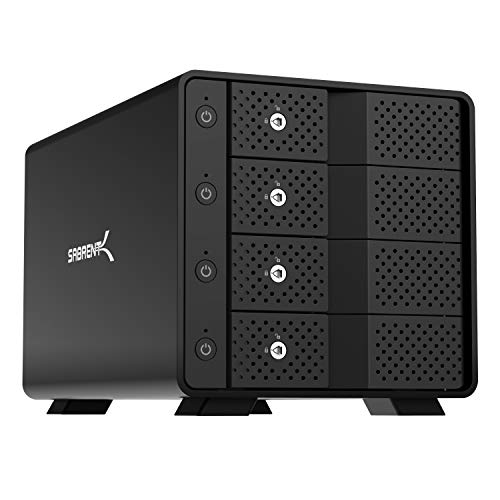
- Four independent drive bays
- 10Gbps USB-C direct-attached storage
- Active cooling with security lock
Best For: Editors needing a desktop enclosure for multiple SATA drives
Dual-Bay Editing Dock
WAVLINK NVMe and SATA Dual-Bay Dock

- Supports NVMe and SATA drives
- 10Gbps USB 3.2 Gen 2 connection
- Offline clone without a PC
Best For: Editors who need a versatile two-drive dock for cloning and transfers
Workstation-Grade RAID Pick

- RAID 0/1/3/5/10 plus JBOD and Clone modes
- Up to 110TB with 2.5"/3.5" SATA drive support
- 150W PSU and 80mm fan for multi-drive stability
Best For: Editors needing a high-capacity RAID DAS for footage and backups
Simple Dual-Bay Docking Choice
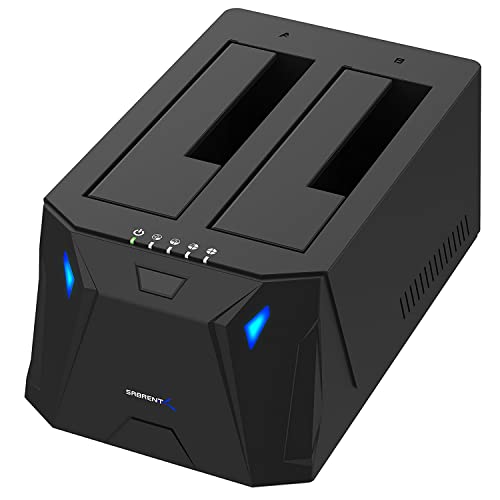
- Dual bays for 2.5"/3.5" SATA HDDs and SSDs
- Offline cloning works without a computer
- USB 3.0 with plug-and-play, no drivers needed
Best For: Quick drive swaps and offline cloning in a compact dock
USB-C Multi-Bay Cloner Pick
ORICO 5-Bay USB-C Docking Station

- One-button offline duplication with four-copy cloning
- Five bays with support for up to 5x20TB
- USB 3.2 Gen 1 USB-C connection with C/C-A cable
Best For: USB-C users who want a multi-bay dock with offline cloning
Budget Dual-Bay Clone Station
FIDECO Dual-Bay SATA Dock with Offline Clone

- Dual-bay support for 2.5-inch and 3.5-inch SATA drives
- USB 3.0 speeds up to 5Gbps with plug-and-play setup
- Offline cloning works without a computer
Best For: Editors who want an affordable dock for backups and drive-to-drive cloning
Pro Speed Top-Loader
StarTech Dual-Bay USB 3.1 Dock

- USB 3.2 Gen 2 connection with up to 10Gbps host speed
- Hot-swap, tray-less top-loading design for easy drive changes
- Supports 2.5-inch and 3.5-inch SATA HDDs and SSDs
Best For: Frequent drive swaps, backups, and fast media transfers
USB-C Offline Cloner

- USB-C dock with dual-bay SATA support
- Offline cloning copies one drive to another without a PC
- Windows and Mac plug-and-play operation
Best For: Editors who want USB-C access and easy standalone drive cloning
Hybrid Editing Dock – SABRENT NVMe & SATA USB-C Dock
If you want hard drive docking stations for video editing that can handle both fast scratch work and older archive drives, this SABRENT dock is a flexible pick. It accepts M.2 NVMe SSDs plus 2.5-inch and 3.5-inch SATA SSDs/HDDs, and its 10Gbps USB 3.2 Gen 2 connection is a solid fit for quick media access and backups.
Best For: Editors who want one dock for NVMe and SATA drives, plus easy offline cloning.
Pros:
- Supports M.2 PCIe NVMe and 2.5-inch/3.5-inch SATA drives in one unit.
- Includes both USB-C to USB-C and USB-A to USB-C cables.
- Offline clone function works without a computer.
- Tool-free, hinged lay-flat design makes drive swaps quick.
Cons:
- Drives are not included.
- Single-drive dock, so it is not built for multi-drive simultaneous access.
- 3.5-inch drives need the included 12V power adapter.
For editors who move between SSD projects and large HDD archives, this dock keeps the workflow straightforward. It is especially useful if you want cloning support and broad compatibility in a compact desktop unit.
Pro RAID Workstation – LaCie 2big Dock 20TB RAID Hub
For hard drive docking stations for video editing where speed, storage, and connectivity matter, the LaCie 2big Dock is aimed at laptop-focused production setups. It combines a desktop RAID enclosure with Thunderbolt and USB4 compatibility, up to 550MB/s performance, and built-in card and display connections for a streamlined desk.
Best For: Editors who want a high-capacity RAID dock with pro connectivity and data recovery support.
Pros:
- Desktop RAID design with RAID 0/1 setup options.
- Includes dual Thunderbolt 3 ports plus a USB4-compatible USB hub port.
- Built-in CFexpress Type B, CFast 2.0, SD card slots, and DisplayPort 1.5.
- Comes with hot-swappable IronWolf Pro drives and Rescue Data Recovery Services.
Cons:
- Large desktop unit, so it is not a portable option.
- Uses mechanical 3.5-inch drives, not SSDs.
- Premium feature set makes it more specialized than a basic dock.
This is a strong fit for editors building a more permanent workstation around fast media ingest and redundant storage. The integrated ports and RAID flexibility make it more of a production hub than a simple drive dock.
Multi-Drive Archive Dock – SABRENT 4-Bay USB-C Enclosure
If your video editing workflow needs multiple large drives online at once, this SABRENT enclosure is built for direct-attached storage over a single 10Gbps USB-C connection. It holds up to four 3.5-inch SATA HDDs or SSDs, with each bay using its own controller for stable access.
Best For: Editors who want a four-drive desktop enclosure for organized media storage.
Pros:
- Four independent bays with dedicated controllers for each drive.
- 10Gbps USB-C connection supports direct-attached storage use.
- Tray-less, tool-free insertion with per-bay power and activity LEDs.
- Active cooling, lock key, and Kensington slot add desktop security.
Cons:
- Drives are not included.
- Not hardware RAID; each drive mounts individually.
- Designed for 3.5-inch SATA drives, so it is not an NVMe dock.
For editors managing separate source, cache, and archive drives, this enclosure offers a clean JBOD-style setup. It is a practical choice when reliability and capacity matter more than RAID features.
Dual-Bay Editing Dock – WAVLINK NVMe and SATA Dual-Bay Dock
For hard drive docking stations for video editing, this WAVLINK two-bay unit is built around flexibility and fast file movement. It supports both M.2 NVMe and 2.5-inch/3.5-inch SATA drives, and its 10Gbps USB 3.2 Gen 2 connection is positioned for 4K editing, backups, and drive transfers.
Best For: Editors who want a dual-bay dock for mixed drives and offline cloning.
Pros:
- Dual-bay design supports mixed drive workflows.
- 10Gbps USB 3.2 Gen 2 speed for large media transfers.
- Offline clone function works without a computer.
- Supports NVMe M.2 and SATA 2.5-inch/3.5-inch drives.
Cons:
- Product notes do not list drives as included.
- Best suited to two drives at a time, not larger multi-drive libraries.
- Performance depends on the drive type installed.
This dock is a useful middle ground for editors who want faster transfers than a basic enclosure and the convenience of cloning built in. Its broad compatibility makes it easy to use across Windows, Mac, and Linux systems.
Workstation-Grade RAID Pick – ORICO 5-Bay RAID Enclosure
If you need hard drive docking stations for video editing that can scale into a serious desktop storage setup, this ORICO 5-bay enclosure is built for that role. It supports multiple RAID modes, high-capacity SATA HDDs and SSDs, and a built-in power supply, so it makes sense for creators managing large project files, backups, and media libraries.
Best For: Editors who want a RAID-capable, high-capacity DAS for large video projects and archive storage.
Pros:
- Supports RAID 0, 1, 3, 5, 10, JBOD, Clone, and Clear modes for flexible workflows
- Up to 110TB total capacity with support for both 2.5″ and 3.5″ SATA drives and SSDs
- Built-in 150W power supply helps keep five drives running with stable power
- Aluminum alloy shell and 80mm fan are designed for long-term cooling
Cons:
- USB 3.0 transfer speed tops out at 230MB/s in the supplied specs
- Larger desktop unit is less portable than a simple single-bay dock
- RAID setup is more involved than a basic plug-and-play dock
This is the strongest pick here if your editing workflow needs centralized storage, redundancy, or a single large workspace for footage. It leans more toward a desktop DAS than a quick-access dock, but that tradeoff is useful for serious post-production setups.
Simple Dual-Bay Docking Choice – SABRENT EC-HD2B Dual Bay Dock
For buyers comparing hard drive docking stations for video editing, this SABRENT dual-bay dock keeps things straightforward. It supports standard 2.5″ and 3.5″ SATA drives or SSDs, offers offline cloning, and plugs in without drivers, which makes it a practical desk tool for moving projects or duplicating media drives.
Best For: Editors who want a compact dual-bay dock for quick drive swaps and offline cloning.
Pros:
- Supports 2.5″/3.5″ SATA HDDs and SSDs
- Offline cloning is included for drive duplication without a computer
- Plug-and-play design needs no drivers
- USB 3.0 connection supports up to 5Gbps transfer speeds
Cons:
- Limited to two drive bays
- Supports drives up to 10TB per the supplied notes
- Not designed for RAID storage expansion or multi-drive media libraries
This is a good fit if you want a basic dock for ingest, cloning, or rotating drives during edits. It is not the most expandable option, but its simplicity is useful when speed and convenience matter more than large-scale storage.
USB-C Multi-Bay Cloner Pick – ORICO 5-Bay USB-C Docking Station
If you want hard drive docking stations for video editing with a stronger cloning focus, this ORICO 5-bay model stands out. It supports one-button offline duplication, handles up to five SATA SSDs or HDDs, and uses USB 3.2 Gen 1 with USB-C connectivity, making it useful for editors moving large video libraries between systems.
Best For: Editors and photographers who need a USB-C multi-bay dock with offline cloning.
Pros:
- One-button offline duplication supports copying four drives from one source without a computer
- Five-bay design supports up to 5x20TB capacity in the supplied notes
- USB 3.2 Gen 1 with USB-C to C/C-A cable broadens compatibility
- Aluminum alloy body and vertical layout are designed for heat dissipation
Cons:
- Supplied details list supported devices quantity as 1, so it is less of a shared workstation hub
- Cloning requires care because the target disk is overwritten
- Transfer speed is tied to SATA and USB 3.2 Gen 1 rather than a faster Thunderbolt class connection
This dock is a smart choice when cloning workflow matters as much as storage expansion. It gives you multi-bay flexibility and USB-C convenience, but it is best viewed as a dedicated duplicator and dock rather than a full-featured editing RAID system.
Budget Dual-Bay Clone Station – FIDECO Dual-Bay SATA Dock with Offline Clone
If you want hard drive docking stations for video editing that make it easy to shuffle footage between drives, this FIDECO dual-bay dock covers the basics well. It supports two 2.5-inch or 3.5-inch SATA HDDs/SSDs at once, connects over USB 3.0, and adds offline cloning when you need a quick drive-to-drive copy without opening software.
Best For: Editors who need a simple dual-bay SATA dock for backup, transfers, and quick standalone cloning.
Pros:
- Supports two SATA HDDs or SSDs at the same time for easier media handling.
- USB 3.0 connection with up to 5Gbps transfer speed.
- Offline clone function lets you copy drives without a computer.
- Plug-and-play design with no driver installation needed.
Cons:
- Only supports SATA drives, not other drive types.
- New drives may need to be initialized before the computer recognizes them.
If your workflow involves moving raw footage, project backups, or drive duplicates, this dock offers a practical mix of convenience and speed. It is a solid pick when you want dual-bay flexibility without paying for extra features you may not use.
Pro Speed Top-Loader – StarTech Dual-Bay USB 3.1 Dock
For hard drive docking stations for video editing where speed and reliability matter, this StarTech dual-bay dock is built around USB 3.2 Gen 2 performance. It supports 2.5-inch and 3.5-inch SATA drives, lets you hot-swap drives in a tray-less top-loading design, and is aimed at file backup, disk imaging, and fast data transfer.
Best For: Editors and IT-minded users who want a high-speed SATA dock for frequent backups and drive swaps.
Pros:
- USB 3.2 Gen 2 connection supports up to 10Gbps host speeds.
- Hot-swappable, tool-less top-loading design makes drive changes quick.
- Supports 2.5-inch and 3.5-inch SATA HDDs and SSDs.
- Includes LED activity lights and a universal power adapter.
Cons:
- IDE support requires a separate adapter.
- Higher-end feature set may be more than casual users need.
This is the strongest pick here if your editing workflow moves large files often and you want a dock designed for repeated use. The faster host connection and durable bay design make it a good fit for heavier backup and transfer jobs.
USB-C Offline Cloner – SABRENT Dual-Bay USB-C Dock
If you need hard drive docking stations for video editing that can also duplicate drives on their own, this SABRENT USB-C dock is built for that job. It reads and writes two SATA drives at once when connected to a computer, and it also works as an offline cloner that can copy one drive to another without a PC.
Best For: Editors who want USB-C connectivity plus simple standalone cloning for backup drives.
Pros:
- Offline cloning works without a computer.
- Dual bays mount as separate drives for simultaneous access.
- Supports 2.5-inch and 3.5-inch SATA HDDs and SSDs.
- USB 3.0 speeds up to 5Gbps with plug-and-play support on Windows and Mac.
Cons:
- Requires a USB-C port on your computer unless you supply your own adapter cable.
- Does not support IDE, M.2, NVMe, or Molex-powered drives.
- Offline cloning is limited to up to 60MBps by design.
This dock makes sense if your editing setup benefits from USB-C and you occasionally need a simple clone station. It is especially useful for file-moving workflows where both bays need to be accessible at the same time.
How We Picked the Best Hard Drive Docking Stations for Video Editing
We focused on docks that make real editing work easier: fast transfer speeds, broad drive support, stable performance under sustained use, and layouts that fit both solo creators and multi-drive projects. For Hard Drive Docking Stations for Video Editing, that means prioritizing USB-C, USB 3.1/3.2, Thunderbolt, NVMe where relevant, and reliable SATA support for common archive and media drives.
We also considered whether a dock is better for offloading camera cards through attached storage, cloning working drives, or building a larger scratch-and-archive setup. Capacity, bay count, and cooling matter too, especially if you regularly move terabytes of footage.
Quick Comparison
Single-bay and dual-bay docks are usually the best fit for editors who need portability, simple backups, and occasional drive swaps. Multi-bay enclosures are better if you juggle current projects, archives, and duplicate copies at the same time. Thunderbolt-class models are typically the strongest pick for users working with large 4K or 6K timelines, while 10Gbps USB-C docks offer a more affordable speed-to-price balance.
Key Buying Factors for Hard Drive Docking Stations for Video Editing
Speed and Interface
Look at the connection standard first. A 10Gbps USB-C dock is a solid baseline for most editors, while Thunderbolt or USB4 models can help reduce bottlenecks with faster SSDs and heavier workloads.
Drive Type Support
Make sure the dock supports the drives you already own. Many editors need 2.5-inch and 3.5-inch SATA support for bulk storage, while some workflows also benefit from NVMe support for faster project drives.
Bay Count and Workflow
Two-bay docks work well for clone-and-backup routines. Four- and five-bay options suit users who want a more permanent media station with multiple active drives or mirrored copies.
Cloning, RAID, and Recovery
If you back up source footage often, cloning can save time and reduce mistakes. RAID support may help with redundancy or combined capacity, but it is only worthwhile if you understand the tradeoffs and can manage it properly. Recovery services and data protection features are a bonus for valuable production archives.
Who Should Buy Which Hard Drive Docking Stations for Video Editing?
Choose a compact dual-bay dock if you want a straightforward setup for ingest, backup, and cloning. Pick a multi-bay enclosure if you maintain a growing edit library or need a central storage hub. Go for a Thunderbolt or USB4 dock if speed is your top priority and you regularly work with high-bitrate footage. If you need a budget-friendly, general-purpose option, a USB-C 10Gbps model is often the best place to start.
In short, the best choice depends on whether you value raw speed, storage density, or workflow simplicity. Match the dock to your editing pace, your drive types, and how often you move large media files.