
Choosing the right memory card reader can save serious time in the field and in the edit suite. For videographers, speed, format support, and reliability matter more than flashy extras.
This roundup focuses on the best options for fast offload, multi-card workflows, and practical compatibility across modern camera media.
Best 10 Memory Card Reader for Videographers Picks for 2026
Pro-level CFexpress Speed
ProGrade CFexpress Type B USB 4.0 Reader

- Up to 40Gb/s transfer speeds
- Magnetic mount with adhesive metal plate
- Includes certified USB 4.0 cable
Best For: CFexpress Type B shooters needing maximum speed
All-in-One Legacy Format Reader
Opluz 8-in-1 XQD Multi-Card Reader

- Supports XQD, CF, SD, microSD, MS, and XD
- Reads and writes 6 cards at once
- 10Gbps USB 3.2 Gen 2 transfer speed
Best For: Creators working across multiple legacy card formats
Compact Dual-Slot Workflow Tool
Freewell USB 3.2 Duo Card Reader

- Reads SD and microSD cards
- 10Gbps Type-C connectivity
- Built-in storage compartment for cards and SIMs
Best For: Travel-friendly SD and microSD workflows
Expanded Desktop Hub
Rocketek 8-in-1 CFexpress Type B Reader

- Supports CFexpress Type B plus six other card formats
- Two USB 3.2 Gen 2 USB-A expansion ports
- Includes USB-C and USB-A cables
Best For: Desk setups needing card reading and USB expansion
Multi-format Utility Pick
4-in-1 USB-C SD/CF/MS/TF Reader

- Supports CF, SD, microSD, and Memory Stick
- Includes USB-C plug and USB-A adapter
- Plug-and-play with phones, tablets, and computers
Best For: Videographers with mixed card formats who want broad compatibility
Speed-Focused Pro Reader
CFexpress/XQD/SD 10Gbps Reader

- 10Gbps speed for large video files
- Supports CFexpress Type B, XQD, and SD
- Reads and writes two cards at once
Best For: Professional filmmakers needing fast CFexpress and XQD offloads
Compact Everyday Reader
4-in-1 USB-C and USB 3.0 Reader

- Supports SD, microSD, MS, and CF cards
- Works with both USB-C and USB 3.0 ports
- Can read four cards at the same time
Best For: Budget-conscious videographers needing a compact multi-card reader
Dual-slot speed for mixed media
2IN1 CFexpress Type B & SD Reader
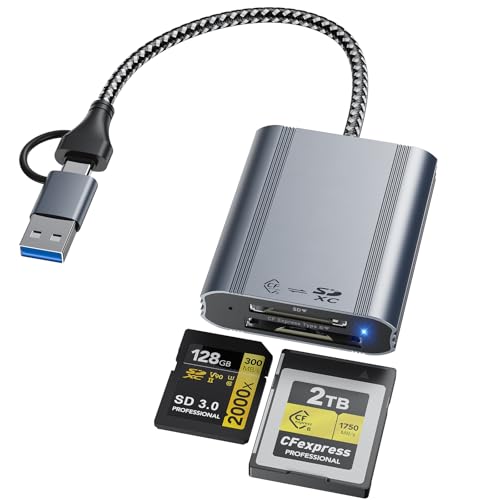
- 10Gbps USB 3.2 Gen 2 transfer speed
- Reads CFexpress Type B and SD cards
- USB-C and USB-A connections
Best For: Videographers using CFexpress Type B plus SD cards
Multi-format workflow hub
UGREEN 4-Slot USB 3.0 Card Reader
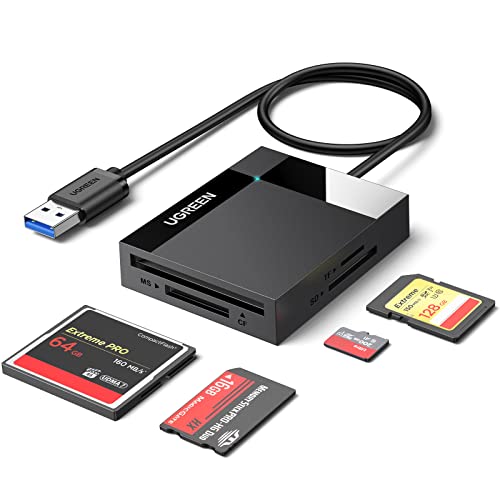
- Reads SD, microSD, CF, and MS cards
- Transfers up to 4 cards simultaneously
- USB 3.0 with 5Gbps rated speed
Best For: Creators handling mixed legacy card formats
Dedicated CFexpress Type B speed
Acer 10Gbps CFexpress Type B Reader

- Designed only for CFexpress Type B cards
- 10Gbps USB 3.2 Gen 2 transfer speed
- USB-C and USB-A connectors
Best For: Shoots built around CFexpress Type B media
Pro-level CFexpress Speed – ProGrade CFexpress Type B USB 4.0 Reader
If you need a memory card reader for videographers that can keep up with fast offloads and an on-the-go editing setup, this ProGrade Digital CFexpress Type B reader is built for exactly that. With USB 4.0 and up to 40Gb/s transfer speeds, it is aimed at creators who want to spend less time waiting on downloads and more time in post-production.
Best For: Videographers and creators working with CFexpress Type B cards who want top-tier transfer speed and a travel-friendly setup.
Pros:
- USB 4.0 connection with up to 40Gb/s transfer speeds for fast file transfers
- Includes an adhesive metal plate so the magnetic reader can attach to a laptop for a compact mobile workstation
- Comes with a certified USB 4.0 cable for peak performance
- Refresh Pro enabled for ProGrade Digital memory cards
Cons:
- Single-slot design means it only handles one card type at a time
- Built specifically for CFexpress Type B, so it is not a multi-format option
For shooters who prioritize speed and reliability over versatility, this reader is a strong workflow upgrade. The 2-year warranty and rugged build add extra confidence for frequent travel and demanding production days.
All-in-One Legacy Format Reader – Opluz 8-in-1 XQD Multi-Card Reader
This memory card reader for videographers is a practical choice if your workflow still involves a mix of older and current formats. With six card slots, 10Gbps transfer speeds, and USB-A/USB-C compatibility, it can handle XQD, CF, SD, microSD, MS, and XD cards for fast offloads across different camera systems.
Best For: Videographers and photographers who need one compact reader for multiple card formats, including XQD and CF.
Pros:
- Supports XQD, CF, SD, microSD, MS, and XD cards
- Can read and write 6 cards at the same time
- 10Gbps USB 3.2 Gen 2 transfer speed for faster file movement
- Compact aluminum body with switchable USB-A and USB-C plug design
Cons:
- Bulkier than a single-format reader because it packs multiple slots into one body
- Designed around legacy formats, so it may be more reader than some users need
If you juggle several card types in one production setup, this reader simplifies your bag without sacrificing speed. The rugged aluminum build and broad OS support make it a solid field companion for travel, studio, or on-location work.
Compact Dual-Slot Workflow Tool – Freewell USB 3.2 Duo Card Reader
For videographers who want a compact memory card reader for videographers that also keeps small accessories organized, the Freewell Duo Reader is built around speed, portability, and storage convenience. It reads SD and microSD cards over USB 3.2 with Type-C connectivity, while its built-in storage compartment adds space for multiple cards and SIMs.
Best For: Videographers and photographers who want a portable SD and microSD reader with built-in card storage.
Pros:
- Reads UHS-I and II SD cards plus microSD cards
- USB Type-C connection with 10Gbps data transfer
- Durable aluminum alloy build in a compact form factor
- Includes storage for CFexpress Type A/B cards, SD cards, microSD cards, and NANO SIM slots
Cons:
- No driver-free claim is mentioned for every platform beyond plug-and-play compatibility
- Not the right choice if you mainly shoot on CFexpress only and want a dedicated single-format reader
This is a smart pick if you want a portable reader that does more than just move files. The built-in storage compartment makes it especially useful for keeping media and tiny accessories together in one travel-ready accessory.
Expanded Desktop Hub – Rocketek 8-in-1 CFexpress Type B Reader
If you want a memory card reader for videographers that doubles as a desk-friendly hub, this Rocketek 8-in-1 model gives you broad format support plus extra USB ports. It handles CFexpress Type B, CF, SD, microSD/TF, MS, and XD cards, and its two USB 3.2 Gen 2 USB-A ports make it more useful than a basic reader when your workstation needs more connections.
Best For: Videographers and editors who want a multi-format reader with built-in USB expansion for desktop or laptop setups.
Pros:
- Supports CFexpress Type B, CF, SD, microSD/TF, MS, and XD cards
- Includes 2 USB 3.2 Gen 2 USB-A data ports for peripherals or external drives
- USB-C 3.2 Gen 2 connection supports up to 10Gbps bandwidth
- Aluminum housing helps protect the reader and dissipate heat during heavy transfers
Cons:
- More of a hub-style unit than a minimalist pocket reader
- Actual speed will vary depending on card, port, device, and file size
This is a good fit if you want one device to handle cards and a couple of USB accessories at the same time. The included USB-C to USB-C and USB-C to USB-A cables make it easier to plug into both newer and older workstations.
Multi-format Utility Pick – 4-in-1 USB-C SD/CF/MS/TF Reader
If you want a memory card reader for videographers that can move files across cameras, phones, tablets, and computers, this 4-in-1 USB-C model covers a lot of ground. It supports SD, microSD, CF, and Memory Stick formats, and the included USB-C to USB adapter adds extra flexibility for older USB ports.
Best For: Videographers who need a compact, multi-format reader for quick offload across USB-C and USB-A devices.
Pros:
- Reads CF, SD, microSD, and Memory Stick cards in one unit
- USB-C connector plus detachable USB-C to USB adapter for broader compatibility
- Plug-and-play design with no driver or software required
- Supports fast transfer of photos, RAW files, and HD video formats like H.264 and MPEG-4
Cons:
- Listed transfer speed is 480 Mbps, so it is not the fastest option here
- Does not support Wi-Fi SD cards
- Only a practical choice if you actually use the supported legacy card types
For mixed-format shooters, this is a convenient everyday reader that prioritizes compatibility over speed. It makes sense as a travel-friendly backup or general-purpose offload tool when you need one reader that handles several card families.
Speed-Focused Pro Reader – CFexpress/XQD/SD 10Gbps Reader
When speed matters, this memory card reader for videographers is built for larger camera files and on-set backups. It combines CFexpress Type B, XQD, and SD slots in a compact aluminum body, and the 10Gbps connection is aimed at fast transfer of 4K and 8K footage.
Best For: Professional filmmakers and videographers working with CFexpress Type B, XQD, and SD cards.
Pros:
- 10Gbps transfer speed for high-resolution 4K/8K footage and RAW photos
- 3-in-1 design supports CFexpress Type B, XQD, and SD cards
- Can read and write two cards simultaneously for convenient backups
- Includes USB-C to USB-C and USB-A to USB-C cables for flexible setup
Cons:
- Not compatible with all XQD series; the notes exclude XQD N/S/H series
- More specialized than a basic multi-format reader
- Best value depends on using CFexpress or XQD cards regularly
This is the strongest pick for creators who need a faster workflow and handle pro-grade media. The aluminum build and dual-slot backup support make it especially useful for travel, field work, and time-sensitive edits.
Compact Everyday Reader – 4-in-1 USB-C and USB 3.0 Reader
This BENFEI model is a practical memory card reader for videographers who want one compact adapter for common camera cards. It supports SD, microSD, MS, and CF cards, and the 2-in-1 USB-C/USB 3.0 design makes it easy to use with both newer laptops and older ports.
Best For: Videographers who want an affordable, compact reader for SD and legacy card workflows.
Pros:
- Reads SD, microSD, MS, and CF cards in a single compact unit
- USB-C and USB 3.0 compatibility gives it broad device support
- Supports up to 160MB/sec in UHS-I mode with the right card and port
- Can read four cards simultaneously
Cons:
- Not compatible with Memory Stick Standard, Memory Stick Micro (M2), or CF Type I
- Speed depends on the card and the USB port being used
- Less specialized for high-end workflows than CFexpress readers
For creators who mainly need a dependable all-rounder, this reader offers a solid balance of compatibility and convenience. It is especially useful as a compact backup reader for laptop-based editing setups and travel kits.
Dual-slot speed for mixed media – 2IN1 CFexpress Type B & SD Reader
If you want a memory card reader for videographers that can keep up with large 4K/8K files, this Rocketek dual-slot model is built for fast offloads and flexible day-to-day use. It combines CFexpress Type B and SD slots in one compact adapter, with USB-C and USB-A connectivity for easy use across modern laptops and older desktops.
Best For: Videographers and creators who need a compact dual-slot reader for CFexpress Type B and SD cards.
Pros:
- USB 3.2 Gen 2 speeds up to 10Gbps for fast transfers of large video and RAW photo files
- Dual-slot design reads CFexpress Type B and SD cards, with simultaneous reading supported
- USB-C and USB-A connectors reduce the need for adapters or extra cables
- Aluminum alloy body is designed for durability and heat dissipation during extended transfers
Cons:
- Only supports CFexpress Type B, not other CFexpress formats
- Focused on Type B and SD cards, so it is not the most universal all-format reader
Overall, this is a practical travel-friendly option if your workflow centers on CFexpress Type B and SD media. The dual-slot layout and broad OS support make it a strong fit for fast on-location backups and post-shoot transfers.
Multi-format workflow hub – UGREEN 4-Slot USB 3.0 Card Reader
This UGREEN memory card reader for videographers is a strong all-in-one choice if you need to handle several card formats without constantly swapping gear. With SD, microSD, CompactFlash, and Memory Stick support, it fits mixed camera and production workflows, and the USB 3.0 connection is rated for quick file transfers.
Best For: Videographers who regularly work with multiple card types and want to read several cards at once.
Pros:
- Supports SD, microSD, CompactFlash, and Memory Stick formats
- Can read and write 4 cards simultaneously to cut down on swapping
- USB 3.0 transfer speeds up to 5Gbps for faster offloads
- Plug-and-play compatibility with Windows, Mac, Linux, and Chrome OS
Cons:
- Bulkier than a single-slot reader, so it is less pocket-friendly
- Not built around newer CFexpress media types
For editors and shooters juggling legacy and current cards, this reader is about convenience and flexibility. Its four-slot design is especially useful when you need to move multiple cards from a shoot without slowing down.
Dedicated CFexpress Type B speed – Acer 10Gbps CFexpress Type B Reader
If your camera workflow is centered on CFexpress Type B, this Acer memory card reader for videographers keeps things simple and fast. It is purpose-built for Type B cards only, with USB 3.2 Gen 2 support and USB-C/USB-A connectors for transferring 4K/8K footage and high-resolution images on the go.
Best For: Videographers who only need a dedicated CFexpress Type B reader for fast offloads.
Pros:
- Dedicated CFexpress Type B support for a focused workflow
- 10Gbps USB 3.2 Gen 2 transfer rate for large video files
- USB-C and USB-A connectors add device flexibility
- Compact aluminum-alloy design with spring locking and ejection
Cons:
- Not compatible with SD, microSD, or CFexpress Type A/C cards
- Requires OTG support on compatible mobile devices
This is the right pick if you want a no-fuss reader made specifically for CFexpress Type B media. It gives you the speed and portability needed for fast turnaround without adding extra slots you may not use.
How We Picked the Best Memory Card Reader for Videographers
We prioritized readers that suit real video workflows: fast transfer performance, support for common camera card formats, and dependable build quality. We also looked for models that make sense for on-location use, editing stations, and backup-heavy shooting days.
Quick Comparison
In this group, CFexpress Type B readers are the speed leaders for high-bitrate footage, while multi-format readers are better for mixed-camera teams and creators who still use SD, microSD, XQD, or CF media. Dual-slot and hub-style designs can add convenience if you regularly offload more than one card type.
Key Buying Factors for a Memory Card Reader for Videographers
Card Format Support
Match the reader to your camera media first. If you shoot on CFexpress Type B, choose a dedicated high-speed reader. If your kit is mixed, a multi-card reader may be the better long-term choice.
Transfer Speed
Look for USB 3.2 Gen 2 or USB4 when possible, especially for large 4K, 6K, or 8K files. Faster readers reduce offload time, but the actual speed will still depend on your card, cable, port, and computer.
Portability and Workflow
Compact readers are easier to pack, while models with storage compartments or dual slots can streamline travel and on-set backups. If you often dump cards between shoots, a simple, durable design is usually best.
Device Compatibility
Check whether you need USB-C only, USB-A plus USB-C, or support for tablets and mobile devices. A Memory Card Reader for Videographers should fit both your shooting kit and your edit setup without adapters becoming a headache.
Who Should Buy Which Memory Card Reader for Videographers?
Choose a dedicated CFexpress Type B reader if speed is your top priority and your camera uses that format exclusively. Pick a multi-format reader if you work across several cameras, need SD and microSD support, or want one reader for travel. Dual-slot readers are a smart middle ground for creators who want flexibility without carrying a larger hub.
If you are building a fast, dependable offload workflow, the best choice is usually the reader that matches your cards first and your ports second. That simple rule helps you avoid bottlenecks and keeps media management efficient on every shoot.