
Choosing the right audio interface for live performance can make the difference between a clean, confident set and a stressful night of technical issues. The best options prioritize low latency, stable drivers, flexible routing, and monitoring features that help you stay in control on stage.
Below, we’ve narrowed the field to 10 strong picks for different setups, from solo vocal-and-guitar rigs to compact multi-input performances and streaming-friendly stage use.
Best 10 Audio Interface for Live Performance Picks for 2026
Live Gig Multichannel Workhorse

- 4x4 USB audio/MIDI interface
- 4 MIDAS-designed mic preamps
- Metal chassis with 24-bit/192 kHz audio
Best For: Bands and performers needing multiple inputs and MIDI support
Pro Routing and Monitor Control
MOTU UltraLite-mk5 18x22 USB Interface

- 18 inputs and 22 outputs
- DSP mixing with six mix busses
- Onboard effects and low-latency drivers
Best For: Performers needing advanced routing and custom monitor mixes
Studio-Grade Stage Capture
Focusrite Clarett+ 4Pre USB Interface

- Four Clarett+ mic preamps
- Two JFET instrument inputs
- ADAT expansion and balanced outputs
Best For: Musicians wanting premium sound and expandable live recording
Streaming-to-Stage Switcher
Zoom AMS-24 USB Audio Interface

- Music and Streaming modes
- 2 XLR/TRS inputs with loopback
- Bus-powered and cross-platform
Best For: Solo creators and performers switching between recording and streaming
Solo Studio Starter
Focusrite Scarlett Solo 3rd Gen

- 1 mic preamp and 1 instrument input
- 24-bit/192kHz recording with Air mode
- Low-noise outputs for clean monitoring
Best For: Solo singers and guitarists who want a compact, easy interface
Stream-Ready Multichannel

- Four combo inputs with 48V phantom power
- Music and Streaming modes simplify routing
- Loopback, direct monitor, and battery power support
Best For: Live streamers and musicians who need flexible four-input routing
Portable Starter Interface
M-Audio M-Track Solo for Recording, Streaming, and Podcasting
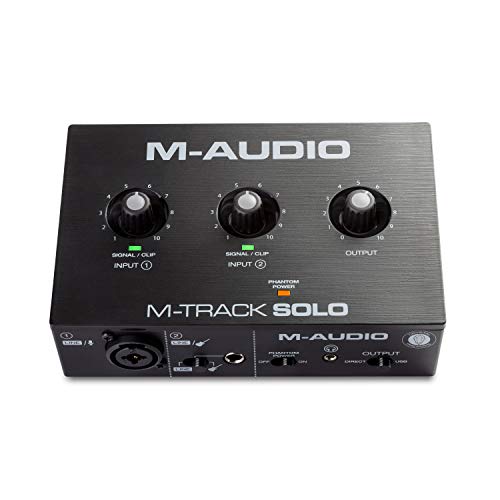
- Combo XLR/line and instrument inputs
- Zero-latency monitoring via USB/Direct switch
- Crystal Preamp for microphone clarity
Best For: Solo performers and beginners needing a compact, simple interface
Streaming-Ready Interface
MAONO PS22 Lite for Guitar & Vocals

- 24-bit/192kHz capture with 106dB dynamic range
- Loopback and ASIO support for live streaming
- Instrument input plus 48V phantom power
Best For: Streamers and creators who want flexible routing in a compact interface
Portable Monitoring Interface
Synido USB-C Audio Interface for Live Use

- Three monitoring modes for flexible use
- 24-bit/48kHz with low-latency audio chip
- Compact 300g body with USB-C support
Best For: Performers needing portable monitoring control for small setups
Live Gig Multichannel Workhorse – Behringer U-PHORIA UMC404HD
If you need an audio interface for live performance that can handle multiple mics and instruments, the Behringer U-PHORIA UMC404HD is built around a practical 4×4 layout with MIDI I/O and ultra-low latency. Its MIDAS-designed preamps, 24-bit/192 kHz conversion, and metal chassis make it a straightforward choice when you want dependable routing for stage or rehearsal use.
Best For: Performers and small bands who need four inputs, four outputs, and MIDI in a rugged interface.
Pros:
- 4×4 USB audio/MIDI interface with 4 inputs, 4 outputs, and 1x MIDI I/O
- 24-bit/192 kHz resolution for high-quality recording and playback
- 4 MIDAS-designed mic preamps with +48V phantom power
- Impact-resistant metal chassis for sturdier live use
Cons:
- Uses USB 2.0 rather than newer connectivity
- Focused on core routing rather than advanced onboard mixing features
Overall, the UMC404HD is a solid pick if live performance needs lean more toward multiple wired sources and reliable signal capture than fancy extras. It offers the kind of no-nonsense channel count and build quality that can make a difference in real-world setups.
Pro Routing and Monitor Control – MOTU UltraLite-mk5 18×22 USB Interface
MOTU UltraLite-mk5 18x22 USB Audio Interface 3 for Mac, Windows and iOS with mixing and effects
Check Price On AmazonThe MOTU UltraLite-mk5 is a feature-packed audio interface for live performance when you need flexible routing, multiple outputs, and low-latency monitoring. With 18 inputs, 22 outputs, DSP-driven monitor mixing, and onboard effects, it is designed for setups that need more than a basic interface.
Best For: Live performers and electronic musicians who need extensive I/O, custom monitor mixes, and onboard processing.
Pros:
- 18×22 interface with 40 simultaneous audio channels
- DSP monitor mixing with six separate mix busses
- Onboard reverb, 4-channel parametric EQ, and dynamics processing
- Industry-leading low latency and high dynamic range outputs
Cons:
- More complex than a simple plug-and-play interface
- Higher-end feature set may be more than casual users need
For live rigs that demand serious routing and personalized monitoring, the UltraLite-mk5 stands out as a powerful control hub. Its mix engine and output flexibility make it especially useful when different performers or destinations need separate feeds.
Studio-Grade Stage Capture – Focusrite Clarett+ 4Pre USB Interface
The Focusrite Clarett+ 4Pre is a strong audio interface for live performance if you want clean capture, flexible inputs, and reliable monitoring. Its four low-noise Clarett preamps, dual JFET instrument inputs, balanced outputs, and ADAT expansion make it a practical choice for players who also care about studio-grade sound.
Best For: Musicians who want premium preamps and clean live recording with room to expand.
Pros:
- Four low-noise, low-distortion Clarett+ mic preamps
- Two JFET instrument inputs preserve guitar tone naturally
- Two transparent headphone outputs and four balanced outputs
- ADAT optical input adds digital expandability
Cons:
- Fewer onboard performance features than some live-centric interfaces
- Expansion depends on compatible ADAT gear
If your live setup prioritizes sound quality and clean signal capture, the Clarett+ 4Pre is easy to recommend. It balances pro-level input quality with practical monitoring and expansion options for larger rigs.
Streaming-to-Stage Switcher – Zoom AMS-24 USB Audio Interface
The Zoom AMS-24 is an audio interface for live performance and streaming setups that need fast switching between routing modes. Music mode and Streaming mode give you two different workflows, while loopback, direct monitoring, and bus power make it appealing for simple portable rigs.
Best For: Solo performers, streamers, and creators who need an easy switch between recording and broadcasting.
Pros:
- Music mode and Streaming mode for different routing needs
- 2 XLR/TRS inputs with one guitar-compatible input
- Loopback and direct monitoring for live and streaming use
- Works with PC, Mac, iOS, and Android devices
Cons:
- Only 2 inputs and 2 main outputs
- 48 kHz maximum sample rate is lower than some competitors
The AMS-24 makes sense when simplicity matters more than channel count. For lightweight live performance or hybrid stream-and-stage workflows, its mode switching and hardware controls keep the setup approachable.
Solo Studio Starter – Focusrite Scarlett Solo 3rd Gen
If you need an audio interface for live performance basics like vocal and guitar monitoring, the Focusrite Scarlett Solo 3rd Gen keeps the setup simple. It offers one XLR mic preamp, one Hi-Z instrument input, and low-noise balanced outputs, making it a practical choice for compact rigs and straightforward capture/playback.
Best For: Solo performers, singer-guitarists, and creators who want a compact interface with clean inputs and easy monitoring.
Pros:
- 1 XLR mic preamp plus 1 Hi-Z instrument input for vocals and guitar
- 24-bit/192kHz recording with high-performance converters
- Air mode adds extra clarity to acoustic instruments
- Low-noise balanced outputs and headphone playback for private monitoring
Cons:
- Only 2 channels, so it is not built for multi-mic live setups
- No loopback or dedicated streaming routing features listed
For simple live performance workflows, this interface is strongest when you only need one voice and one instrument in a small, reliable package. It is less flexible than multi-input models, but the included software and easy connectivity make it a solid entry-level option.
Stream-Ready Multichannel – Zoom AMS-44 4×4 USB-C
The Zoom AMS-44 is an audio interface for live performance and streaming when you need more routing flexibility. With four XLR/TRS combo inputs, four low-noise preamps, and instant switching between Music mode and Streaming mode, it fits performers who want to record, monitor, and broadcast with less setup friction.
Best For: Musicians, streamers, and mobile creators who need four inputs, loopback, and easy mode switching.
Pros:
- Four XLR/TRS combo inputs with 48V phantom power
- Music mode and Streaming mode for different workflows
- Direct Monitor and Loopback switches with no extra software
- USB-C power plus battery support for mobile use
Cons:
- Listed compatibility details are more specific to macOS in the supplied notes
- Bulkier and more feature-heavy than a simple solo interface
This is a strong pick if your live setup needs multiple inputs and fast switching between stage-style monitoring and stream-friendly routing. The built-in loopback and battery option make it especially useful for mobile or hybrid performance situations.
Portable Two-Channel Performer – Alloy Red 2×2 USB-C Interface
For a compact audio interface for live performance or mobile recording, this 2×2 model focuses on simple, direct operation. It includes two combo jacks, 48V phantom power, direct monitoring, and USB-C bus power, so it is built for quick plug-and-play use with a laptop or PC.
Best For: Mobile performers, laptop users, and home creators who want a simple two-input interface with direct monitoring.
Pros:
- Plug-and-play USB-C design with no drivers required
- Two combo jacks for vocals or guitar inputs
- 24-bit/192kHz converters for high-fidelity recording
- Direct Monitor and 3.5mm headphone jack for zero-latency tracking
Cons:
- Only 2 channels, so it is not designed for larger live rigs
- Windows is the only operating system specifically listed in the supplied details
This interface makes sense when portability and simplicity matter more than advanced routing. The illuminated gain rings are a nice touch for dim spaces, and the one-cable setup keeps it easy to carry and use on the go.
Portable Starter Interface – M-Audio M-Track Solo for Recording, Streaming, and Podcasting
If you want a simple audio interface for live performance tasks like vocals, guitar, or quick streaming setups, the M-AUDIO M-Track Solo keeps things straightforward. It offers a combo XLR/line input, a separate instrument input, and zero-latency monitoring, making it a practical pick when you need basic reliability without extra complexity.
Best For: Solo performers, beginners, and creators who need an easy, compact interface for vocals, guitar, and live monitoring.
Pros:
- Combo XLR/line input plus dedicated line/instrument input for flexible source options
- USB/Direct switch supports zero-latency monitoring for live use
- Crystal Preamp is designed for transparent microphone capture, including condenser mics
- Includes RCA outputs and a 1/8" headphone output for monitoring flexibility
Cons:
- Only 2 channels, so it is built for simpler setups
- 48kHz max sample rate is more basic than higher-resolution alternatives
- Best suited to lightweight recording and streaming rather than advanced routing
Overall, this is a clean entry-level choice if you need a compact interface that handles live performance essentials well. It is especially appealing when zero-latency monitoring and a simple input layout matter more than expanded studio features.
Streaming-Ready Interface – MAONO PS22 Lite for Guitar & Vocals
The MAONO PS22 Lite is a strong audio interface for live performance workflows where streaming, guitar, and vocals all need to work together. Its 24-bit/192kHz capture, loopback support, ASIO driver compatibility, and dedicated instrument input make it a flexible option for creators who want more control in a compact device.
Best For: Streamers, beginner musicians, and content creators who want high-resolution audio with routing features.
Pros:
- 24-bit/192kHz recording with 106dB dynamic range for detailed capture
- Up to 56 dB preamp gain plus 48V phantom power for condenser and dynamic mics
- Dedicated instrument input with impedance adjustment for guitar recording
- ProStudio Routing Software with loopback and ASIO support for live broadcasts
Cons:
- Geared more toward creators and streamers than larger multi-input rigs
- Compact design may feel limited if you need extensive hardware controls
- Best results depend on selecting the MAONO ASIO driver in software settings
This model stands out if you want an interface that bridges live performance and streaming without a steep learning curve. The routing tools and direct monitoring features add useful flexibility for practical day-to-day use.
Portable Monitoring Interface – Synido USB-C Audio Interface for Live Use
If you need an audio interface for live performance with easy monitoring control, the Synido 2×2 focuses on practical switching and clean signal handling. It supports 24-bit/48kHz recording, offers three monitoring modes, and includes line/instrument input switching, which makes it useful for small live, recording, and broadcast setups.
Best For: Performers and creators who want a lightweight interface with simple monitoring modes and mobile-friendly connectivity.
Pros:
- Three monitoring modes: Stereo, Mix, and USB for different workflow needs
- 24-bit/48kHz capture with a dedicated audio chip for reduced latency
- 48V phantom power for supported microphones
- Compact 300g design with USB-C and included adapter for portable use
Cons:
- 48kHz maximum sample rate is modest compared with higher-resolution interfaces
- Recommended third-party ASIO driver setup may be an extra step for some users
- Best suited to straightforward 2-channel performance rather than larger routing needs
As an audio interface for live performance, this Synido model emphasizes easy switching and fast monitoring control over advanced studio expansion. It is a sensible fit when portability and clear on-the-fly adjustments matter most.
How We Picked the Best Audio Interface for Live Performance
For live use, we focused on the features that matter most in real performance conditions: dependable driver performance, low-latency monitoring, enough inputs and outputs for the job, and practical hardware controls. We also considered build quality, bus power where useful, and whether an interface can handle both stage monitoring and quick recording without slowing you down.
Quick Comparison: Which Type Fits Your Setup?
If you perform alone, a simple 1- or 2-input interface is often enough. If you sing and play guitar, a 2-input model with direct monitoring is usually the sweet spot. For keys, backing tracks, or small ensembles, look for 4 inputs or more, plus multiple outputs for monitors, clicks, or routing to a mixer. If you need to move between rehearsal, livestreaming, and stage work, an Audio Interface for Live Performance with loopback and software control can be especially useful.
Key Buying Factors for an Audio Interface for Live Performance
Latency and Driver Stability
Low latency matters when you monitor through software instruments, amp sims, or live vocal effects. Reliable ASIO, Core Audio, or class-compliant operation is just as important as raw specs.
Inputs, Outputs, and Routing
Choose enough I/O for your actual performance setup, not just your recording needs. Extra outputs can support monitor mixes, click tracks, or effects sends, while flexible routing helps adapt to different venues.
Monitoring and Control
Direct monitoring, blend controls, gain knobs, and clear level indicators make stage use easier. These features help you avoid delay and manage changes quickly between songs.
Power and Portability
Bus-powered interfaces are convenient for compact rigs, while externally powered units may offer more headroom and stronger connectivity for larger setups. Consider what matters more: travel simplicity or expanded capability.
Who Should Buy Which Audio Interface for Live Performance?
Solo singers, guitarists, and podcasters who also play live should look at compact 1- or 2-channel units. Mobile performers and streamers often benefit from interfaces with loopback and simple USB-C connectivity. Musicians running backing tracks, stereo keys, or multi-mic stage setups should prioritize 4-channel or higher models with more output flexibility.
In short, the best choice is the one that matches your actual live workflow. For an Audio Interface for Live Performance, prioritize stable monitoring, sensible I/O, and controls you can trust under pressure.