
Choosing the right speakers can make video editing faster, more accurate, and less fatiguing. The best computer speakers for video editing help you judge dialogue, noise, music, and levels without guesswork.
Below, we focus on compact desktop systems that balance clarity, connectivity, and value for everyday editing workflows.
Best 10 Computer Speakers for Video Editing Picks for 2026
Compact Studio Pick
Mackie CR3.5 Creative Reference Monitors

- Transparent studio-style response
- Tone knob adds bass or sparkle
- TRS, RCA, and 3.5 mm inputs
Best For: Desk-based editors who want compact near-field monitoring
Budget 2.1 Option
Logitech Z313 Multimedia Speaker System

- 2.1 design adds a compact subwoofer
- Convenient control pod for quick volume changes
- Simple wired setup for desktop use
Best For: Budget-minded editors needing basic desktop playback
Flat-Response Choice
Edifier MR4 Studio Monitor Speakers
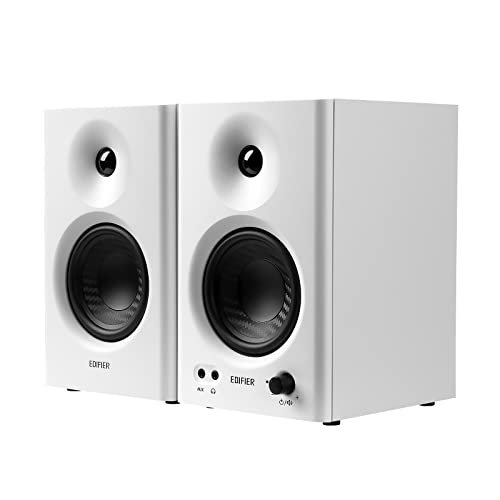
- Near-flat tuning for creator-focused listening
- TRS, RCA, AUX, and headphone output
- Separate high/low controls plus dual modes
Best For: Editors and creators who want neutral near-field monitors
High-Impact 2.1 Pick
Klipsch ProMedia 2.1 THX Computer Speakers

- THX-certified 2.1 layout with horn clarity
- 6.5-inch subwoofer adds strong bass
- Plug-and-play setup with control pod
Best For: Editors who prefer powerful, cinematic desktop audio
Studio-Grade Desktop Pick
M-AUDIO BX3 3.5" Wired Studio Monitors

- Zero-latency wired monitoring
- 3.5-inch Kevlar woofers and silk dome tweeters
- RCA, 1/4-inch, and 1/8-inch inputs
Best For: Compact wired monitoring for editing, streaming, and desktop multimedia
Wireless Convenience Pick
Logitech Z207 Bluetooth Computer Speakers

- Bluetooth or 3.5 mm connections
- Easy-Switch for two devices
- On-speaker headphone jack
Best For: Easy everyday listening and quick switching between editing devices
Most Balanced Editing Choice
PreSonus Eris 3.5 Powered Studio Monitors

- 50W powered near-field monitors
- High- and low-frequency tuning controls
- TRS, RCA, and front aux inputs
Best For: Editors who want compact powered monitors with flexible tuning and connections
Compact Power Hub
Edifier M90 100W Desktop Speakers

- 100W RMS compact desktop speaker system
- Hi-Res Audio with LDAC and Bluetooth 6.0
- HDMI eARC, optical, USB-C, AUX, and SUB OUT
Best For: Editors who want compact high-output speakers with flexible connectivity
Precision Monitor Pick

- Hi-Res certified flat response for monitoring
- Balanced TRS, RCA, AUX, Bluetooth, and headphone out
- Music, Monitor, and Custom modes
Best For: Video editors who want accurate near-field monitoring
Compact Editing Desk Choice

- 66W RMS compact speaker set for desktops
- Hi-Res Audio with LDAC and Bluetooth 5.3
- USB-C, AUX, and included angled stands
Best For: Editors with limited desk space who still want detailed sound
Compact Studio Pick – Mackie CR3.5 Creative Reference Monitors
If you want computer speakers for video editing that lean more toward accurate desktop monitoring than big-room bass, the Mackie CR3.5 is a smart fit. Its transparent studio-style response, 3.5-inch woven woofer, and silk dome tweeter help you hear edits, dialogue, and timing details clearly, while the tone knob lets you add a little extra low end or sparkle when needed.
Best For: Editors who want compact near-field speakers with flexible tone shaping for desk-based work.
Pros:
- Studio-oriented sound with a tone knob for quick shaping
- TRS, RCA, and 3.5 mm inputs cover interfaces, PCs, and more
- Desktop and bookshelf modes help optimize placement
- Built-in headphone output adds convenience for editing sessions
Cons:
- Not a full 2.1 system, so bass is limited compared with subwoofer setups
- 3.5-inch woofer may feel small for users wanting more low-end weight
For video editing on a desk, these monitors make sense if you value clarity and control over rumble. They are especially appealing when you need a simple, wired monitor pair that can also double for casual listening.
Budget 2.1 Option – Logitech Z313 Multimedia Speaker System
For computer speakers for video editing on a tighter budget, the Logitech Z313 focuses on simple setup and easy everyday use. The 2.1 design adds a compact subwoofer, and the control pod keeps volume adjustment within reach when you’re jumping between timeline work, playback, and review.
Best For: Editors who want an affordable, easy-to-use 2.1 speaker setup for general desktop use.
Pros:
- 2.1 layout with a compact subwoofer for extra bass
- Convenient control pod makes volume changes easy
- 25 watts RMS output is enough for casual desktop listening
- Simple wired setup works with desktops and other compatible devices
Cons:
- Not positioned as a studio monitor, so it is less suited to critical audio checks
- RCA connectivity is more basic than the flexible inputs on monitor speakers
- Best for general use rather than detailed mix decisions
This is the most straightforward option in the group if you mainly need dependable playback and don’t require monitor-level detail. It works best as a practical everyday speaker system rather than an accuracy-first editing tool.
Flat-Response Choice – Edifier MR4 Studio Monitor Speakers
If your priority is computer speakers for video editing with a more neutral monitoring approach, the Edifier MR4 is the strongest studio-style pick here. It is tuned toward a near-flat response curve, uses 1-inch silk dome tweeters and 4-inch composite woofers, and includes monitor and music modes so you can switch between work-focused listening and casual playback.
Best For: Video editors and creators who want near-flat desktop monitors with useful tone controls.
Pros:
- Near-flat tuning is aimed at artists and music creators
- TRS, RCA, AUX, and front headphone output offer flexible connectivity
- Separate high- and low-frequency controls help tailor the sound
- Monitor mode and music mode make it versatile for work and playback
Cons:
- Designed as near-field monitors, so they are not meant to deliver heavy bass impact
- Requires corded power and desktop placement
For editing workflows where clarity matters more than boosted lows, the MR4 is an easy recommendation. The combination of flexible inputs, front headphone out, and near-flat tuning makes it well suited to a computer-based creative setup.
High-Impact 2.1 Pick – Klipsch ProMedia 2.1 THX Computer Speakers
When you want computer speakers for video editing with a bigger, more powerful presentation, the Klipsch ProMedia 2.1 brings a THX-certified 2.1 layout and a side-firing subwoofer. Its horn technology is built for clarity, while the 6.5-inch sub adds the kind of full-bandwidth bass that can make review playback feel more cinematic.
Best For: Editors who want a high-output 2.1 system with strong bass and clear dialog playback.
Pros:
- THX certification and horn technology emphasize clarity
- 6.5-inch subwoofer delivers powerful bass response
- High peak output suits larger listening levels
- Simple plug-and-play setup with 3.5 mm input and control pod
Cons:
- Less suitable than studio monitors for neutral, reference-style editing
- Large subwoofer can take up more space under or beside a desk
- Bass-forward design may not be ideal for purely analytical listening
This is the option for creators who prefer an engaging, room-filling sound over a flatter studio signature. It is a strong desktop companion if you edit, preview, and also want your system to pull double duty for movies or music.
Studio-Grade Desktop Pick – M-AUDIO BX3 3.5" Wired Studio Monitors
If you want computer speakers for video editing that prioritize clarity over flashy bass, the M-AUDIO BX3 is a strong desktop option. These wired studio monitors are built for zero-latency monitoring, so what you hear while cutting dialogue, syncing audio, or checking effects stays clean and immediate.
Best For: Editors who want a compact wired monitor pair for accurate desktop monitoring, streaming, and multimedia work.
Pros:
- Wired connection keeps monitoring latency-free for editing and playback review.
- 3.5-inch Kevlar woofers and silk dome tweeters aim for clear stereo detail.
- MDF cabinet and bass reflex design help reduce unwanted vibration.
- Multiple inputs, including 1/4-inch, 1/8-inch, and RCA, make setup flexible.
Cons:
- Requires wired placement, so it is less convenient than Bluetooth speakers.
- Compact 3.5-inch size may not satisfy users wanting deeper low-end output.
- Rear EQ controls are less convenient than front-panel tuning.
For a small editing desk, the BX3 focuses on the monitoring basics that matter most: clean signal, usable inputs, and detailed stereo separation. It is a practical choice if you care more about hearing your edits accurately than about wireless features or room-filling bass.
Wireless Convenience Pick – Logitech Z207 Bluetooth Computer Speakers
The Logitech Z207 is a simple, flexible option if you want computer speakers for video editing and also plan to switch between devices often. It connects by Bluetooth or 3.5 mm, and Easy-Switch makes it easy to pause on one device and move to another without reworking your setup.
Best For: Editors who want an easy everyday speaker set with Bluetooth convenience and quick device switching.
Pros:
- Bluetooth and 3.5 mm input support a wide range of devices.
- Easy-Switch technology simplifies moving between two audio sources.
- On-speaker headphone jack is handy for private review sessions.
- Passive radiators add bass extension for fuller general playback.
Cons:
- 10 watts peak power is modest compared with studio monitor options.
- Bluetooth 4.2 is less ideal if you want a strictly wired editing chain.
- Designed more for convenience than for precise studio-style monitoring.
This is a good pick when ease of use matters more than reference-level accuracy. For editors who move between a computer, phone, or tablet, the Z207 keeps the desk clean and the listening experience straightforward.
Most Balanced Editing Choice – PreSonus Eris 3.5 Powered Studio Monitors
For computer speakers for video editing, the PreSonus Eris 3.5 stands out if you want a more accurate near-field monitor sound on a desktop. With 50 watts of built-in amplification, woven-composite woofers, and silk-dome tweeters, these powered speakers are built to keep voices, effects, and background music clear during edit checks.
Best For: Video editors who want compact powered monitors with tuning controls and broad desk-friendly connectivity.
Pros:
- 50 watts of power delivers clear, distortion-free sound at practical desktop volumes.
- High- and low-frequency tuning controls help adapt the sound to your room.
- Balanced TRS, RCA, and front aux input provide flexible hookup options.
- Front headphone jack supports private review and late-night editing.
Cons:
- Still a compact 3.5-inch monitor, so bass depth is limited versus larger speakers.
- Best results come from wired connections, not wireless convenience.
- Near-field design is ideal for the desk, not for filling a larger room.
If you want a balanced desktop monitor for editing work, this model combines practical tuning controls with the kind of connectivity that fits a real production desk. It is a solid middle ground between budget multimedia speakers and more demanding studio setups.
Compact Power Hub – Edifier M90 100W Desktop Speakers
If you want computer speakers for video editing that can also handle playback and client review, the Edifier M90 gives you a lot in a compact desktop footprint. Its 100W RMS output, Hi-Res Audio support, and multiple wired and wireless inputs make it a flexible choice for a clean editing desk.
Best For: Editors who want a compact, high-output speaker set with broad connectivity and optional subwoofer expansion.
Pros:
- 100W RMS output from a compact active 2.1-capable design
- Hi-Res Audio with LDAC support for compatible Android wireless playback
- HDMI eARC, optical, USB-C, AUX, Bluetooth 6.0, and SUB OUT
- Remote control plus app-based EQ and preset control
Cons:
- EQ editing in the app only works over Bluetooth
- Subwoofer is not included
For a video editing setup that needs strong volume, multiple input options, and the ability to grow into a fuller 2.1 system, the M90 is a practical all-in-one desktop speaker pick.
Precision Monitor Pick – Edifier MR3 Studio Monitors
If accurate monitoring matters most in your computer speakers for video editing, the Edifier MR3 is built around a flat, Hi-Res Audio certified response and studio-style inputs. It is positioned as a near-field speaker for audio production, video editing, guitar playing, and everyday listening.
Best For: Video editors who want a monitor-style speaker with precise sound and multiple input options.
Pros:
- Hi-Res Audio certified with a flat 52Hz to 40kHz response
- Balanced TRS, RCA, AUX, Bluetooth, and headphone output
- Music, Monitor, and Custom modes for different listening needs
- MDF cabinet design helps reduce distortion in a desktop setup
Cons:
- Lower power output than the larger desktop-focused models
- More studio-oriented tuning may not be the most bass-forward choice
The MR3 makes sense if you want a more reference-style speaker for editing timelines, checking dialogue, and hearing detail clearly rather than chasing extra bass.
Compact Editing Desk Choice – Edifier M60 Desktop Speakers
The Edifier M60 is a strong fit for computer speakers for video editing when you want a compact desktop speaker with higher-end audio features. It combines 66W RMS output, Hi-Res Audio with LDAC, and USB-C/AUX connectivity in a small design that comes with angled aluminum stands.
Best For: Editors who need a compact, polished desktop speaker with clear audio and easy wired connections.
Pros:
- 66W RMS output in a small desktop-friendly footprint
- Hi-Res Audio with LDAC over Bluetooth 5.3
- USB-C and AUX wired inputs for simple PC connections
- Bundled 15-degree aluminum stands to aim sound toward ear level
Cons:
- No optical, HDMI, or dedicated subwoofer output
- Smaller 3-inch drivers limit low-end output compared with larger models
If your edit station is tight on space, the M60 offers a clean mix of compact size, digital audio support, and desktop-friendly setup accessories.
How We Picked the Best Computer Speakers for Video Editing
For Computer Speakers for Video Editing, we prioritized sound clarity, midrange accuracy, and consistent performance at close listening distances. We also looked at connectivity, desk footprint, controls, and whether each system is better suited to editing dialogue-heavy content or mixed-media projects.
We favored models that can reveal detail without sounding harsh, since editors often spend long sessions checking audio on repeat.
Quick Comparison
In a fast comparison, 2.0 studio monitors are usually the best fit when you want cleaner detail and a more honest mix. 2.1 systems can add more bass impact, which may be helpful for content with music, trailers, or gaming-style edits, but they are not always the most neutral choice.
Bluetooth and USB-C inputs are convenient, while simple analog connections still work well if you mainly stay at a fixed workstation.
Key Buying Factors for Computer Speakers for Video Editing
Accuracy Over Bass
Strong low end is tempting, but editing benefits more from clear mids and controlled highs. Dialogue lives in the midrange, so that is where detail matters most.
Near-Field Listening
Desktop speakers are usually heard close up. Look for models designed for near-field use, because they tend to image better and reduce room coloration at shorter distances.
Connectivity and Workflow
If you switch between a laptop, interface, or monitor, pick speakers with the inputs you actually use. 3.5 mm, RCA, USB-C, Bluetooth, and TRS inputs can all be useful depending on your setup.
Size and Placement
Small rooms and crowded desks benefit from compact cabinets. If space is limited, a smaller 2.0 pair may be easier to place correctly than a larger system with a subwoofer.
Controls and Fine Tuning
Simple tone controls or acoustic adjustments can help you adapt the sound to your room. That matters when you want a quick, reliable editing reference without constant EQ tweaks.
Who Should Buy Which Computer Speakers for Video Editing?
If you edit mostly interviews, YouTube content, or podcasts, prioritize clarity and midrange detail over heavy bass. If you also want one speaker setup for music, movies, and casual listening, a more energetic 2.1 system may be the better compromise.
For creators working in tight spaces, compact powered monitors are often the smartest choice. If convenience is the priority, look for easy setup and flexible inputs; if accuracy is the priority, choose the most neutral-sounding option in your price range.