
Need more capacity, better organization, or stronger redundancy from your desktop storage setup? USB-C RAID enclosures make it easier to build fast, flexible multi-drive storage without moving to a full server.
Below, we focus on the best options for different needs, from compact two-bay models to higher-capacity five-bay enclosures for larger media libraries and backups.
Best 10 USB C Raid Enclosures Picks for 2026
High-Capacity 5-Bay RAID

- Up to 110TB across five SATA drives
- RAID 0/1/3/5/10/JBOD/CLONE support
- Aluminum case with 80mm cooling fan
Best For: Large backup and video workflows needing flexible RAID
Business-Grade 4-Bay RAID
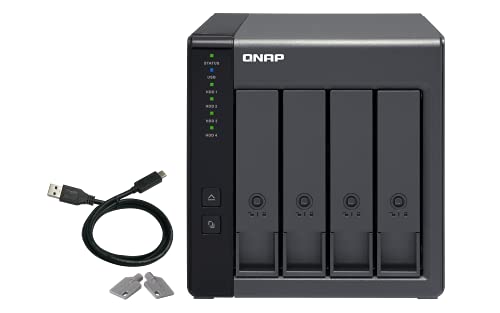
- Hardware RAID with RAID 0/1/5/JBOD
- USB Type-C DAS for Mac, Windows, Linux
- Lockable bays and diskless design
Best For: NAS backup and desktop RAID expansion
Compact Dual-Bay RAID

- Supports HDDs and SSDs in 2.5/3.5-inch sizes
- RAID 0, RAID 1, Normal, and JBOD modes
- Aluminum build with cooling fan
Best For: Simple dual-drive storage and basic RAID setups
Fast 2-Bay USB-C RAID

- USB 3.2 Gen 2 with up to 10Gbps speeds
- RAID 0/1/JBOD/SINGLE support
- Tool-free trays with push-lock design
Best For: Faster mirrored backup and performance storage
Flexible 5-Bay RAID Pick

- 8 RAID and storage modes
- Up to 5 drives, 160TB total
- Smart cooling with status LEDs
Best For: Flexible backup and expansion with mixed SATA drives
Secure High-Capacity RAID Bay

- 8 RAID modes plus JBOD and clone
- Up to 110TB with 22TB drives
- Locking design and silent fan
Best For: Large desktop storage with drive security and RAID options
Balanced 4-Bay RAID Choice

- Multiple RAID modes including clone and JBOD
- Up to 96TB total capacity
- Dual fans for active cooling
Best For: Compact RAID storage for backups and media libraries
4-Bay Basics
CENMATE 4 Bay USB A/C + eSATA Enclosure

- Up to 80TB total capacity
- USB A/C 3.0 and eSATA included
- No RAID or NAS support
Best For: Simple large-capacity DAS storage without RAID features
RAID Value Pick
MAIWO USB-C 4-Bay RAID Enclosure

- Supports RAID Normal, 0, 3, 5, 1/10, Clone, JBOD
- Up to 96TB with 2.5/3.5" SATA drives
- Dual fans and 78W external power supply
Best For: Flexible RAID storage with USB-C and multiple array modes
RAID + Cooling
CENMATE 4 Bay 8-Mode RAID Enclosure

- Eight RAID modes including Clone and Large
- Up to 80TB total capacity
- Aluminum body with 2-inch fans
Best For: Users who want eight RAID modes and active cooling in one enclosure
High-Capacity 5-Bay RAID – Yottamaster 5-Bay USB C DAS
If you need one of the more expandable usb c raid enclosures for a serious desktop backup or media workflow, the Yottamaster PS500RC3 is built around capacity first. It supports five SATA drives, multiple RAID modes, and USB 3.1 Type-C connectivity, making it a practical fit for users who want flexible storage without moving to a full NAS.
Best For: Photographers, video editors, and other users who need up to 110TB of configurable direct-attached storage.
Pros:
- Supports up to 5 drives and up to 110TB total capacity
- Offers RAID 0/1/3/5/10/JBOD/CLONE options
- Aluminum shell and 80mm temperature-controlled fan for cooling
- Works with 2.5-inch and 3.5-inch SATA HDDs and SSDs
Cons:
- USB 3.1 Type-C tops out at 5Gbps, not faster Gen 2 speeds
- High-power drive setups may need extra external power attention
- Brand-new drives may need formatting before use
This is a strong choice if you want maximum drive count and broad RAID flexibility in a single USB-C enclosure. It is best suited to users who value storage density and cooling over compact size.
Business-Grade 4-Bay RAID – QNAP TR-004 USB-C RAID
QNAP TR-004 4 Bay USB Type-C Direct Attached Storage (DAS) with hardware RAID (Diskless)
Check Price On AmazonThe QNAP TR-004 is a straightforward pick among usb c raid enclosures if you want a hardware RAID DAS for computers or NAS expansion. It connects through USB Type-C, supports multiple RAID layouts, and includes lockable bays, so it fits users who want a more organized external storage setup rather than a general-purpose dock.
Best For: Users who want a diskless 4-bay RAID enclosure for Windows, macOS, Linux, or QNAP NAS backup.
Pros:
- Hardware RAID support for RAID 0, 1, 5, JBOD, and individual disks
- USB Type-C connection with included Type-C to Type-A cable
- Lockable drive bays for added physical security
- Works as external storage for computers or QNAP NAS backup
Cons:
- Diskless, so drives must be purchased separately
- Not compatible with certain older QNAP NAS models
- NAS applications cannot be installed on the enclosure
For users who want a known RAID brand with simple hardware RAID management, the TR-004 is a dependable option. Its main appeal is reliable multi-bay storage with a practical, business-like feature set.
Compact Dual-Bay RAID – CENMATE USB A/C 2-Bay RAID
If you want a smaller usb c raid enclosure for everyday storage, the CENMATE 2-bay unit keeps things simple with RAID 0, RAID 1, Normal, and JBOD modes. It supports 2.5-inch and 3.5-inch SATA HDDs and SSDs, includes both USB A and USB C 3.0 cables, and is aimed at users who want plug-and-play expansion without a lot of setup.
Best For: Home or office users who want a compact dual-bay RAID enclosure with basic mode flexibility.
Pros:
- Supports 2.5-inch and 3.5-inch HDDs and SSDs
- Offers four modes: RAID 0, RAID 1, Normal, and JBOD
- Aluminum body with built-in fan for cooling
- Includes USB A/C 3.0 cables for broad compatibility
Cons:
- Fan noise is noted at around 40–50 dB
- Mac OS does not have RAID software here
- RAID changes can cause data loss if not handled carefully
This enclosure is a good fit if you want a modest two-drive RAID box instead of a larger, more complex system. It is best for straightforward storage needs where size and compatibility matter more than advanced RAID options.
Fast 2-Bay USB-C RAID – TerraMaster D2-320 10Gbps
The TerraMaster D2-320 stands out among usb c raid enclosures if speed is a priority, thanks to its USB 3.2 Gen 2 connection and support for RAID 0, RAID 1, JBOD, and SINGLE modes. It is a diskless 2-bay DAS designed for users who want up to 44TB of storage and a simple tool-free tray system.
Best For: Users who want a faster 2-bay USB-C DAS for mirrored backups or high-speed RAID 0 storage.
Pros:
- USB 3.2 Gen 2 connection with up to 10Gbps transfer rates
- Supports RAID 0, RAID 1, JBOD, and SINGLE
- Up to 44TB total capacity with 22TB drives
- Tool-free trays with push-lock design
Cons:
- Diskless, so you must supply your own drives
- Plastic enclosure instead of metal
- Only 2 bays, so capacity is more limited than larger units
The D2-320 is a strong fit if you want a fast, modern USB-C enclosure without moving to a larger multi-bay chassis. Its combination of 10Gbps connectivity and simple RAID choices makes it practical for everyday backup or performance-focused storage.
Flexible 5-Bay RAID Pick – 5-Bay Flexible Backup Hub
If you want usb c raid enclosures that can handle mixed drive setups and multiple storage tasks, this UGREEN 5-bay DAS is built for flexibility. It supports 2.5-inch and 3.5-inch SATA HDDs/SSDs, offers eight storage modes, and uses a USB-C 5Gbps connection for compatible Windows, macOS, and Linux systems.
Best For: Users who want a high-capacity USB-C DAS with lots of RAID choices for backup, expansion, and drive reuse.
Pros:
- 8 modes including PM, RAID 0, RAID 1/3/5/10, Large, and Clone
- Supports up to five drives and up to 160TB total capacity
- Smart cooling with automatic fan speed adjustment and sleep support
- Clear LED indicators for drive status and RAID rebuild info
Cons:
- Changing RAID modes requires reformatting, so backups are essential
- Not meant to add drives to a NAS storage pool
- Requires an external 12V/8A power adapter
Overall, this is a strong pick if your priority is broad RAID flexibility rather than a simple single-mode enclosure. The combination of five bays, cooling control, and multiple operating modes makes it versatile for backup and storage expansion workflows.
Secure High-Capacity RAID Bay – 5-Bay Locked RAID Storage
Among usb c raid enclosures, this ORICO 5-bay model is aimed at users who need straightforward multi-drive storage with strong capacity and simple physical protection. It supports eight RAID-related modes, runs through a USB 3.0 connection, and is designed for 3.5-inch SATA drives with up to 22TB per disk.
Best For: Users who want a spacious 5-bay enclosure for large files, backups, and RAID-based storage management.
Pros:
- Supports 8 modes: 0, 1, 3, 5, 10, JBOD, CLONE, and CLEAR
- Up to 110TB total capacity with support for 22TB drives
- 80mm silent fan plus front and rear vents for cooling
- Independent locking mechanism helps prevent accidental drive removal
Cons:
- Uses USB 3.0 rather than a higher-speed interface
- RAID mode changes require a backup first
- Built for 3.5-inch disks only
This ORICO enclosure is a practical fit if you value capacity, safety, and simple access to multiple hard drives. Its built-in power design and lock system make it especially appealing for desktop setups that stay in one place.
Balanced 4-Bay RAID Choice – Compact 4-Bay RAID Dock
If you’re comparing usb c raid enclosures for a smaller desktop footprint, this MAIWO 4-bay unit keeps the feature set focused on practical storage and backup use. It supports multiple RAID layouts, includes USB A-C and C-C cables, and works with 3.5-inch SATA drives up to a 96TB total capacity.
Best For: Professionals and power users who want a 4-bay RAID enclosure for backups, media libraries, and workstation storage.
Pros:
- Supports Normal, 0, 3, 5, 1/10, Clone, and Large (JBOD)
- USB 3.1 interface with up to 5Gbps transfer speeds
- Up to 96TB capacity with four 24TB drives
- Two cooling fans help maintain operating temperatures
Cons:
- Only supports 3.5-inch SATA drives
- Cooling fans are switch-controlled rather than automatic
- Less total capacity than larger 5-bay alternatives
For users who do not need a massive bay count, this MAIWO enclosure offers a balanced mix of RAID flexibility, cooling, and capacity. It is a sensible choice for workstations, backups, or storage-heavy media setups.
4-Bay Basics – CENMATE 4 Bay USB A/C + eSATA Enclosure
If you want a straightforward option among usb c raid enclosures, this CENMATE 4-bay model is built for storage expansion rather than RAID features. It supports 2.5/3.5″ SATA HDDs and SSDs, offers up to 80TB capacity, and includes USB A/C 3.0 plus eSATA for flexible desktop use.
Best For: Users who need a simple 4-bay DAS for large-capacity SATA storage with USB-C connectivity.
Pros:
- Supports 2.5/3.5″ SATA HDDs and SSDs up to 80TB total.
- Includes USB A/C 3.0 and eSATA cables for broad compatibility.
- Aluminum-alloy body plus built-in fan helps with cooling.
- Plug-and-play design works with Windows, Mac, and Linux.
Cons:
- No RAID or NAS functionality.
- Fan noise is listed around 40-50 decibels.
- USB 3.0 speed is capped at 5Gbps.
For buyers who mainly need dependable multi-drive expansion, this enclosure focuses on capacity, cooling, and easy setup. It makes sense if RAID management is not part of your workflow.
RAID Value Pick – MAIWO USB-C 4-Bay RAID Enclosure
For shoppers comparing usb c raid enclosures, this MAIWO 4-bay model stands out for its wide RAID support and practical desktop storage design. It handles 2.5/3.5″ SATA drives, includes USB A/C 3.1 and C-C cables, and supports up to 96TB across multiple RAID modes.
Best For: Users who want a flexible 4-bay RAID enclosure with USB-C connectivity and multiple array options.
Pros:
- Supports RAID Normal, 0, 3, 5, 1/10, Clone, and JBOD-style large mode.
- Up to 96TB capacity for 2.5″ and 3.5″ SATA HDD/SSD drives.
- USB A/C 3.1 interface with transfer speeds up to 5Gbps.
- Dual-fan cooling and a 78W external power supply add stability.
Cons:
- Listed as DAS, not NAS.
- 5Gbps is the stated top transfer rate.
- RAID setup adds more complexity than a simple plug-and-play enclosure.
This is a strong pick if RAID flexibility matters more than simplicity. The combination of multiple modes, active cooling, and USB-C support makes it a versatile choice for heavier storage workloads.
RAID + Cooling – CENMATE 4 Bay 8-Mode RAID Enclosure
If you need usb c raid enclosures with a wider range of array choices, this CENMATE 4-bay unit is built around eight RAID modes and a cooling-focused aluminum design. It supports 2.5/3.5″ SATA HDDs and SSDs, tops out at 80TB, and includes USB A/C 3.0 plus eSATA connectivity.
Best For: Buyers who want eight RAID modes in a 4-bay USB-C storage enclosure.
Pros:
- Eight RAID modes: 0/1/3/5/10, Clone, Large, and Normal.
- Supports up to 80TB total across four SATA drives.
- Aluminum-alloy build and 2-inch fans help manage heat.
- USB A/C 3.0 and eSATA cables are included.
Cons:
- RAID mode changes require a specific reset procedure.
- Fan noise is listed around 40-50 decibels.
- MAC OS has no RAID software support noted in the product details.
This enclosure is best when RAID flexibility is the priority and you want active cooling in a four-drive desktop unit. It offers a lot of mode variety, but setup is less casual than a basic storage box.
How We Picked the Best USB C Raid Enclosures
We prioritized build quality, RAID flexibility, drive compatibility, cooling, connection options, and overall value. For USB C Raid Enclosures, the most useful models are the ones that balance real-world performance with easy setup and dependable thermal management.
We also considered whether each enclosure fits common use cases such as backup, video editing, photo libraries, and long-term archiving.
Quick Comparison
Two-bay units are usually the best choice for simple mirrored backups or a compact performance boost. Four-bay and five-bay enclosures offer more capacity and more RAID options, which makes them better for expanding storage or housing large working libraries.
USB-C connectivity is the main convenience factor, but cable compatibility, enclosure size, and support for 2.5-inch versus 3.5-inch drives can matter just as much.
Key Buying Factors for USB-C RAID Enclosures
RAID Modes
Look for the RAID levels you actually need. RAID 0 can improve speed but offers no redundancy, while RAID 1, RAID 5, and similar modes are better for protecting data. Many USB C Raid Enclosures also support JBOD or individual disk modes for maximum flexibility.
Drive Size and Capacity
Check whether the enclosure supports 2.5-inch drives, 3.5-inch drives, or both. If you plan to use high-capacity HDDs, make sure the enclosure’s stated capacity and drive count match your long-term storage goals.
Cooling and Noise
More bays usually mean more heat. A built-in fan, aluminum construction, and sensible airflow can help keep drives stable during long transfers. If the enclosure will sit near your desk, fan noise may be worth considering too.
Ports and Compatibility
Confirm whether the enclosure uses USB-C only or includes USB-A and other options like eSATA. That can make a big difference if you work across older and newer systems. Also verify OS support and whether special software is required for RAID management.
Who Should Buy Which USB C Raid Enclosures?
If you want a simple backup target for a laptop or desktop, a two-bay enclosure is usually enough. If you work with large files, manage growing media collections, or want more redundancy options, a four-bay model is a stronger fit.
Choose a five-bay enclosure if you need maximum expansion in a single box and are comfortable trading a larger footprint for more storage and RAID flexibility. For the most practical setup, match the enclosure to your drive type, capacity plan, and how much redundancy you need from day one.