
Cutting the cord does not mean giving up local news, sports, weather, or network programming. The right TV antenna can provide free over-the-air channels without a monthly subscription, but reception depends heavily on your location, building materials, and distance from broadcast towers.
We compared 10 indoor and indoor/outdoor TV antennas with attention to signal range, cable length, setup, compatibility, and everyday value. Use the guide below to narrow the list to the antenna that best fits your room and reception needs.
Best 10 TV Antennas Picks for 2026
Long-Reach Choice

- Indoor or outdoor installation
- 16.5-foot cable and signal booster
- Supports 4K and 1080p formats
Best For: Flexible placement and potentially longer-range reception
Easy Setup Pick
DAANT Indoor Long-Range TV Antenna

- 16-foot shielded coaxial cable
- Supports 4K, UHD, and 1080p
- Designed for digital and smart TVs
Best For: Simple indoor installation with flexible placement
Compact Indoor Pick

- Compact indoor design with magnetic base
- Omnidirectional reception
- Includes a 10-foot cable and two-year warranty
Best For: Small spaces and easy antenna repositioning
Tabletop Classic
Philips Rabbit Ears Indoor TV Antenna

- Adjustable VHF/UHF rabbit ears and loop
- No-tools tabletop setup
- ATSC 3.0 compatible where available
Best For: Nearby local broadcasts and simple tabletop use
Reliable Everyday Pick
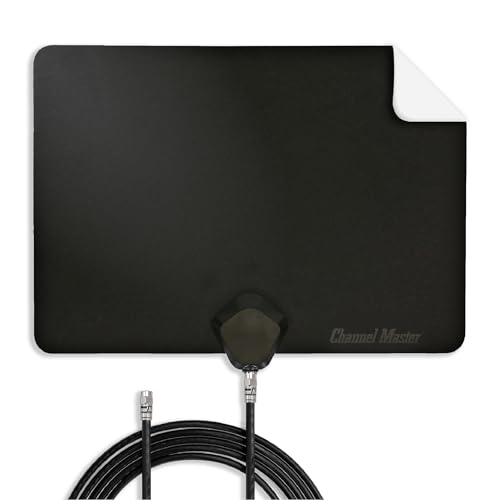
- 35-mile indoor reception range
- Supports 4K and ATSC 3.0
- Includes 12-foot RG6 cable
Best For: Dependable local-channel reception with discreet placement
Clean TV-Mounted Design
UltraPro Hover Digital TV Antenna

- Up to 40-mile indoor range
- Mounts directly on top of the TV
- Supports 4K, 8K, and ATSC 3.0
Best For: Low-profile setups prioritizing neat, tool-free installation
Best Long-Range Pick
6000+ Miles Amplified TV Antenna

- 38-foot cable with mounting accessories
- USB-powered amplification and ATSC 3.0 support
- Weatherproof for indoor or outdoor use
Best For: Long cable runs, weak-signal areas, RVs, and outdoor setups
Best Flexible Placement

- 20-foot cable for easier positioning
- Compact design with magnetic base
- Amplified reception and 1080p HD support
Best For: Apartments, bedrooms, and setups needing discreet placement
Best Simple Indoor Value

- 4K and 1080p support
- 9.8-foot cable for indoor placement
- Compact design with no built-in amplifier
Best For: Basic indoor setups in areas with adequate local reception
Long-Reach Choice – NEOSIGN 180-Mile TV Antenna
If you need tv antennas with flexible placement, the NEOSIGN model supports indoor or outdoor use and includes a long 16.5-foot coaxial cable. Its signal booster and stated 180-mile maximum range may suit homes that need extra installation flexibility, though actual reception depends on local coverage.
Best For: Buyers seeking an indoor/outdoor antenna with a long cable and optional signal boosting.
Pros:
- Supports 4K and 1080p digital formats.
- Can be used indoors or outdoors.
- Includes a 16.5-foot coaxial cable and signal booster.
- Offers a stated maximum range of 180 miles.
Cons:
- Reception depends heavily on local signal coverage.
- The booster requires the correct mode and a channel rescan.
- Outdoor placement may require additional mounting arrangements.
The NEOSIGN is a feature-focused option for shoppers who want placement versatility and extra cable length. Check available local channels before buying and rescan after moving the antenna or changing its range setting.
Easy Setup Pick – DAANT Indoor Long-Range TV Antenna
The DAANT is one of the more straightforward tv antennas for digital and smart TVs. It includes a 16-foot shielded coaxial cable, supports 4K, UHD, and 1080p broadcasts, and is designed to be positioned near a window before scanning for channels.
Best For: Digital-TV owners who want a simple indoor antenna with a long cable.
Pros:
- Supports 4K, UHD, and 1080p broadcast formats.
- Includes a 16-foot coaxial cable with multiple shielding layers.
- Simple plug-in installation and channel scanning process.
- Rated for a stated maximum range of 100 miles.
Cons:
- Not suitable for older analog televisions.
- Reception may require testing different positions and orientations.
- Comes with a three-month warranty.
DAANT offers a practical indoor setup for compatible digital TVs. Its cable length gives you room to experiment with placement, but channel availability and reception quality still depend on your location and nearby broadcast towers.
Compact Indoor Pick – HIDB Slim Digital TV Antenna
Among compact tv antennas, the HIDB stands out for its small footprint and included magnetic base. It is designed for indoor use, offers omnidirectional reception, and includes a 10-foot cable, making it convenient for a TV stand, table, or placement near a window.
Best For: Apartment dwellers and other shoppers who prioritize a compact, movable indoor antenna.
Pros:
- Compact design is easy to place or hide.
- Omnidirectional reception can simplify positioning.
- Includes a magnetic base and 10-foot cable.
- Backed by a two-year manufacturer warranty.
Cons:
- Actual reception varies with location, terrain, and obstacles.
- The supplied guidance recommends mounting high and facing broadcast towers when possible.
- Channel scanning is required after setup or relocation.
The HIDB is a sensible choice when space and easy repositioning matter more than outdoor installation. Its compact form and magnetic base make experimenting with placement convenient, while the two-year warranty adds reassurance.
Tabletop Classic – Philips Rabbit Ears Indoor TV Antenna
The Philips Rabbit Ears is a traditional tabletop option for shoppers comparing tv antennas for nearby local broadcasts. Its adjustable dipoles and circular UHF loop cover VHF and UHF reception, while the included 5-foot coaxial cable supports a no-tools setup.
Best For: Homes close to broadcast towers that want a familiar tabletop antenna for local channels.
Pros:
- Adjustable rabbit ears and circular loop support VHF and UHF reception.
- Simple tabletop installation with no tools required.
- Compatible with modern TVs and NextGen TV (ATSC 3.0) where available.
- Includes U.S.-based support and a limited-lifetime replacement pledge.
Cons:
- Its stated maximum range is 30 miles.
- The 5-foot cable offers less placement flexibility than longer-cable models.
- Reception may require manually adjusting the dipoles and loop.
Philips is a practical, recognizable choice for short-range indoor reception. It works best when local towers are relatively nearby and you want an uncomplicated tabletop design rather than a long-range installation.
Reliable Everyday Pick – Channel Master FLATenna
If you want a straightforward option among tv antennas, the Channel Master FLATenna offers a slim indoor design and a realistic 35-mile reception range. Its reversible finish and multiple placement options make it easy to fit into an urban or suburban setup.
Best For: Viewers seeking a dependable indoor antenna for local channels and discreet placement.
Pros:
- Supports available HD, 4K, and ATSC 3.0 broadcasts.
- Includes a 12-foot shielded RG6 coaxial cable.
- Reversible black-and-white design supports wall, window, or tabletop placement.
- Backed by a one-year manufacturer warranty.
Cons:
- The 35-mile range may not suit homes far from broadcast towers.
- Indoor reception can vary with obstructions and interference.
The FLATenna is a practical choice when you value simple installation, flexible placement, and a clearly stated reception range over exaggerated long-distance claims.
Flexible Range Option – FGOTV Indoor Smart TV Antenna
This FGOTV model stands out among tv antennas for its selectable short- and long-range modes. It includes an amplifier, a 16.5-foot cable, and placement guidance aimed at helping users adjust reception around local tower distance and household interference.
Best For: Buyers who want adjustable reception modes and a longer included cable for indoor placement.
Pros:
- Offers short-range and long-range modes for different tower distances.
- Includes an upgraded Smart IC chip designed to filter cellular and FM interference.
- Comes with a 16.5-foot cable, amplifier, and manual.
- Supports available 4K, UHD, and 1080p broadcasts.
Cons:
- Reception depends on local towers, terrain, building materials, and placement.
- Some low-VHF channels may require a compatible additional antenna.
- The amplifier may not noticeably improve reception in weak-signal areas.
This antenna provides useful adjustment options, but getting good results requires checking tower distance, choosing the appropriate mode, positioning it carefully, and rescanning channels after changes.
Clean TV-Mounted Design – UltraPro Hover Digital TV Antenna
For a tidy entertainment-center setup, the UltraPro Hover is one of the more distinctive tv antennas. It attaches directly to the top of a television, swivels horizontally for positioning, and can also sit on a surface or mount to a wall.
Best For: Cord-cutters who want a low-profile antenna mounted directly on or near the TV.
Pros:
- Captures VHF and UHF signals up to a stated 40-mile range.
- Supports 4K, 8K, and ATSC 3.0-compatible broadcasts where available.
- Offers top-of-TV, tabletop, or wall placement.
- Includes a limited-lifetime replacement pledge and U.S.-based technical support.
Cons:
- Indoor reception still depends on signal conditions and antenna positioning.
- Its top-mounted design may not work equally well with every TV shape or setup.
The Hover is a good fit when appearance and simple installation matter. Its swivel design gives you some positioning control, while the included mounting options make it adaptable to different rooms.
Best Long-Range Pick – 6000+ Miles Amplified TV Antenna
For shoppers comparing tv antennas, this amplified indoor/outdoor model emphasizes flexible placement and long-range reception. It includes a 38-foot coaxial cable, USB-powered signal boosting, weatherproof construction, and support for ATSC 3.0 and 4K/8K resolution.
Best For: Homes, RVs, campers, and other setups where the antenna needs to be placed far from the television or used indoors and outdoors.
Pros:
- Includes a 38-foot cable and mounting accessories for flexible placement.
- USB-powered amplifier supports reception in urban, suburban, and weak-signal areas.
- Weatherproof design supports indoor or outdoor use.
- Works with smart TVs, non-smart TVs, RV TVs, and digital converter boxes.
Cons:
- Requires a TV channel scan after installation.
- Traditional TVs need a digital converter box.
- Outdoor installation may require choosing a secure, elevated location.
This is the most feature-rich option of the three, especially if you want long cable reach, amplification, and indoor/outdoor flexibility. Its extensive accessories also make it a practical choice for buyers who want to avoid purchasing extra installation supplies.
Best Flexible Placement – 2026 Indoor TV Antenna
Among tv antennas for local channels, this TIJOORT model balances a compact design with a 20-foot cable and magnetic base. It is designed for indoor placement behind a TV or on a window, while its weather-resistant materials also support outdoor use.
Best For: Viewers who want an easy-to-position antenna with a longer-than-basic cable and support for smart TVs and older televisions.
Pros:
- 20-foot cable allows placement on a window, wall, balcony, or rooftop.
- Compact design can be hidden behind a TV unit or placed on a window.
- Supports local channels in 1080p HD and is listed as compatible with 4K and older TVs.
- Includes a magnetic base and amplified signal booster.
Cons:
- Actual channel availability depends on the location and local broadcast coverage.
- Outdoor placement requires selecting a suitable protected position despite the weather-resistant design.
- The listed long-range figures should not be treated as a guarantee of reception in every area.
The 20-foot cord gives this antenna more positioning freedom than compact short-cable models, while the small footprint keeps it unobtrusive. It is a sensible middle-ground choice for buyers who want simple setup and flexible placement.
Best Simple Indoor Value – Compact HD TV Antenna
This compact option keeps tv antennas straightforward: connect it to the TV, position it near a window or wall, and scan for channels. It supports 4K and 1080p displays, includes a 9.8-foot coaxial cable, and uses filtering technology to reduce unwanted signal noise.
Best For: Indoor viewers who want a basic, compact antenna for local channels and do not need a built-in amplifier.
Pros:
- Supports 4K and 1080p HD channels.
- Compact black design can be placed behind a TV or attached to a wall or window.
- 9.8-foot cable offers useful flexibility for bedrooms, living rooms, and game rooms.
- Easy setup requires connecting the coaxial cable and scanning for channels.
Cons:
- Does not include an amplifier.
- Its listed maximum range is shorter than the other two options.
- Reception may require rescanning after the antenna is moved.
This model is best suited to uncomplicated indoor installations in areas with suitable local signal coverage. Because it lacks an amplifier, buyers in weaker-signal locations may need a separate booster.
How We Picked the Best TV Antennas
We focused on practical features that affect real-world performance rather than relying only on advertised mileage claims. Our comparison considers reception design, included coaxial cable length, indoor placement flexibility, compatibility with digital and 4K televisions, installation effort, and suitability for local broadcast channels.
Because antenna performance varies by address, these picks represent different use cases. A thin indoor antenna may work well near a city broadcast market, while a model with a longer cable or more flexible placement can be more useful in a room with blocked windows or greater tower distance.
Quick Comparison
- Best for simple indoor setup: Choose a compact amplified or unamplified model with an included coaxial cable.
- Best for apartments: Look for a slim antenna that can sit near a window or mount discreetly on a wall.
- Best for flexible placement: Prioritize a longer cable so you can test several locations without moving the television.
- Best for established reception: A straightforward rabbit-ear or loop design can be sufficient when towers are nearby.
- Best for difficult layouts: Consider a model marketed for longer range, while keeping expectations realistic about obstructions and interference.
Key Buying Factors for TV Antennas
Location and Tower Distance
Your address is the most important factor. Check a broadcast reception map before buying to estimate which stations are available and where towers are located. Hills, dense buildings, metal siding, and energy-efficient window coatings can weaken signals.
Indoor Placement
Start near a window and as high as practical. Try several orientations and run a channel scan after each adjustment. A longer cable can make a bigger difference than a higher advertised range because it gives you more placement options.
Amplification and Interference
An amplifier may help compensate for cable loss or a weak signal, but it cannot create missing reception. In some locations, excess amplification can worsen interference. If an antenna performs poorly, test it without an amplifier when possible.
Compatibility and Connections
Most modern televisions with a coaxial antenna input can use these products, including many smart TVs. The antenna receives free broadcast channels; it does not provide paid streaming services or guarantee every local station.
Who Should Buy Which TV Antennas?
Choose a basic indoor antenna if you live relatively close to broadcast towers and want the lowest-cost way to receive major local networks. These models are easy to install and usually work best when placed near a window.
Choose a longer-cable or long-range design if your television is far from a suitable window or your home has challenging walls and furniture. Treat range numbers as estimates, not guarantees, and prioritize placement flexibility.
Choose a classic rabbit-ear style if you want a simple, adjustable design and live in an area with strong signals. Its visible shape may be less discreet, but repositioning the elements can help fine-tune reception.
Choose a more versatile indoor/outdoor model if indoor testing produces unreliable results and you have permission to place an antenna outside. Outdoor positioning is often more effective, but installation requires greater care and weather exposure planning.