
If you are upgrading a GPU, replacing worn thermal pads, or chasing lower hotspot and VRAM temperatures, the right thermal putty for graphics card applications can make a noticeable difference.
This roundup focuses on non-conductive, high-performance options chosen for coverage, ease of use, and value so you can match the putty to your card, workload, and modding comfort level.
Best 10 Thermal Putty for Graphics Card Picks for 2026
GPU Modding Pick
TG Putty Basic 30g Non-Conductive GPU Putty

- Non-conductive thermal putty for GPU pad replacement
- Bridges 0.2 mm to 3.0 mm height differences
- Includes spatulas for easier application
Best For: GPU modders replacing thermal pads with a safer gap filler
High-Performance Pick
UTP-6 12.8 W/mK GPU Thermal Putty 10g

- 12.8 W/mK thermal performance
- Low-viscosity formula for dispensing use
- ROHS compliant and halogen-free
Best For: Repair work and GPU pad replacement where performance matters
Premium Upgrade
TG Putty Advance 30g Non-Conductive GPU Putty

- Non-conductive thermal putty for GPU mods
- Bridges uneven component heights
- Includes spatulas for application
Best For: Users who want a step-up TG Putty option for pad replacement
Ultra Performance Pick
UTP-X Ultra 16.8 W/mK GPU Putty 20g
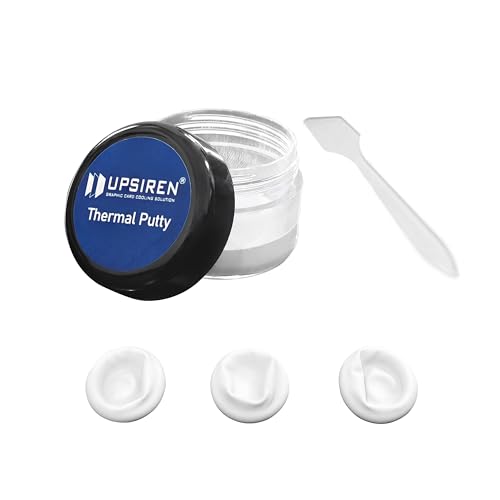
- 16.8 W/mK thermal conductivity
- Non-conductive and easy to apply
- Replaces soft pads up to 3 mm thick
Best For: High-conductivity GPU and memory-chip pad replacement
Premium GPU Putty

- Non-conductive for safer GPU use
- Included spatulas or hand application
- Bridges 0.2 mm to 3.0 mm gaps
Best For: GPU modders replacing thermal pads with a flexible, high-performance putty
High-Heat Gap Filler
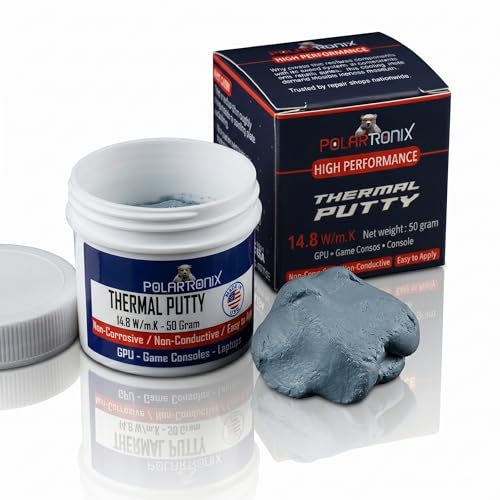
- 14.8 W/m·K thermal conductivity
- Non-conductive and safe for components
- Reusable soft formula for uneven gaps
Best For: High-performance cooling on GPUs, laptops, and consoles with irregular spacing
Bulk Value Putty
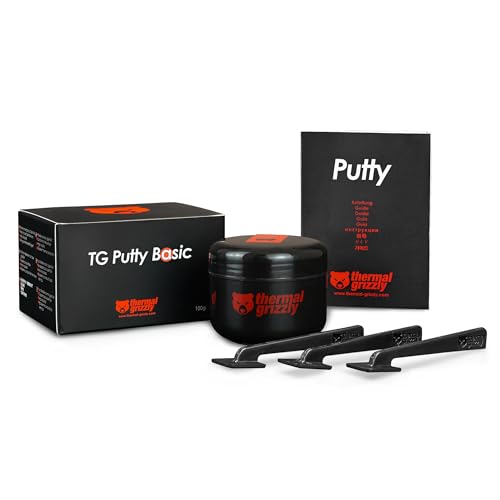
- Large 100 gram supply
- Non-conductive for safer use
- Bridges 0.2 mm to 3.0 mm gaps
Best For: Big or repeated GPU pad-replacement jobs needing more material
Compact Single-Build Pick
10g High-Performance Thermal Putty

- 10g portable size for small repairs
- >15W/mK conductivity for GPU and VRAM cooling
- Non-conductive, non-corrosive formula
Best For: DIY users and laptop owners doing one-off repairs
High-Capacity Value Pick
100g Thermal Putty for GPU VRAM

- 100g pack suits multiple applications
- 16W/mK formula for strong heat transfer
- Non-conductive and designed for thin gap filling
Best For: Enthusiasts and repair users needing a larger supply
Bulk Professional Pick
30g High-Performance Thermal Putty

- 30g bulk size for repeated applications
- >15W/mK conductivity for demanding cooling tasks
- Non-conductive formula for commercial repair work
Best For: Repair shops and technicians doing frequent GPU servicing
GPU Modding Pick – TG Putty Basic 30g Non-Conductive GPU Putty
If you need thermal putty for graphics card work, TG Putty Basic is a practical option for replacing traditional thermal pads in GPU mods. It is electrically non-conductive and designed to bridge uneven component heights, helping maintain good thermal contact across varied gaps.
Best For: GPU modders and builders who want a non-conductive gap filler for thermal pad replacement.
Pros:
- Electrically non-conductive for safer use around GPU components.
- Flexible filler helps compensate for height differences between parts.
- Works across a broad 0.2 mm to 3.0 mm gap range.
- Includes spatulas and can also be applied by hand with gloves.
Cons:
- Manual application may be messier than using pre-cut pads.
- Basic version is the entry option in a 3-tier product range.
This is a straightforward choice if your priority is a non-conductive thermal putty that can help replace pads and bridge uneven surfaces in a graphics card assembly.
High-Performance Pick – UTP-6 12.8 W/mK GPU Thermal Putty 10g
For thermal putty for graphics card repairs, UTP-6 focuses on high thermal performance and gap filling. It is designed for VGA, GPU, IC, and processor cooling, with a low-viscosity formula that supports dispensing, rework, and field repair use.
Best For: Rework and repair jobs where a high-performance putty is needed to replace thermal pads.
Pros:
- Rated at 12.8 W/mK for strong thermal performance.
- Low viscosity supports dispensing and stencil screen-printing.
- Designed to fully fill gaps better than traditional thermal pads.
- ROHS compliant and halogen-free.
Cons:
- Notes state it should not be used as silicone grease on a CPU.
- Only 10g, so larger projects may need more than one unit.
This option makes sense when you want a specialized thermal management material for electronics assemblies rather than a general-purpose paste.
Premium Upgrade – TG Putty Advance 30g Non-Conductive GPU Putty
TG Putty Advance is another thermal putty for graphics card maintenance and modding, aimed at users who want a non-conductive pad replacement material with flexible coverage. Like the other TG Putty variants, it is built to bridge uneven heights and improve contact where thermal pads no longer fit well.
Best For: Users who want a step-up option in the TG Putty range for GPU pad replacement.
Pros:
- Electrically non-conductive for safer GPU use.
- Flexible gap filler for uneven component heights.
- Covers the same 0.2 mm to 3.0 mm bridge range noted for the line.
- Can be applied with included spatulas or by hand with gloves.
Cons:
- Specific conductivity advantages over Basic are not detailed in the notes.
- Manual application still requires care and cleanup.
If you like the TG Putty format and want the Advance version, this is a clean middle-ground choice for graphics card thermal pad replacement.
Ultra Performance Pick – UTP-X Ultra 16.8 W/mK GPU Putty 20g
If you want thermal putty for graphics card cooling with a strong performance focus, UTP-X Ultra is positioned as a sticky, gummy thermal paste for GPUs and memory chips. It is intended to replace soft thermal pads up to 3 mm thick while offering non-conductive application and long service life.
Best For: GPU and memory-chip pad replacement where high thermal conductivity is the priority.
Pros:
- High 16.8 W/mK thermal conductivity rating.
- Non-conductive and easy to apply directly to components.
- Can replace soft thermal pads up to 3 mm thick.
- Notes say it can handle temperatures up to 250 degrees Celsius.
Cons:
- Sticky, gummy texture may not suit users who prefer firmer pad-style materials.
- Specific use case is focused on GPUs and memory chips rather than general thermal paste use.
This is the strongest performance-oriented pick in the group if your main goal is pushing heat away from GPU components and replacing thicker soft pads.
Premium GPU Putty – TG Putty Pro 30g
If you want thermal putty for graphics card mods that can replace pads and handle uneven component heights, Thermal Grizzly TG Putty Pro is built for exactly that job. It is electrically non-conductive, easy to apply by hand or with the included spatulas, and designed to bridge gaps from 0.2 mm to 3.0 mm for better contact between the PCB and cooler.
Best For: GPU modders and builders replacing thermal pads with a non-conductive, high-performance putty.
Pros:
- Electrically non-conductive for safer use around sensitive components
- Can be applied by hand or with the included spatulas
- Replaces traditional thermal pads for GPU and PCB applications
- Handles height differences from 0.2 mm to 3.0 mm
Cons:
- Only a 30 gram package, so larger projects may use it quickly
- Best suited to modding and pad replacement rather than simple routine maintenance
Overall, this is a focused upgrade option for users who need a flexible, non-conductive filler that can conform to tricky GPU spacing. It stands out most when pad replacement and precise gap filling matter.
High-Heat Gap Filler – 14.8 W/m·K Putty
This thermal putty for graphics card cooling is aimed at users who want a high-performance, non-conductive gap filler for VRAM, MOSFETs, and coils. With a 14.8 W/m·K rating and a soft, reusable formula, it is meant for uneven surfaces where thermal pads or paste do not fit well.
Best For: Users who need a reusable, non-conductive putty for GPUs, laptops, or consoles with irregular gaps.
Pros:
- 14.8 W/m·K thermal conductivity for efficient heat transfer
- Completely electrically non-conductive
- Soft and pliable for uneven surfaces and small gaps
- Reusable and removable without losing performance, per product notes
Cons:
- Sold in a 50 gram jar, which may be more than needed for small jobs
- Positioned for demanding applications, so it may be overkill for simple repairs
For builders working on hot-running components, this jar offers a practical balance of conductivity, safety, and reusability. It is especially compelling when you need one material that can work across GPUs, gaming consoles, and laptops.
Bulk Value Putty – TG Putty Basic 100g
Thermal Grizzly TG Putty Basic is the larger-capacity thermal putty for graphics card work when you need a flexible, electrically non-conductive filler for pad replacement. It is designed to compensate for height differences between components, and the included spatulas make application straightforward for GPU modding.
Best For: Users who want a larger 100 gram supply for GPU thermal pad replacement and gap filling.
Pros:
- Electrically non-conductive for safer application
- Flexible gap filler that bridges 0.2 mm to 3.0 mm differences
- Easy to apply by hand or with included spatulas
- 100 gram size suits bigger or repeated projects
Cons:
- Basic version offers less thermal performance than the higher-tier variants in the line
- Manual application may still call for gloves, as recommended
This is the practical pick if you need more material on hand and want a straightforward pad-replacement putty. It makes the most sense for users focused on coverage, compatibility, and value rather than the absolute top-end conductivity tier.
Compact Single-Build Pick – 10g High-Performance Thermal Putty
If you need thermal putty for graphics card repairs without buying a large tube, this 10g option is built for small jobs like single PC builds, laptop repasting, and compact fixes. It’s a non-conductive gap filler with >15W/mK conductivity, so it’s aimed at improving contact in uneven areas around GPUs, VRAM, and other components.
Best For: DIY users, laptop owners, and small repair jobs that need a portable amount of thermal putty.
Pros:
- 10g size is convenient for one-off repairs and smaller builds
- >15W/mK conductivity targets strong heat transfer for GPUs and other electronics
- Non-conductive and non-corrosive for safer use on sensitive parts
- Includes a precision scraper and silicone finger sleeves
Cons:
- Smaller quantity may not suit multiple GPUs or bulk repair work
- Designed as a general replacement for thermal paste and pads, not a specialized niche product
This is the most practical pick if you want to test thermal putty for graphics card maintenance without committing to a larger bulk package. The main tradeoff is simple: you get portability and convenience, not the lowest cost per gram.
High-Capacity Value Pick – 100g Thermal Putty for GPU VRAM
For thermal putty for graphics card projects that involve repeated repasting or larger applications, this 100g pack gives you plenty of material to work with. It’s rated at 16W/mK, is non-conductive, and is designed to fill very thin gaps around GPU VRAM and other heatsink contact points.
Best For: Enthusiasts and repair users who want a larger supply for GPUs, consoles, and other electronics.
Pros:
- 100g size is better for multiple repairs or larger projects
- 16W/mK conductivity is aimed at strong heat dissipation
- Can be applied thinly, around 0.2–0.3 mm, for gap filling
- Non-conductive formula is safer around sensitive electronics
Cons:
- Larger quantity may be more than casual users need
- Best suited to users comfortable applying and shaping putty
This is the most flexible choice if you expect to use thermal putty across several devices, not just one graphics card. Its value comes from the larger quantity and broad compatibility, while still keeping the focus on stable, gap-filling cooling performance.
Bulk Professional Pick – 30g High-Performance Thermal Putty
If you’re choosing thermal putty for graphics card servicing in a shop, repair bench, or multi-build workflow, this 30g version is aimed at heavier use. It delivers >15W/mK conductivity, is non-conductive, and is positioned as a cost-effective bulk replacement for thermal paste and thermal pads in server, GPU, and workstation cooling.
Best For: Repair shops, technicians, and system builders who need a larger professional-use supply.
Pros:
- 30g bulk size is suited to repeated applications
- >15W/mK conductivity targets demanding GPU and server cooling
- Non-conductive, non-corrosive formula supports safer commercial use
- Includes professional scrapers and silicone finger sleeves
Cons:
- More material than most casual home users will need
- Geared toward professional and commercial workflows rather than occasional repairs
Among these options, this one makes the most sense if you care about throughput, repeatability, and supply on the workbench. The larger size and long-lasting formula are the main advantages for anyone servicing multiple graphics cards or other high-heat systems.
How We Picked the Best Thermal Putty for Graphics Card Use
We prioritized electrically non-conductive formulas, thermal performance claims that make sense for GPU and VRAM contact areas, and jar sizes that suit both single-card repairs and repeat use. We also looked for products that are practical for replacing thermal pads in uneven gaps, where putty can improve contact without requiring exact pad thickness matching.
Quick Comparison: What Matters Most
In this category, the biggest differences are thickness, spreadability, package size, and intended use. Some Thermal Putty for Graphics Card upgrades is better for small spot repairs and pad replacement on a single GPU, while larger jars are better for full repasting jobs, multiple cards, or shops. Higher thermal conductivity claims can be helpful, but only if the putty is easy to apply and stays where you need it.
Key Buying Factors for Thermal Putty for Graphics Card
Electrical Safety
Choose a non-conductive formula whenever possible. GPU boards are crowded, and a safe formula reduces the risk of accidental shorts during application.
Gap-Filling Ability
Putty is most useful when components sit at different heights or when pad thickness is hard to match. Look for a product that can fill uneven spaces cleanly without drying out too quickly.
Thermal Performance Claims
W/m·K numbers can help with comparison, but they are not the only factor. Real-world performance also depends on contact quality, even coverage, and how the material behaves under pressure and heat.
Volume and Value
Smaller containers can be enough for one card, but larger jars often deliver better value for enthusiasts, builders, and repair technicians who service multiple GPUs.
Application Comfort
Some putties are easier to shape and spread than others. If you are new to GPU maintenance, a more forgiving texture can be worth more than a slightly higher thermal rating.
Who Should Buy Which Thermal Putty for Graphics Card?
If you are doing a first-time GPU maintenance job, a mid-size, non-conductive putty with balanced performance is usually the safest choice. If you repair multiple cards or want to stock up for future builds, a larger jar offers better value. Enthusiasts chasing maximum cooling may prefer higher-performance options, while budget-minded buyers can choose a proven entry-level formula that still handles pad replacement and VRAM contact well.
For most users, the best Thermal Putty for Graphics Card upgrades is the one that combines safety, workable consistency, and enough quantity for a clean, complete application.