
Finding reliable backup power on a sub-$300 budget is easier when you focus on the equipment that matters most: capacity, rack compatibility, runtime, and management features. The best rack UPS systems under 300 can protect networking gear, servers, workstations, and other critical electronics from outages, brownouts, and surges.
This roundup includes compact 1U and 2U rack-mount models, plus practical desktop-style alternatives for installations where rack mounting is optional. Use the guide below to compare capabilities and choose the right balance of power, monitoring, and installation flexibility.
Best 10 Rack Ups Systems Under 300 Picks for 2026
Top Rack-Mount Power Choice

- 1500VA/900W capacity
- 2U rack or tower mounting
- AVR and replaceable battery
Best For: Small servers, network equipment, and higher-load workstations
Best Compact Office Backup

- 550VA/330W backup capacity
- Four battery-backed outlets
- Replaceable battery and status alerts
Best For: Home offices, routers, NAS devices, and low-power electronics
Best Slim Rack Value
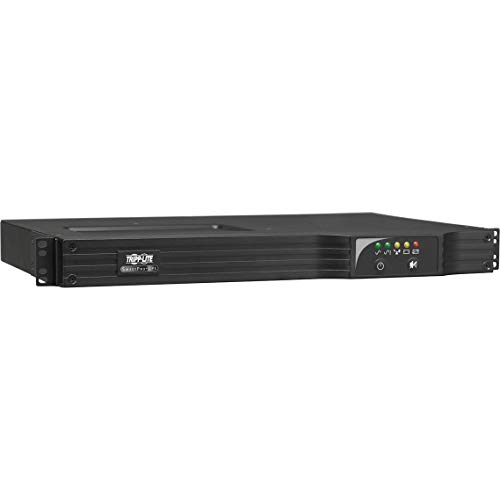
- 1U rack-mount design
- 500VA/300W output with AVR
- USB, DB9, and RJ-11 interfaces
Best For: Small racks with low-power network or IT equipment
Best Sine-Wave Rack Backup

- 1U rack-mount sine-wave UPS
- 500VA/300W with AVR
- LCD panel and three-year battery warranty
Best For: Active-PFC equipment, networking, security, and A/V systems
Compact Rack Backup
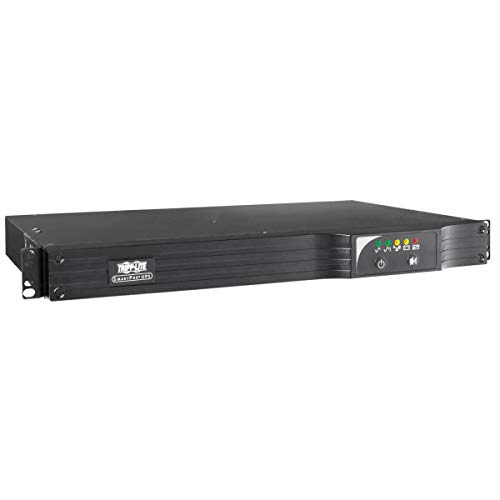
- 500VA/300W 1U rack/tower design
- 11.8-inch depth suits shallow racks
- AVR, EPO, USB, RS232, and optional network management
Best For: Shallow racks with lighter network equipment
LCD Rack Monitoring

- 500VA/300W 1U rackmount UPS
- LCD reports runtime and power conditions
- AVR, six outlets, and three-year battery warranty
Best For: Small racks where local status monitoring matters
High-Capacity Tower Backup

- 1500VA/810W tower UPS
- Ten outlets with AVR and LCD monitoring
- Replaceable battery plus Ethernet and DSL protection
Best For: Higher-load equipment using a tower UPS beside the rack
Compact Rack Protection
- 500VA/300W capacity in a 1U rackmount design
- LCD monitoring and automatic voltage regulation
- Six outlets, including four with battery backup
Best For: Small rack servers, network devices, and telecom equipment
Flexible Desktop Backup
Eaton Tripp Lite INTERNET550U UPS

- 550VA/300W UPS with ten total outlets
- Replaceable battery and wall-mounting tabs
- 316-joule surge protection and EMI/RFI filtering
Best For: Routers, PCs, TVs, and compact desktop electronics
High-Capacity Workstation Backup

- 1500VA/900W mini-tower capacity
- Twelve outlets with six battery-backed outlets
- Color LCD, AVR, and USB-A/USB-C charging
Best For: Workstations, networking setups, and home entertainment equipment
Top Rack-Mount Power Choice – Eaton Tripp Lite SMART1500LCD
For rack ups systems under 300, the Eaton Tripp Lite SMART1500LCD stands out when you need substantial capacity in a compact 2U design. Its 1500VA/900W rating, automatic voltage regulation, eight outlets, and replaceable battery make it suitable for servers, networking equipment, and workstation setups.
Best For: Small server racks, network devices, workstations, and other equipment needing higher-capacity 2U backup.
Pros:
- Provides 1500VA/900W capacity with eight NEMA 5-15R outlets.
- Supports 2U rack mounting or vertical tower use with the included adapter.
- AVR corrects brownouts and overvoltages without using battery power.
- Includes a rotatable LCD, replaceable battery, RJ45 dataline protection, and a three-year warranty.
Cons:
- Its 2U profile and 29-pound weight require more rack space and support than smaller units.
- Battery-mode output is modified sine wave rather than pure sine wave.
- Listed runtime is four minutes.
This is the most capable option here for buyers prioritizing output capacity and rack flexibility. It costs more rack space than 1U models, but its monitoring features and serviceable battery improve long-term practicality.
Best Compact Office Backup – APC BE650G1
Among rack ups systems under 300, the APC BE650G1 is a compact, budget-friendly choice for protecting everyday electronics. It supplies 550VA/330W of backup power, with four battery-backed outlets and four surge-only outlets for computers, routers, NAS devices, and smart-home equipment.
Best For: Home offices, Wi-Fi routers, modems, NAS devices, and other lower-power electronics.
Pros:
- Offers eight outlets, including four with battery backup and surge protection.
- Provides up to 22 minutes of runtime at a 100W load according to the supplied notes.
- Has user-replaceable batteries and clear status indicators with mutable alarms.
- Includes a three-year warranty and $75,000 connected-equipment protection.
Cons:
- It is a desktop-style unit rather than a rack-mount UPS.
- The 390W maximum output is limiting for higher-powered servers or workstations.
- Only four outlets receive battery backup.
The BE650G1 makes sense when compact size and straightforward outlet coverage matter more than rack integration or high capacity. It is better suited to peripheral and networking protection than a dedicated server rack.
Best Slim Rack Value – Tripp Lite SMART500RT1U
For rack ups systems under 300, the Tripp Lite SMART500RT1U offers a space-saving 1U rack-mount format with 500VA/300W capacity. Line-interactive operation, AVR, USB and DB9 management connections, and included cabling make it a practical fit for smaller equipment racks.
Best For: Small network racks and low-power rack equipment where a 1U footprint and basic management connectivity are important.
Pros:
- Fits a standard 1U rack space and provides 500VA/300W output.
- Uses line-interactive UPS technology with AVR.
- Includes USB, RS-232, RJ-11, power, and data cables.
- Offers seven NEMA 5-15 output connectors in the supplied product description.
Cons:
- Its 300W capacity is intended for lighter loads.
- Listed full-load runtime is approximately five minutes in the product specifications.
- The two-year warranty is shorter than some alternatives in this roundup.
This model is a sensible choice when rack space is tight and the connected load is modest. Its management interfaces add usefulness for monitored installations, but it should not be matched with equipment approaching its maximum output.
Best Sine-Wave Rack Backup – CyberPower CP500PFCRM1U
Among rack ups systems under 300, the CyberPower CP500PFCRM1U is notable for combining a 1U rack-mount design with sine-wave output. Its 500VA/300W capacity, AVR, LCD panel, and four battery-backed outlets are aimed at networking, audio/visual, security, and equipment using active PFC power supplies.
Best For: Compact racks containing active-PFC equipment, networking devices, security systems, and audio/visual gear.
Pros:
- Provides sine-wave output for active-PFC and conventional power supplies.
- Fits a 1U rack space and supplies 500VA/300W capacity.
- Includes AVR and a multifunction LCD showing runtime, battery status, and power conditions.
- Offers a three-year warranty including batteries and a $300,000 connected-equipment guarantee.
Cons:
- Its 300W output limits it to relatively light equipment loads.
- Only four of the six outlets provide battery backup; two are surge-only.
- Remote management requires the optional RMCARD205.
This is the strongest fit when sine-wave output is a priority in a compact rack. Its low capacity is best matched with carefully measured loads, while the LCD and AVR provide useful local power information.
Compact Rack Backup – Tripp Lite SMART500RT1U
For rack ups systems under 300, the Eaton Tripp Lite SMART500RT1U is a compact 500VA/300W line-interactive option. Its 1U rack/tower design and 11.8-inch depth suit shallow racks, while AVR helps correct brownouts without using battery power.
Best For: Shallow network racks and remotely managed equipment that needs a compact 1U UPS.
Pros:
- Short 11.8-inch installed depth for space-constrained racks
- AVR helps handle brownouts without draining the battery
- Includes USB, RS232, EPO, PowerAlert software, and optional SNMP/Web management
- One outlet is individually controllable for load shedding
Cons:
- 300W maximum output limits it to lighter loads
- Listed runtime is about three minutes
- Six-foot? The supplied notes specify a 10-foot cord, but the unit’s listed weight and warranty details vary across the specifications
This model is strongest when rack depth and remote-management features matter more than extended runtime. Confirm your equipment’s load before installation, since its 300W capacity is intended for modest network and server setups.
LCD Rack Monitoring – CyberPower OR500LCDRM1U
The CyberPower OR500LCDRM1U is a practical pick among rack ups systems under 300 when status visibility is important. This 500VA/300W, 1U rackmount UPS combines AVR with a multifunction LCD that shows runtime, battery status, load, and power conditions.
Best For: Small servers, network devices, and telecom equipment needing front-panel UPS status information.
Pros:
- Multifunction LCD displays runtime, battery, load, and power information
- Six outlets include four battery-backed and two surge-only receptacles
- AVR corrects minor fluctuations without switching to battery
- Includes a 10-foot power cord and three-year warranty including batteries
Cons:
- 300W capacity is best suited to smaller equipment loads
- Simulated sine-wave output is not intended for equipment with active PFC power supplies
- Remote management requires the optional RMCARD205
Choose this CyberPower unit if its LCD and warranty coverage are more valuable than higher capacity. It is a straightforward 1U solution for compatible equipment, but check power-supply requirements before connecting critical devices.
High-Capacity Tower Backup – Tripp Lite OMNI1500LCDT
Although it is not a rackmount chassis, the Eaton Tripp Lite OMNI1500LCDT is worth considering alongside rack ups systems under 300 when a tower UPS can sit near the rack. Its 1500VA/810W capacity, 10 outlets, LCD, and AVR provide substantially more load headroom than the 300W rack units.
Best For: Workstations, small servers, networking equipment, and other higher-load setups using a tower-form UPS.
Pros:
- 810W output supports heavier equipment loads
- Ten outlets provide flexible battery-backup and surge-protection coverage
- LCD shows runtime, wattage load, voltage, and battery status
- User-replaceable RBC51 battery and Ethernet and telephone/DSL protection add maintenance and connectivity benefits
Cons:
- Tower form factor does not mount directly in a rack
- Its 15.6-inch depth may require more floor or shelf space
- Provides about seven minutes of listed runtime under the stated specifications
This is the better fit when your equipment exceeds the modest capacity of a 300W rack UPS and you have room for a tower beside the rack. Its LCD and replaceable battery make ongoing monitoring and maintenance easier, but it should not be selected when a true 1U rackmount installation is required.
Compact Rack Protection – CyberPower OR500LCDRM1U UPS
For buyers comparing rack ups systems under 300, the CyberPower OR500LCDRM1U is a compact 1U rackmount option rated for 500VA/300W. Its LCD, AVR, and six-outlet layout make it practical for smaller servers, network equipment, and telecom installations that do not require active PFC compatibility.
Best For: Small rack-mounted servers, network devices, and telecom equipment within a 300W load.
Pros:
- 1U rackmount form factor with a metal enclosure.
- LCD panel displays runtime, battery status, and power conditions.
- AVR helps correct minor voltage fluctuations without using the battery.
- Includes four battery-backup outlets and two surge-only outlets.
Cons:
- Simulated sine wave output is intended for equipment without active PFC power supplies.
- Remote management requires the optional RMCARD205.
- The supplied listing identifies this unit as renewed.
With its shallow 9.25-inch depth and 300W output limit, this CyberPower model is best suited to modest rack loads where space and basic status monitoring matter more than high capacity.
Flexible Desktop Backup – Eaton Tripp Lite INTERNET550U UPS
Among rack ups systems under 300, the Eaton Tripp Lite INTERNET550U takes a more compact, non-rack form. It provides 550VA/300W of backup power, ten total outlets, and a replaceable battery for home-office networking, desktop electronics, or wall- and under-desk installations.
Best For: Wi-Fi routers, PCs, TVs, and other compact electronics that need accessible battery backup rather than a rackmount chassis.
Pros:
- Ten outlets split between five battery-backup/surge outlets and five surge-only outlets.
- Replaceable internal battery and resettable circuit breaker.
- 316 joules of surge protection with EMI/RFI filtering.
- Keyhole tabs and a 5-foot power cord support wall or under-desk placement.
Cons:
- Compact form factor is not a 1U rackmount design.
- Runtime depends heavily on the connected load; the listed examples range from 2.9 to 67 minutes.
- Its 300W output limit is unsuitable for higher-power equipment.
This Tripp Lite is a sensible choice when outlet count, replaceable-battery access, and flexible placement are priorities. It is better for desktop or wall-mounted setups than organized server racks.
High-Capacity Workstation Backup – CyberPower CP1500AVRLCD3 UPS
For shoppers expanding beyond entry-level rack ups systems under 300, the CyberPower CP1500AVRLCD3 offers substantially more capacity at 1500VA/900W. Its mini-tower design is not rackmount, but AVR, a color LCD, twelve outlets, and USB charging make it useful for workstations, networking devices, and home entertainment equipment.
Best For: Workstations and networking or entertainment setups that need up to 900W of backup capacity.
Pros:
- 1500VA/900W capacity provides more headroom than 300W-class UPS units.
- Twelve outlets include six battery-backup/surge outlets and six surge-only outlets.
- Color LCD provides detailed battery and power-condition information.
- AVR and USB-A/USB-C charging add useful everyday functionality.
Cons:
- Mini-tower form factor does not mount directly in a rack.
- Simulated sine wave output may not suit equipment requiring pure sine wave power.
- Listed runtime is load-dependent, with a stated runtime of three minutes.
This model is the strongest capacity choice in the group, but its tower chassis makes it a poor fit for a standard rack installation. Choose it when power margin and outlet capacity matter more than rack compatibility.
How We Picked the Best Rack Ups Systems Under 300
We focused on models priced below $300 that offer useful protection for home labs, small offices, network closets, and entry-level server setups. Our comparison considers rated capacity in VA and watts, rack height, battery-backed outlet availability, automatic voltage regulation (AVR), waveform quality, monitoring options, and practical installation needs.
Because the products vary considerably, a higher VA rating does not automatically make one unit the best choice. The connected load, available rack space, desired runtime, and equipment sensitivity should determine your final selection.
Quick Comparison
| What to Compare | Best Fit |
|---|---|
| 1U rack-mount design | Compact network racks and shallow equipment cabinets |
| 2U rack-mount design | Higher-capacity installations with more rack space |
| 500VA class | Modems, routers, switches, and small network appliances |
| 1,500VA class | Multiple devices, workstations, or larger networking loads |
| LCD and USB monitoring | Users who want local status and easier troubleshooting |
| Sine-wave output | Equipment with active power-factor-correction supplies |
Key Buying Factors for Rack Ups Systems Under 300
Capacity and Runtime
Check both the VA and watt ratings. VA describes apparent power, while watts indicate the actual load the UPS can support. Add the wattage of every device you plan to connect and leave headroom for startup demand and future expansion. Runtime decreases as the load rises, so a larger unit may provide more useful shutdown time even if your normal draw is modest.
Rack Size and Installation
Confirm whether the unit is 1U or 2U and measure rack depth, rail clearance, and available mounting hardware. Some compact UPS products are rack-mountable, while others are better suited to shelves or desktops. Battery weight can be significant, so verify that the rack and rails can support it safely.
Output, AVR, and Protection
AVR helps correct moderate voltage fluctuations without switching to battery, which can extend battery life. If you are powering servers or modern networking hardware with active PFC power supplies, a pure or simulated sine-wave output may be important. Also check outlet count, surge protection, circuit-breaker design, and whether all outlets provide battery backup.
Monitoring and Maintenance
LCD panels make it easier to view load, runtime, voltage, and battery status locally. USB, serial, or network management can support automatic shutdown and remote alerts. Look for replaceable batteries and accessible documentation, since batteries are consumable components that typically need replacement after several years.
Who Should Buy Which Rack Ups Systems Under 300?
Choose a 500VA 1U model for a small switch, router, firewall, or modest network cabinet where rack space is limited. A 1,500VA rack unit is better for several appliances, a workstation, or equipment that needs additional runtime and capacity. Select a sine-wave model when compatibility with sensitive or PFC-equipped hardware is a priority.
If rack mounting is not essential, a tower-style 1,500VA UPS can offer strong capacity and convenient front-panel monitoring for a home office or lab. For basic modem, router, or single-PC protection, a compact desktop unit may be the most economical option. Before buying, confirm your load, outlet requirements, rack dimensions, and the manufacturer’s battery-replacement and warranty terms.