
The best power amplifiers with trigger input make it easier to build an integrated audio system that powers up, switches on, and works alongside a compatible preamp or AV receiver. Trigger control is especially useful in home theaters, multiroom setups, and rack-mounted installations where convenience matters.
Our 2026 roundup covers compact Class D models, stereo and monoblock amplifiers, balanced-input designs, bridgeable rack units, and feature-rich options with Bluetooth or subwoofer support. Compare the specifications carefully to match your speakers, room, and system controls.
Best 10 Power Amplifiers with Trigger Input Picks for 2026
Best Value Trigger Amp

- 50W per channel at 8 ohms
- Bridgeable 120W single-channel output
- 12V trigger input and output
Best For: Compact automated home audio installations
Best Audiophile Features
AIYIMA A20 Balanced Stereo Amp

- 116dB SNR and 0.002% THD+N
- Adjustable 60–200Hz high-pass filter
- 12V trigger with XLR/RCA flexibility
Best For: Balanced 2.1 home audio systems
Best for Rack Power

- 1U rack chassis with 1000W RMS bridged claim
- Stereo, parallel, and bridged modes
- Built-in crossover, limiter, and LED meters
Best For: High-output pro and DJ rack systems
Best Mono Audiophile Amp

- 200W mono output for passive speakers
- Three balanced XLR/TRS input sets
- 12V trigger and selectable gain
Best For: Balanced high-fidelity systems using mono blocks
Best for Live Sound Power
Gemini XGA-3000 2-Channel Amplifier
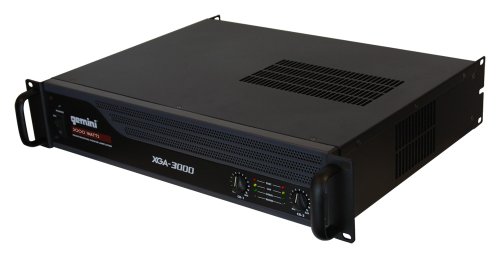
- 3000 watts with stereo and bridge modes
- XLR, 1/4-inch, and RCA inputs
- 2U rack chassis with protection circuits
Best For: DJs, PA systems, venues, and live events
Best for Trigger-Ready Desktop Hi-Fi

- 12V trigger for synchronized power control
- Bluetooth 5.2 and balanced TRS input
- High-pass filter and PRE-OUT for 2.1 systems
Best For: Home theater, desktop Hi-Fi, and bookshelf speakers
Best for Compact Monoblock Systems

- 12V trigger and signal-sensing Auto mode
- 300W mono output with XLR/TRS and RCA
- Fanless GaN Class D design for quiet desktop use
Best For: Compact desktop Hi-Fi and single-speaker setups
Rack-Mount Powerhouse

- Up to 2,000W bridged or 1,000W per channel
- TRS, XLR, Speakon, and binding-post connections
- Bluetooth, USB-A playback, cooling fan, and LED meters
Best For: Rack-based PA systems needing high output and flexible connectivity
Compact Trigger-Ready Amp

- Dedicated 12V trigger-in for synchronized power control
- Stereo and mono modes with up to 235W output
- Balanced XLR/TRS input and improved ventilation
Best For: Compact home audio and theater systems requiring trigger synchronization
Monoblock Expansion Choice

- Up to 240W at 4 ohms per passive speaker
- XLR/TRS balanced and RCA inputs
- PFFB design and chassis-based heat dissipation
Best For: Scalable HiFi and home theater systems using one amp per speaker
Best Value Trigger Amp – Monoprice Unity 200-Watt
The Monoprice Unity is a practical choice among power amplifiers with trigger input for compact home audio and distributed sound setups. Its Class-D design provides two-channel output, bridgeable operation, trigger control, and rack-mount flexibility without a large chassis.
Best For: Home audio systems needing straightforward trigger automation, flexible two-channel or bridged output, and rack installation.
Pros:
- 50 watts per channel into 8-ohm loads or 65 watts into 4-ohm loads
- Bridgeable output delivers 120 watts into a single 8-ohm load
- Includes both 12-volt trigger input and output
- Rack-mount ears, buffered loop output, and built-in protection add installation flexibility
Cons:
- Output is more modest than higher-powered professional amplifiers
- Rear-panel gain adjustment is less convenient than front-panel control
Choose this model when integration features and mounting options matter as much as raw power. The trigger output and buffered loop are particularly useful when expanding a system with additional amplifiers.
Best Audiophile Features – AIYIMA A20 Balanced Stereo Amp
The AIYIMA A20 combines balanced connectivity, configurable system integration, and a 12V trigger in a compact Class-D design. For shoppers comparing power amplifiers with trigger input, its adjustable high-pass filter and subwoofer output make it especially flexible for 2.1 setups.
Best For: Audiophile-focused stereo or 2.1 systems using balanced sources, an external preamp, and automated power control.
Pros:
- Reported 116dB SNR and 0.002% THD+N
- Adjustable 60–200Hz high-pass filter and subwoofer output support 2.1 integration
- 12V trigger, bypass mode, gain switch, and XLR/RCA input toggle
- Includes swappable op-amp design and active internal cooling airflow
Cons:
- Its feature set may be more involved than needed for a basic stereo system
- Power depends on the included 48V, 5A adapter and system configuration
The A20 is a strong fit for listeners who want more than simple on/off automation. Its filtering and input flexibility make it easier to tailor the amplifier to a preamp, subwoofer, and balanced-source system.
Best for Rack Power – Rockville DS10 2-Channel Amp
The Rockville DS10 is a 1U rack-mount power amplifier aimed at demanding audio rigs. Its trigger-free design is worth noting for shoppers specifically comparing power amplifiers with trigger input, but it offers substantial system-control features through stereo, parallel, and bridged modes plus an integrated crossover and limiter.
Best For: Rack-based pro, DJ, monitor, and subwoofer systems that prioritize high output and flexible signal routing over 12V trigger automation.
Pros:
- Rated at 1000W RMS bridged at 8 ohms, with 4000W peak output claimed
- Stereo, parallel, and bridged operating modes support multiple configurations
- Built-in 110Hz full-range, low-pass, and high-pass crossover options
- 1U chassis, quiet variable-speed fans, limiter, protection circuitry, and LED meters
Cons:
- Supplied notes do not list a 12V trigger input
- Its pro-oriented output and controls may be excessive for modest home systems
- Fan cooling may be less suitable for ultra-quiet listening rooms
If a trigger input is a firm requirement, this model should not be your first choice. However, for rack installations needing high output, crossover control, monitoring, and multiple operating modes, the DS10 is well equipped.
Best Mono Audiophile Amp – TOPPING B200 200W
The TOPPING B200 is a mono amplifier designed for high-fidelity systems and balanced-source integration. Among power amplifiers with trigger input, it stands out for its 12V trigger, three XLR/TRS balanced inputs, selectable gain, and very low stated distortion.
Best For: Audiophiles building a high-power stereo system with two mono amplifiers and balanced DAC or preamp connections.
Pros:
- Delivers 200W of output for demanding passive speakers
- Three sets of XLR/TRS balanced inputs provide flexible source connectivity
- 12V trigger supports coordinated power control
- High/low gain settings and claimed 145dB SNR/DNR with less than 0.000075% THD+N
Cons:
- It is a mono amplifier, so a stereo system requires two units
- Balanced XLR/TRS connectivity may be unnecessary for basic consumer setups
- Supplied notes do not specify speaker impedance or rack-mount provisions
The B200 makes the most sense when clean balanced signal paths and separate-channel amplification are priorities. Budget for a second unit if you want conventional left/right stereo from passive speakers.
Best for Live Sound Power – Gemini XGA-3000 2-Channel Amplifier
For DJs, venues, and PA systems that need serious headroom, the Gemini XGA-3000 is a high-output option among power amplifiers with trigger input alternatives. It delivers 3000 watts, supports 4- and 8-ohm loads, and offers stereo or mono bridge operation, though its supplied features do not include a 12V trigger input.
Best For: Working DJs, live sound systems, venue installs, and other high-output applications.
Pros:
- 3000 watts of stated continuous power with stereo and bridge modes.
- Balanced XLR and 1/4-inch inputs plus unbalanced RCA connectivity.
- Protection circuits, limiter functionality, status LEDs, and variable-speed cooling.
- Rack-mountable 2U metal chassis weighing about 17.6 pounds.
Cons:
- No 12V trigger input is listed, so automated power synchronization may require an external solution.
- The high-power design is more suited to PA and installation use than compact desktop audio.
The XGA-3000 is a practical choice when output, flexible connections, and road-ready construction matter more than trigger-based system control. Its protection features and bridge capability add useful flexibility for demanding sound setups.
Best for Trigger-Ready Desktop Hi-Fi – Ampapa Douk Audio D1
The Ampapa Douk Audio D1 is a compact stereo choice for shoppers comparing power amplifiers with trigger input. Its 12V trigger, Bluetooth 5.2, balanced TRS input, tone controls, and subwoofer-friendly PRE-OUT make it well suited to a convenient home or desktop system.
Best For: Home theater, bookshelf speakers, desktop Hi-Fi, and 2.1 systems needing synchronized power control.
Pros:
- Includes a 12V trigger for coordinated system power operation.
- Two-channel design rated at up to 600 watts total output.
- Adjustable 30–200Hz high-pass filter and full-range PRE-OUT support subwoofer integration.
- Bluetooth 5.2, TRS balanced input, remote control, and digital VU display add convenience.
Cons:
- Its compact 48V/5A adapter and home-audio focus may not suit large PA applications.
- Output specifications are presented as a total 600 watts rather than a single per-channel figure in the supplied details.
The D1 stands out when a trigger input is central to a tidy, automated stereo setup. Its filtering, PRE-OUT, and broad input selection make it particularly flexible for bookshelf speakers and an active subwoofer.
Best for Compact Monoblock Systems – GaN Mono 300W Class D Amp
The GaN Mono is a single-channel option for compact systems seeking power amplifiers with trigger input and flexible startup control. Its 12V trigger, signal-sensing Auto mode, balanced XLR/TRS and RCA inputs, and fanless GaN Class D design fit desktop Hi-Fi and near-field listening particularly well.
Best For: One passive speaker in a desktop Hi-Fi or compact home theater system, with a second unit used for stereo.
Pros:
- 12V trigger, signal-sensing Auto mode, and manual operation provide flexible power control.
- 300 watts of mono output with selectable high/low gain.
- Balanced XLR/TRS and unbalanced RCA inputs accommodate professional and home sources.
- Fanless, 95%-efficient GaN Class D design stays compact and quiet.
Cons:
- This is a single-channel amplifier; a conventional stereo system requires two units.
- No power adapter is included, and the supplied notes specify a 48V/5A supply for full output.
- Its tabletop form is intended for compact listening rather than large-scale sound reinforcement.
The GaN Mono makes the most sense when low heat, quiet operation, and automated power control are priorities. Remember to budget for a suitable power supply and a second amplifier if you need left-and-right stereo operation.
Rack-Mount Powerhouse – Pyle PTA1000BT
If you need power amplifiers with trigger input for a rack-based sound system, note that this model focuses on high output, flexible connections, and Bluetooth convenience. It delivers up to 2,000 watts in bridged mode or 1,000 watts per channel in stereo, with support for 4- to 8-ohm speakers.
Best For: Rack-mounted PA setups, multi-speaker systems, and users who want Bluetooth and MP3 playback alongside wired inputs.
Pros:
- High output with stereo and bridged operating modes.
- Includes TRS, XLR, Speakon, and binding-post connections.
- Bluetooth, USB-A MP3 playback, LCD display, and LED monitoring add convenience.
- Built-in cooling fans help manage heat during operation.
Cons:
- The supplied specifications list multiple inputs and controls but do not identify a dedicated trigger input.
- Its rack-mount design and 220-volt specification may be more than compact home systems require.
The PTA1000BT is a practical choice when output and connection variety matter more than trigger-based automation. Its bridgeable two-channel design and cooling system suit demanding speaker installations, while Bluetooth provides an easy wireless source option.
Compact Trigger-Ready Amp – Fosi Audio ZA3
Among power amplifiers with trigger input, the Fosi Audio ZA3 stands out for combining a compact desktop format with a dedicated 12V trigger-in connection. Its stereo and mono modes let you tailor the amplifier to bookshelf speakers, home theater channels, or a higher-output mono configuration.
Best For: Desktop and home theater systems that need balanced connectivity, automatic power synchronization, and flexible stereo-or-mono operation.
Pros:
- Dedicated 12V trigger-in supports synchronized turn-on and turn-off.
- Balanced combo input accepts both XLR and 1/4-inch TRS plugs.
- Provides up to 180W in stereo or 235W in mono mode.
- Features upgraded ventilation and swappable op-amps for customization.
Cons:
- Requires the supplied 48V power adapter for its stated maximum output.
- Its 235W maximum output is lower than larger rack-style amplifiers.
- Op-amp rolling may appeal mainly to experienced audio enthusiasts.
The ZA3 is one of the better fits for a trigger-controlled compact system. Its balanced input, selectable operating modes, and 12V trigger make it easy to integrate, while the cooling updates support sustained output in a small chassis.
Monoblock Expansion Choice – Fosi Audio V3 Mono
For buyers comparing power amplifiers with trigger input, the Fosi Audio V3 Mono is designed as a focused monoblock power stage rather than a conventional stereo amplifier. It can deliver up to 240W at 4 ohms to one passive speaker and can be combined into multi-channel home audio or theater systems.
Best For: HiFi listeners and home theater builders who want one amplifier per speaker or additional power from an AV receiver.
Pros:
- Up to 240W at 4 ohms for driving a single passive speaker.
- Supports balanced XLR/TRS and RCA inputs with selectable gain.
- PFFB technology is designed to reduce load-related distortion and improve frequency response.
- Efficient chassis cooling supports stable high-power operation.
Cons:
- The supplied notes do not identify a dedicated trigger input.
- A mono design generally requires multiple units for stereo or multichannel systems.
- Its power and input configuration may be excessive for small desktop speakers.
The V3 Mono makes the most sense when system expansion and speaker-by-speaker power are priorities. Its balanced and single-ended inputs, high measured-performance claims, and scalable monoblock design give home theater builders room to grow, though trigger control is not specified.
How We Picked the Best Power Amplifiers with Trigger Input
We selected amplifiers across several common system types rather than treating maximum wattage as the only measure of performance. The lineup includes compact desktop models, stereo amplifiers, mono power amps, and rack-mount units suitable for larger installations. We prioritized useful system-integration features, including 12-volt trigger inputs or outputs where specified, balanced inputs, bridgeable operation, flexible speaker connections, and practical form factors.
We also considered whether each amplifier suits home theater, two-channel listening, subwoofer duty, distributed audio, or entry-level professional use. Published power ratings should be compared carefully because impedance, distortion limits, channel count, and testing methods can vary between manufacturers.
Quick Comparison
| What to Compare | Best Match |
|---|---|
| Compact stereo listening | Mini Class D amplifiers with RCA, XLR, or Bluetooth connectivity |
| High-output rack systems | Bridgeable two-channel amplifiers with 1U rack compatibility |
| Dedicated speaker or subwoofer channels | Mono amplifiers with high continuous-power capability |
| Home theater integration | Models with a dependable 12-volt trigger and compatible input sensitivity |
| Flexible source connections | Amplifiers offering balanced XLR/TRS plus RCA or wireless inputs |
Key Buying Factors for Power Amplifiers with Trigger Input
Trigger Compatibility
Confirm whether the amplifier has a 12-volt trigger input, trigger output, or both. An input lets a preamp or receiver control amplifier power; an output can pass that signal to another component. Check the connector type, voltage range, polarity, and whether the trigger activates standby or fully powers the unit.
Power, Impedance, and Channel Design
Match continuous output to your speakers and listening level, not just the largest advertised peak figure. Verify support for your speakers’ nominal impedance and consider headroom for demanding music or movie soundtracks. Stereo, bridged, and mono configurations offer different balances of power, flexibility, and cost.
Inputs and System Layout
Balanced XLR or TRS inputs can help reduce noise over longer cable runs, while RCA inputs remain convenient for many home systems. Bluetooth, USB, HPF controls, subwoofer outputs, and gain switches are useful only if they fit your signal chain. Also check whether the amplifier needs active cooling and how much rack or shelf ventilation it requires.
Build and Installation Details
For rack systems, confirm rack height, depth, connector clearance, and cooling requirements. For desktop or living-room use, consider chassis size, noise from fans, front-panel controls, and standby behavior. A trigger feature is valuable only when the amplifier can be installed safely and integrated without awkward cable routing.
Who Should Buy Which Power Amplifiers with Trigger Input?
Choose a compact Class D stereo amplifier if you want efficient power in a desktop, bookshelf, or small home theater system. A balanced-input model is a stronger choice for longer interconnects or equipment with professional-style outputs. Mono amplifiers make sense when you want one dedicated channel per speaker or subwoofer and prefer flexible expansion.
For large rooms, high-sensitivity speakers, or rack-based installations, consider a higher-output two-channel amplifier with bridge capability and robust cooling. Bluetooth-equipped models are convenient for casual streaming, but they should not replace a properly integrated wired source in a critical listening system. Above all, verify trigger behavior, speaker impedance, ventilation, and real-world power requirements before buying.