
A 12V trigger can make an audio system feel significantly more polished by coordinating amplifier power with a receiver, preamp, streamer, or other source component. The right setup reduces manual switching while keeping your system easier to manage.
This roundup covers dedicated stereo and mono amplifiers, rack-friendly models, compact desktop designs, and trigger accessories. Use the guide below to match output, connections, speaker compatibility, and control features to your system.
Best 10 Power Amplifiers with 12v Trigger Picks for 2026
Compact HiFi Pick
SMSL AO10 2-Channel Stereo Power Amp

- 12V trigger for synchronized power control
- Up to 100W × 2 at 2 ohms
- Seven EQ presets and bass/treble controls
Best For: Desktop and compact passive-speaker systems
Installation-Friendly Choice
Monoprice Unity 100-Watt Power Amp
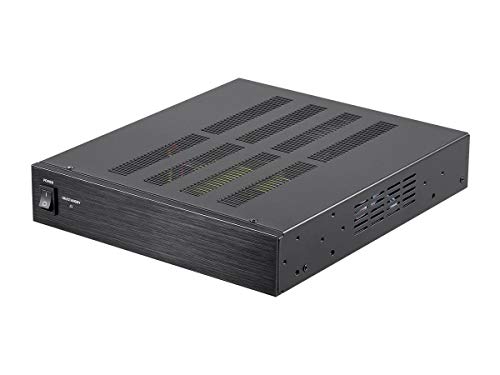
- 12V input and output triggers
- Bridgeable two-channel design
- Euroblock connector for wiring
Best For: Simple integrated audio installations
DIY High-Power Option
DAMGOO 440W Bluetooth Amplifier Board

- Up to 220W + 220W stereo output
- Bluetooth 5.2, USB, and AUX inputs
- 12–36V DC operation; adapter not included
Best For: DIY wireless-speaker and high-output projects
Trigger Add-On
BobWire DAT1 Digital Audio Trigger
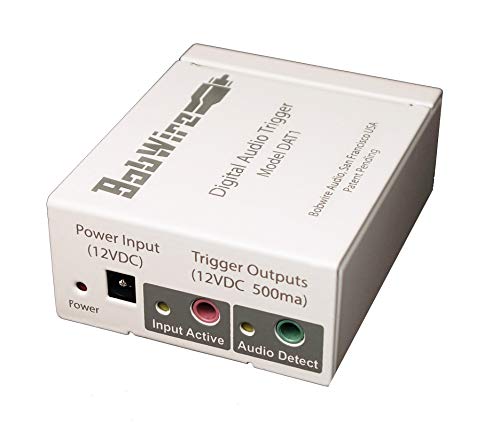
- Adds two 12V trigger outputs
- Uses optical digital-audio sources
- Designed for standalone amplifiers, not AVRs
Best For: Automating power control from optical sources
Feature-Rich Choice

- Two-channel design with up to 600W total output
- 12V trigger, Bluetooth 5.2, and balanced TRS input
- High-pass filter and subwoofer pre-out for 2.1 systems
Best For: Flexible bookshelf-speaker and 2.1 home audio setups
Audiophile Mono Powerhouse

- 200W mono output for high-power speaker systems
- Three sets of XLR/TRS balanced inputs
- 12V trigger and selectable high/low gain
Best For: Balanced hi-fi systems using one amplifier per speaker
Rack-Friendly Installation Pick
Monoprice Unity 200W Class-D Amp

- 50W per channel into 8 ohms and bridgeable operation
- 12V trigger input and output for system control
- Rack ears and buffered loop output for installations
Best For: Rack-mounted multi-zone and custom audio installations
Best Compact Stereo Pick

- 140W × 2 at 4 ohms
- Balanced TRS and RCA inputs
- TRIG auto power synchronization
Best For: Compact stereo and desktop HiFi systems
Best Monoblock Value

- 300W single-channel output
- 12V Trigger and Auto modes
- Fanless, 95%-efficient design
Best For: Compact desktop monoblock systems
Best Rackmount Pro Option

- Stereo, parallel, and bridged modes
- Built-in 110Hz crossover and limiter
- 1U rack chassis with LED meters
Best For: DJ, pro-audio, and rack-mounted systems
Compact HiFi Pick – SMSL AO10 2-Channel Stereo Power Amp
The SMSL AO10 is a practical choice among power amplifiers with 12v trigger support when you want compact stereo power, simple tone shaping, and synchronized system control. Its Class D design delivers up to 100W per channel at 2 ohms, while the front-panel controls and EQ presets make setup flexible for desktop or home audio.
Best For: Desktop listeners and compact passive-speaker systems needing 12V-triggered power control.
Pros:
- Built-in 12V trigger supports synchronized power on/off.
- Up to 100W × 2 at 2 ohms and 70W × 2 at 4 ohms.
- Seven EQ presets plus independent treble and bass controls.
- Compact freestanding design includes a remote and cables.
Cons:
- Requires a 12V DC power supply.
- Two-channel design may not suit larger multichannel installations.
The AO10 stands out for combining useful system integration with accessible sound adjustments in a space-saving chassis. It is a strong fit when you want a straightforward stereo amplifier rather than a DIY board or trigger-only accessory.
Installation-Friendly Choice – Monoprice Unity 100-Watt Power Amp
The Monoprice Unity is a straightforward option among power amplifiers with 12v trigger connections, offering both 12-volt input and output triggers for coordinated equipment control. Its bridgeable, two-channel design and Euroblock connector make it suitable for practical tabletop audio installations.
Best For: Buyers building a simple two-channel system that needs trigger input and output connections.
Pros:
- Provides both 12V input and output triggers.
- Bridgeable two-channel configuration.
- Uses a Euroblock connector for installation-oriented wiring.
- Listed output power is 120 watts.
Cons:
- No warranty is listed in the supplied details.
- The larger tabletop footprint may be less suitable for cramped desktop setups.
With trigger connections in both directions, the Unity is focused on system integration rather than extensive sound customization. Consider it when reliable control-link options and bridgeability matter more than built-in EQ features.
DIY High-Power Option – DAMGOO 440W Bluetooth Amplifier Board
The DAMGOO T220HS is a DIY amplifier board for builders who need substantial stereo output and multiple source options. It uses dual TPA3251 chips, supports 12–36V DC input, and adds Bluetooth 5.2, USB, and AUX connectivity, though it does not include a power adapter or a built-in 12V trigger interface.
Best For: DIY wireless-speaker projects requiring high output and flexible input options.
Pros:
- Rated for up to 220W + 220W stereo output.
- Supports Bluetooth 5.2, USB sound card, USB flash drive, and AUX.
- Independent treble, bass, and multifunction volume controls.
- Protection features address short circuit, over-voltage, under-voltage, overheating, and clipping.
Cons:
- Power adapter is not included.
- It is an amplifier board, so enclosure and installation work are required.
- No 12V trigger function is listed.
This board is not a direct match for shoppers specifically seeking power amplifiers with 12v trigger support, but it offers considerably more DIY flexibility and output than a finished compact amp. Choose it only if you are comfortable supplying power and completing the build.
Trigger Add-On – BobWire DAT1 Digital Audio Trigger
The BobWire DAT1 is an accessory rather than a power amplifier, but it can help complete a system built around power amplifiers with 12v trigger inputs. It converts a compatible optical digital-audio source into 12V trigger outputs for automatically switching compatible standalone amplifiers and other equipment.
Best For: Adding automatic 12V trigger control to a standalone amplifier driven by an optical audio source.
Pros:
- Provides two 12V trigger outputs with different source/action options.
- Works with optical sources such as TVs, Sonos Connect, and Echo Link.
- Includes a 192kHz/24-bit Cirrus Logic DAC for PCM analog output.
- Compact 2.5 × 2-inch plastic enclosure.
Cons:
- It will not turn on an AVR and is intended for standalone amplifiers with 12V trigger inputs.
- Requires a compatible optical digital-audio source.
- Supports PCM audio output rather than a general surround-audio format.
Use the DAT1 when your amplifier already has trigger input capability but your source lacks a trigger output. It fills that control gap neatly, while its limitations make source and amplifier compatibility important before purchase.
Feature-Rich Choice – Ampapa Douk Audio D1
If you want power amplifiers with 12v trigger support for a compact home audio system, the D1 combines two-channel amplification with modern connectivity and setup flexibility. Its Bluetooth 5.2, balanced TRS input, adjustable high-pass filter, and subwoofer pre-out make it especially adaptable for bookshelf-speaker and 2.1 systems.
Best For: Listeners building a flexible desktop, bookshelf-speaker, or 2.1 home theater system.
Pros:
- Two-channel output rated at up to 600 watts total with the included 48V/5A GaN adapter.
- 12V trigger, Bluetooth 5.2, TRS balanced input, remote control, and tone adjustment.
- Adjustable 30–200Hz high-pass filter and full-range subwoofer pre-out support.
- Digital VU display, socketed NE5532 op-amps, and PFFB technology.
Cons:
- Its feature-rich interface may be more than needed for a basic amplifier setup.
- The supplied notes do not specify the exact trigger input/output configuration.
The D1 is a strong all-around option when convenient control, visible metering, and 2.1 expansion matter as much as amplification. It is particularly appealing for buyers who want modern features in a compact aluminum chassis.
Audiophile Mono Powerhouse – TOPPING B200 Mono Amplifier
The TOPPING B200 is a mono amplifier for listeners seeking power amplifiers with 12v trigger integration and balanced connectivity. Its 200W output, three XLR/TRS input sets, adjustable gain, and low-noise NFCA discrete design make it suited to serious hi-fi systems.
Best For: Audiophiles pairing one B200 with each speaker in a balanced stereo system.
Pros:
- Delivers 200W of output for demanding passive speakers.
- Three sets of XLR/TRS balanced inputs support flexible preamp and DAC connections.
- Includes a 12V trigger for coordinated power control.
- Offers high/low gain modes and exceptionally low stated distortion.
Cons:
- It is a mono amplifier, so a stereo setup requires two units.
- Its balanced-input focus may be less convenient for systems built around basic unbalanced sources.
With its mono configuration and high-performance specifications, the B200 is best considered as a building block for a carefully matched hi-fi system. Buyers should plan for two amplifiers if they need conventional left-right stereo amplification.
Rack-Friendly Installation Pick – Monoprice Unity 200W Class-D Amp
For integrated installations needing power amplifiers with 12v trigger connections, the Monoprice Unity offers practical control and expansion features. This Class-D model includes both a 12V trigger input and output, buffered signal looping, bridgeable operation, and rack-mount hardware.
Best For: Rack-mounted whole-home audio, custom installations, and systems that need trigger chaining.
Pros:
- Provides 50W per channel into 8-ohm loads or 65W per channel into 4-ohm loads.
- Bridge mode delivers 120W into a single 8-ohm load.
- 12V trigger input and output allow coordinated power control with other equipment.
- Rack-mount ears, buffered loop output, and protection against thermal and short-circuit faults.
Cons:
- Its per-channel output is lower than the other amplifiers in this roundup.
- Speaker connections use detachable Phoenix connectors rather than conventional binding posts.
The Unity is a sensible installation-oriented choice rather than a feature-heavy desktop amp. Its trigger output, loop connection, and rack-mount options make it especially useful when integrating multiple amplifiers or zones.
Best Compact Stereo Pick – TOPPING Mini300
If you want power amplifiers with 12v trigger support for a compact stereo system, the TOPPING Mini300 combines balanced Class-D amplification with automatic power synchronization. It delivers up to 140W per channel at 4 ohms and accepts both balanced TRS and unbalanced RCA sources.
Best For: Desktop HiFi, studio monitoring, and compact stereo systems that need clean power and trigger-based control.
Pros:
- Fully balanced Class-D design with very low stated distortion.
- Up to 140W × 2 at 4 ohms with 124dB SNR/DNR.
- TRIG-linked power sync, plus TRS and RCA input compatibility.
- Compact aluminum chassis with overheat and overcurrent protection.
Cons:
- Its two-channel output is less suitable for single-speaker monoblock applications.
- The supplied details list a quick-start guide but no extensive accessory package.
The Mini300 is a strong choice when a small stereo amplifier needs both high output and convenient system automation. Its trigger control and flexible inputs make it particularly easy to integrate with a DAC, preamp, or audio interface.
Best Monoblock Value – GaN Mono 300W
The GaN Mono is a single-channel option for shoppers seeking power amplifiers with 12v trigger control in a very small, efficient chassis. Its 12V Trigger mode can synchronize power with a DAC or preamp, while Auto and manual modes provide additional control options.
Best For: Modern desktop HiFi systems, near-field listening, and passive speakers used in a compact monoblock setup.
Pros:
- 300W single-channel Class-D output with GaN technology.
- Supports balanced XLR/TRS and unbalanced RCA inputs.
- 12V Trigger, signal-sensing Auto, and manual power modes.
- Fanless, 95%-efficient design with adjustable gain.
Cons:
- It is a monoblock, so a standard stereo system requires two amplifiers.
- Power adapter is not included; full output requires a 48V/5A supply.
This amplifier suits listeners who prioritize compact dimensions, low heat, and flexible system control. Remember to budget for the required power supply and a second unit if you need conventional left-right stereo amplification.
Best Rackmount Pro Option – Rockville DS10
The Rockville DS10 is a rack-oriented two-channel power amplifier for larger audio rigs. While the supplied specifications do not list a 12V trigger input, its stereo, parallel, and bridged modes, built-in crossover, limiter, and protection circuitry make it a versatile choice for demanding sound reinforcement setups.
Best For: Rack-mounted DJ, pro-audio, monitor, and subwoofer applications where high output and configuration flexibility matter.
Pros:
- Two-channel design with stereo, parallel, and bridged operating modes.
- Built-in 110Hz crossover supports full-range, low-pass, or high-pass operation.
- 1U chassis with variable-speed cooling fans and LED dB meters.
- Includes limiter and protection against short circuits, thermal overload, and DC offset.
Cons:
- The supplied notes do not confirm 12V trigger support.
- Fan cooling may be less suitable for quiet home listening spaces.
- Its rackmount pro-audio format is larger and less desktop-friendly than the other options.
Choose the DS10 for system flexibility and rack integration rather than trigger-based home automation. Its crossover, bridged mode, monitoring, and protection features are valuable when driving mains, monitors, or subwoofers in a pro-style setup.
How We Picked These Power Amplifiers with 12v Trigger
We focused on products that either include a genuine 12V trigger input or output, or solve a closely related trigger-integration problem. We compared rated power, channel configuration, amplifier class, input and output connectivity, size, and intended use. Because manufacturers use different testing conditions, wattage figures should be treated as a starting point rather than a direct promise of identical real-world performance.
We also considered practical system factors: whether an amplifier works with a preamp or AV receiver, whether it supports balanced connections, whether it can drive demanding speakers, and whether its form factor suits a desktop, living-room rack, or larger installation.
Quick Comparison
| Best For | What to Prioritize | Typical Pick Type |
|---|---|---|
| Desktop stereo | Compact size, simple inputs, moderate output | Small Class-D stereo amplifier |
| Home theater expansion | Trigger compatibility, dependable cooling, rack fit | Bridgeable or rack-mount power amp |
| High-output stereo | Speaker impedance support and current delivery | Higher-powered two-channel amplifier |
| Monoblock systems | Balanced inputs and matching gain | Mono amplifier pair |
| Systems without a trigger | Reliable sensing and automatic activation | 12V trigger converter or accessory |
Key Buying Factors for Power Amplifiers with 12v Trigger
Trigger Direction and Compatibility
Check whether the product has a 12V trigger input, trigger output, or both. An input lets another component turn the amplifier on; an output can pass the activation signal to another device. Confirm the connector type, voltage range, polarity, and whether the trigger remains active during standby. If your source has no trigger output, a trigger-sensing accessory may be the more practical solution.
Power, Impedance, and Bridging
Match continuous power ratings to your speakers and listening room, not just the largest advertised peak number. Verify the minimum supported impedance and whether the amplifier is stable with your speakers. Bridging can increase output, but it may change the minimum impedance requirement and usually reduces the number of available channels.
Inputs and System Layout
RCA inputs suit many consumer preamps, while XLR or TRS balanced inputs can help with longer cable runs and professional-style equipment. Consider gain controls, subwoofer outputs, tone controls, cooling requirements, and rack depth before buying. A compact amplifier may be ideal for a desk but less suitable for a continuously driven installation.
Sound, Noise, and Everyday Operation
Low distortion and a high signal-to-noise ratio are useful specifications, but system matching matters more than chasing a single number. Look for sensible standby behavior, accessible controls, protection circuitry, and a thermal design appropriate for the intended load.
Who Should Buy Which Power Amplifiers with 12v Trigger?
Choose a compact stereo Class-D model for desktop listening, small rooms, or a simple passive-speaker setup. Select a bridgeable or rack-mount amplifier when you are expanding an AV system and need flexible installation or additional output. Higher-powered stereo models make more sense for larger rooms, inefficient speakers, or demanding listening levels.
Monoblocks are best for listeners building a modular, balanced system around a dedicated preamp. If your television, streamer, or DAC does not provide a 12V trigger, consider a trigger converter instead of replacing otherwise capable equipment. Before ordering, confirm the trigger behavior and connector standard for every component in the chain.