
If you’re building a workstation for 4K, 8K, or heavy multitasking, the right motherboard matters as much as the CPU and GPU. For editors, the best Gigabyte AERO motherboard for video editing should offer stable power delivery, fast storage support, and the connectivity you need for fast project workflows.
In this roundup, we focus on boards that balance performance, expansion, and creator-friendly features so you can choose a platform that fits your editing load and budget.
Best 10 Gigabyte Aero Motherboard for Video Editing Picks for 2026
Best for Creative Connectivity
GIGABYTE B650 AERO G AM5 Motherboard

- AM5 support for Ryzen 7000/8000/9000 CPUs
- PCIe 5.0 M.2 and M.2 Thermal Guard III
- USB-C, WiFi 6E, and 2.5GbE for modern workflows
Best For: AM5 content creators who want strong connectivity and fast NVMe storage for editing work.
Best for Thunderbolt-Heavy Editing

- Thunderbolt 4 and front USB-C for fast external workflows
- Five M.2 slots plus PCIe 5.0 for heavy storage expansion
- Dual 2.5GbE LAN and WiFi 7 for flexible networking
Best For: Intel creators who need fast I/O, lots of NVMe storage, and a workstation-ready feature set.
Best for Balanced Editing Builds
GIGABYTE B550 AORUS Elite AX V2
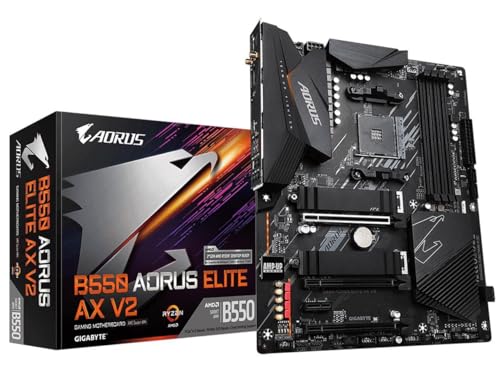
- Stable 12+2 power phase design
- PCIe 4.0 M.2 support for fast storage
- Wi‑Fi 6 and 2.5 GbE for modern connectivity
Best For: Ryzen-based video editing PCs that need dependable power, fast storage, and built-in wireless.
Best for Content Creators
GIGABYTE X870E AERO X3D AM5 ATX Motherboard

- AM5 support for Ryzen 9000/8000/7000 CPUs
- Four M.2 slots with PCIe 5.0 storage support
- USB4, WiFi 7, and dual 5GbE for fast workflows
Best For: Creators and editors who want a high-end AM5 board with strong storage and connectivity.
Best for Balanced Video Editing Builds
GIGABYTE B550 Eagle WIFI6 AM4 Board

- 10+3 phase VRM for steady Ryzen performance
- Dual M.2 and PCIe 4.0 for fast project storage
- Wi‑Fi 6, USB-C, and LAN cover modern editing setups
Best For: AM4 creators who want a stable, well-equipped motherboard for editing work without moving to a higher-cost platform.
Best Easy Setup
GIGABYTE B550 Gaming X V2 AM4 ATX Motherboard

- 10+3 power phase design for stable Ryzen performance
- Two M.2 slots plus PCIe 4.0 support for fast storage
- Q-Flash Plus and front USB-C simplify building and upgrades
Best For: Creators building a reliable AM4 editing PC who want easy assembly and solid everyday performance.
Best for High-Speed Editing Builds
GIGABYTE B850 AORUS Elite WIFI7

- AM5 support for Ryzen 9000/8000/7000
- 14+2+2 power design for stable workloads
- 3x M.2, PCIe 5.0, WiFi 7, and 2.5GbE
Best For: Video editors building a fast, modern AM5 workstation with strong storage and connectivity.
Best for High-Performance Builds
GIGABYTE Z790 AORUS PRO X DDR5 Motherboard

- 18+1+2 phase VRM for demanding Intel CPUs
- 5 M.2 slots, including PCIe 5.0 x4
- WiFi 7, 5GbE LAN, and USB-C 3.2
Best For: Serious video editors and creators building a high-end Intel Z790 workstation.
Best Balanced AM5 Editing Board

- Strong 14+2+1 power design for Ryzen workloads
- PCIe 5.0 M.2 and DDR5 for fast editing performance
- WiFi 6E, 2.5GbE, and USB-C improve connectivity
Best For: AM5 editors who want a stable, modern motherboard with strong core features.
Best for Creative Connectivity – GIGABYTE B650 AERO G AM5 Motherboard
If you want a gigabyte aero motherboard for video editing with strong modern I/O and a clean builder-friendly layout, the GIGABYTE B650 AERO G is a smart AM5 option. It supports Ryzen 9000/8000/7000 chips, DDR5 memory, and PCIe 5.0 storage, making it a solid base for a fast editing workstation.
Best For: Editors building an AM5 desktop who want quick storage access, dependable cooling support, and strong front/rear connectivity.
Pros:
- AM5 support for Ryzen 7000, 8000, and 9000 processors
- PCIe 5.0 M.2 plus M.2 Thermal Guard III for fast, cooler NVMe drives
- USB-C front and rear connectivity suits external drives and modern peripherals
- EZ-Latch design makes GPU and M.2 installation easier
Cons:
- Requires DDR5, so it is not a drop-in upgrade for older memory kits
- ATX size may be more board than compact editing builds need
As a gigabyte aero motherboard for video editing, this model focuses on practical workstation features rather than flashy extras, with the bandwidth and expansion headroom that content creators are likely to use. It is a good fit if you want a balanced AM5 board with creator-friendly connectivity and storage support.
Best for Thunderbolt-Heavy Editing – GIGABYTE Z890 AERO G
If you want a gigabyte aero motherboard for video editing, the GIGABYTE Z890 AERO G stands out for high-speed connectivity, modern storage expansion, and creator-friendly expansion features. It pairs Intel Core Ultra Series 2 support with DDR5, PCIe 5.0, and Thunderbolt 4, making it a strong fit for editing rigs that move large media files and rely on fast peripherals.
Best For: Editors and content creators building a performance-focused Intel workstation with fast external storage, multiple NVMe drives, and easy upgrade access.
Pros:
- Thunderbolt 4 and front USB-C help with fast external drives and docked workflows
- Five M.2 slots plus PCIe 5.0 give you plenty of room for scratch, cache, and project storage
- Dual 2.5GbE LAN and WiFi 7 offer flexible, high-speed networking options
- EZ-Latch features make GPU and SSD installation simpler
Cons:
- Premium features may be more motherboard than casual editors need
- Requires Intel Core Ultra Series 2 platform compatibility
- ATX size may not suit compact editing builds
For a gigabyte aero motherboard for video editing, this model makes the most sense when your workflow depends on fast storage, strong I/O, and a clean creator-focused build. It is less about bargain pricing and more about giving editors the connectivity and expansion headroom to keep a system relevant for years.
Best for Balanced Editing Builds – GIGABYTE B550 AORUS Elite AX V2
If you want a dependable gigabyte aero motherboard for video editing without jumping to a more expensive platform, the GIGABYTE B550 AORUS Elite AX V2 hits a smart middle ground. It pairs Ryzen 3000/4000/5000 support with solid power delivery, PCIe 4.0 storage, and the kind of connectivity that keeps a creator workstation practical and fast.
Best For: Editors building a Ryzen-based workstation that needs strong thermal design, modern storage support, and built-in Wi‑Fi.
Pros:
- 12+2 power phase design helps support stable performance under editing workloads
- Two M.2 slots, including PCIe 4.0, give you fast scratch and project storage options
- Wi‑Fi 6, 2.5 GbE LAN, and front USB-C improve everyday creator connectivity
- VRM and M.2 thermal guards help keep temperatures under control
Cons:
- DDR4-only platform, so it is not a fit if you want newer DDR5 builds
- B550 means fewer high-end expansion features than pricier X-series boards
- Best value when paired with a compatible Ryzen CPU and dedicated GPU
For a gigabyte aero motherboard for video editing, this board stands out as a practical creator-friendly option rather than an extreme workstation pick. It offers the right mix of stability, storage speed, and modern I/O for editing rigs that need reliable day-to-day performance.
Best for Content Creators – GIGABYTE X870E AERO X3D AM5 ATX Motherboard
If you want a gigabyte aero motherboard for video editing, this X870E AERO X3D is built to handle modern creator workloads with strong AM5 CPU support, DDR5 memory, and fast storage expansion. It combines PCIe 5.0, USB4, WiFi 7, and dual 5GbE in a feature set that makes sense for a workstation-style build.
Best For: Editors, content creators, and power users who want a high-end AM5 board with fast networking, multiple M.2 slots, and creator-friendly connectivity.
Pros:
- 16+2+2 power phase design and robust VRM cooling for stable Ryzen 9000/8000/7000 performance
- Four M.2 slots with two PCIe 5.0 options for fast project and scratch storage
- USB4, dual 5GbE LAN, and WiFi 7 for fast transfers and flexible workflow connectivity
- EZ-Latch features and DriverBIOS simplify building and setup
Cons:
- Expensive compared with mainstream AM5 boards
- Overkill if you do not need high-speed I/O or multiple SSDs
This is a strong pick if your gigabyte aero motherboard for video editing needs lean toward speed, expandability, and cleaner cable-free assembly. It is aimed at creators who value workstation-grade connectivity and storage flexibility more than bargain pricing.
Best for Balanced Video Editing Builds – GIGABYTE B550 Eagle WIFI6 AM4 Board
If you want a gigabyte aero motherboard for video editing without overspending on platform features, this B550 board is a sensible middle ground. It gives Ryzen 3000/4000/5000 support, PCIe 4.0, dual M.2 slots, and built-in Wi‑Fi 6, so you can build a fast, storage-friendly workstation for editing and exports.
Best For: Editors building a reliable AM4 workstation who want strong connectivity, quick storage options, and solid power delivery for mainstream Ryzen CPUs.
Pros:
- 10+3 phase VRM design helps keep Ryzen chips stable under sustained editing loads
- Two M.2 slots and PCIe 4.0 support are useful for fast scratch and project drives
- Wi‑Fi 6, USB-C, and 1GbE LAN cover modern workflow connectivity
- DDR4 support makes it easier to reuse or buy affordable memory
Cons:
- AM4 limits upgrade paths compared with newer AM5 platforms
- 1GbE LAN is fine for most users but not ideal for heavy network storage workflows
- Not the best fit if you want the most advanced creator-focused board features
For a gigabyte aero motherboard for video editing, this model stands out as a practical creator pick rather than a luxury board. It delivers the essentials that matter most—stable CPU power, fast storage, and flexible connectivity—while keeping the build straightforward and cost-conscious.
Best for Editing Workloads – GIGABYTE Z790 AORUS Elite AX
If you want a gigabyte aero motherboard for video editing that can keep up with modern Intel CPUs, the Z790 AORUS Elite AX is a strong all-around pick. It pairs DDR5 support, a robust VRM, and fast M.2 storage options with the kind of connectivity creators actually use for large project files and external devices.
Best For: Video editors building an Intel LGA 1700 workstation who want reliable power delivery, fast storage expansion, and modern I/O.
Pros:
- 16+1+2 phase VRM helps support sustained workloads on 12th, 13th, and 14th Gen Intel CPUs
- Four M.2 slots and PCIe 5.0 support make high-speed scratch and project storage easier
- DDR5, WiFi 6E, 2.5GbE, and USB-C 3.2 give it strong creator-friendly connectivity
- Useful build features like EZ-Latch and Q-Flash simplify installation and updates
Cons:
- ATX size may be more board than compact editing builds need
- No built-in Thunderbolt, which some creator workflows may prefer
- Overkill if you only need a basic office or light-editing system
Overall, this board makes sense when the gigabyte aero motherboard for video editing needs to balance speed, stability, and expansion rather than focus on flashy extras. It is especially appealing for editors planning multiple NVMe drives and a long-term Intel upgrade path.
Best Easy Setup – GIGABYTE B550 Gaming X V2 AM4 ATX Motherboard
If you want a practical gigabyte aero motherboard for video editing without overpaying for extras you may not use, the B550 Gaming X V2 is a solid middle-ground pick. It supports Ryzen 5000/4000/3000 CPUs, offers PCIe 4.0 for a fast GPU or SSD, and includes two M.2 slots for keeping your editing scratch drives and project storage organized.
Best For: Creators building a reliable AM4 editing PC who want easy assembly, modern connectivity, and a stable power design.
Pros:
- 10+3 power phase design and VRM heatsink help keep Ryzen processors steady under load
- Two M.2 slots and PCIe 4.0 support are useful for fast storage and GPU upgrades
- Front USB-C, GbE LAN, and Q-Flash Plus make setup and daily use more convenient
- Compatible with DDR4 and 4 DIMMs for flexible memory configurations
Cons:
- No built-in Wi-Fi, so wireless networking requires an adapter
- B550 is capable, but heavy workstation users may prefer a higher-end creator board
- Not ideal if you need the newest platform features beyond AM4
For editing rigs built around an AMD AM4 chip, this board covers the essentials well: stable power, fast storage options, and straightforward building features. If your gigabyte aero motherboard for video editing search is really about dependable performance and a clean DIY experience, this one fits that brief.
Best for High-Speed Editing Builds – GIGABYTE B850 AORUS Elite WIFI7
If you want a gigabyte aero motherboard for video editing that balances modern connectivity with strong AM5 support, the B850 AORUS Elite WIFI7 is a smart fit. It brings DDR5 support, PCIe 5.0, three M.2 slots, and WiFi 7 into a platform that can handle fast storage and demanding creator workloads without feeling overbuilt.
Best For: Video editors and content creators building an AM5 workstation with fast NVMe storage, newer Ryzen CPUs, and reliable wireless networking.
Pros:
- Supports Ryzen 9000, 8000, and 7000 CPUs on AM5
- 14+2+2 power design is well suited for sustained creator workloads
- Three M.2 slots and PCIe 5.0 help with high-speed storage expansion
- WiFi 7, 2.5GbE LAN, and USB-C improve modern connectivity
Cons:
- ATX size may be more board than compact builds need
- Creator-specific extras are solid, but not as specialized as workstation boards
For a gigabyte aero motherboard for video editing, this board makes the most sense if you want a current-gen AM5 platform with fast storage, strong power delivery, and room to grow. It is especially appealing for editors who value a clean, future-ready foundation over niche pro-workstation features.
Best for High-Performance Builds – GIGABYTE Z790 AORUS PRO X DDR5 Motherboard
If you’re building a fast, future-ready gigabyte aero motherboard for video editing, this Z790 AORUS PRO X gives you the core features that matter most: strong power delivery, DDR5 support, and plenty of high-speed storage. It is aimed at creators who want a stable Intel 14th/13th/12th Gen platform with room for heavy multitasking, large media libraries, and fast scratch drives.
Best For: Video editors and content creators who want a robust Intel Z790 motherboard with excellent storage expansion and modern connectivity.
Pros:
- 18+1+2 phase VRM design helps support demanding Intel CPUs under sustained workloads
- Five M.2 slots, including one PCIe 5.0 x4, are great for fast project and cache storage
- DDR5 with XMP 3.0 plus PCIe 5.0 make it a strong long-term creator platform
- WiFi 7, 5GbE LAN, and USB-C 3.2 add fast connectivity for modern workflows
Cons:
- Higher-end feature set may be more than casual editors need
- Requires an LGA 1700 Intel CPU and DDR5 memory, which adds to total build cost
For buyers comparing a gigabyte aero motherboard for video editing, this model stands out as a well-equipped creator board with the storage, power, and connectivity needed for serious editing rigs. It is especially appealing if you plan to use multiple NVMe drives and want a platform that can keep up with demanding timelines.
Best Balanced AM5 Editing Board – GIGABYTE B650 AORUS Elite AX
If you want a practical gigabyte aero motherboard for video editing without overspending on extras you may not use, this B650 AORUS Elite AX is a strong middle-ground pick. It gives you modern AM5 support, DDR5 memory, PCIe 5.0 storage, and solid power delivery, so it can handle a capable Ryzen editing build with room to grow.
Best For: Editors building a reliable AM5 workstation who want fast storage, stable power, and modern connectivity.
Pros:
- 14+2+1 power design helps support demanding Ryzen CPUs for long renders and exports
- PCIe 5.0 M.2 and DDR5 support keep your editing system fast and future-ready
- WiFi 6E, 2.5GbE, and front/rear USB-C add useful workstation connectivity
- Thermal guards and heatsinks help keep performance steady under load
Cons:
- No built-in Thunderbolt or USB4 for ultra-fast external media workflows
- B650 is not as feature-rich as higher-end creator-focused boards
- Best value when paired with a Ryzen CPU that can take advantage of the platform
For most buyers, this is a sensible choice if you need a gigabyte aero motherboard for video editing and want performance features first, flashy extras second. It is especially appealing for creators who want a dependable AM5 board with strong storage and networking support.
How We Picked the Best Gigabyte Aero Motherboard for Video Editing
We prioritized boards with strong VRM designs, multiple M.2 slots, modern USB options, and current-platform support for AMD AM5 or Intel LGA 1700/1851. For a Gigabyte Aero Motherboard for Video Editing, those features matter because they help sustain CPU performance, speed up scratch and cache storage, and reduce bottlenecks when moving large media files.
We also looked for practical creator features such as Thunderbolt support, Wi-Fi 7 or Wi-Fi 6, dual LAN, PCIe 5.0 readiness, and enough rear I/O for high-resolution displays, fast drives, and peripherals.
Quick Comparison
AM5 boards such as the B650 AERO G, B650 AORUS Elite AX, B850 AORUS Elite WiFi 7, and X870E AERO X3D Dark Wood are ideal if you want a newer AMD editing platform with a clear upgrade path. Intel choices like the Z790 AORUS Elite AX, Z790 AORUS PRO X, and Z890 AERO G are better suited to users already invested in Intel CPUs or those who want strong high-speed I/O and multi-drive expansion.
Older AM4 options, including the B550 boards, remain sensible if you are upgrading an existing Ryzen 3000/5000 system and want to control costs.
Key Buying Factors for Gigabyte Aero Motherboard for Video Editing
Power Delivery and Cooling
Editing loads can keep the CPU under sustained pressure for long renders and exports. A stronger VRM and effective heatsinks help maintain boost clocks and stability during those long sessions.
Storage Expansion
Look for at least two M.2 slots, with three or more preferred for active projects, cache, and archive drives. PCIe 5.0 M.2 support is a bonus, but PCIe 4.0 is still excellent for most edit workflows.
Connectivity
USB-C, Thunderbolt 4, 2.5GbE LAN, and fast Wi-Fi make a real difference when transferring footage, attaching external storage, or using docked peripherals. Creators who move very large files should pay close attention to rear I/O and networking.
Platform and Upgrade Path
Choose AM5 if you want a newer AMD platform and future CPU support. Choose Intel LGA 1700 or 1851 if you prefer Intel’s ecosystem or need a specific feature set. AM4 only makes sense if you are reusing existing parts or seeking the lowest-cost upgrade.
Who Should Buy Which Gigabyte Aero Motherboard for Video Editing?
If you want the strongest creator-focused feature set, the Z890 AERO G and X870E AERO X3D Dark Wood stand out for high-end builds. If you want a well-rounded sweet spot, the B650 AERO G and B850 AORUS Elite WiFi 7 are compelling for most editors. Budget-conscious upgraders should consider the B550 options, while power users with more drives and expansion needs may prefer the Z790 AORUS PRO X.
In short, choose the board that matches your CPU platform first, then narrow by M.2 count, networking, and rear I/O. That approach will give you the best long-term value for video editing.