
Speakers sitting directly on a desk can send vibrations through the surface, while poor placement can leave the sound aimed below your ears. An isolation stand or pad can help address both problems—but the right choice depends on your speaker size and where you sit.
These nine options range from simple foam pads to angled stands and adjustable risers. Use the guide below to narrow them down by fit, positioning, and the amount of adjustment you actually need.
Best 9 Deskspeaker Isolation Stands Picks for 2026
Most Adjustable
IsoAcoustics Iso-130 Speaker Stands
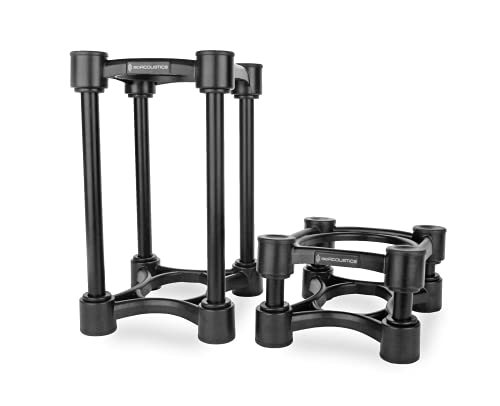
- 14 height-and-tilt configurations
- 5.1-by-6-inch platform
- 20-pound load capacity
Best For: Desktop monitors needing precise tweeter alignment
Best Foam Wedge
Liquid Stands Medium Isolation Pad

- Five angle settings
- 12-by-8-inch footprint
- Non-slip, 50 kg/m³ foam
Best For: Angling a small studio monitor on a desk or stand
Best for Small Speakers
Audioengine DS1 Desktop Stands
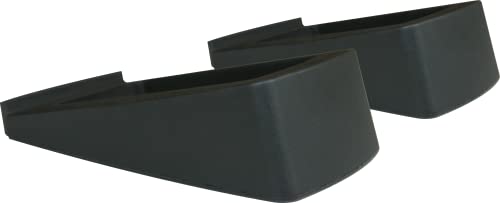
- Pair of silicone rubber stands
- Fixed 15-degree tilt
- 8-pound weight limit
Best For: Small desktop speakers needing a fixed upward tilt
Heavy-Duty Isolation
Pyle PSIO4 Foam Speaker Platform

- 44.6 lb rated capacity
- Foam, rubber base, steel top
- 7.5 × 9.1 in platform
Best For: A heavier speaker that fits the platform
Fixed-Angle Pair

- Pair of rubber wedges
- Fixed 15° tilt
- 4.75 in base width
Best For: Medium-sized desktop speakers needing a fixed tilt
Adjustable Foam Angles
Liquid Stands Large Isolation Pad

- Five listed angle settings
- 14 × 11 in footprint
- Non-slip foam surface
Best For: Monitor positioning with selectable wedge angles
Large Monitor Pick
8–10-Inch Three-Layer Isolation Pads

- Two pads for 8–10-inch monitors
- 15.5 × 13-inch platform per pad
- Three-layer, non-slip construction
Best For: Large studio monitors on roomy desks
Compact Monitor Pick
Adjustable Pads for 3–5-Inch Speakers

- 8 × 6.3-inch pads
- Adjustable listening angle
- Two-pad desktop set
Best For: Compact monitors needing angle adjustment
Mid-Size Monitor Pick
Adjustable Pads for 6.5–8-Inch Speakers
- 13 × 10.65-inch pads
- Adjustable listening angle
- Two-pad foam set
Best For: 6.5–8-inch monitors needing angle adjustment
Most Adjustable – IsoAcoustics Iso-130 Speaker Stands
If you need deskspeaker isolation stands that let you fine-tune monitor placement, the IsoAcoustics Iso-130 pair offers 14 height-and-tilt configurations. Its 5.1-by-6-inch platform suits speakers within its 20-pound load capacity.
Best For: Desktop studio monitors that need flexible positioning to aim their tweeters toward ear level.
Pros:
- Offers 14 height-and-tilt configurations.
- Includes two stands, with low and tall height settings of 2.8 and 8.25 inches.
- Isolators are designed to reduce vibration transferred to the supporting surface.
Cons:
- The 5.1-by-6-inch platform may be too small for larger monitors.
- Speakers must stay within the 20-pound load capacity.
Choose this pair when precise speaker aiming matters as much as isolation; check your monitor’s footprint and weight before buying.
Best Foam Wedge – Liquid Stands Medium Isolation Pad
For a foam-based option among deskspeaker isolation stands, the Liquid Stands medium pad provides five angle settings in a 12-by-8-inch footprint. Its non-slip surface is intended to help keep a compatible studio monitor in place.
Best For: Users positioning a 3- to 4.5-inch studio monitor on a desk or speaker stand.
Pros:
- Offers five stated angles: 0°, ±5°, and ±10°.
- Uses 50 kg/m³ polyurethane foam for support.
- Has a non-slip surface and a 12-by-8-inch footprint.
Cons:
- The listing specifies one item, so confirm quantity if you need pads for a pair of speakers.
- Foam wedges do not provide the same height-setting options as an adjustable stand.
This is a straightforward choice when you mainly need tilt and foam support, rather than a raised stand with multiple height positions.
Best for Small Speakers – Audioengine DS1 Desktop Stands
The Audioengine DS1 pair is a compact pick for deskspeaker isolation stands when you want a fixed upward angle for small desktop speakers. Each silicone rubber stand tilts a speaker 15 degrees and has a 3.75-by-6.25-inch mounting base.
Best For: Small computer, gaming, or bookshelf speakers that fit the stands’ footprint and 8-pound weight limit.
Pros:
- Includes two stands for a stereo pair.
- Provides a 15-degree tilt to aim speakers upward.
- Silicone rubber construction is designed to dampen vibration.
Cons:
- The 15-degree angle is fixed.
- The 8-pound maximum limits use with heavier speakers.
Pick the DS1 if its fixed angle suits your listening position; for height or tilt adjustments, look to a more configurable stand.
Heavy-Duty Isolation – Pyle PSIO4 Foam Speaker Platform
For deskspeaker isolation stands that need to support a heavier speaker, the Pyle PSIO4 pairs high-density foam with a rubber anti-slip base and a machined-steel top plate. Its 7.5-by-9.1-inch platform is rated for up to 44.6 pounds.
Best For: A studio monitor or speaker that fits the platform and needs a stable, vibration-damping riser.
Pros:
- High-density foam is designed to reduce unwanted vibrations.
- Rubber base helps resist slipping.
- Steel top plate provides a sturdy speaker surface.
- 44.6-pound rated load capacity.
Cons:
- Listed as one platform, so a stereo pair requires checking the quantity ordered.
- Fixed platform; the notes do not list adjustable tilt angles.
The PSIO4 is worth considering when load capacity and a secure surface matter more than angle adjustment. Check your speaker’s footprint against the platform before buying.
These Monoprice deskspeaker isolation stands come as a pair of compact rubber wedges with a fixed 15° tilt. They are intended for medium-sized bookshelf speakers and studio monitors, including most standard 5-inch and larger models.
Best For: A desktop stereo setup that needs a simple, fixed upward tilt.
Pros:
- Pair covers a two-speaker setup.
- 15° tilt changes the speakers’ listening angle.
- Compact 7.75-by-4.75-inch footprint per stand.
Cons:
- Fixed tilt offers no listed angle adjustment.
- Check speaker base dimensions against the 4.75-inch stand width.
Choose these if a straightforward angled pair suits your desk; check the footprint and tilt against your speakers and listening position before ordering.
The Liquid Stands option gives buyers comparing deskspeaker isolation stands five listed angle settings: 0°, ±5°, and ±10°. Its 14-by-11-by-2-inch foam pad has a non-slip surface and is designed to help position studio monitors for listening.
Best For: A monitor setup that needs selectable foam-wedge angles and has room for a 14-by-11-inch pad.
Pros:
- Five listed angle settings offer placement flexibility.
- Non-slip surface helps keep a monitor in place.
- 50 kg/m³ foam density is specified.
Cons:
- 14-by-11-inch footprint may take up significant desk space.
- Listing references both 3–4.5-inch monitors and a 6–8-inch product highlight; verify fit for your speaker.
The selectable angles are the main reason to consider this pad. Measure your available surface and confirm monitor compatibility, given the differing size guidance in the supplied notes.
Large Monitor Pick – 8–10-Inch Three-Layer Isolation Pads
For larger speakers, these deskspeaker isolation stands provide a 15.5-by-13-inch platform designed for 8- to 10-inch studio monitors and subwoofers. The two-pack uses a three-layer construction to help reduce vibration between the speaker and desk.
Best For: Desks or studios using 8- to 10-inch monitors that fit a 15.5-by-13-inch pad.
Pros:
- Two pads are included for a stereo pair.
- Three-layer construction combines shock-absorbent rubber sponge with a non-slip fibreboard base.
- Large surface accommodates monitors such as the Yamaha HS8.
Cons:
- The 15.5-by-13-inch footprint takes substantial desk space.
- No adjustable listening angle is specified.
Choose these when surface area and a stable base matter more than angle adjustment; check your speaker’s base dimensions and available desk space before ordering.
Compact Monitor Pick – Adjustable Pads for 3–5-Inch Speakers
These compact deskspeaker isolation stands are sized for 3- to 5-inch studio monitors, with each pad measuring 8 by 6.3 inches. The high-density foam is intended to reduce vibration and resonance, while the adjustable angle helps position speakers for listening.
Best For: Small studio monitors that need desktop isolation and angle adjustment.
Pros:
- Two pads are included for a stereo setup.
- Adjustable angle supports more precise monitor placement.
- Pads can be placed directly on a desktop without additional setup.
Cons:
- The 8-by-6.3-inch surface is intended for 3- to 5-inch speakers, not larger monitors.
This is the space-conscious option in the group. Check your monitors’ actual base dimensions against the pads, rather than relying only on speaker size.
Mid-Size Monitor Pick – Adjustable Pads for 6.5–8-Inch Speakers
For 6.5- to 8-inch speakers, these deskspeaker isolation stands offer a 13-by-10.65-inch surface per pad. Their foam construction is designed to reduce vibration and resonance, and the adjustable angle provides a way to refine monitor placement.
Best For: Mid-size studio monitors that need a larger pad with adjustable positioning.
Pros:
- Two pads are included for left and right monitors.
- Adjustable angle helps aim speakers toward the listening position.
- Pads can sit directly on a desktop.
Cons:
- Each 13-by-10.65-inch pad needs more room than a compact-monitor pad.
- The stated size range does not cover 10-inch monitors.
These fill the gap between compact pads and the larger 8- to 10-inch option. Measure both your monitor bases and desktop to confirm the fit.
How We Picked the Best Deskspeaker Isolation Stands
We focused on practical differences a desktop buyer can check before ordering: speaker fit, stand height or tilt, contact material, and whether each option is sold as a pair. The selection includes adjustable stands, fixed-angle risers, and foam pads for small through large speakers. Product descriptions alone cannot establish how much vibration a stand will reduce on your particular desk, so treat isolation claims as a reason to compare designs—not as a guaranteed sound improvement.
Quick Comparison
For placement control: The IsoAcoustics Iso-130 offers height and tilt adjustment. For a fixed upward angle: The Audioengine DS1 and Monoprice tilted wedges suit buyers who do not need adjustable height. For a straightforward foam option: Liquid Stands pads, Pyle pads, and the size-labeled 2-packs cover different speaker footprints. Check the listed dimensions rather than relying on terms such as “medium” or “large.”
Key Buying Factors for Deskspeaker Isolation Stands
Speaker Footprint and Stability
Measure each speaker’s base, then compare it with the stand’s usable top surface. A speaker should sit securely without rocking or substantially overhanging the support. Also check the stand’s load rating where one is provided; size alone does not tell you how much weight it can hold. The larger pads in this roundup may suit bigger monitors, while the 3–5-inch option is intended for smaller speakers.
Height, Tilt, and Listening Position
A stand should help aim your speakers toward your usual seated listening position. If the tweeters sit low, added height or upward tilt may be useful. Adjustable height and tilt give you more flexibility; fixed-angle wedges are simpler but may not match every desk or chair height. Before choosing a tilted model, check that the angle will not aim the speakers above your ears.
Desk Space and Isolation Material
Check the full footprint, not just the area supporting the speaker, especially if your desk is shallow or crowded. Foam pads are generally simple to place and can provide a compliant layer between speaker and desk. Rigid stands with isolation elements may be easier to position precisely. Neither type can fix a rattling desk or replace good speaker placement.
Who Should Buy Which Deskspeaker Isolation Stands?
Choose the IsoAcoustics Iso-130 if you need to fine-tune both height and tilt and your speakers fit its platform. Consider the Audioengine DS1 or Monoprice wedges when a compact, fixed-angle stand meets your listening position. Start with Liquid Stands or Pyle pads if you want a simpler support and can confirm the pad dimensions suit your speakers. For particularly small or large cabinets, compare the size-labeled 2-pack pads against your actual speaker bases before buying. Whichever style you choose, confirm pair quantity, dimensions, and weight compatibility on the current listing.