
A good trackball can make Windows navigation more comfortable while reducing the desk space needed for everyday pointing and scrolling. The right model depends on your preferred control style, hand size, connectivity needs, and tolerance for cables or batteries.
We’ve gathered 10 trackballs for Windows covering ergonomic wireless designs, wired workhorses, thumb-controlled options, and larger index-finger models. Use the guide below to narrow the list quickly and choose the best fit for your workspace.
Best 10 Trackballs for Windows Picks for 2026
Best Ergonomic Upgrade

- 20-degree tilt with contoured thumb-control design
- Bluetooth and Logi Bolt wireless connectivity
- Six customizable buttons and USB-C charging
Best For: Comfort-focused Windows productivity users
Best Full-Size Wired Pick
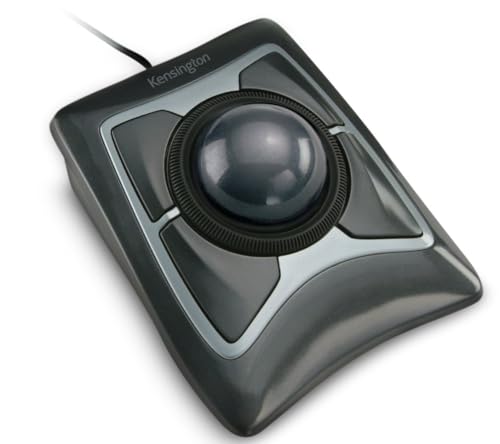
- Large 55mm ball with optical tracking
- Patented scroll ring for page navigation
- Ambidextrous design with detachable wrist rest
Best For: Desktop users who prefer wired precision
Best Wireless Value

- Wireless thumb-control design with six buttons
- Switchable 750/1500 DPI tracking
- Tilt scrolling and removable, cleanable ball
Best For: Right-handed Windows laptop and PC users
Best Compact Simplicity

- Compact, ambidextrous finger-operated design
- Medium 40mm ball with optical tracking
- Wired USB setup requires no batteries
Best For: Basic Windows navigation in compact workspaces
Productivity-Focused Ergonomics

- 4D wheel handles vertical and horizontal scrolling
- Connects to three devices via Bluetooth or 2.4G
- Five DPI levels and customizable buttons
Best For: Windows multitasking and detailed desk work
Quiet Wired Precision

- 44mm trackball suits larger hands
- Quiet clicks for shared or late-night spaces
- Four DPI levels and programmable buttons
Best For: Right-handed Windows users who prefer wired reliability
Best Adjustable Wireless Pick
Ergonomic Rechargeable Trackball

- Adjustable 0°/18° ergonomic tilt
- Bluetooth and 2.4GHz for three devices
- Rechargeable USB-C battery with five DPI levels
Best For: Windows users seeking wireless flexibility and customizable comfort
Best for Large Hands
Wired 44mm Finger-Control Trackball

- Large, hand-conforming design
- 44mm index-finger-operated trackball
- Plug-and-play USB-A connection with five DPI levels
Best For: Large-handed Windows users focused on office and design work
Best Plug-and-Play Value

- Ergonomic thumb control for reduced arm movement
- USB-A and USB-C connectivity
- Six buttons with forward and back controls
Best For: Windows users wanting a simple wired trackball for everyday productivity
Best Ergonomic Upgrade – Logitech MX Ergo S
The Logitech MX Ergo S is a strong choice among trackballs for Windows users who want wireless convenience and an ergonomic thumb-control design. Its 20-degree tilt, quiet clicks, customizable controls, and dual Bluetooth/Logi Bolt connectivity suit both work and productivity setups.
Best For: Windows users with medium- to large-sized hands who prioritize comfort, customization, and rechargeable wireless use.
Pros:
- 20-degree tilt and contoured shape are designed to support a more comfortable forearm posture.
- Switch between speed and high-precision tracking with a dedicated button.
- Six customizable buttons and Smart Actions expand productivity through the Logi Options+ app.
- Supports Bluetooth and the included Logi Bolt receiver, with USB-C charging.
Cons:
- Right-handed design may not suit left-handed users.
- Charging cable is not included.
- Advanced customization requires the Logi Options+ app.
Choose the MX Ergo S if you want a premium, rechargeable Windows trackball with a distinctly ergonomic shape. Its compact wireless setup and configurable buttons make it especially practical for office productivity.
Best Full-Size Wired Pick – Kensington Expert Trackball
Kensington Expert Trackball Mouse (K64325), Black Silver, 5"W x 5-3/4"D x 2-1/2"H
Check Price On AmazonThe Kensington Expert Trackball is a full-size wired option for shoppers comparing trackballs for Windows. Its large 55mm ball, scroll ring, ambidextrous layout, and detachable wrist rest provide precise control without requiring batteries or wireless pairing.
Best For: Windows users who want a stable, ambidextrous desktop trackball with a large ball and dedicated scrolling.
Pros:
- Large 55mm ball and Diamond Eye optical tracking support precise cursor control.
- Patented scroll ring makes it easy to move through long pages.
- Ambidextrous design and detachable wrist rest accommodate different users and preferences.
- Four customizable buttons and cursor settings can be adjusted with KensingtonKonnect on supported systems.
Cons:
- Wired USB-A connection limits placement flexibility.
- Windows ARM-based computers are not currently supported by KensingtonKonnect.
- ChromeOS users receive basic HID functions but cannot customize the device through KensingtonKonnect.
The Expert Trackball makes sense when reliable wired operation and a large control surface matter more than portability. Its scroll ring is a useful advantage for document-heavy Windows work.
Best Wireless Value – ELECOM EX-G Trackball
The ELECOM EX-G is a practical wireless choice among trackballs for Windows, combining thumb control with six physical buttons and adjustable DPI settings. Its 2.4GHz receiver, smooth roller-ball design, and removable ball make it well suited to everyday laptop or PC use.
Best For: Right-handed Windows users who want wireless thumb control, programmable inputs, and adjustable cursor speed.
Pros:
- Optical tracking and switchable 750/1500 DPI settings support different cursor-speed preferences.
- Six buttons include tilt-scroll controls for horizontal scrolling.
- Wireless USB connectivity provides up to a 10-meter range.
- Removable ball and large artificial ruby bearings simplify cleaning and maintenance.
Cons:
- Right-handed design is not ambidextrous.
- Uses a replaceable battery rather than a rechargeable battery.
- Horizontal scrolling does not work in Windows RT 8.1.
The EX-G is a well-rounded pick for Windows users who want more controls than a basic trackball provides. Its adjustable DPI and tilt scrolling are particularly useful for mixed productivity tasks.
Best Compact Simplicity – Kensington Orbit Trackball
The Kensington Orbit is a straightforward wired option for trackballs for Windows, with a compact footprint and ambidextrous finger-operated design. Its medium 40mm ball provides optical tracking, while the USB connection avoids batteries and wireless setup.
Best For: Windows users who want a compact, ambidextrous trackball for basic cursor control and limited desk space.
Pros:
- Compact design uses less desk space than a conventional mouse.
- Ambidextrous layout accommodates both left- and right-handed users.
- Wired USB connection provides simple installation without batteries.
- Kensington Konnect supports button assignment and cursor-speed adjustments on compatible systems.
Cons:
- Only two buttons are provided.
- It does not include a scroll ring.
- Wired connectivity offers less flexibility than a wireless model.
The Orbit is best when simplicity and desk-space efficiency are the priorities. It lacks the extra controls of larger models, but its ambidextrous shape and battery-free operation keep everyday Windows navigation uncomplicated.
Flexible Wireless Control – Nulea M505A
The Nulea M505A is a practical choice among trackballs for windows users who want wireless control, adjustable sensitivity, and a compact setup. Its 44mm index-finger ball lets you move the cursor without sliding the mouse, which can be useful at a crowded desk, on a couch, or in bed.
Best For: Windows users who want a rechargeable, multi-device trackball for small workspaces.
Pros:
- 44mm index-finger trackball supports precise cursor control with less arm movement.
- Five DPI modes allow you to adjust cursor speed for different tasks.
- Connects to up to three devices through Bluetooth or USB receiver.
- Built-in rechargeable battery is rated for up to 60 days per charge.
Cons:
- Right-hand orientation limits flexibility for left-handed users.
- The unusual trackball operation may require an adjustment period.
- DPI switching is located on the bottom of the mouse.
The M505A balances comfort, portability, and device flexibility. It is a strong fit if you want a wireless Windows trackball that works without much desk space, though new users should expect some practice before the index-finger control feels natural.
Productivity-Focused Ergonomics – UGREEN M785DR
The UGREEN M785DR stands out among trackballs for windows users who need multi-device connectivity and efficient scrolling. Its ergonomic design, adjustable DPI, and 4D hyper-fast scroll wheel make it suited to documents, spreadsheets, timelines, and multi-screen workflows.
Best For: Windows multitaskers who want customizable controls, fast scrolling, and Bluetooth or 2.4G connectivity.
Pros:
- Connects with up to three devices through Bluetooth and a USB receiver.
- 4D scroll wheel supports vertical and horizontal scrolling plus speed switching.
- Five DPI settings range from 400 to 2000 for adjustable cursor control.
- USB-C rechargeable 500mAh battery and customizable buttons support productivity.
Cons:
- Regular trackball cleaning is recommended to maintain smooth tracking.
- Its larger set of controls may take time to configure and learn.
- The listed compatibility includes Windows 10 or later rather than older Windows versions.
With broad operating-system support, programmable controls, and a versatile scroll wheel, the M785DR is designed for demanding desk work. Choose it when workflow customization matters more than a minimalist mouse layout.
Quiet Wired Precision – SANWA GMATB137
The SANWA GMATB137 is a wired option for shoppers comparing trackballs for windows who prefer a stable connection and quiet clicking. Its 44mm ball, four DPI levels, and palm-supporting shape are designed for controlled navigation on a desk or other surfaces.
Best For: Right-handed Windows users with large hands who want quiet, driver-free wired operation.
Pros:
- Large 44mm trackball enables cursor control without moving the mouse.
- Four DPI settings from 600 to 1600 support different precision needs.
- No driver is required for basic operation.
- Noiseless left and right buttons suit libraries, offices, and late-night use.
Cons:
- Wired USB operation does not provide wireless freedom.
- Right-hand design may not suit left-handed users.
- Button customization software does not work with Mac OS or Chrome OS.
The GMATB137 is a straightforward choice when quiet clicks and a dependable wired connection are priorities. Its programmable forward and back functions add flexibility on Windows, while the large body and 44mm ball may appeal to users with larger hands.
Best Adjustable Wireless Pick – Ergonomic Rechargeable Trackball
If you want flexible connectivity and a more natural hand position, this adjustable wireless model is a versatile choice among trackballs for windows. Its 0°/18° tilt, thumb-operated ball, and rechargeable design suit everyday work, study, and multitasking.
Best For: Windows users who want wireless multi-device switching, adjustable ergonomics, and quiet operation.
Pros:
- Adjustable 0° or 18° angle helps accommodate different wrist positions.
- Connects with Bluetooth or 2.4GHz to up to three devices.
- Rechargeable USB-C battery, five DPI levels, and quiet-touch buttons.
Cons:
- Right-hand design may not suit left-handed users.
- The included driver is not compatible with macOS.
- New trackball users may need one to two weeks to adapt.
Choose this model if you value cable-free convenience and ergonomic adjustability. Its broad Windows compatibility and stored USB receiver make it practical for home, office, or student setups.
Best for Large Hands – Wired 44mm Finger-Control Trackball
For shoppers comparing trackballs for windows and needing a roomier fit, this wired model uses a large 44mm ball controlled by the index finger. Its hand-conforming shape and precise optical tracking are aimed at office, design, and general productivity work.
Best For: Right-handed Windows users with larger hands who prefer a stable wired connection and finger control.
Pros:
- Large-hand ergonomic design is intended to reduce wrist and muscle strain.
- 44mm trackball works across varied surfaces and confined workspaces.
- Five DPI levels and optical tracking support precise cursor placement.
- USB-A connection requires no drivers and includes a 1.8m cable.
Cons:
- Wired design does not offer wireless mobility.
- Not recommended for gaming based on its tracking profile and response characteristics.
- Forward/backward buttons are not supported on Mac systems.
This is a focused productivity tool rather than a gaming mouse. Its generous shape and large finger-operated ball make it worth considering when comfort, precision, and minimal desk movement matter most.
Best Plug-and-Play Value – Nulea M509 Wired Trackball
The Nulea M509 is a straightforward option for anyone seeking trackballs for windows without battery management or driver installation. Its thumb-controlled ball, ergonomic curve, and dual Type-A/Type-C interface make it suitable for compact desks and everyday computing.
Best For: Windows laptop and desktop users who want a simple wired trackball with forward and back buttons.
Pros:
- Thumb control reduces wrist and arm movement during navigation.
- Plug-and-play operation requires no drivers.
- Dual USB-A and USB-C interface supports varied computer setups.
- Six buttons include forward and back controls for productivity.
Cons:
- Buttons are not programmable.
- Wired operation limits flexibility compared with wireless models.
- Right-hand design is not suited to left-handed use.
The M509 is a practical pick when you want reliable wired operation and broad port compatibility. It keeps the feature set useful but uncomplicated for Windows work, browsing, and small workspaces.
How We Picked These Trackballs for Windows
We focused on practical features that affect daily Windows use: tracking method, ball placement, connection options, button layout, scrolling, comfort, power, and overall suitability for different hand sizes. The selection includes both wired and wireless models, with options for Bluetooth, 2.4GHz USB receivers, USB-C charging, and plug-and-play USB connections.
Because comfort is highly personal, we also considered control style. Thumb-ball designs can feel familiar to conventional mouse users, while index-finger trackballs often offer broader cursor movement and may suit users with larger hands or limited wrist movement.
Quick Comparison
| Best For | Look For | Common Trade-Off |
|---|---|---|
| Flexible desk setups | Bluetooth and 2.4GHz wireless | Battery or charging required |
| Long sessions | Contoured support and adjustable angles | Larger footprint |
| Large hands | Large index-finger ball and roomy shell | Less familiar control layout |
| Reliable office use | Wired USB connection | Reduced cable-free flexibility |
| Productivity shortcuts | Programmable buttons | More setup may be needed |
Key Buying Factors for Trackballs for Windows
Ball Placement and Control
Thumb-control trackballs are usually the easiest transition for traditional mouse users. Index-finger models place the main ball under the fingers and can provide smooth, wide cursor control without moving the device. Try to match the design to your natural hand position rather than choosing by appearance alone.
Connection and Compatibility
Most listed models connect to Windows through USB, Bluetooth, or a 2.4GHz receiver. Bluetooth is convenient for laptops and devices with limited ports, while a USB receiver can offer simple pairing and dependable everyday use. Wired models are a strong choice for fixed desks, shared computers, and users who never want to manage batteries.
Comfort, Size, and Angle
Check the product dimensions and intended hand size before buying. A roomy shape can help large hands, but it may feel bulky on a small desk. Adjustable tilt can improve wrist posture, while a smooth palm rest and low-effort buttons matter during long work sessions.
Scrolling, Buttons, and Maintenance
Look for a dedicated scroll wheel, useful shortcut buttons, and programmable controls if you work in spreadsheets, design software, or browser-heavy workflows. Trackballs also need occasional cleaning around the ball and sensor area to maintain smooth movement.
Who Should Buy Which Trackballs for Windows?
Choose a premium wireless ergonomic model if comfort, multiple-device flexibility, and a polished feature set are your priorities. Pick a Kensington-style index-finger design if you want precise control from a larger central ball or prefer moving the pointer without shifting your hand. A compact thumb-control wireless model makes sense for everyday laptop and office use.
For a dependable workstation, a wired USB trackball avoids pairing and charging concerns. Users with large hands should prioritize the dedicated large-hand and 44mm-ball designs, while shoppers seeking flexibility should favor models offering both Bluetooth and 2.4GHz connectivity. Whichever you choose, allow a short adjustment period: trackballs feel different from mice, but the stationary design can become comfortable once your hand learns the control pattern.