
Choosing the right audio mixer for church sound can make worship services easier to manage, improve speech intelligibility, and give musicians a more consistent mix. The best option depends on your room size, input count, volunteer experience, and need for remote control or recording.
We compared 10 mixers across analog, powered, and digital designs to help churches find practical options for small gatherings, full worship bands, livestreaming, and larger production setups.
Best 10 Audio Mixer for Church Sound Picks for 2026
Best Flexible Digital Control
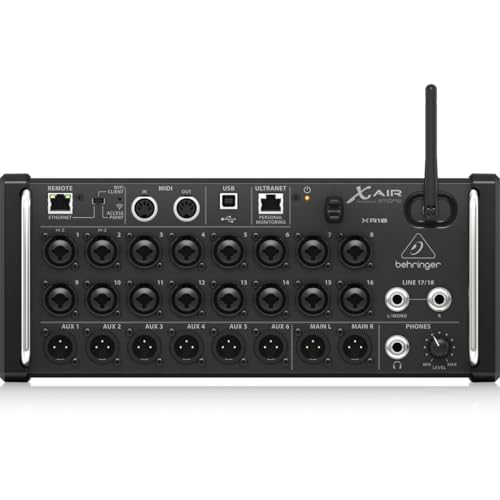
- 18-input digital mixer with tablet control
- 16 programmable Midas mic preamps
- Built-in Wi-Fi and 18x18 USB interface
Best For: Churches wanting remote digital mixing and recording flexibility
Best Simple Powered Setup
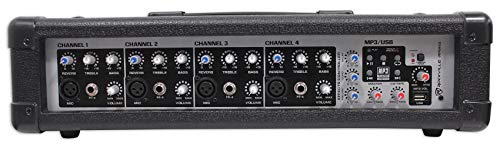
- Four-channel powered mixing console
- USB, effects, and phantom power included
- Dual 8-ohm speaker outputs
Best For: Small churches needing an all-in-one powered mixer
Best Analog Multitrack Option
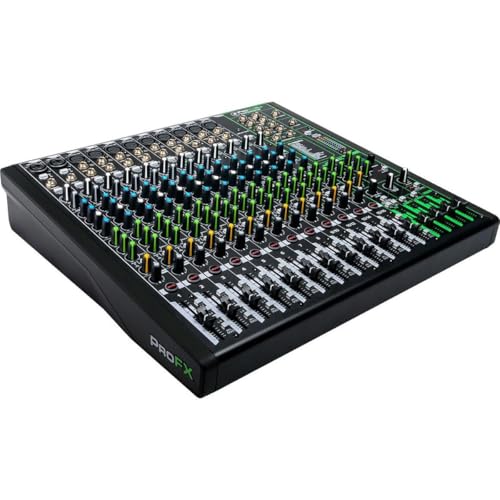
- 16-channel analog mixer
- 24 built-in GigFX effects
- USB multitrack recording interface
Best For: Churches wanting hands-on controls and simultaneous recording
Best Large-Scale Digital Control

- 40 inputs and 25 buses
- 32 programmable Midas mic preamps
- Motorized faders and 16 XLR outputs
Best For: Larger churches running complex multi-input productions
High-Power Choice

- 6000W peak powered output
- 14 mic preamps with phantom power
- USB, Bluetooth, effects, and recording
Best For: Large services and live events
Reliable Analog Workhorse

- Eight-channel analog layout
- Two configurable auxiliary buses
- Swept-mid EQ and RCA playback/record I/O
Best For: Small to midsize church systems
Connected All-Rounder

- 12 channels with XLR combo inputs
- Bluetooth and USB computer interface
- 16 DSP effects and 7-band EQ
Best For: Flexible services, events, and recording
Flexible Small-Church Mixer

- Eight XLR/1/4-inch input channels
- USB, Bluetooth, and recording support
- 3-band EQ, effects, and headphone monitoring
Best For: Small worship teams and church services with playback or livestreaming
Expandable Worship Console

- Sixteen channels for larger setups
- 99 DSP effects and 7-band main EQ
- USB, Bluetooth, mute, PAD, and 48V controls
Best For: Larger worship teams and church events with complex mixes
Compact Service Mixer

- Ultra-thin 8-channel design
- Bluetooth, MP3/USB, and recording features
- Reverb and 48V phantom power included
Best For: Small, portable church services and conference setups
Best Flexible Digital Control – Behringer X AIR XR18
The Behringer X AIR XR18 is a strong audio mixer for church sound when tablet control, multiple microphone inputs, and flexible routing matter. Its 18-input digital design includes 16 programmable Midas preamps, built-in Wi-Fi, and an 18×18 USB interface for recording or playback.
Best For: Churches needing remote tablet-based control for live services, rehearsals, or recording.
Pros:
- Control from iPad or Android tablets
- 16 programmable Midas-designed mic preamps
- Built-in tri-mode Wi-Fi router
- 18×18 bidirectional USB audio interface
Cons:
- Requires a tablet for its primary control interface
- Only the listed main outputs are two XLR outputs
The XR18 offers a compact, modern setup for churches that want digital mixing without a traditional control surface. Its tablet workflow and USB connectivity are especially useful for flexible service and recording setups.
Best Simple Powered Setup – Rockville RPM45 Powered Mixer
The Rockville RPM45 is an audio mixer for church sound that combines basic mixing with built-in amplification. This four-channel powered mixer includes USB connectivity, effects, phantom power, and dual 8-ohm speaker outputs for straightforward small-system setups.
Best For: Small churches, schools, and venues that need a compact mixer with powered speaker outputs.
Pros:
- Built-in powered output rated at 225 watts per channel at 8 ohms
- USB connectivity and onboard effects
- Includes +15V phantom power
- Dual 8-ohm 1/4-inch speaker outputs
Cons:
- Four channels provide less input capacity than the other mixers here
- Heavier and larger than a basic unpowered compact mixer
The RPM45 is aimed at users who want an uncomplicated all-in-one solution rather than a large channel count. Its powered outputs can simplify a small church sound system, provided four input channels are sufficient.
Best Analog Multitrack Option – Mackie ProFX16v3
The Mackie ProFX16v3 is a practical audio mixer for church sound when you want 16 channels without adopting a digital mixing workflow. It pairs Onyx preamps and 24 built-in GigFX effects with USB multitrack recording, allowing you to mix the room and record at the same time.
Best For: Churches and small venues that prefer hands-on analog controls with built-in recording.
Pros:
- 16-channel layout without a digital learning curve
- Onyx preamps provide up to 60 dB of gain
- 24 built-in GigFX effects
- USB multitrack recording interface included
Cons:
- Analog operation does not provide the same digital scene-management workflow as a digital mixer
- At 19.7 pounds, it is not especially lightweight
The ProFX16v3 balances familiar physical controls with useful USB recording features. It is a sensible choice for worship teams that want a conventional mixer while still capturing multitrack performances.
Best Large-Scale Digital Control – Behringer X32
The Behringer X32 is a large-format audio mixer for church sound, live production, and other systems needing extensive routing. It provides 40 inputs, 25 buses, 32 programmable Midas preamps, motorized 100 mm faders, and 16 XLR outputs for detailed control of complex services.
Best For: Larger churches and production teams managing many inputs, buses, outputs, and scenes.
Pros:
- 40-input, 25-bus digital mixing architecture
- 32 programmable Midas-designed mic preamps
- 25 automated motorized 100 mm faders
- 16 XLR outputs and integrated talkback section
Cons:
- Large and heavy at 45.4 pounds
- More mixer capacity than a small church may need
- Requires more space than compact mixer designs
The X32 is built for teams that need substantial input and output capacity rather than a minimal setup. Its motorized faders and scene-management features can help organize repeatable, complex worship productions.
High-Power Choice – Rockville RPM1470
The Rockville RPM1470 is a high-output audio mixer for church sound setups that need numerous microphone inputs, built-in effects, and direct playback or recording options. Its powered design is specified at 6000W peak, with 14 XDR2 mic preamps, phantom power, and separate graphic EQ control for main and monitor outputs.
Best For: Large church services, events, and live setups with multiple microphones and powered speaker systems.
Pros:
- 14 XDR2 mic preamps with +48V phantom power support condenser microphones.
- Built-in USB and Bluetooth support playback, while USB or SD recording adds convenient mix capture.
- Dual 7-band graphic EQs and 16 built-in 24-bit effects provide flexible sound shaping.
- Powered output is rated at 6000W peak, or 750W RMS per channel at 4 ohms.
Cons:
- At 28.9 pounds, it is less convenient to move than the lighter mixers in this roundup.
- Its larger powered-mixer design may be more capability than a small worship setup needs.
Choose the RPM1470 when your priority is a powerful, feature-rich console that can handle larger live environments. The onboard effects, recording, wireless streaming, and monitor EQ make it versatile, though its size and weight favor a dedicated installation or substantial event rig.
Reliable Analog Workhorse – Soundcraft EPM8 Mixer
The Soundcraft EPM8 is a straightforward audio mixer for church sound applications that value practical analog control and essential routing. It provides eight channels, configurable auxiliary buses, XLR and quarter-inch connections, and dedicated playback and recording I/O.
Best For: Small to midsize church sound systems needing dependable analog mixing and auxiliary routing.
Pros:
- Eight channels provide a focused setup for microphones and other sources.
- Two configurable auxiliary buses support flexible monitoring or effects routing.
- Mono inputs include 3-band EQ with swept mid control for more precise shaping.
- RCA phono playback inputs and record outputs simplify integration with external devices.
Cons:
- It does not list built-in Bluetooth, USB recording, or onboard digital effects.
- Eight channels may be limiting for larger congregations or more complex stage setups.
The EPM8 is a sensible pick for teams that want clear, hands-on analog operation without the extra features of a digital-oriented console. Its auxiliary buses and swept-mid EQ are particularly useful when the church system needs practical monitor and tone-control options.
Connected All-Rounder – Pyle PMXU128BT Mixer
The Pyle PMXU128BT is a flexible audio mixer for church sound setups that need multiple combo inputs plus modern playback and recording connectivity. Its 12-channel layout includes USB, Bluetooth, a USB soundcard interface, +48V phantom power, 16 DSP effects, and a 7-band EQ.
Best For: Churches seeking an affordable, versatile console for services, events, recording, and wireless playback.
Pros:
- 12 channels and XLR combo inputs accommodate a range of microphones and line-level sources.
- Bluetooth supports wireless streaming from phones, tablets, and other compatible devices.
- USB connectivity enables computer recording and connection to Mac or PC systems.
- 16 DSP effects, +48V phantom power, and a 7-band EQ expand its live-use flexibility.
Cons:
- The supplied details do not specify powered speaker output, so an external amplifier or powered speakers may be needed.
- Its 10.6-pound weight is portable, but the console still has a relatively deep 21.4-inch footprint.
For churches wanting a broad feature set without moving to a more specialized console, the PMXU128BT combines useful connectivity with hands-on controls. It is especially appealing when the same mixer must cover live sound, media playback, and computer recording.
Flexible Small-Church Mixer – 8-Channel USB Audio Mixer
If you need an audio mixer for church sound in a compact setup, this 8-channel console offers practical connectivity for microphones, instruments, playback devices, and monitoring. Its USB, Bluetooth, and recording features also suit services that incorporate backing tracks, livestreaming, or basic recording.
Best For: Small church services, worship teams, meetings, and livestream setups needing versatile inputs and simple effects.
Pros:
- Eight channels include XLR and unbalanced 1/4-inch inputs for connecting multiple sources.
- USB playback and recording, Bluetooth streaming, and REC/TAPE connections support flexible media handling.
- Each channel provides gain, 3-band EQ, FX, PFL, and a fader, with reverb and delay effects available.
- Headphone monitoring and LED peak indicators help with basic level checking.
Cons:
- Eight channels may be limiting for larger worship teams or more complex church installations.
- The supplied details do not specify software-update support.
This mixer is a sensible choice when a church needs straightforward analog-style control, multiple microphone inputs, and convenient playback or recording without moving to a larger console.
Expandable Worship Console – 16-Channel Digital Mixer
For church sound systems with several microphones, instruments, and playback sources, this 16-channel mixer provides more connection capacity and deeper sound-shaping controls. Its mute buttons, main-output EQ, DSP effects, and independent phantom-power control are useful for managing a busy service mix.
Best For: Larger worship teams, multi-microphone services, church events, and operators who want extensive onboard processing.
Pros:
- Sixteen channels provide room for microphones, instruments, and stereo line sources.
- Ninety-nine DSP effects offer presets for live performance and other audio situations.
- Individual channel controls include gain, EQ, AUX, pan, and mute, while the main output adds a 7-band EQ.
- Independent 48V phantom power, PAD switching, Bluetooth, and USB playback/recording broaden setup options.
Cons:
- The larger control set may require more setup experience than a basic church mixer.
- The supplied specifications do not provide complete item dimensions.
With its extra channels and more extensive processing, this is the strongest fit of the three for a church that expects a growing input list or wants more control over the main mix.
Compact Service Mixer – CT-80S 8-Channel Console
This compact 8-channel console is an option for church sound systems that need microphone and instrument connections alongside Bluetooth and USB playback. Its ultra-thin chassis, MP3 player, reverb, and 48V phantom power make it suited to smaller services, conferences, and worship events.
Best For: Small churches, campus services, conferences, family KTV-style events, and portable setups.
Pros:
- Eight channels support wired, wireless, condenser, and instrument connections according to the supplied notes.
- Built-in Bluetooth 5.0, MP3/USB input, and USB recording support playback and basic recording tasks.
- Includes reverb, 48V phantom power, and an LED display for operating visibility.
- Its approximately 1.57-inch ultra-thin design is convenient when space is limited.
Cons:
- Eight channels offer less expansion room than the 16-channel alternative.
- The supplied notes identify a 110V American plug, which may require compatibility checks in other regions.
This model emphasizes portability and media convenience rather than extensive channel capacity, making it a practical audio mixer for church sound when the input list is modest and space matters.
How We Picked the Best Audio Mixer for Church Sound
We focused on the features that matter most in real church environments: available microphone and line inputs, phantom power, routing flexibility, built-in effects, monitoring options, connectivity, portability, and ease of operation. We also considered whether each mixer suits volunteer-led services, recurring worship teams, livestreaming, or larger multi-channel productions.
Because churches have different technical requirements, this list includes compact analog consoles, powered mixers with built-in amplification, and digital mixers that offer deeper control through a tablet or computer. No single board is ideal for every sanctuary, so the right choice should match your current system and likely future needs.
Quick Comparison
Compact 8-channel mixers are useful for small churches, speech-focused events, and simple acoustic setups. Models with 12 to 16 channels provide more room for multiple vocalists, instruments, playback devices, and auxiliary feeds. Larger digital consoles such as the X AIR XR18 and X32 are better suited to worship bands, monitor mixes, recording, and detailed signal management.
Powered mixers can simplify a basic setup by combining mixing and amplification in one enclosure, but they may be less flexible than a separate mixer and amplifier system. USB, Bluetooth, and built-in effects are convenient for playback, recording, and streaming, while remote digital control is especially helpful when the operator needs to mix from the room.
Key Buying Factors for an Audio Mixer for Church Sound
Input Count and Expansion
Count every microphone, instrument, playback source, livestream feed, and future connection before buying. Leave spare inputs for guest speakers, additional musicians, or new ministry programs.
Analog Versus Digital Control
Analog mixers are usually straightforward and quick to learn. Digital mixers offer scene recall, deeper routing, compression, equalization, multiple monitor mixes, and remote control, but they require more setup knowledge and dependable network operation.
Outputs and Monitoring
Check the number of main, monitor, auxiliary, and subwoofer outputs. A worship band may need separate mixes for stage wedges, in-ear monitors, overflow rooms, and a recording or livestream feed.
Speech Clarity and Effects
Look for useful equalization, high-pass filtering, compression, and reverb controls. These features can improve vocal intelligibility, but excessive effects may make sermons and announcements harder to understand.
Power, Connectivity, and Reliability
Choose powered equipment only when its amplifier capacity matches your speakers. USB recording, Bluetooth playback, and phantom power can add flexibility, while sturdy controls, simple cabling, and dependable support matter for volunteer-operated systems.
Who Should Buy Which Audio Mixer for Church Sound?
Small congregations and simple speaking or acoustic setups should consider an 8-channel mixer with essential inputs and straightforward controls. Churches adding several vocalists, instruments, or playback sources may benefit from a 12- or 16-channel board.
Choose a powered mixer when you want a compact solution for passive speakers and mobile events. Select a digital mixer when you need saved settings, multiple monitor mixes, recording, livestream integration, or control from different positions in the room. Larger worship teams and production crews should prioritize generous input capacity, flexible buses, and room to expand rather than choosing solely by price.