
Choosing the right studio monitors can improve mixing decisions, translation, and everyday listening. Models with built-in DSP add digital tuning, room correction, or speaker voicing features that help compensate for placement and acoustic challenges.
Our roundup covers compact desktop monitors, near-field speakers, and professional options from IK Multimedia, Neumann, Yamaha, KRK, ADAM Audio, and Edifier. Use the guide below to compare features and match each type to your room, workflow, and budget.
Best 10 Studio Monitors with Built in Dsp Picks for 2026
Best Compact Calibration Pick

- ARC room correction and ARC X emulation tools
- 36 Hz–32 kHz response with precise time alignment
- Tabletop and mic-stand mounting options
Best For: Critical mixing and production in compact or untreated spaces
Best Professional DSP Reference

- Built-in DSP engine for professional monitoring
- Mathematically modeled dispersion waveguide
- Compact 4-inch nearfield design
Best For: Nearfield monitoring in project, broadcast, and post-production studios
Best Desktop Connectivity
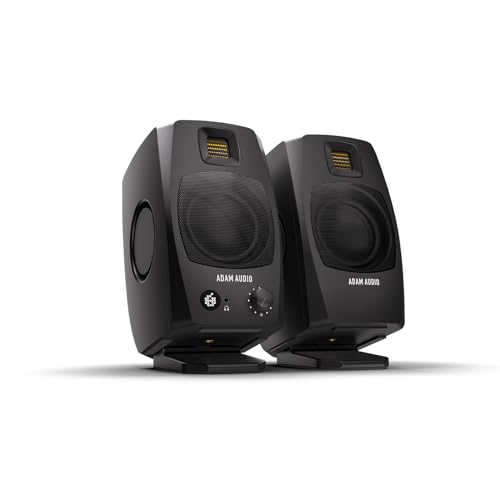
- DSP switches address common placement issues
- USB-C, TRS, and RCA connectivity
- D-ART tweeter with 45 Hz low-frequency extension
Best For: Desktop production with computers, mobile devices, and compact workstations
Best Straightforward Studio Pair

- 5-inch bi-amplified nearfield monitors
- 54 Hz–30 kHz frequency response
- Balanced and unbalanced XLR/TRS inputs
Best For: Music production with conventional analog studio connections
Accessible Creator Pick
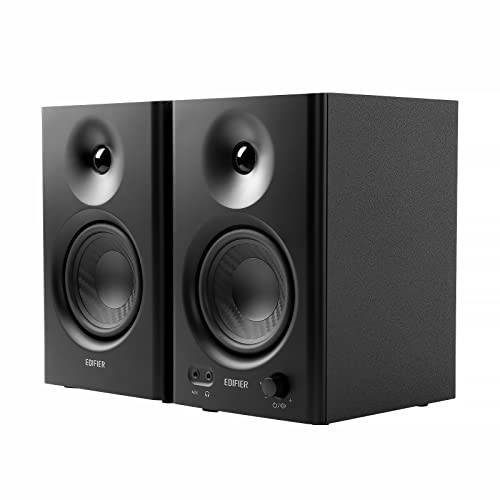
- Near-flat tuning for music creation
- Balanced TRS plus RCA and AUX inputs
- Selectable monitor and music modes
Best For: Compact home creator setups
Compact Reference Choice

- 4.5-inch woofer and 1-inch tweeter
- Room control and high-trim adjustments
- XLR/TRS, RCA, and stereo-mini inputs
Best For: Desktop production and video editing
Advanced DSP Reference

- Advanced DSP with app control
- IP network connectivity
- Bi-amped 4-inch monitor pair
Best For: DSP-equipped near-field monitoring
Balanced Room Control

- 73-watt self-powered 7-inch monitor
- Bi-amped Class A/B amplification
- Front port and low/high level controls
Best For: Studio mixing with flexible near-wall placement
Connected Compact Choice

- App-based EQ and three listening modes
- Bluetooth multipoint plus balanced TRS
- 18W x 2 RMS compact monitor design
Best For: Desktop studios and versatile near-field listening
Pair for Stereo Mixing

- Two matched 73-watt 7-inch monitors
- Bi-amped Class A/B amplification
- Front ports and frequency controls
Best For: Stereo recording and mixing setups
Best Compact Calibration Pick – iLoud MTM MKII Pair
If you need studio monitors with built in dsp for a compact workspace, the IK Multimedia iLoud MTM MKII pair combines room-correction tools, precise time alignment, and a broad 36 Hz–32 kHz response. The included ARC mic supports calibration, while ARC X software adds monitor and reference-system emulations.
Best For: Critical mixing, mastering, and production in small or acoustically inconsistent rooms.
Pros:
- ARC room correction helps address room and placement inconsistencies.
- Precise time alignment supports accurate imaging and reduced phase distortion.
- Compact pair offers tabletop stands and mic-stand mounting options.
- Broad frequency response and 200 watts of maximum output support detailed monitoring.
Cons:
- Calibration depends on the ARC microphone and software workflow.
- The 3.5-inch speaker design may not suit listeners seeking a larger nearfield presentation.
The iLoud MTM MKII is a strong choice when calibration flexibility and compact placement matter more than conventional cabinet size. Its DSP-based ARC tools make it especially adaptable for home studios and multipurpose rooms.
Best Professional DSP Reference – Neumann KH 80 DSP
The Neumann KH 80 DSP is a professional nearfield monitor for buyers seeking studio monitors with built in dsp and a compact 4-inch format. Its DSP engine and mathematically modeled dispersion waveguide are designed for controlled reference monitoring in project, broadcast, post-production, and home studios.
Best For: Professional nearfield monitoring, post-production, broadcast work, and multi-channel systems.
Pros:
- Built-in DSP supports controlled, adaptable monitoring.
- Mathematically modeled dispersion waveguide helps manage sound distribution.
- Compact 4-inch monitor suits nearfield and space-conscious setups.
- Supports tabletop or floor-standing placement and app control.
Cons:
- Listed as a single monitor, so a stereo setup requires two units.
- The 57 Hz low-frequency specification is less extended than larger monitors.
- Its professional feature set may be more than casual listeners need.
The KH 80 DSP prioritizes controlled, professional monitoring in a small enclosure. It is a sensible fit for users who value Neumann’s waveguide design and DSP functionality for focused nearfield work.
Best Desktop Connectivity – ADAM Audio D3V
For a desktop-focused setup, the ADAM Audio D3V is one of the more convenient studio monitors with built in dsp. USB-C connectivity works with computers and mobile devices, while DSP-powered switches help address common placement issues. Its D-ART tweeter and passive radiators extend the system down to 45 Hz.
Best For: Songwriters, producers, and desktop users who want USB-C connectivity and placement controls.
Pros:
- DSP-powered switches help compensate for common speaker-placement issues.
- USB-C, balanced 1/4-inch inputs, and RCA compatibility support flexible connections.
- D-ART tweeter is designed for precise, unfatiguing high-frequency reproduction.
- Included angled stands and mic-stand mounting support ergonomic placement.
Cons:
- The desktop-oriented 3.5-inch woofer format may provide less scale than larger monitors.
- Its feature set is centered on near-desktop use rather than larger-room monitoring.
The D3V stands out for modern desktop workflows, especially when direct USB-C connection is important. Its DSP switches and included stands add practical setup flexibility without requiring a separate interface for compatible devices.
Best Straightforward Studio Pair – Yamaha HS5 Pair
The Yamaha HS5 pair is a straightforward monitoring option for buyers comparing studio monitors with built in dsp but who may prefer conventional analog controls. These bi-amplified 5-inch monitors emphasize sonic purity, offer 54 Hz–30 kHz response, and accept balanced or unbalanced XLR and TRS connections.
Best For: Music production and studio monitoring with a familiar analog nearfield setup.
Pros:
- Includes two 5-inch powered studio monitors for stereo monitoring.
- Bi-amplified design provides 45 watts of LF and 25 watts of HF power.
- XLR and TRS inputs accept balanced or unbalanced signals.
- Designed to emphasize the original sound without added coloration.
Cons:
- The supplied notes do not identify built-in DSP or digital room correction.
- Its 54 Hz low-frequency response is less extended than some compact DSP alternatives.
- Placement flexibility is more limited than monitors offering dedicated DSP controls.
The HS5 pair is best viewed as a conventional, no-frills reference option rather than a DSP-equipped monitor. Choose it when accurate, uncolored monitoring and standard XLR/TRS connectivity matter more than app-based calibration.
Accessible Creator Pick – Edifier MR4
The Edifier MR4 is a practical entry point for shoppers seeking studio monitors with built in dsp-style workflow flexibility, though its supplied features focus on analog controls rather than DSP processing. Its 1-inch silk-dome tweeter, 4-inch composite woofer, MDF enclosure, and near-flat tuning are suited to basic music creation, recording, and computer listening.
Best For: Home creators who want compact, wired monitors with selectable monitor and music modes.
Pros:
- Near-flat tuning is intended for music production and creator use.
- Offers balanced 1/4-inch TRS, RCA, AUX, and front headphone connections.
- Separate high- and low-frequency controls provide straightforward adjustment.
- Monitor and music modes support production and casual listening.
Cons:
- The supplied notes do not identify built-in DSP processing.
- The 4-inch woofer and 42-watt maximum output are aimed at compact setups.
- It is not waterproof.
The MR4 makes sense when flexible analog connectivity and simple controls matter more than networked or app-based DSP calibration. It is a capable tabletop option for smaller workspaces and general creator duties.
Compact Reference Choice – Yamaha HS4
The Yamaha HS4 is a compact pair for buyers comparing studio monitors with built in dsp, although the supplied specifications describe room-control and high-trim response controls rather than DSP. Its 4.5-inch woofer, 1-inch tweeter, and 60 Hz–22 kHz response make it a practical fit for music production and video-editing workstations.
Best For: Desktop producers and editors who need a compact Yamaha monitor pair with multiple wired inputs and basic response controls.
Pros:
- Pair packaging provides a stereo monitoring setup.
- Room control and high-trim controls help tailor response to the workspace.
- Accepts XLR/TRS combo, RCA, and stereo-mini connections.
- Includes speaker cables, a stereo mini-to-RCA cable, and anti-slip pads.
Cons:
- The supplied notes do not specify built-in DSP functionality.
- Output is listed at 26 watts and above 26 watts, so it is designed for near-field use.
- It is not water resistant.
The HS4 is a sensible choice when familiar studio-monitor connectivity and basic acoustic-response adjustments are priorities. Buyers specifically requiring app-based or networked DSP should verify that capability separately, since it is not stated in the supplied details.
Advanced DSP Reference – Neumann KH 80 DSP
Neumann KH 80 DSP 4" Active 2-Way Studio Monitor (Gray, Pair) with (2) Isolation Pad, Medium Bundle
Check Price On AmazonThe Neumann KH 80 DSP is the clearest match for shoppers seeking studio monitors with built in dsp. This bundled pair combines 4-inch woofers, 1-inch tweeters, bi-amped power, advanced DSP, app control, and IP network connectivity, with isolation pads included for tabletop placement.
Best For: Serious desktop or small-room monitoring setups that need DSP features, app control, and network connectivity.
Pros:
- Built-in advanced DSP is explicitly listed.
- App control and IP network connectivity support a more flexible setup.
- Bi-amped design provides 120 watts for LF and 70 watts for HF.
- Includes two monitors and two medium isolation pads.
Cons:
- The supplied connectivity specification lists XLR only.
- Its 4-inch woofer is intended for near-field monitoring rather than large-room output.
- The advanced feature set may be more than needed for casual computer listening.
Among these options, the KH 80 DSP is the strongest fit for the target keyword because DSP, app control, and network connectivity are directly specified. It is the most feature-focused choice for users who want more than basic analog response adjustments.
Balanced Room Control – KRK Classic 7 Single Monitor
The KRK Classic 7 is a practical choice for shoppers comparing studio monitors with built in dsp, especially if you want a self-powered 7-inch monitor with straightforward analog connections and basic room-response adjustment. Its 73-watt output, bi-amped Class A/B design, and front-firing port suit near-wall placement and demanding studio work.
Best For: Studio recording and mixing setups that need a powerful single monitor with flexible placement.
Pros:
- 73-watt, self-powered 7-inch design requires no external amplifier.
- Bi-amped Class A/B amplifiers are matched to the drivers for high headroom and low distortion.
- Front-firing port supports placement closer to walls.
- Dedicated low- and high-frequency controls help tailor the response to the room.
Cons:
- This listing is for one monitor, so a stereo setup requires two units.
- It has wired RCA, 1/4-inch TRS, and XLR connectivity rather than wireless audio.
- The supplied notes do not identify built-in DSP processing; its adjustment features are analog level controls.
The Classic 7 is a solid option when output, durability, and placement flexibility matter more than app-based processing. Remember to budget for a second monitor if you are building a stereo pair.
Connected Compact Choice – Edifier MR3 Powered Monitor
The Edifier MR3 is a compact option for shoppers seeking studio monitors with built in dsp and convenient everyday connectivity. It offers Monitor, Music, and Custom modes, with deeper EQ adjustment through the EDIFIER ConneX app, alongside balanced TRS, RCA, AUX, Bluetooth, and a headphone output.
Best For: Home studios, near-field listening, video editing, and users who want app-based sound customization.
Pros:
- Hi-Res Audio certified with a stated 52Hz–40kHz flat response.
- 18W x 2 RMS output, 3.5-inch mid-low drivers, and 1-inch tweeters provide full-range sound.
- Monitor, Music, and Custom modes support different listening tasks.
- Bluetooth multipoint and balanced TRS, RCA, AUX, and headphone connections offer flexibility.
Cons:
- Its 3.5-inch mid-low drivers are smaller than those in the 7-inch KRK models.
- Maximum output is listed as 42 watts, making it less suited to louder monitoring environments.
- Bluetooth and app features may be unnecessary for a strictly wired studio workflow.
The MR3 stands out for its compact format, versatile inputs, and app-controlled EQ. It is a sensible fit for a desktop or home studio where convenience and multiple listening modes are priorities.
Pair for Stereo Mixing – KRK Classic 7 Monitor Pair
This KRK Classic 7 pair is a convenient starting point for shoppers comparing studio monitors with built in dsp who need two matched monitors for stereo work. Each 7-inch monitor is self-powered at 73 watts, uses bi-amped Class A/B amplification, and includes low- and high-frequency adjustment controls.
Best For: Stereo studio recording and mixing setups that need a complete pair of matched 7-inch monitors.
Pros:
- Includes two 73-watt, self-powered 7-inch monitors.
- Bi-amped Class A/B amplifiers are matched to the drivers.
- Front-firing ports allow more flexible placement near walls.
- Low- and high-frequency controls help accommodate room acoustics and personal preference.
Cons:
- The supplied notes do not identify built-in DSP; adjustment is described through dedicated frequency-level controls.
- No wireless communication technology is listed.
- The larger 7-inch cabinets may require more desk or stand space than compact monitors.
For buyers who need stereo monitoring without purchasing a second speaker separately, this pair offers a straightforward and powerful setup. Its analog controls and front ports are useful for practical room placement, though it is not the clearest match for app-based DSP features.
How We Picked the Best Studio Monitors with Built in Dsp
We selected models across several use cases, including compact desktop production, home studios, professional near-field monitoring, and general music playback. We considered driver size, amplification, room-correction or DSP features, connectivity, stereo configuration, placement flexibility, and overall practicality. Because the list includes both dedicated DSP monitors and capable active speakers with related studio-monitor designs, verify the exact feature set before buying.
Built-in DSP can include equalization presets, speaker emulation, crossover management, or calibration with a measurement microphone. It is not a substitute for acoustic treatment, careful placement, or a reliable listening position, but it can make a monitor easier to integrate into a real room.
Quick Comparison
- Best for advanced room correction: IK Multimedia iLoud MTM MKII, supplied with an ARC measurement microphone.
- Best compact professional option: Neumann KH 80 DSP, especially where precise near-field monitoring matters.
- Best desktop-focused choice: ADAM Audio D3V for small workspaces and close listening.
- Best familiar mixing reference: Yamaha HS5 or HS4, depending on the required size and output.
- Best value-oriented options: Edifier MR4 or MR3 for casual production, editing, and everyday playback.
- Best larger two-way option: KRK Classic 7 when a bigger cabinet and stronger low-end reach are priorities.
Key Buying Factors for Studio Monitors with Built-In DSP
Room Size and Listening Distance
Choose a monitor that suits your listening position. Compact four-inch models work well on desks and in small rooms, while seven-inch monitors generally need more space and a greater listening distance. Oversized speakers in a small, untreated room can make bass harder to judge.
Calibration and Control
Look at what the DSP actually does. Room measurement and automatic correction offer more integration help than simple EQ switches, while presets can be useful for adapting to placement. Check whether calibration requires an included microphone, a separate accessory, software, or a specific connection.
Inputs, Placement, and Power
Balanced inputs are valuable for studio interfaces because they help reduce noise over longer cable runs. Desktop users may also want convenient volume controls, Bluetooth, or unbalanced inputs. Check rear-panel clearance, horizontal or vertical placement options, isolation, and whether the pair includes both powered and passive cabinets.
Low-End Expectations
Smaller monitors can deliver clear midrange detail but may not reproduce deep bass with the same authority as larger models or a subwoofer. If you produce bass-heavy music, prioritize extension, room compatibility, and a possible subwoofer upgrade rather than judging size by wattage alone.
Who Should Buy Which Studio Monitors with Built in Dsp?
Choose the iLoud MTM MKII if automatic ARC calibration and a compact footprint are central to your setup. Choose the Neumann KH 80 DSP for a more professional monitoring system with precise control and strong near-field performance. The ADAM D3V suits creators working primarily at a desk.
The Yamaha HS5 remains a practical choice for focused mixing, while the HS4 is better suited to smaller spaces and simpler systems. Consider the KRK Classic 7 when you want a larger monitor with fuller output. The Edifier MR4 and MR3 are sensible entry-level choices for editing, content creation, and mixed studio-and-home use.