
Building layered performances at home does not require a full production rig. The right loop station can help you capture guitar, bass, vocals, rhythms, and effects while keeping your workflow immediate and creative.
This roundup covers dedicated loop pedals, drum-loop options, multi-effects units, and desktop production stands so you can match your setup to your space, playing style, and recording goals.
Best 10 Loop Stations for Home Studios Picks for 2026
Best Beginner Pick

- Simple controls for recording and overdubbing
- 12 minutes of stereo recording time
- 24-segment loop-status indicator
Best For: Guitar, bass, and keyboard players wanting an easy stompbox looper
Best Compact Gear Riser
Headliner 55° Desktop Production Stand

- Angled 55-degree design for easier access
- Adjusts from 8.25 to 13 inches wide
- Steel frame with non-slip rubber pads
Best For: Keyboard players organizing desktop production gear
Best for Extended Loop Storage

- Nine loops and 40 minutes total recording
- USB WAV import and export
- Built-in tuner with uncompressed 48 kHz/24-bit audio
Best For: Guitarists needing long loop storage and computer transfer
Best Large-Format Stand
Headliner Large Desktop Production Stand
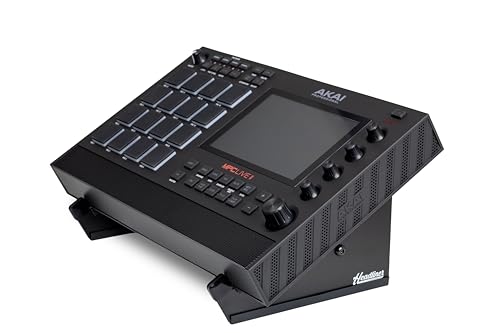
- Designed for larger desktop gear
- Compatible with BOSS RC-505 and similar devices
- Adjustable 8.25–13-inch width with angled placement
Best For: Producers positioning large loopers and controllers on a desk
Versatile Stereo Looper

- 77 slots and about 300 minutes of stereo recording
- Auto Record and adjustable Fade Out controls
- Imports common audio formats and exports WAV files
Best For: Home-studio guitarists and bassists needing extensive stereo loop storage
Multi-Effects Practice Station
MOOER GE100 Multi-Effects Looper

- 180-second looper with built-in drum machine
- 66 effects and 160 total preset/user patches
- Expression pedal, tuner, headphone out, and line-out mode
Best For: Players wanting looping plus effects and rhythms in one unit
Drum-Enhanced Loop Station
FLAMMA FF20 Looper and Drum Machine

- 300 minutes of recording across 100 loop slots
- 220 drum grooves in 11 styles
- Color screen, time stretch, USB transfer, and headphone out
Best For: Solo musicians building layered arrangements and practicing silently
Flexible Guitar Looping

- 11 playback modes for creative looping
- 10-minute recording capacity
- 24-bit sampling with zinc-alloy housing
Best For: Guitarists seeking varied playback effects and extended loop recording
Looping With Drums

- 140 minutes of stereo loop storage
- 121 grooves across 11 genres
- Import and export support through editor software
Best For: Home-studio players who want stereo loops and built-in rhythm accompaniment
High-Capacity Practice Hub

- 300 minutes of stereo recording in 100 slots
- 220 drum grooves across 11 styles
- Color screen, USB transfer, and headphone output
Best For: Players who prioritize extensive storage and silent home practice
Best Beginner Pick – BOSS RC-1 Loop Station
For musicians seeking approachable loop stations for home studios, the BOSS RC-1 keeps the core looping workflow simple. It supports recording, playback, overdubbing, and undo/redo, while its 24-segment indicator makes the current loop mode easy to monitor.
Best For: Guitar, bass, and keyboard players who want a straightforward stompbox looper.
Pros:
- Simple record, overdub, playback, undo, and redo controls
- 12 minutes of stereo recording time
- Stereo inputs and outputs with memory retention after power-off
- Includes a 9-volt battery and supports an optional PSA-series adapter
Cons:
- Optional AC adapter is sold separately
- Offers less memory and connectivity than the LEKATO model
The RC-1 is a practical choice when ease of use matters more than extensive storage or computer-based loop management. Its clear indicator and familiar pedal format suit compact home setups.
Best Compact Gear Riser – Headliner 55° Desktop Production Stand
Loop stations for home studios are easier to use when they are positioned within reach. This adjustable Headliner stand raises compatible production gear to a 55-degree angle, helping keyboard players access additional devices without moving away from the keyboard.
Best For: Keyboard-based home studios that need a compact angled stand for effects modules, drum machines, samplers, or synths.
Pros:
- 55-degree angle improves access to controls and screens
- Width adjusts from 8.25 to 13 inches
- Solid steel construction with non-slip rubber pads
- Helps organize more gear on a production desk
Cons:
- It is a stand rather than a loop station or audio device
- Designed for larger desktop gear, so compatibility should be checked
This stand is a useful workflow accessory rather than a looping solution itself. Its adjustable width and angled design can make a desktop looper or effects module easier to see and operate.
Best for Extended Loop Storage – LEKATO Guitar Looper Pedal
For home studios that need more phrase storage, the LEKATO combines a looper with a tuner and USB file transfer. It provides nine loops, up to 40 minutes of total recording time, and uncompressed 48 kHz/24-bit audio.
Best For: Guitarists who want long recording times, multiple saved loops, and computer-based WAV import and export.
Pros:
- Nine loops with up to 40 minutes of total recording time
- Supports up to 10 minutes for a single recording
- USB import and export for WAV loop files
- Built-in tuner and unlimited overdubbing
Cons:
- USB file management may be more than beginners need
- Supplied notes identify it primarily as a guitar looper, not a broader keyboard-oriented unit
The LEKATO is a strong fit when storage and loop portability are priorities. Its included USB cable and 9V power adapter make it convenient for a home setup that mixes pedal use with computer editing.
Best Large-Format Stand – Headliner Large Desktop Production Stand
A large desktop stand can improve access to loop stations for home studios and other production hardware. This Headliner model is designed for devices such as the BOSS RC-505, Ableton Push, MPC units, and Maschine, with an angled surface for easier control access.
Best For: Home producers using larger desktop loopers, samplers, drum machines, or controller-style production gear.
Pros:
- Fits larger devices including the BOSS RC-505 Loop Station
- Angled design makes knobs and screens easier to reach and view
- Adjustable width from 8.25 to 13 inches
- Steel construction and non-slip rubber pads support stable placement
Cons:
- It does not provide looping, audio processing, or recording functions
- Users should confirm their device fits the stated adjustable width
This is the more suitable Headliner option for larger tabletop loopers and production controllers. It helps clear desk space and places controls at a more accessible angle without adding electronic features.
Versatile Stereo Looper – MOOER Looper X2
For home studios that need substantial loop storage without a computer, the MOOER Looper X2 is a practical choice among loop stations for home studios. It provides stereo recording, 77 save slots, and approximately 300 minutes of total recording time, with import and export support through its editor software.
Best For: Guitarists and bassists who want a compact stereo looper with extensive memory, automatic recording, and fade-out control.
Pros:
- 77 save slots across 11 banks and approximately 300 minutes of stereo recording.
- 44.1kHz/24-bit recording with stereo 1/4-inch inputs and outputs.
- Auto Record, adjustable Fade Out, and separate recording and playback volume controls.
- Supports MP3, WAV, FLAC, and APE imports, plus WAV exports through editor software.
Cons:
- Requires a 9V DC, 300mA center-negative adapter.
- The compact dual-footswitch layout may require an external footswitch for expanded track cycling.
The X2 stands out when storage capacity and stereo operation matter most. Its editor connectivity and practice-friendly automation make it well suited to building layered ideas in a home setup.
Multi-Effects Practice Station – MOOER GE100 Multi-Effects Looper
The MOOER GE100 combines looping with amp-style effects, rhythm patterns, and an expression pedal, making it a flexible option among loop stations for home studios. Its 180-second looper works alongside 66 effect types and a built-in drum machine for computer-free practice and songwriting.
Best For: Players who want a looper, effects processor, drum machine, tuner, and expression control in one pedal.
Pros:
- Offers 80 preset patches and 80 user patches for storing tones.
- Includes 66 effect types across eight effect modules.
- Provides a 180-second looper and drum machine with 40 rhythm patterns.
- Includes an assignable expression pedal, headphone output, tuner, and line-out mode.
Cons:
- Its 180-second looper has less recording time than the dedicated loopers in this roundup.
- The larger multi-effects format may be more than users seeking a simple looper need.
The GE100 is best viewed as an all-in-one practice and sketching tool rather than a dedicated high-capacity looper. Its effects, rhythms, and expression control can help a home-studio player develop complete ideas without additional gear.
Drum-Enhanced Loop Station – FLAMMA FF20 Looper and Drum Machine
The FLAMMA FF20 is a feature-rich option for loop stations for home studios, pairing 300 minutes of stereo recording with 100 memory slots and 220 drum grooves. Its full-color screen, USB file transfer, time stretching, and headphone output make it especially useful for arranging and practicing at home.
Best For: Solo musicians who want layered loops, built-in rhythms, visual status information, and silent headphone practice.
Pros:
- Stores up to 300 minutes of stereo recordings across 100 loop slots.
- Includes 220 drum grooves across 11 styles for standalone practice and jamming.
- Full-color screen displays loop status, recording time, BPM, and drum patterns.
- Offers time stretch, Auto Record, One-Shot mode, Fade Out, USB file transfer, and headphone output.
Cons:
- Its feature-rich interface may take longer to learn than a basic looper pedal.
- USB file transfer requires the included editor software.
- It uses a corded 9V power setup rather than battery power.
The FF20 is a strong fit for musicians who want a complete practice and songwriting station. Its drum library and headphone output broaden its usefulness beyond straightforward loop recording, while the screen helps keep complex sessions organized.
Flexible Guitar Looping – ACAGALA Guitar Looper Pedal
For guitarists comparing loop stations for home studios, the ACAGALA Guitar Looper offers a straightforward way to build extended parts and experiment with sound. It combines 11 playback types, 10 minutes of recording time, and 24-bit sampling in a compact zinc-alloy pedal.
Best For: Guitarists who want extended recording time and varied playback effects in a durable pedal.
Pros:
- Offers 11 playback modes for experimenting with different loop sounds.
- Provides up to 10 minutes of recording time for longer, layered ideas.
- Uses 24-bit sampling and a rugged zinc-alloy construction.
Cons:
- Its supplied features focus on guitar effects and looping rather than built-in drums or file transfer.
- There is no stated headphone output or onboard display in the supplied details.
The ACAGALA is a focused option for guitar-based looping, especially if playback variety and a sturdy enclosure matter more than advanced studio-management features.
Looping With Drums – MOOER Groove Loop X2
The MOOER Groove Loop X2 is a strong contender among loop stations for home studios when you want rhythm accompaniment as well as looping. Its stereo looper, drum machine, save slots, and editor software support both practice and more structured recording workflows.
Best For: Musicians who want stereo looping paired with a broad selection of built-in drum grooves.
Pros:
- Stores up to 140 minutes of stereo loops across 14 save slots.
- Includes 121 drum grooves across 11 musical genres.
- Supports time stretch, automatic tempo detection, and separate routing for looper and drum-machine audio.
- Allows MP3, WAV, FLAC, and APE imports plus WAV export through editor software.
Cons:
- Requires a 9V DC, 300mA adapter.
- The supplied details do not mention a headphone output or built-in screen.
With stereo operation, extensive rhythm choices, and file-management support, the Groove Loop X2 suits home-studio users who want a pedal that can provide both accompaniment and repeatable loop storage.
High-Capacity Practice Hub – FLAMMA FF20 Looper Pedal
The FLAMMA FF20 is designed for loop stations for home studios where storage, rhythm options, and quiet practice are priorities. It combines 300 minutes of stereo recording, 100 loop slots, a color screen, USB file transfer, and headphone output in a dual-footswitch pedal.
Best For: Guitarists and bassists who need substantial loop storage, drum accompaniment, and headphone-based practice.
Pros:
- Offers 300 minutes of stereo recording across 100 memory slots.
- Includes 220 drum grooves covering 11 styles.
- Provides a 2-inch full-color screen showing loop status, BPM, patterns, and settings.
- Supports time stretch, auto record, USB WAV transfers, and headphone monitoring.
Cons:
- Requires a 9V DC, 300mA power supply.
- The feature-rich design may be more than needed for players seeking a basic looper.
The FF20 is the most storage-focused option here, making it particularly practical for organizing many ideas, practicing silently, and building arrangements with built-in drum patterns.
How We Picked These Loop Stations for Home Studios
We focused on the features that matter most in a compact home setup: recording time, loop memory, overdubbing, footswitch layout, rhythm support, stereo connectivity, sound quality, power requirements, and ease of use. The selection includes straightforward single-loop pedals for beginners, more capable units for layered arrangements, and supporting gear that can improve desktop ergonomics.
Because products vary widely, compare the specifications carefully. A basic looper may be ideal for practicing timing, while a drum-equipped or multi-effects pedal can better support complete song sketches. Duplicate listings with different sizes or configurations should also be checked for the exact included accessories and dimensions.
Quick Comparison
| Best For | Look For | Recommended Type |
|---|---|---|
| Simple practice and first loops | One-button recording, clear status indicators | Basic looper pedal |
| Songwriting and layered arrangements | Multiple memories, longer recording time, overdub control | Advanced looper |
| Rhythm-backed performances | Built-in drum grooves, tempo control, pattern variety | Looper with drum machine |
| Flexible guitar processing | Presets, effects variety, stereo output | Multi-effects unit |
| Desktop synth and sampler setups | Stable construction, adjustable angle, sufficient surface area | Production stand |
Key Buying Factors for Loop Stations for Home Studios
Recording Time and Memory
Check both total recording time and the number of saved loop slots. Short memory is fine for exercises, but song development benefits from longer capture time and multiple locations for storing ideas.
Controls and Footswitch Layout
Hands-free control is central to looping. Separate switches for record, overdub, stop, undo, and rhythm functions can make live operation easier, especially when the pedal is placed under a desk or microphone stand.
Rhythm and Timing Features
Built-in drums can turn an isolated loop into a usable practice track. Look for tap tempo, quantization, count-in options, and enough groove variety if you plan to build full arrangements.
Inputs, Outputs, and Power
Confirm whether the unit supports mono or stereo signal paths, instrument-level connections, auxiliary input, USB transfer, and the correct power supply. Stereo support is especially useful for keyboards, effects chains, and spacious guitar tones.
Size and Studio Workflow
Measure the available floor or desktop space before buying. Adjustable production stands can raise synths, samplers, and drum machines to a more comfortable angle while leaving room for pedals, interfaces, or a keyboard.
Who Should Buy Which Loop Stations for Home Studios?
Choose a simple pedal if you want an affordable, uncomplicated way to practice timing or layer a few guitar parts. Choose a longer-memory looper with dedicated controls if you write complete arrangements or perform with several overdubs. A drum-machine looper is the better fit for solo musicians who need an immediate rhythmic foundation.
Players who want amp-style sounds and looping in one compact setup should consider a multi-effects unit, while desktop producers may get more practical value from an adjustable stand that improves access and organization. Before ordering, prioritize the connections, control scheme, memory capacity, and dimensions that match your existing studio rather than choosing solely by the number of effects or advertised recording minutes.