
Finding a supportive office chair can be difficult when standard models leave your feet dangling, your back unsupported, or the seat extending too far behind your knees. The best ergonomic office chairs for petite users provide a closer fit through adjustable seat depth, lower seat heights, responsive lumbar support, and appropriately scaled armrests.
We’ve gathered 10 chairs suited to smaller frames, from compact leather designs to breathable mesh models with more advanced adjustments. Use the comparison and buying advice below to narrow the options based on your desk setup, workday length, preferred materials, and budget.
Best 10 Ergonomic Office Chairs for Petite Users Picks for 2026
Adaptive Mesh Fit
ProtoArc Flexer Slide-Seat Chair
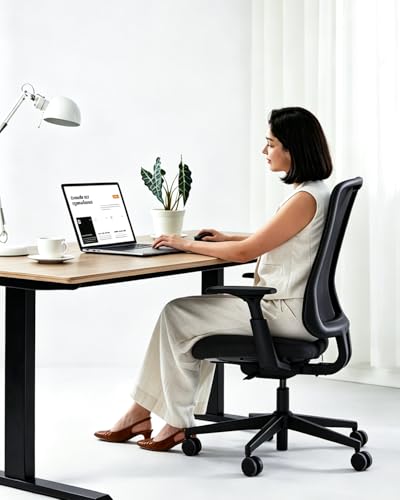
- 1.6-inch sliding seat-depth adjustment
- Breathable mesh for extended sitting
- Reclines from 95° to 125°
Best For: Users 5'1"–6'0" seeking adjustable leg support
Supportive Executive Value
Brown Leather Chair for Short Users
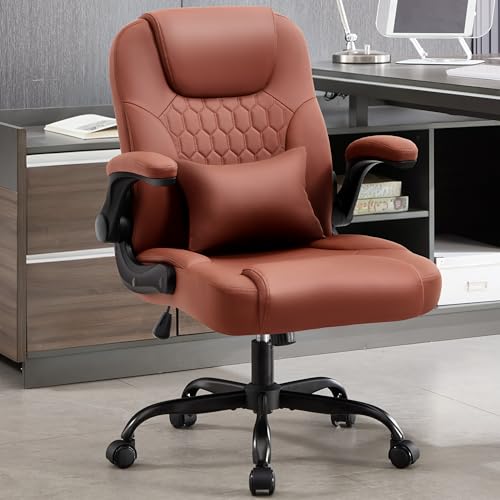
- Includes an adjustable lumbar pillow
- Flip-up padded armrests save space
- 400-pound maximum weight recommendation
Best For: Short users who prefer a padded executive-style chair
Small-Frame Premium Support

- Fits users approximately 4'8"–5'10"
- 3D lumbar and 4D headrest adjustments
- 135° recline with retractable footrest
Best For: Petite users wanting comprehensive ergonomic adjustment
Best Overall Support
Adjustable Lumbar Office Chair

- Lumbar support moves forward/backward and up/down.
- Thick foam seat with a 400-pound capacity.
- Recommended for users approximately 5'4" to 6'3".
Best For: Petite-to-average users needing strong lumbar adjustability
Best for Compact Desks

- 4-inch molded foam cushion targets long-session comfort.
- Flip-up arms tuck beneath smaller desks.
- Adjustable lumbar, tilt, and rocking functions.
Best For: Flexible comfort in tight or shared workspaces
Best Adjustability

- 3D lumbar support adjusts in multiple directions.
- 17.32-inch seat depth may suit shorter legs.
- Adjustable arms, headrest, and three-level tilt lock.
Best For: Petite users who prioritize fine-grained customization
Petite Fit Pick

- Sliding seat depth and adjustable height
- Three-level lumbar and flexible headrest
- 135° recline with retractable footrest
Best For: Petite users seeking extensive adjustability
Simple Support Value

- 17.72–22.44-inch adjustable seat height
- Adjustable lumbar and breathable mesh back
- Flip-up arms and 300-pound capacity
Best For: Petite shoppers wanting basic adjustability and cushioning
Adjustable High-Back Option
Marsail Ergonomic Office Chair

- Lumbar adjusts in four directions
- 3D flip-up armrests and adjustable headrest
- 90°–120° recline with breathable mesh
Best For: Users needing extensive upper-body adjustability
Compact Leather Comfort – Small PU Leather Office Chair
For shoppers comparing ergonomic office chairs for petite users, this compact PU leather model offers a padded backrest, adjustable height, and a simple rocking function. Its flip-up arms can also help the chair fit beneath a desk when space is limited.
Best For: Short users who want a cushioned, easy-care chair for an office, bedroom, study area, or gaming setup.
Pros:
- Height-adjustable high back with curved lumbar-supporting padding
- Flip-up armrests save desk and floor space
- Waterproof, stain-resistant PU leather and high-density sponge padding
- 275-pound weight recommendation and smooth rubber casters
Cons:
- The listed 22.4-inch seat height may still be tall for some petite users
- PU leather may feel warmer than mesh during extended use
- Requires assembly
This chair combines a small-chair profile with executive-style upholstery and practical space-saving arms. Check the seat-height and depth measurements carefully before buying, especially if keeping both feet flat is a priority.
Adaptive Mesh Fit – ProtoArc Flexer Slide-Seat Chair
The ProtoArc Flexer is designed for a broad range of smaller and average-height users, making it a strong option among ergonomic office chairs for petite users. Its sliding seat adjusts depth by 1.6 inches to help reduce dangling legs or pressure behind the knees.
Best For: Users from approximately 5’1″ to 6’0″ who want breathable mesh, adjustable seat depth, and a chair suited to long work sessions.
Pros:
- Sliding seat provides 1.6 inches of depth adjustment
- Breathable Wintex mesh back promotes airflow
- Adjustable armrests and 95°–125° reclining range
- Includes hair-proof casters and a five-year warranty
Cons:
- Its stated fit range may not suit users below 5’1″
- Maximum weight recommendation is 220 pounds
- Assembly is required
The adjustable seat depth is the standout feature for petite shoppers who often find standard seats too long. Pair it with the height adjustment and armrest settings to create a more personalized working position.
Supportive Executive Value – Brown Leather Chair for Short Users
This brown PU leather chair brings padded support and an added lumbar pillow to the search for ergonomic office chairs for petite users. The flip-up arms and rocking adjustment add flexibility, although the standard-size seat should be measured carefully before purchase.
Best For: Short users who prefer an upholstered executive-style chair with customizable lumbar support and flip-up arms.
Pros:
- Extra PU lumbar pillow supports customized lower-back positioning
- Curved padded backrest and high-resilience sponge cushioning
- 90-degree flip-up padded armrests help save space
- 400-pound maximum weight recommendation
Cons:
- The 19.7-inch seat depth may feel long for some petite users
- Only one reclining position is listed
- PU leather can retain more heat than mesh
The removable-style lumbar support concept and flip-up arms make this a versatile option, but its standard seat dimensions are less specifically petite-focused than the adjustable-depth alternatives. Verify the measurements before ordering.
Small-Frame Premium Support – MUSSO E80 Air Petite Chair
Built specifically for users from 4’8″ to 5’10”, the MUSSO E80 Air is one of the most petite-focused ergonomic office chairs for petite users in this roundup. It combines a lower seat height and optimized depth with adjustable lumbar support, a headrest, and a retractable footrest.
Best For: Small-frame users who want highly adjustable support, breathable mesh, and a recline setup suitable for work and relaxation.
Pros:
- Designed for users from 4’8″ to 5’10” with a lower seat height
- 3D Bio-Wing lumbar support adjusts for depth and height
- 4D headrest offers height, depth, tilt, and rotation adjustment
- 135-degree recline with retractable footrest and flip-up arms
Cons:
- At 24.2 kg, it is relatively heavy to move
- Its extensive adjustment system may be more than some users need
- The supplied notes do not list a maximum weight recommendation
This is the most purpose-built choice here for genuinely petite users, particularly those below 5’1″. Its extensive adjustability and footrest make it appealing for long sessions, though the larger feature set and weight may not suit a minimalist setup.
Best Overall Support – Adjustable Lumbar Office Chair
For shoppers comparing ergonomic office chairs for petite users, the Nexthro offers broad lumbar adjustability and a thick foam seat. Its listed height range of approximately 5’4″ to 6’3″ makes it a practical option for petite users at the taller end of that range who also want a wider seat and higher weight capacity.
Best For: Petite-to-average-height users who prioritize adjustable lower-back support and a roomy seat.
Pros:
- Lumbar support adjusts 1 inch forward/backward and 3.15 inches up/down.
- 3.2-inch high-density foam cushion is designed for extended sitting.
- Supports up to 400 pounds and includes smooth-rolling casters.
- Flip-up armrests and mesh construction suit home or office use.
Cons:
- The listed recommended height range starts at about 5’4″, so very petite users may find it too large.
- The 20.7-inch seat depth may not suit users with especially short legs.
This is a sturdy, feature-rich choice when lumbar positioning and seat width matter more than having a compact petite-specific frame. Check the seat height and depth against your measurements before buying.
Best for Compact Desks – Molded Foam Office Chair
This chair is worth considering among ergonomic office chairs for petite users who need a flexible setup for a smaller desk. Its 20-inch-wide frame, flip-up arms, adjustable lumbar cushion, and tilt-and-rock function offer useful versatility, though the 20-inch seat depth should be checked carefully by shorter users.
Best For: Users who need a supportive chair that can tuck under a desk and remain comfortable during long work sessions.
Pros:
- The 4-inch molded foam cushion is designed to distribute pressure during 8-plus-hour use.
- Flip-up armrests help the chair fit under tight or shared workspaces.
- Adjustable lumbar support, tilt, and rocking tension allow personalized positioning.
- Reinforced metal base supports up to 350 pounds and includes a 5-year warranty.
Cons:
- The 20-inch seat depth may be long for very petite users.
- The supplied details do not specify a petite-user height range or seat-height range.
The compact overall dimensions and stowable arms make this a practical small-workspace option. Petite buyers should verify that the seat depth and height allow their feet to rest comfortably on the floor.
Best Adjustability – HOLLUDLE 3D Mesh Chair
The HOLLUDLE stands out among ergonomic office chairs for petite users because nearly every major contact point can be adjusted. Its 17.32-inch seat depth may be more approachable for shorter users than deeper seats, while the 19.69-inch seat height means petite shoppers should confirm their desk and foot position before ordering.
Best For: Petite users who want highly customizable lumbar, armrest, headrest, and recline settings.
Pros:
- 3D lumbar support adjusts up/down, forward/backward, and rotates.
- 3D armrests and a 2D headrest provide multiple positioning options.
- 17.32-inch seat depth may better accommodate shorter legs.
- Breathable mesh, three-level tilt lock, and a 5-year warranty support extended use.
Cons:
- The listed 19.69-inch seat height may be high for very petite users.
- Its 25.98-inch depth and width require more floor space than a compact chair.
- Assembly is estimated at 20 to 30 minutes.
This is the strongest fit for shoppers who are willing to fine-tune a chair rather than choose a simple compact model. Its shorter listed seat depth is promising for petite users, but the seat height remains an important measurement to verify.
Petite Fit Pick – MUSSO E80 Muse
For shoppers comparing ergonomic office chairs for petite users, the MUSSO E80 Muse stands out for its small-frame focus and broad adjustability. Its sliding seat depth, adjustable height, three-level lumbar support, and flexible headrest help you fine-tune the chair for everyday desk work.
Best For: Petite users who want a highly adjustable chair with a headrest, reclining function, and footrest.
Pros:
- Sliding seat depth and adjustable height support a more personalized petite fit.
- Three-level lumbar support and a multi-position headrest offer flexible back and neck positioning.
- 135° recline, retractable footrest, breathable mesh, and a padded seat support work breaks and longer sessions.
- Flip-up arms provide extra clearance in compact workspaces.
Cons:
- The pink finish and small-frame styling may not suit every office.
- Its many adjustments may take time to configure.
The E80 Muse is the most purpose-built option here for petite users. Choose it when precise positioning and relaxation features matter more than a minimal design.
Simple Support Value – X XISHE Ergonomic Desk Chair
The X XISHE ergonomic desk chair is a straightforward choice among ergonomic office chairs for petite users, with adjustable seat height, movable lumbar support, and a breathable mesh back. Its flip-up arms and compact swivel design can also work well in smaller home-office setups.
Best For: Shoppers who want a cushioned, easy-care chair with basic ergonomic adjustments and a 300-pound capacity.
Pros:
- Seat height adjusts from 17.72 to 22.44 inches to accommodate different desk setups.
- Up-and-down lumbar support and an S-shaped back design promote a supported seated posture.
- Thick PU-leather sponge cushioning is easy to wipe clean, while the mesh back promotes airflow.
- Flip-up arms, quiet casters, and 360° swivel help save space and improve mobility.
Cons:
- The listed 19.29-inch seat depth may feel deep for some petite users.
- It offers fewer headrest and recline adjustments than the other chairs in this roundup.
This model is a practical budget-style option when you want adjustable height and lumbar support without a highly complex setup. Petite shoppers should pay particular attention to the seat depth before buying.
Adjustable High-Back Option – Marsail Ergonomic Office Chair
The Marsail ergonomic office chair combines a high-back mesh design with adjustable lumbar support, a headrest, and 3D armrests. For people evaluating ergonomic office chairs for petite users, the lumbar range and movable arms are useful, though the listed seat height and depth deserve a careful fit check.
Best For: Users who want a breathable high-back chair with flexible lumbar, armrest, headrest, and recline adjustments.
Pros:
- Lumbar support adjusts 1.18 inches forward and backward and 2.16 inches up and down.
- 3D armrests move forward, backward, and side to side, and flip up when needed.
- Adjustable headrest and 90°–120° recline support different working and resting postures.
- Thick foam seating, breathable mesh, and a 330-pound capacity support extended use.
Cons:
- The listed 21.6-inch seat height may be high for some petite users.
- The listed 29.5-inch seat depth may require careful measurement before purchase.
Marsail offers the richest adjustment set after the MUSSO, particularly for lumbar and arm positioning. It is a better match for petite users whose desk setup accommodates its listed seat dimensions.
How We Picked the Best Ergonomic Office Chairs for Petite Users
We focused on fit first, looking for chairs with a seat height that can accommodate shorter legs, manageable seat depth, and lumbar support that can align with a smaller torso. We also considered adjustability, cushion or mesh construction, armrest design, recline range, weight capacity, caster mobility, and the practical needs of home-office users.
Because product specifications and available configurations can vary, verify the current dimensions before ordering. A chair that works well for one petite user may still feel too deep, too wide, or too tall for another.
Quick Comparison
| Best For | Look For | Potential Advantage |
|---|---|---|
| Smallest workstations | Compact frame and low seat range | Better fit under short desks |
| Long work sessions | Adjustable lumbar support and seat depth | More personalized pressure relief |
| Warm rooms | Mesh back and ventilated seat design | Improved airflow |
| Soft, executive styling | Padded or PU leather upholstery | Easy cleaning and a cushioned feel |
| Changing postures | Recline, tilt, and adjustable armrests | More movement throughout the day |
Key Buying Factors for Ergonomic Office Chairs for Petite Users
Seat Height and Depth
Your feet should rest flat on the floor while your knees remain close to a right angle. The seat should support your thighs without pressing behind your knees. If a chair is too deep, a sliding seat pan or a small cushion behind your back may help, but built-in depth adjustment is usually the better solution.
Lumbar and Back Support
Look for lumbar support that can move vertically or change in firmness. A high back is not automatically better; the important factor is whether the support meets your lower back without forcing your shoulders forward.
Armrests, Desk Height, and Materials
Adjustable armrests can reduce shoulder tension, especially when the desk is higher than your ideal seated position. Mesh improves ventilation, while padded upholstery may feel softer and be easier to wipe clean. Check the chair’s width and armrest clearance if your workspace is compact.
Stability and Capacity
Review the stated weight capacity, base construction, caster type, and warranty. A stable five-star base and smooth-rolling casters matter more than flashy styling for everyday use.
Who Should Buy Which Ergonomic Office Chairs for Petite Users?
Choose a compact, lower-profile chair if your desk is small or you routinely struggle with excessive seat depth. Pick a model with a sliding seat and adjustable lumbar support if you work full days and need a more precise fit. Mesh chairs are a practical choice for warm environments, while PU leather models suit users who prefer a cushioned surface and straightforward cleaning.
If you share a workspace or frequently change tasks, prioritize adjustable armrests, tilt tension, and recline controls. For a particularly short user, measure from the floor to the underside of the knee while seated and compare that figure with the chair’s minimum seat height. The right match should let you sit fully back, keep your feet supported, and maintain a relaxed posture without relying on constant adjustments.