
If you print with Bambu Lab gear, dry filament matters just as much as print settings. Moisture can cause stringing, weak layers, and inconsistent extrusion.
This roundup of the best filament dryer for bambu lab setups focuses on AMS-compatible options, sealed storage, and practical drying performance for everyday use.
Best 10 Filament Dryer for Bambu Lab Picks for 2026
Touchscreen Dryer
Creality Space Pi Filament Dryer

- 360° hot-air drying with 110W PTC heat
- 12 filament presets plus 45°C-70°C control
- Touch screen with power-off memory
Best For: People wanting an easy standalone dryer for many materials
Dual-Chamber Dryer
Creality Space Pi X4 Filament Storage Box
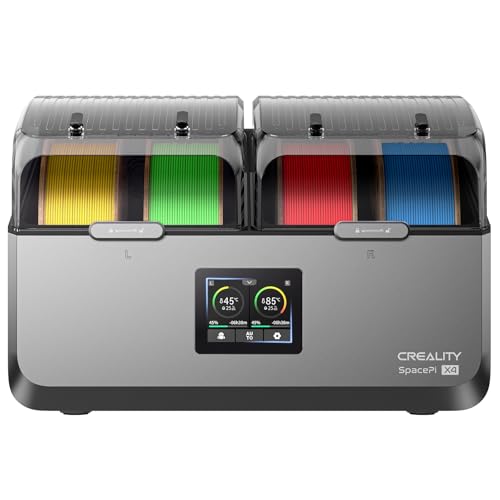
- Four-spool dry-and-print workflow
- Dual chambers with independent temperature control
- Up to 85°C for engineering filaments
Best For: Advanced users handling multiple materials at once
Dual-Spool Hot-Air Dryer

- Holds two spools for simultaneous drying
- 360° PTC hot-air heating
- 12 presets with 45°C-70°C control
Best For: Users wanting a roomy standalone dryer with presets
Sealed Two-Spool Dryer Box

- Sealed storage with multiple moisture barriers
- Two-spool capacity with PTFE tube routing
- 150W PTC heater reaches 70°C quickly
Best For: Users prioritizing sealed storage and two-spool drying
Editor’s Pick
EIBOS Tetras 4-Chamber AMS Heater Upgrade
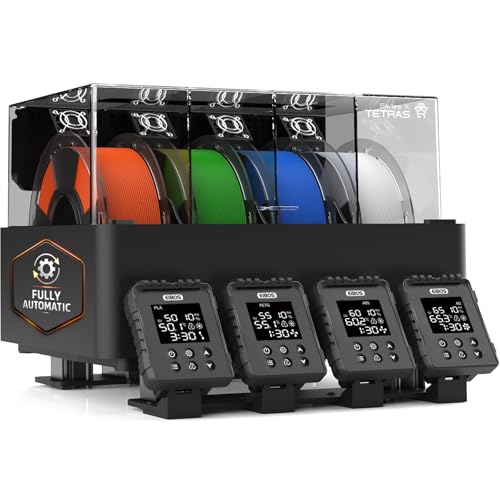
- 4 independent drying chambers
- Dry while printing with own controls
- Auto-sealing storage with humidity monitoring
Best For: Bambu Lab AMS users drying multiple spools at once
Best Value
Creality Space Pi Plus 2-Spool Dryer
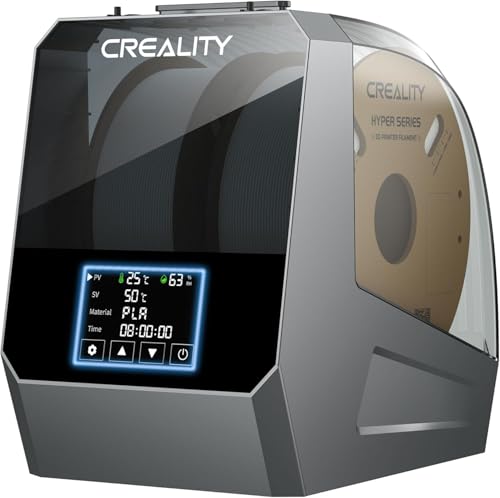
- Dual 1 kg spool capacity
- 160W PTC heating with 360° airflow
- 12 filament presets and touch screen
Best For: Buyers wanting an easy dual-spool dryer for many filament types
Compact AMS Upgrade

- 2 independent chambers with separate sensors
- Dry while printing with automatic venting
- Sealed storage with humidity control
Best For: AMS users who only need two independently managed drying chambers
AMS Heater Upgrade – SUNLU AMS Heater for Bambu Lab AMS Gen 1
If you want a filament dryer for Bambu Lab that fits into an AMS Gen 1 workflow, this SUNLU upgrade is designed to dry while you print. It replaces the original lid with a non-destructive installation and brings heat directly to the filament area while keeping the feeding motor protected.
Best For: Bambu Lab AMS Gen 1 users who want simultaneous printing and drying without modifying the system.
Pros:
- Enables simultaneous printing and drying inside AMS Gen 1.
- Reaches 70°C in about 20 minutes for fast drying.
- Non-destructive, three-step installation by swapping the original lid.
- Supports all AMS Gen 1 functions and 4-spool use.
Cons:
- Not compatible with AMS 2nd generation.
- Does not include the Automatic Material System itself.
This is a practical add-on if you already own AMS Gen 1 and want to keep multi-color printing moving while conditioning filament. The safety-focused airflow design and fast warm-up make it a straightforward upgrade for existing Bambu Lab setups.
Touchscreen Dryer – Creality Space Pi Filament Dryer
This filament dryer for Bambu Lab owners is a good standalone option if you want more control over drying before feeding spools into your printer. The Creality Space Pi uses 360° hot-air circulation, one-key presets for common materials, and a touch screen that makes setup simple.
Best For: Users who want a versatile external dryer for many filament types, including high-performance materials.
Pros:
- 360° heating with a 110W PTC heater for even drying.
- One-key presets for 12 filament types, plus manual 45°C to 70°C control.
- 3.7-inch touch screen clearly shows temperature and time.
- Power-off memory retains settings after outages.
Cons:
- Not an AMS-integrated solution.
- Designed for 1.75mm/2.85mm filament drying rather than on-printer drying.
The Space Pi is a solid pick when you need a flexible dryer that can handle PLA, TPU, ABS, PETG, Nylon, and composite variants. Its preset-driven interface and memory function make it easy to keep using once you find the right drying settings.
Safe AMS Drying – SUNLU AMS Heater for Bambu Lab AMS Gen 1
If you need a filament dryer for Bambu Lab AMS Gen 1 that focuses on safe, efficient operation, this SUNLU heater is built for dry-while-you-print use. It swaps in as a top-cover replacement, concentrates heat around the filament, and includes multiple safety layers to help protect the AMS system.
Best For: AMS Gen 1 users who want a safer integrated drying setup with 4-spool support.
Pros:
- Drys filament while printing to save time.
- Heats to 70°C in 20 minutes with even heat distribution.
- Triple-safe design includes PTC heater, fan, thermal cutoff, and software controls.
- Supports all four spools and preserves sealed storage and multi-color printing.
Cons:
- Only compatible with AMS Gen 1.
- Does not include the AMS unit itself.
This version is especially appealing if you want a Bambu Lab-compatible dryer that prioritizes protection around the feeding motor. The flat top also makes stacking easier if you are planning a compact multi-unit setup.
Dual-Chamber Dryer – Creality Space Pi X4 Filament Storage Box
For a more advanced filament dryer for Bambu Lab users who manage multiple materials, the Creality Space Pi X4 is built to dry and print with four spools at once. Its dual independent heating chambers and high-temperature PTC system make it a strong choice when you need flexible, energy-aware filament storage and drying.
Best For: Advanced users drying multiple filament types at different temperatures in one machine.
Pros:
- Supports four spools dry-and-print workflows at once.
- Two independent chambers can run at different temperatures.
- Reaches up to 85°C, suitable for engineering filaments.
- Single-chamber mode can save up to 40% energy.
Cons:
- Requires attention to tray heat resistance for other brands’ plastic trays.
- More complex than a basic single-chamber dryer.
The X4 stands out if you regularly juggle PA, PAHT, PC, or flexible materials and want more control than a standard dryer provides. The ability to separate chambers and temperatures gives it real utility for demanding printing setups.
AMS Active Dryer Upgrade – SUNLU AMS Heater for Bambu Lab
If you want a filament dryer for bambu lab that works inside the AMS ecosystem, this SUNLU heater is built to dry spools while you print. It replaces the AMS top cover, supports four spools at once, and uses humidity-based automation to reduce manual drying steps.
Best For: Bambu Lab AMS users who want an active-drying upgrade without sacrificing normal AMS use.
Pros:
- Actively dries filament during printing in Bambu Lab AMS 1.0.
- Fast PTC heating reaches up to 70°C in about 20 minutes.
- Dual-airflow design helps heat spools evenly.
- Humidity sensor enables automatic start and stop behavior.
Cons:
- AMS is not included with the heater.
- Designed for AMS 1.0, so fit is more specific than a standalone dryer box.
This is a strong choice if your main goal is to dry filament without interrupting a Bambu Lab AMS workflow. The quick install and automatic control make it especially appealing for users who want a low-hassle moisture solution.
Dual-Spool Hot-Air Dryer – Creality Space PI Plus
This filament dryer for bambu lab setups and other 3D printers is built for users who want a roomy, adjustable dryer box with straightforward controls. The Creality Space PI Plus holds two spools, uses 360° hot-air circulation, and includes preset settings for many common and engineering filaments.
Best For: Makers who want a dual-spool dryer with easy presets, a touch screen, and a wide temperature range.
Pros:
- Dual-spool capacity lets you dry two rolls at the same time.
- PTC heating with 360° airflow is designed for more even drying.
- Adjustable temperature range from 45°C to 70°C.
- Touch screen and 12 filament presets make setup simple.
Cons:
- Not an integrated AMS accessory; it is a separate dryer box.
- Longer drying jobs may need the 48-hour timer to be set manually.
For users who want a flexible standalone dryer, this model balances capacity, preset convenience, and manual control. It is a practical pick if you regularly switch between filament types and want a box that can handle two spools at once.
Sealed Two-Spool Dryer Box – Comgrow SH02
If you need a filament dryer for bambu lab printing as well as other setups, this Comgrow SH02 focuses on sealed storage and fast, even drying. It supports two spools, routes PTFE tubes through dedicated holes, and combines PTC heating with safety features for everyday use.
Best For: Users who want a sealed two-spool dryer box with simple filament presets and strong moisture protection.
Pros:
- Two-spool design can dry or store two rolls at once.
- 150W PTC heater reaches 70°C and heats quickly.
- 360° airflow helps promote more even drying.
- Sealing rings on multiple openings help keep moisture out.
Cons:
- Bulkier than a single-spool dryer.
- Preset library covers 9 filament types, which is less than some rivals.
This is a practical pick if moisture protection matters as much as drying performance. The sealed design and dual-spool layout make it a good fit for users who want to keep filament ready between prints.
Editor’s Pick – EIBOS Tetras 4-Chamber AMS Heater Upgrade
If you want a filament dryer for Bambu Lab that can handle mixed-material jobs without constant babysitting, the EIBOS Tetras is built for that workflow. It turns a Bambu Lab AMS Gen 1 into a four-spool drying system with fully independent chambers, so each filament can be dried at its own temperature while you print.
Best For: Bambu Lab AMS users who need independent drying for multiple spools and materials at the same time.
Pros:
- 4 independent chambers with separate heaters, fans, controls, and sensors
- Supports drying while printing with 20°C-65°C temperature control
- Automatic venting, sealing, and humidity monitoring for storage
- Drop-in add-on with its own power supply for AMS Gen 1
Cons:
- AMS unit is not included
- Designed specifically as an add-on for Bambu Lab AMS Gen 1
- US version is 110V
This is the most specialized option here, and its biggest advantage is flexibility: you can dry different filaments simultaneously without compromise. If your Bambu Lab setup regularly switches between PLA, PETG, TPU, or Nylon, the Tetras is aimed squarely at that use case.
Best Value – Creality Space Pi Plus 2-Spool Dryer
The Creality Space Pi Plus is a practical filament dryer for Bambu Lab owners who want a simple, high-capacity box for everyday drying. It holds two 1 kg spools, uses double 360° hot-air circulation, and includes one-key presets plus a touch screen to make setup straightforward.
Best For: Users who want a user-friendly dual-spool dryer for common and advanced filaments.
Pros:
- Two-roll capacity with four filament holes and two PTFE pipes
- 160W PTC heater with 360° hot-air circulation for more even drying
- One-key presets for 12 filament types, plus manual 45°C-70°C control
- 4-inch LCD touch screen with easy temperature and unit switching
Cons:
- Less specialized for Bambu Lab AMS integration than AMS-specific upgrades
- Bulkier than single-spool dryers
For buyers who care more about straightforward operation than advanced AMS integration, this model covers a wide range of filament types without much setup friction. It is a strong all-around choice if you want two-spool drying and easy controls in one unit.
Compact AMS Upgrade – EIBOS Dyas 2-Chamber Heater
If you need a filament dryer for Bambu Lab but do not need four separate chambers, the EIBOS Dyas offers the same AMS-style upgrade concept in a smaller 2-chamber design. It supports drying while printing, has independent temperature and humidity sensors for each chamber, and is built to work as a drop-in add-on for Bambu Lab AMS Gen 1.
Best For: Bambu Lab AMS users who want a smaller upgrade with independent chamber control.
Pros:
- 2 independent drying chambers with dedicated heaters, fans, and sensors
- Supports drying and printing at the same time
- Automatic venting, sealing, and humidity control for storage
- Independent power supply and simple add-on installation
Cons:
- Only 2 chambers instead of 4
- AMS unit is not included
- Made for Bambu Lab AMS Gen 1 specifically
Dyas makes sense when you want the benefits of a smart AMS dryer without paying for a larger four-spool setup. It is a focused option for users who mainly rotate between two filaments and want active drying plus protected storage in one unit.
How We Picked the Best Filament Dryer for Bambu Lab
We focused on dryers and heater modules that make sense for Bambu Lab users: AMS compatibility, stable temperature control, multi-spool support, and the ability to dry while printing when the design allows it. We also favored models with clear displays, independent chambers, and useful storage features that help keep filament dry after the cycle ends.
Quick Comparison
For most Bambu Lab owners, the right choice comes down to workflow. AMS heater upgrades are best if you want to improve an existing Bambu Lab AMS setup without adding a large external box. Standalone dryers are better if you need broader compatibility, active storage, or support for multiple spools at once. Larger multi-chamber units make sense for heavy users who run several materials regularly.
Key Buying Factors for Filament Dryer for Bambu Lab
AMS Compatibility
If you use an AMS, make sure the dryer or heater is designed to work with that system. Some units are built specifically as AMS heater upgrades, while others are universal dry boxes. The right choice depends on whether you want to dry filament inside the AMS path or use an external drying station.
Temperature Range and Heating Style
A wider temperature range gives you more flexibility for PLA, PETG, ABS, ASA, nylon, and specialty materials. Look for even heat distribution, not just high maximum temperature. Features like 360° hot-air circulation or PTC heating usually help reduce uneven drying.
Capacity and Chamber Design
Single-spool units are fine for occasional use, but dual-spool or multi-chamber designs are better if you print often or keep several materials active. Separate chambers can also prevent you from over-handling spools and reopening the box too often.
Drying While Printing
This is one of the most useful features for an active Bambu Lab workflow. If a unit supports drying while printing, you can keep filament conditioned during longer jobs and reduce exposure to ambient humidity.
Storage and Sealing
A good Filament Dryer for Bambu Lab should do more than heat. Sealed lids, gasketed storage, and humidity-conscious designs help preserve results after the drying cycle ends, which is especially important in humid rooms or seasonal climates.
Who Should Buy Which Filament Dryer for Bambu Lab?
Choose an AMS heater upgrade if you already rely on the Bambu Lab AMS and want the least disruptive improvement. Pick a standalone dual-spool dryer if you need flexibility across different printers or materials. Go for a multi-chamber model if you manage a larger print farm, swap filaments often, or want the convenience of drying multiple rolls at once. For most hobbyists, the best value comes from a unit that balances temperature control, sealing, and easy everyday use rather than chasing the highest advertised heat.