
Warehouse Wi-Fi has to do more than connect a few laptops. It needs to stay stable across racks, aisles, loading zones, and high-device traffic without dead spots or constant drops.
This roundup highlights the best options for building dependable wireless coverage in large, busy spaces, with an emphasis on range, roaming, capacity, and deployment flexibility.
Best 10 Wireless Access Point for Warehouse Picks for 2026
Warehouse-Ready Wi‑Fi 6
Omada EAP650 Business WiFi 6 AX3000

- Wi‑Fi 6 speeds up to 2976 Mbps
- Free Omada cloud management and app setup
- PoE+, passive PoE, or DC power support
Best For: Warehouses needing fast, centrally managed wireless coverage
Outdoor Range Pick

- Weatherproof outdoor access point for warehouse exteriors
- High-gain antennas and high transmit power for long range
- Passive PoE with free injector for easier install
Best For: Outdoor warehouse yards and perimeter coverage
Budget Indoor Choice
Cudy AP1300 Dual Band Gigabit AP
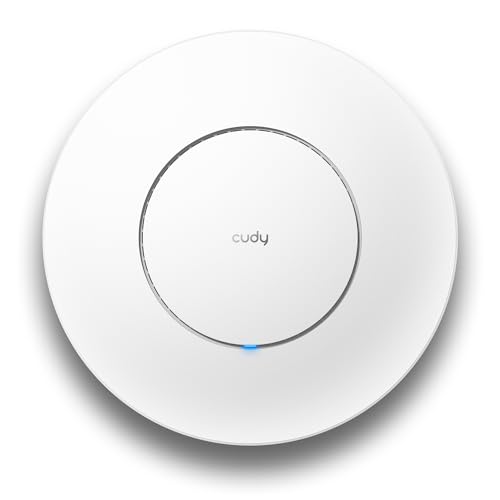
- Dual-band AC1200 with MU-MIMO and beamforming
- PoE, passive PoE, or 12V DC power options
- Centralized control for multiple APs
Best For: Affordable indoor warehouse coverage with easy multi-AP management
Multi-Gig Upgrade
Zyxel NWA50AXPRO WiFi 6 AX3000

- Wi‑Fi 6 AX3000 with 2.5G Ethernet uplink
- NebulaFlex management with cloud or standalone control
- Supports WPA3, mesh, roaming, and VLAN tagging
Best For: Warehouses that want multi-gig speed and modern network features
Rugged Dual-Band Coverage

- IP65-rated enclosure for harsher environments
- Dual-band AC1200 with support for 100+ devices
- PoE or 24V DC power for flexible placement
Best For: Warehouses needing durable, flexible coverage
Compact Wi-Fi 6 Upgrade

- Wi-Fi 6 AX1800 with up to 128 registered devices
- PoE or adapter power for simple deployment
- WPA3 support and up to 4 SSIDs
Best For: Small warehouse offices and secure add-on coverage
Business Mesh and Roaming

- AC1350 dual-band with MU-MIMO support
- Seamless roaming and mesh networking
- Omada cloud/app control for centralized management
Best For: Warehouses needing managed Wi-Fi with roaming and mesh
Wi-Fi 7 High-Capacity Pick
Omada EAP770 Tri-Band Business AP
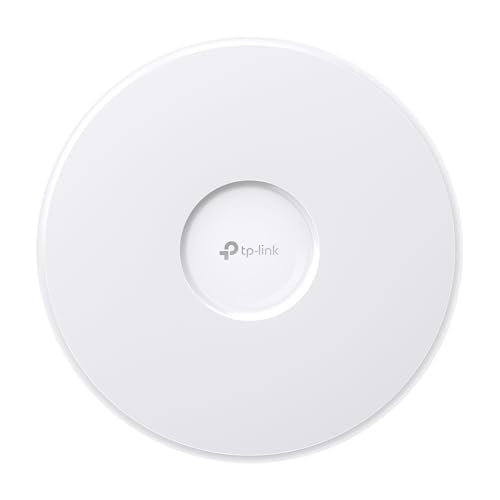
- Wi-Fi 7 tri-band with up to 11.0 Gbps
- 2.5G port and PoE+/DC power support
- Handles 380+ devices with 1500 sq. ft. coverage
Best For: Warehouses needing high-capacity, future-ready business WiFi
Value Wi-Fi 6 Choice

- Wi-Fi 6 AX1800 dual-band performance
- Free Omada Essentials cloud management
- PoE+, passive PoE, or DC power support
Best For: Budget-conscious warehouses wanting easy-managed business WiFi
Compact Wi-Fi 7 Upgrade

- Wi-Fi 7 dual-band with up to 3.6 Gbps
- 2.5G port for faster wired backhaul
- Supports mesh, roaming, and WPA3
Best For: Warehouses wanting a compact multi-gig Wi-Fi 7 AP
Warehouse-Ready Wi‑Fi 6 – Omada EAP650 Business WiFi 6 AX3000
If you need a wireless access point for warehouse areas that also has to cover offices, break rooms, or loading zones, the Omada EAP650 brings Wi‑Fi 6 speeds and flexible power options in a compact design. It supports cloud management, mesh, roaming, and WPA3, making it a strong fit for teams that want centralized control without adding extra hardware.
Best For: Warehouses that need fast Wi‑Fi 6 coverage with simple cloud management.
Pros:
- Wi‑Fi 6 dual-band speeds up to 2976 Mbps for high-demand wireless use
- Free Omada Essentials cloud management with app-based setup
- Supports mesh WiFi, seamless roaming, WPA3, band steering, and load balancing
- Flexible power options: PoE+, passive PoE, or included DC adapter
Cons:
- Mesh and seamless roaming require Omada SDN controllers
- Single 1G port may be limiting for multi-gig wired backhaul needs
Overall, the EAP650 is a practical choice if you want a warehouse-friendly access point that balances speed, management features, and installation flexibility. Its compact footprint also makes it easier to place in mixed business environments.
Outdoor Range Pick – TP-Link EAP110-Outdoor V3
For a wireless access point for warehouse spaces that extend outdoors, the TP-Link EAP110-Outdoor is built for long-range 2.4 GHz coverage and weatherproof deployment. It includes passive PoE with a free injector, plus Omada/SDN and app-based management for simpler installation and oversight.
Best For: Outdoor warehouse yards, entry points, and covered perimeter areas.
Pros:
- Designed for outdoor Wi-Fi applications with weatherproof construction
- High transmission power and high-gain antennas support long-range coverage
- Passive PoE and mounting kit make deployment easier
- Omada app and controller support for centralized management
Cons:
- Single-band Wi‑Fi 4 hardware is slower than modern Wi‑Fi 5/6 options
- 2.4 GHz only, so it is not ideal for high-density indoor traffic
This model makes the most sense when coverage distance matters more than top speed. For warehouse exteriors and basic outdoor connectivity, it offers a straightforward, durable setup.
Budget Indoor Choice – Cudy AP1300 Dual Band Gigabit AP
If you want a wireless access point for warehouse interiors without jumping to enterprise pricing, the Cudy AP1300 offers dual-band AC1200 performance, PoE flexibility, and centralized multi-AP control. Its ceiling-mounted design and beamforming help improve coverage in busy indoor environments with many connected devices.
Best For: Small to mid-sized warehouse interiors needing affordable dual-band coverage.
Pros:
- Dual-band AC1200 with MU-MIMO for handling multiple clients
- Supports 802.3at/af PoE, passive PoE, or 12V DC power
- Centralized multi-AP control for batch provisioning and firmware updates
- Beamforming and seamless roaming help maintain stable connections
Cons:
- Gigabit-class hardware is solid, but not multi-gig
- Coverage spec is modest compared with larger enterprise APs
The AP1300 is a practical value option when you need dependable indoor Wi‑Fi coverage and simple management. It is especially appealing for warehouses that want multiple APs without complicated deployment.
Multi-Gig Upgrade – Zyxel NWA50AXPRO WiFi 6 AX3000
When your wireless access point for warehouse use needs both better speed and a stronger wired uplink, the Zyxel NWA50AXPRO stands out with Wi‑Fi 6 AX3000 performance and a 2.5G Ethernet port. It also adds NebulaFlex management, mesh support, VLAN tagging, and WPA3 for more controlled business deployments.
Best For: Warehouses ready for multi-gig uplinks and modern Wi‑Fi 6 coverage.
Pros:
- Wi‑Fi 6 AX3000 throughput with 160 MHz channel support
- 2.5G multi-gig uplink helps remove the 1Gbps bottleneck
- NebulaFlex offers standalone or cloud management at no added licensing cost
- Supports OFDMA, MU-MIMO, fast roaming, mesh, and WPA3
Cons:
- Best value depends on whether your network can use the 2.5G uplink
- Management features may be more than needed for very simple installs
This is the most forward-looking option in the group if your warehouse network needs more headroom for wired and wireless traffic. The combination of multi-gig connectivity and Wi‑Fi 6 features makes it a strong long-term pick.
Rugged Dual-Band Coverage – Tenda AC1200 i24
If you need a wireless access point for warehouse spaces that may include dust, moisture, or outdoor-adjacent zones, the Tenda i24 is built for that kind of deployment. Its IP65-rated enclosure, dual-band WiFi 5 radio, and flexible PoE or 24V DC power options make it a practical fit for large, mixed-use environments where installation flexibility matters.
Best For: Warehouses needing durable coverage, easy mounting, and flexible power options.
Pros:
- IP65-rated design is suited to harsher conditions.
- Dual-band AC1200 performance supports up to 100+ devices.
- PoE and 24V DC support make placement easier.
- Cloud management and seamless roaming help with ongoing control.
Cons:
- Wi-Fi 5 is older than Wi-Fi 6 options.
- Coverage is listed at 3,200 sq. ft., which may not suit very large facilities alone.
Overall, this is the most rugged option in the group, and its weather-resistant build can be especially appealing when the warehouse environment is less forgiving than a standard office. It prioritizes durability and deployment flexibility over the newest wireless standard.
Compact Wi-Fi 6 Upgrade – NETGEAR WAX210PA
The NETGEAR WAX210PA is a compact wireless access point for warehouse networks that need a secure add-on Wi-Fi 6 upgrade rather than a full router replacement. It connects to an existing wired network, supports PoE or the included adapter, and offers WPA3 plus up to 4 SSIDs for cleaner staff and guest separation.
Best For: Small warehouse offices, retail storage areas, and other spaces needing secure Wi-Fi 6 coverage.
Pros:
- Wi-Fi 6 AX1800 with MU-MIMO supports up to 128 registered devices.
- PoE or power adapter support simplifies installation.
- Compact design is suited to discreet wall or ceiling mounting.
- WPA2/WPA3 security and up to 4 SSIDs improve network separation.
Cons:
- Coverage is listed at up to 1,500 sq. ft., which is modest for large warehouses.
- It requires an existing router and Ethernet connection.
This model makes sense when you want a modern, secure access point without unnecessary complexity. For smaller warehouse zones or office areas inside a larger facility, it delivers a clean Wi-Fi 6 upgrade with straightforward browser-based setup.
Business Mesh and Roaming – TP-Link Omada EAP225
The TP-Link Omada EAP225 is a business-focused wireless access point for warehouse setups that need centralized management, mesh expansion, and seamless roaming. With dual-band AC1350 performance, MU-MIMO, and flexible PoE options, it is designed to support dependable coverage in environments where multiple users and devices move through the space.
Best For: Warehouses that want business-grade management, mesh support, and roaming.
Pros:
- Dual-band AC1350 delivers solid business Wi-Fi performance.
- MU-MIMO and seamless roaming help with multiple devices and movement.
- Omada SDN app and cloud access simplify centralized control.
- Mesh support adds expansion options without extra wiring.
Cons:
- Wi-Fi 5 is not the newest wireless standard.
- Indoor coverage only, so it is best for internal warehouse areas.
If your warehouse network needs more than basic connectivity, this model stands out for management and expansion features. It is a strong choice when roaming, mesh flexibility, and business administration matter as much as raw speed.
Wi-Fi 7 High-Capacity Pick – Omada EAP770 Tri-Band Business AP
If you need a wireless access point for warehouse spaces with lots of devices, the Omada EAP770 is built for high-capacity business WiFi. Its Wi-Fi 7 tri-band design, 2.5G uplink, and support for 380+ concurrent devices make it a strong fit for busy operations that need reliable coverage and room to grow.
Best For: Warehouses and business environments that want multi-gig, high-device-count WiFi with flexible power options.
Pros:
- Wi-Fi 7 tri-band design with up to 11.0 Gbps combined speeds
- 2.5G Ethernet port helps future-proof the network for faster internet upgrades
- Supports 380+ concurrent devices and up to 1500 sq. ft. coverage
- Works with PoE+ or 12V DC power, and includes an adapter
Cons:
- Coverage is listed at 1500 sq. ft., so larger warehouses may need multiple units
- Advanced Omada features may require more setup than a basic plug-and-play AP
The EAP770 is a practical choice when you want newer Wi-Fi 7 performance without giving up business features like mesh, captive portal, WPA3, and centralized cloud management. It is best viewed as a scalable access point for demanding warehouse networking rather than a simple consumer router replacement.
Value Wi-Fi 6 Choice – Omada EAP610 Business AP
The Omada EAP610 is a solid wireless access point for warehouse use when you want dependable Wi-Fi 6 performance without overcomplicating deployment. With AX1800 speeds, Omada cloud management, and PoE+ power, it fits practical business installs where centralized control and easy mounting matter.
Best For: Small to mid-sized warehouse setups that need affordable business WiFi with cloud management.
Pros:
- Wi-Fi 6 dual-band speeds up to 1800 Mbps
- Free Omada Essentials cloud management with app-based setup
- Supports mesh, seamless roaming, WPA3, and other business features
- Flexible power options including PoE+, passive PoE, and DC power
Cons:
- Dual-band design is less forward-looking than Wi-Fi 7 models
- Best roaming and mesh features require Omada SDN controllers
This model makes sense if you want a reliable warehouse AP with easy cloud administration and a compact design. It is a balanced pick for businesses that value simple deployment, centralized management, and strong everyday wireless performance.
Compact Wi-Fi 7 Upgrade – Omada EAP720 Dual-Band AP
If you want a wireless access point for warehouse deployment with newer Wi-Fi 7 hardware but a simpler dual-band design, the Omada EAP720 is a strong middle-ground option. It offers a 2.5G port, support for up to 250+ concurrent clients, and Omada-managed features like mesh and seamless roaming.
Best For: Warehouses that want a compact Wi-Fi 7 access point with multi-gig networking and business features.
Pros:
- Wi-Fi 7 dual-band performance with up to 3.6 Gbps data rate
- 2.5G Ethernet port supports faster network backbones
- Supports mesh, seamless roaming, and WPA3 security
- Flexible PoE or DC power with adapter included
Cons:
- Dual-band design may be less ideal than tri-band for the busiest environments
- Coverage is listed at 1500 sq. ft., so large facilities may need several units
The EAP720 is a smart pick if you want Wi-Fi 7 features and a 2.5G uplink without stepping up to a tri-band model. It should appeal to warehouse buyers who need solid business WiFi, easy setup, and room for future network upgrades.
How We Picked the Best Wireless Access Point for Warehouse
For a Wireless Access Point for Warehouse use, we focused on features that matter in real operations: strong coverage, business-grade roaming, PoE support for easier installation, and enough client capacity to handle scanners, tablets, printers, and staff devices at the same time. We also favored models with Wi-Fi 6 or Wi-Fi 7 where speed, efficiency, and future-proofing are priorities.
Quick Comparison
Not every warehouse needs the newest standard. Wi-Fi 6 models are often the sweet spot for cost-effective performance, especially when you need dependable coverage and predictable capacity. Wi-Fi 7 models make more sense if you are designing for heavier traffic, higher throughput, or a long replacement cycle. Outdoor-rated units are useful for yards, docks, and perimeter coverage, while ceiling-mounted APs fit indoor aisles and office-adjacent zones best.
Key Buying Factors for Wireless Access Point for Warehouse
Coverage and Antenna Design
Look for access points that can project signal cleanly through open floor plans and around shelving. Warehouses often benefit more from strategic AP placement than from raw advertised range, so check whether the unit supports ceiling mounting, directional placement, or outdoor use where needed.
Client Capacity and Roaming
Barcode scanners, handheld terminals, cameras, and employee devices can pile up quickly. Choose a model with enough simultaneous client support and seamless roaming so devices keep their connection as workers move between zones.
PoE and Installation
Power over Ethernet simplifies warehouse deployment because you can place APs where they work best without needing nearby outlets. PoE+ is especially helpful for more capable units and cleaner installs above work areas.
Speed, Uplink, and Network Longevity
Match the AP’s Ethernet uplink to your network design. A 2.5G port can reduce bottlenecks on faster systems, while gigabit is still fine for many standard warehouse setups. If you expect growth, consider Wi-Fi 6E or Wi-Fi 7-class devices for longer service life.
Who Should Buy Which Wireless Access Point for Warehouse?
If you need dependable indoor coverage on a budget, a Wi-Fi 6 or strong Wi-Fi 5 model is usually enough. If you operate a larger facility with many connected devices, step up to Wi-Fi 6 with better roaming and higher capacity. Choose an outdoor access point for docks, storage yards, or exterior loading areas. For new builds or major upgrades, Wi-Fi 7 is worth considering when you want the most headroom and a more future-ready Wireless Access Point for Warehouse deployment.