
When you’re diving into Python AI development, the mini PC you choose can make a significant difference in your workflow. With powerful processors and ample memory, the right model can handle complex tasks effortlessly. Curious about which options stand out for their performance and portability? Let’s explore the top contenders that might just be the perfect fit for your development needs.
GEEKOM Mini PC AI A7 MAX (2026 Edition)

If you’re a developer looking to harness the power of AI for Python projects, the GEEKOM Mini PC AI A7 MAX (2026 Edition) is a standout choice. With its AMD Ryzen 9 7940HS processor and 16GB DDR5 memory, you’ll enjoy seamless multitasking. The 1TB SSD is expandable, ensuring ample storage for your projects. Plus, the AMD Radeon 780M GPU supports smooth 1080p gaming and 4K video editing. You’ll appreciate the enhanced cooling system, maintaining low noise levels. Connectivity options like dual USB4 ports and multiple HDMI outputs enhance versatility, making this mini PC an excellent tool for your development needs.
Best For: Developers and content creators who need a powerful, compact PC for multitasking, gaming, and video editing.
Pros:
- High-performance AMD Ryzen 9 processor with 8 cores and 16 threads for seamless multitasking.
- Expandable memory and storage options, accommodating up to 128GB RAM and 4TB SSD.
- Excellent cooling system keeps noise levels low, making it suitable for office and creative environments.
Cons:
- Limited onboard graphics performance compared to higher-end dedicated GPUs for gaming.
- Slightly heavier than some competitors in the mini PC category, which may impact portability.
- Price may be higher than basic mini PCs, making it less accessible for casual users.
MINISFORUM AI X1 Pro-370 Mini PC

The MINISFORUM AI X1 Pro-370 Mini PC stands out for its powerful AMD Ryzen AI 9 HX 370 processor, making it an ideal choice for developers focused on Python AI projects. With 12 cores and 24 threads, it delivers impressive performance, achieving up to 80 TOPS. You’ll appreciate the 64GB DDR5 RAM, expandable to 96GB, and the 1TB SSD, which can expand to 12TB for ample storage. Dual 2.5G LAN ports and Wi-Fi 7 guarantee speedy connectivity, while its AI features enhance productivity. Weighing just 5.3 pounds, it’s perfect for high-performance tasks on the go.
Best For: Developers and experts looking for a high-performance mini PC for AI projects and specialized applications.
Pros:
- Powerful Processor: Equipped with an AMD Ryzen AI 9 HX 370, offering 12 cores and 24 threads for exceptional performance.
- Expandable Memory and Storage: Comes with 64GB DDR5 RAM (expandable to 96GB) and a 1TB SSD (expandable up to 12TB) for significant storage and multitasking capabilities.
- Advanced Connectivity: Features dual 2.5G LAN ports and Wi-Fi 7 for fast wired and wireless connections.
Cons:
- Weight: At 5.3 pounds, it may be heavier than some other mini PCs, making portability less convenient.
- Price Point: High-performance specifications may come at a premium cost compared to lower-end models.
- Limited Warranty: A 30-day return policy may not be sufficient for thorough testing and evaluation by users.
MINISFORUM AI X1-255 Mini PC Barebone with AMD Ryzen 7 255

For developers diving into Python AI projects, the MINISFORUM AI X1-255 Mini PC stands out with its powerful AMD Ryzen 7 255 processor. With 8 cores and 16 threads, it delivers impressive speed up to 4.9 GHz, perfect for multi-threaded tasks. The Radeon 780M graphics guarantee smooth HD visuals and support for light gaming. You can expand your memory up to 64 GB and utilize dual M.2 slots for fast storage. Connectivity options like Wi-Fi 7 and dual USB4 ports enhance your workflow. Plus, efficient heat management keeps everything running quietly and smoothly during intensive workloads.
Best For: Developers and tech enthusiasts looking for a powerful, compact mini PC for AI projects, multimedia editing, and light gaming.
Pros:
- Excellent multi-threaded performance with AMD Ryzen 7 255 and Radeon 780M graphics.
- Expandable memory up to 64 GB and dual M.2 slots for high-speed storage.
- Advanced connectivity options including Wi-Fi 7 and dual USB4 ports for enhanced productivity.
Cons:
- Does not support hot swapping for eGPU connections.
- Requires compatible M.2280 PCIe 4.0 SSD for OCuLink functionality.
- Noise levels can reach up to 45dB under full load, which may not suit all environments.
MINISFORUM Elitemini AI370 Mini PC
Designed for developers seeking robust performance, the MINISFORUM Elitemini AI370 Mini PC stands out with its powerful AMD Ryzen AI 9 HX 370 processor. With 12 cores and 24 threads, it boosts up to 5.1GHz, delivering an impressive 80 TOPS overall performance and 50 TOPS for NPU tasks. Equipped with AMD Radeon 890M graphics, it handles multimedia seamlessly. Connectivity is a breeze with dual 5G LAN ports and Wi-Fi 6E. Triple video outputs let you connect up to three ultra HD displays, while the 32GB RAM and 1TB SSD guarantee smooth operation for demanding applications in AI development.
Best For: Developers and professionals in need of high-performance computing for AI development and multimedia tasks.
Pros:
- Powerful Processor: Features the AMD Ryzen AI 9 HX 370 with 12 cores and 24 threads, boosting up to 5.1GHz for exceptional performance.
- High Connectivity Options: Includes dual 5G LAN ports and Wi-Fi 6E for fast and reliable network connections.
- Triple Display Capability: Supports up to three ultra HD displays, enhancing productivity and multitasking efficiency.
Cons:
- Limited Graphics Options: While it has decent integrated graphics, it may not suffice for advanced gaming or high-end graphic design.
- No Pre-installed Software: Users may need to install their preferred operating system and software, which could be a downside for some.
- Compact Design: The small form factor may limit upgrade potential compared to larger PCs.
MINISFORUM AI X1 Pro-370 Mini PC with AMD Ryzen 9 HX 370
With its powerful AMD Ryzen 9 HX 370 processor, the MINISFORUM AI X1 Pro-370 Mini PC is an excellent choice for developers diving into Python AI projects. It boasts 12 cores and 24 threads, reaching boost speeds of up to 5.1GHz, ensuring you tackle demanding tasks with ease. With 96GB DDR5 RAM and a 2TB SSD (expandable to 4TB), storage won’t be an issue. You’ll appreciate the stunning 3840 x 2160 resolution on multiple displays, plus the connectivity options like Wi-Fi 7 and 2.5G LAN. This mini PC truly enhances your AI development experience, offering efficiency and portability in one package.
Best For: Developers and professionals engaged in AI projects who require high-performance computing in a compact form factor.
Pros:
- Powerful performance with 12 cores and 24 threads, making it suitable for demanding tasks.
- High-resolution support allows for stunning visuals across multiple displays.
- Versatile connectivity options with Wi-Fi 7 and 2.5G LAN for enhanced networking capabilities.
Cons:
- Weight and size may be less portable compared to other mini PCs.
- Price point may be higher than entry-level alternatives.
- Limited warranty period of 30 days, which may not provide sufficient coverage for users.
MINISFORUM Mini PC AI X1 Pro Gaming Computer

The MINISFORUM Mini PC AI X1 Pro Gaming Computer stands out as an ideal choice for developers and AI enthusiasts who crave high-performance capabilities in a compact form. With its AMD Ryzen AI 9 HX 370 processor and Radeon 890M graphics, you’ll enjoy seamless AAA gaming and smooth multitasking. The built-in Copilot AI enhances productivity with intelligent features like real-time translation and quick-access buttons. You’ll appreciate the superior audio quality and dual noise reduction for clear communication. Expandable storage and memory options guarantee you can keep up with demanding tasks while energy-efficient cooling keeps noise levels low.
Best For: Developers and AI enthusiasts seeking high-performance gaming and multitasking capabilities in a compact mini PC.
Pros:
- Powerful Performance: Features an AMD Ryzen AI 9 HX 370 processor with 12 cores and 24 threads for seamless multitasking and gaming.
- Enhanced Productivity: Built-in Copilot AI with real-time translation and quick-access buttons for improved work efficiency.
- Flexible Storage and Memory: Supports expandable storage of up to 12TB and memory up to 128GB, accommodating demanding applications.
Cons:
- Limited Integrated Graphics: While it supports AMD Radeon 890M, it may not be sufficient for users requiring top-tier graphics performance for the latest AAA titles.
- Noise Level under Load: Maintains a noise level of 45dB, which could be noticeable in quiet environments.
- Higher Initial Cost: As a high-performance mini PC, it may come with a higher price tag compared to standard models.
KAMRUI Pinova P2 Mini PC with AMD Ryzen 4300U, 16GB RAM, 512GB SSD

For developers looking to plunge into Python AI projects, the KAMRUI Pinova P2 Mini PC stands out with its powerful AMD Ryzen 4300U processor. This 4-core, 4-thread CPU can reach speeds up to 3.7 GHz, ensuring you can tackle demanding applications with ease. With 16GB of DDR4 RAM and a 512GB SSD, multitasking and quick file transfers become seamless. Plus, its integrated Radeon graphics support Triple 4K displays, enhancing your visual experience. The compact design makes it portable, while versatile connectivity options like USB3.2 and WiFi keep you productive wherever you are. Enjoy lifetime technical support for peace of mind.
Best For: Developers and tech enthusiasts seeking a compact, powerful mini PC for multitasking and demanding applications.
Pros:
- High performance with AMD Ryzen 4300U processor for handling demanding applications and casual gaming.
- Ample memory and storage options with 16GB RAM and 512GB SSD, expandable up to 64GB RAM and 4TB storage.
- Versatile connectivity including USB3.2 Gen2 and support for Triple 4K displays, enhancing productivity and visual experience.
Cons:
- Integrated graphics may not be sufficient for high-end gaming or intensive graphic design tasks.
- Limited pre-installed storage with only 512GB SSD, requiring additional purchases for larger projects.
- Compact size may lead to overheating in extended heavy usage without proper ventilation.
CyberGeek Nano A1 Ubuntu Mini PC

Ideal for developers and enthusiasts diving into Python AI projects, the CyberGeek Nano A1 Ubuntu Mini PC boasts a powerful 12th Gen Alder Lake N100 processor. With speeds up to 3.4GHz and 4C/4T capabilities, it excels in light office tasks. You can customize its memory from 4GB to 16GB and choose PCIe SSDs up to 2TB, ensuring ample storage for your projects. Enjoy stunning visuals with dual HDMI outputs supporting 4K@60Hz. Weighing only 1.76 lbs and measuring compactly, it’s perfect for portability. Plus, Wi-Fi 6 and Bluetooth 5.2 keep you connected seamlessly.
Best For: Developers and enthusiasts looking for a compact and powerful Mini PC for Python AI projects and light office tasks.
Pros:
- Compact and portable design allows easy setup and usage in various environments.
- Expandable memory and storage options provide flexibility for different project needs.
- Dual HDMI outputs support 4K@60Hz for enhanced visual experiences across multiple displays.
Cons:
- Limited performance for heavy gaming or resource-intensive applications due to its light office focus.
- No built-in optical drive, which might be a drawback for users needing physical media access.
- Potentially higher price point compared to less capable Mini PCs in the same category.
Reatan A8 Mini PC with AMD Ryzen 7 8745H, 32GB RAM, 1TB SSD
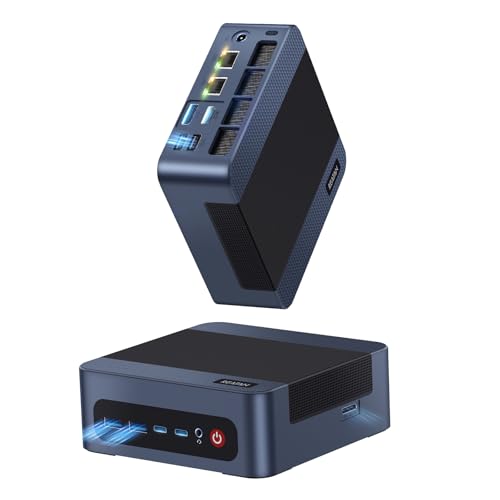
Packed with an AMD Ryzen 7 8745HS processor, the Reatan A8 Mini PC is a powerhouse designed for developers diving into Python AI projects. With 32GB of DDR5 RAM and a lightning-fast 1TB SSD, you’ll experience seamless multitasking and rapid data access. The integrated AMD Radeon 780M GPU enhances your graphics capabilities, perfect for visualizing complex AI models. Plus, it supports up to four displays with an impressive 8K resolution. Connectivity options, including WiFi 6E and multiple USB ports, guarantee you’re well-equipped for any task. Enjoy peace of mind with a three-year support plan and a solid one-year warranty.
Best For: The Reatan A8 Mini PC is best for developers and professionals seeking a powerful, compact solution for multitasking, AI projects, and high-resolution visualizations.
Pros:
- High Performance: Equipped with an AMD Ryzen 7 8745HS processor and 32GB of DDR5 RAM for seamless multitasking.
- Versatile Connectivity: Features multiple USB ports, dual 2.5G LAN, and WiFi 6E for robust connectivity options.
- Impressive Display Support: Capable of supporting four displays with up to 8K resolution for enhanced productivity and visual clarity.
Cons:
- Limited Warranty: The one-year warranty may be less appealing for users looking for longer-term coverage.
- Size Constraints: As a mini PC, it may not have the expandability and upgrade options of larger desktops.
- Integrated Graphics Limitations: While the Radeon 780M GPU is decent, it may not meet the needs of high-end gaming or professional graphic design tasks.
ACEMAGICIAN Kron Mini K1 Mini PC with Ryzen 7 7730U, 16GB DDR4, 512GB SSD

The ACEMAGICIAN Kron Mini K1 Mini PC is a powerhouse tailored for developers diving into Python AI projects. With its AMD Ryzen 7 7730U processor, you’ll experience a significant boost in CPU and GPU performance—up to 35% and 38% respectively. The 16GB DDR4 RAM and 512GB SSD guarantee swift multitasking and ample storage, while the ability to expand up to 2TB offers flexibility. Plus, its Radeon RX Vega Graphics supports light gaming, perfect for unwinding. With 4K triple display output, you’re set for ultra-realistic visuals, making this Mini PC an ideal choice for both work and play.
Best For: Developers and tech enthusiasts looking for a powerful and compact Mini PC for AI projects and light gaming.
Pros:
- High Performance: Equipped with an AMD Ryzen 7 7730U processor, delivering superior CPU and GPU performance.
- Expandable Storage: Comes with 512GB SSD, with the option to expand up to 2TB for additional storage needs.
- Versatile Display Options: Supports 4K triple display output for enhanced visual experiences.
Cons:
- Limited Gaming Capability: While it supports light gaming, it may not handle more demanding titles effectively.
- No Pre-installed OS: Users may need to install their own operating system, which can be a barrier for some.
- Fan Noise: The compact design may lead to increased fan noise under heavy load compared to larger PCs.
Factors to Consider When Choosing a Mini PC for Python AI
When you’re picking a mini PC for Python AI development, you’ll want to contemplate several key factors. Processor performance, memory capacity, and storage options are essential for handling complex tasks efficiently. Don’t forget to check connectivity options and cooling systems to guarantee smooth operation without excessive noise.
Processor Performance Requirements
Choosing the right processor is essential for optimizing Python AI development on a mini PC. Look for a mini PC equipped with a multi-core processor, preferably an 8-core or 12-core CPU, to efficiently tackle the parallel processing tasks that Python AI applications demand. High clock speeds, ideally above 4.5GHz, guarantee quick execution of your algorithms and effective handling of data-intensive tasks. Additionally, support for advanced instruction sets like AVX2 or AVX-512 can considerably boost your AI computations. Pay attention to the processor’s total performance output, measured in TOPS (Tera Operations Per Second); values over 50 TOPS are advantageous for AI workloads. With the right processor, you’ll enhance your development experience greatly.
Memory Capacity Considerations
To guarantee smooth Python AI development, you’ll want to prioritize memory capacity alongside processor performance. Aim for a minimum of 16GB of RAM to efficiently handle data processing and model training tasks. For more demanding projects, consider opting for 32GB or more, as this greatly enhances multitasking capabilities and overall performance. Memory speed is also vital; choosing DDR5 memory can offer faster data access and improved efficiency compared to older DDR4 types. Additionally, make sure the mini PC supports expandable memory options, allowing you to upgrade as your project requirements grow. Adequate memory capacity is essential to run multiple virtual environments and large datasets simultaneously, preventing potential system slowdowns and crashes.
Storage Expansion Options
Memory capacity is just one piece of the puzzle in selecting a mini PC for Python AI development; storage expansion options are equally important. Look for models with dual M.2 slots that support SSDs up to 4TB or more, enhancing your data handling capabilities. Opting for mini PCs that feature PCIe 4.0 storage can greatly boost read/write speeds, essential for managing large datasets efficiently. A minimum of 1TB SSD storage is ideal to accommodate your software, libraries, and datasets without constant upgrades. Additionally, consider systems that allow future upgrades, supporting up to 128GB of RAM and multiple SSD configurations. Versatility in storage types, including both SSDs and traditional hard drives, can help you balance speed and capacity for various AI projects.
Connectivity and Ports
When selecting a mini PC for Python AI development, having the right connectivity options can greatly enhance your workflow. Look for models with multiple USB ports, like USB4 and USB 3.2, to efficiently connect various peripherals. Dual Ethernet ports or high-speed Wi-Fi (Wi-Fi 6 or Wi-Fi 7) are vital for reliable internet connectivity, especially for cloud-based services. Consider mini PCs that support multiple video outputs, such as HDMI and DisplayPort, to enable multi-monitor setups for better productivity. Expansion ports like OCuLink or PCIe slots allow for future upgrades, including external GPUs. Finally, guarantee at least one Thunderbolt or USB-C port for high-speed data transfer, essential for handling large datasets in AI applications.
Cooling and Noise Levels
Selecting a mini PC for Python AI development also means considering how it manages heat and noise. Effective cooling systems, like dual copper heat pipes and silent fan designs, are essential to avoid overheating during intense computations. Look for models with advanced cooling technologies, such as IceBlast 2.0 Cooling, to maintain stability when running complex AI algorithms.
Keep in mind that noise levels below 36dB can notably reduce distractions, creating a more conducive work environment. Adequate heat dissipation is critical; otherwise, thermal throttling may hinder processing speeds during model training. Choose a high-performance mini PC that balances low noise generation with efficient airflow to guarantee comfort during prolonged computational tasks.