
Reliable power is easy to overlook until a voltage spike, overloaded outlet, or messy cable run disrupts a session or damages valuable studio equipment. The right conditioner can add protection, organization, and useful monitoring to a rack or mobile setup.
We compared 10 options for recording studios and stage rigs, including rackmount conditioners, portable power blocks, sequencers, and models with voltage or current displays. Use the guide below to match features and capacity to your workflow.
Best 10 Stage Power Conditioners for Recording Studios Picks for 2026
Best All-Around Setup

- Nine outlets with surge protection
- Noise filtering and LED illumination
- 15A capacity with one USB port
Best For: Compact recording and stage rigs
Best Heavy-Duty Protection
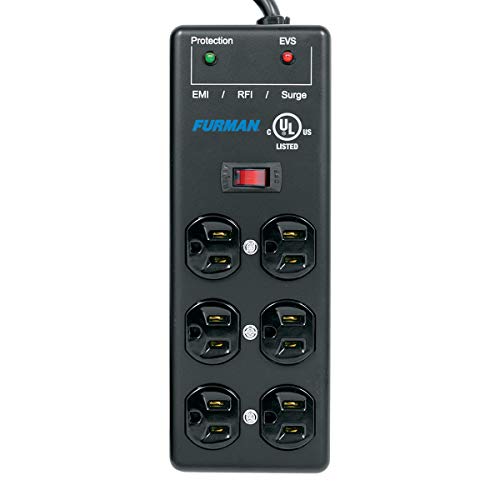
- EVS over- and under-voltage shutdown
- Six outlets with EMI/RFI filtration
- Steel housing and 15-foot cord
Best For: Rugged stage and studio power distribution
Best Rackmount Value

- Rackmount design for studio racks
- Eight rear and one front outlet
- PG-90 filtering with front USB
Best For: Rack-based recording studio systems
Best for High-Current Racks

- 20A capacity for larger rack systems
- Digital voltmeter and ammeter
- SMP, LiFT, and EVS protection
Best For: Feature-rich, high-current studio racks
Portable Studio Protection

- Six outlets with audio filtration
- 540-joule surge protection
- Portable design with 9-foot cable
Best For: Portable studio rigs and small live setups
Sequenced Rack Control

- Eight sequenced and two always-on outlets
- Front LCD voltage display
- EMI/RFI filtering and 15-amp capacity
Best For: Rack-based studio and live equipment systems
Timed Rack Startup

- Sequenced power-up and power-down
- 15-amp rack power capacity
- Helps reduce inrush and speaker thumps
Best For: Studio and live racks needing orderly startup
High-Capacity Sequencing Control
ST-368 10-Socket Power Conditioner

- 3000W total output with sequential power control
- Ten sockets plus independent channel switches
- LCD monitoring, EMI/RF filtering, USB, and Type-C charging
Best For: High-capacity studio and stage racks needing centralized control
Studio Rack Protection

- Fourteen outlets with twelve switched and two unswitched
- Two-stage power-up and power-down system
- 2U enclosure with XLR lamp connectors and LED display
Best For: Large studio racks needing extensive outlet capacity
Compact Sequenced Power Management
SIKUING FL-1000 10-Outlet Conditioner

- 2000W/13A capacity with ten rack-mount outlets
- Sequential startup plus surge and overvoltage protection
- Digital voltage readout and EMI/RFI filtering
Best For: Compact studios and racks needing essential sequencing
Best All-Around Setup – Radial Power-2
For stage power conditioners for recording studios, the Radial Power-2 offers a practical combination of nine outlets, surge protection, noise filtering, and front-facing LED illumination. Its 15-amp capacity and one USB port make it suitable for organizing a compact pro-audio system and related devices.
Best For: Recording and stage rigs needing multiple outlets, basic power protection, and USB charging.
Pros:
- Nine outlets provide room for several connected devices.
- Noise filtering and surge protection support cleaner, safer power.
- LED illumination helps with visibility in darker rack or stage environments.
- Includes one USB port and a two-year warranty.
Cons:
- Its 15-amp capacity is lower than the 20-amp Furman option.
- The supplied notes do not specify rackmount form factor or advanced voltage shutdown.
The Power-2 is a straightforward choice when outlet count and general protection matter most. It suits studios and live setups that do not require metering or higher-current distribution.
Best Heavy-Duty Protection – Furman SS-6B-PRO
The Furman SS-6B-PRO is a durable power block for stage power conditioners for recording studios, with six protected outlets, EMI/RFI filtration, and Extreme Voltage Shutdown. Its 15-foot cord is especially useful when equipment must be positioned far from a wall outlet.
Best For: Stage, studio, and AV setups that prioritize rugged construction and extended cable reach.
Pros:
- EVS protection shuts power down during dangerous over- or under-voltage conditions.
- EMI/RFI filtration helps reduce unwanted electrical noise.
- Heavy-duty steel construction supports demanding setups.
- Includes a 15-foot power cord and illuminated on/off switch.
Cons:
- Six outlets provide less capacity than the nine- and eleven-outlet alternatives.
- It is a power block rather than a rackmount conditioner.
- The supplied notes do not mention USB charging despite listing six USB ports in the specifications.
The SS-6B-PRO is compelling for users who value EVS protection and physical durability over maximum outlet count. The long cord also simplifies placement on stages and in larger rooms.
Best Rackmount Value – Black Lion Audio PG-X
The Black Lion Audio PG-X is a rackmount option for stage power conditioners for recording studios, using PG-90 filtering technology with Panasonic and Wima capacitors. It provides eight rear-panel outlets, one front-panel outlet, and a front USB port for convenient rack-based power management.
Best For: Rack-based studio systems needing accessible outlets and dedicated filtering.
Pros:
- Rackmount form factor integrates neatly into equipment racks.
- Nine total outlets are split between rear and front panels.
- PG-90 filtering technology is paired with Panasonic and Wima capacitors.
- Front-panel USB port adds convenient charging access.
Cons:
- The supplied notes do not specify amperage, voltage, or surge-protection features.
- Its listed dimensions and 7.7-pound weight may require checking rack-space and installation needs.
The PG-X stands out when rack integration and filtering are more important than detailed electrical monitoring. Its front outlet and USB port can make day-to-day studio access easier.
Best for High-Current Racks – Furman PL-PRO DMC
For larger systems comparing stage power conditioners for recording studios, the Furman PL-PRO DMC combines 20-amp capacity with SMP, LiFT, and EVS protection. Its digital voltmeter and ammeter, isolated outlet banks, and dimmable rack lights provide useful monitoring and rack-management features.
Best For: High-current studio racks requiring power monitoring, protection, and front-panel illumination.
Pros:
- 20-amp capacity handles higher-current rack systems.
- Digital voltage and current displays make incoming power and draw easy to monitor.
- SMP, LiFT, and EVS technologies provide surge protection, filtering, and extreme-voltage shutdown.
- Dual dimmable LED rack lights and a BNC lamp connector improve rack visibility.
Cons:
- It is heavier and more feature-rich than a basic power block.
- The supplied details vary between nine and eleven outlets, so buyers should confirm the current configuration.
- Its higher-current design may be unnecessary for a small rig.
The PL-PRO DMC is the most comprehensive choice here for monitoring and managing a substantial rack. Choose it when 20-amp handling and detailed front-panel information justify a more advanced conditioner.
Portable Studio Protection – Black Lion Audio PG-P
For recording studios that need stage power conditioners in a compact format, the Black Lion Audio PG-P combines six outlets, surge protection, and audio filtration in a portable enclosure. Its 9-foot power cable provides practical reach for indoor professional audio setups.
Best For: Portable studio rigs, small live setups, and professional audio equipment that needs filtered, surge-protected power.
Pros:
- Six outlets accommodate multiple audio devices.
- Audio filtration helps support cleaner power for professional audio equipment.
- 540-joule surge protection and a 9-foot power cable add practical protection and placement flexibility.
- Portable stainless-steel enclosure and a two-year warranty suit mobile use.
Cons:
- It offers six outlets rather than a larger rack-based outlet count.
- Its portable power-strip design does not provide sequenced startup or rack mounting.
The PG-P is a straightforward choice when portability and audio filtration matter more than advanced rack power management. It is particularly useful for smaller recording or stage systems.
Sequenced Rack Control – Sound Town STPS-1028
The Sound Town STPS-1028 is a rack-mountable option among stage power conditioners for recording studios, combining sequenced power control with protection and monitoring. Its 1U design provides eight sequenced outlets, two always-on outlets, and a front LCD voltage display.
Best For: Studio and live racks that need staged power-up, individual outlet control, and real-time voltage information.
Pros:
- Eight sequenced outlets help protect speakers and other connected equipment during startup and shutdown.
- Two always-on outlets and a USB charging port add flexibility.
- Individual outlet switches and indicators make front-panel control convenient.
- Built-in spike protection, EMI/RFI filtering, and a 15-amp capacity support studio and live rigs.
Cons:
- The unit weighs 8.53 pounds, making it less convenient for lightweight portable setups.
- Its 1U rack-mountable format is better suited to installed or rack-based systems than tabletop use.
With outlet sequencing, filtering, protection, and voltage readout in one rack unit, the STPS-1028 is a feature-rich fit for organized studio or stage power management.
Timed Rack Startup – Furman M-8S
The Furman M-8S focuses on sequenced power control for recording studios and stage racks. Its 15-amp capacity and delayed rear-outlet switching help reduce inrush currents and speaker thumps when amplifiers, processors, and digital gear power on or off.
Best For: Rack systems that prioritize orderly startup and shutdown for amplifiers, processors, and digital equipment.
Pros:
- Timed sequencing helps prevent inrush currents and speaker thumps.
- 15-amp capacity can power an entire rack of components.
- Rackmount form factor installs in the top slot for an organized setup.
- Three-year limited warranty adds product support.
Cons:
- It has a focused sequencing design rather than the listed LCD voltage display or USB charging features found on some alternatives.
- The 120-volt, 15-amp configuration is intended for compatible electrical systems.
The M-8S is a practical choice when reliable delayed power control is the main requirement. Its simple rack installation and sequenced outlets make it well suited to conventional studio and live racks.
High-Capacity Sequencing Control – ST-368 10-Socket Power Conditioner
For stage power conditioners for recording studios, the ST-368 emphasizes high capacity, flexible outlet access, and centralized startup control. Its 1U rack-mount design provides ten universal sockets, sequential power activation, AC noise filtering, and front-panel monitoring for studio and live audio setups.
Best For: Multi-device studio racks, production rooms, and stage systems that need high power capacity, sequencing, and convenient front-panel charging.
Pros:
- Supports up to 3000W total output, with a stated 30A maximum total rating.
- Provides eight rear sockets, two front normally open sockets, and independent channel switches.
- Includes RF/EMI filtering, LCD voltage monitoring, USB and Type-C charging, and eight-channel LED status indicators.
- Standard 1U rack-mount metal construction is designed for organized installation and heat dissipation.
Cons:
- The listed 100–125V AC range may limit compatibility outside North American-style power systems.
- The product’s numerous controls and indicators may be more than needed for a simple setup.
The ST-368 is a feature-heavy option for users who want substantial power capacity and detailed rack-level control. Verify your rack space, voltage requirements, and connected equipment’s total load before installation.
Studio Rack Protection – Black Lion Audio PG-2
The Black Lion Audio PG-2 is a practical choice among stage power conditioners for recording studios when outlet count and controlled startup are priorities. This 2U rack-mount unit offers fourteen outlets, a two-stage power-up/down system, front-panel status display, and dedicated connections for rack lamps.
Best For: Professional studio and stage racks that need many outlets, sequential power management, and front/rear accessibility.
Pros:
- Provides fourteen total outlets, including twelve switched and two unswitched outlets.
- Two-stage power-up/down sequencing helps manage connected rack equipment.
- Includes 3-pin XLR lamp connectors and a front-panel LED display.
- Uses a stainless-steel enclosure and includes a two-year warranty.
Cons:
- Its 2U form factor requires more rack space than a 1U conditioner.
- The supplied specifications list a 120V AC input, so voltage compatibility should be checked before purchase.
- The notes do not specify USB charging or a digital voltage readout.
The PG-2 is focused on rack distribution and sequencing rather than extra charging features. It makes the most sense when a larger outlet count and lamp connections are more valuable than compact installation.
Compact Sequenced Power Management – SIKUING FL-1000 10-Outlet Conditioner
The SIKUING FL-1000 offers core features expected from stage power conditioners for recording studios in a compact 10-outlet rack unit. It combines sequential startup and shutdown, surge and overvoltage protection, EMI/RFI filtering, a digital voltage readout, and a 2000W total load capacity.
Best For: Home studios, compact professional racks, and home theater systems needing sequenced power and basic real-time voltage monitoring.
Pros:
- Sequentially powers equipment on or off to help reduce simultaneous startup surges.
- Combines surge protection, overvoltage protection, and EMI/RFI noise filtering.
- Supports up to 2000W or 13A and provides ten AC outlets in a standard 19-inch rack format.
- Digital voltage readout makes the input supply visible during operation.
Cons:
- Its 2000W/13A capacity is lower than the ST-368’s stated total output.
- The supplied notes mention only one USB port and do not specify multiple independently switched channels.
- The listed warranty is 360 days.
The FL-1000 is a straightforward fit for smaller systems that benefit from sequencing and protection without requiring a higher-capacity unit. Confirm the combined wattage of amplifiers, mixers, speakers, and other connected equipment before use.
How We Picked These Stage Power Conditioners for Recording Studios
We focused on the features that matter when several pieces of audio equipment share one electrical supply: surge protection, filtering, outlet count, current capacity, rack compatibility, switching design, and ease of use. The selection includes compact portable units for small rigs, conventional rackmount conditioners for studios, and sequencer models for systems that benefit from controlled startup and shutdown.
Because electrical conditions vary by building and venue, a power conditioner is not a substitute for proper grounding, a correctly rated circuit, or professional electrical inspection. Treat published amperage and wattage limits as hard boundaries, not targets to exceed.
Quick Comparison
| Best for | Look for | Most useful features |
|---|---|---|
| Small studio or rehearsal rig | Compact power block | Surge protection, six to eight outlets, simple operation |
| Permanent rack installation | Rackmount conditioner | Front-panel access, rear outlets, filtering, protection status |
| Large studio rack | Higher-capacity unit | 20A support where appropriate, voltage or current monitoring |
| Stage or mobile production | Portable or rugged conditioner | Easy transport, clear status indicators, flexible outlet layout |
| Sequenced systems | Power sequencer | Staged startup and shutdown to reduce turn-on surges and speaker thumps |
Key Buying Factors for Stage Power Conditioners for Recording Studios
Capacity and Circuit Compatibility
Check the unit’s maximum amperage, total wattage, plug type, and voltage before connecting amplifiers, powered speakers, computers, or outboard gear. A 15A conditioner should be used on a properly rated 15A setup; a 20A model is useful only when the circuit and connector support it.
Protection and Filtering
Look for clearly documented surge protection and, where available, noise filtering or EMI/RFI reduction. Protection indicators are helpful because they show whether the protective circuitry is still active. No conditioner can guarantee safety against every lightning event or severe wiring fault.
Outlet Layout and Connectivity
Count the outlets you actually need, allowing room for adapters and future expansion. Rear outlets keep a rack tidy, while front outlets help with temporary connections. USB or USB-C charging can be convenient, but it should not replace dedicated power planning for computers and interfaces.
Monitoring and Sequencing
Voltage and amperage displays make it easier to spot unusual conditions and estimate system load. Sequencing is particularly useful for racks with multiple amplifiers or powered monitors, since controlled power-up can reduce startup stress and unwanted pops.
Rack Fit and Daily Usability
Confirm rack height, depth, mounting hardware, switch placement, display readability, and cable clearance. A unit that fits technically but blocks adjacent plugs or is difficult to switch off is a poor long-term choice.
Who Should Buy Which Stage Power Conditioners for Recording Studios?
Choose a compact power block if you need straightforward protection for a small recording, rehearsal, or fly-rig setup. Select a standard rackmount conditioner for a permanent studio rack with several processors, interfaces, and accessories. Choose a model with monitoring when you regularly troubleshoot venue power or want visibility into system load. A sequencer is the better fit for larger racks with amplifiers, powered speakers, or multiple devices that should start and stop in a controlled order.
Before buying, total the wattage of every connected device, verify your local voltage and plug standard, and leave practical headroom. The best Stage Power Conditioners for Recording Studios are the ones that meet those electrical requirements while making your specific rack safer, clearer, and easier to manage.