
A good portable DAC can make wired headphones and IEMs sound cleaner, more detailed, and more powerful without adding much bulk to your everyday carry.
We selected 10 compact USB and Bluetooth-friendly options for different listeners, from simple phone dongles to feature-rich DAC amplifiers with balanced outputs, EQ, displays, and high-power amplification.
Best 10 Portable Dac Picks for 2026
Feature-Rich Pick

- 560mW+560mW balanced Desktop Mode output
- Ten-band lossless PEQ with app control
- Colour screen and PCM 768kHz/DSD256 support
Best For: Listeners wanting power and deep customization
Lightweight Balanced Pick

- 241mW balanced 4.4mm output
- Dual ESS Sabre DAC chips
- Only 11.5g with USB-C connectivity
Best For: Mobile listeners using balanced headphones
High-Power Value Pick

- 550mW balanced Desktop Mode output
- 3.5mm and 4.4mm outputs
- PCM 384kHz/32bit and DSD256 support
Best For: Driving varied headphones from a compact dongle
Display and Magnetic Design Pick

- Magnetic phone-friendly back panel
- 1.28-inch LCD with volume and playback status
- 3.5mm, 4.4mm, and PS5/Switch support
Best For: Users wanting display controls and flexible device compatibility
Powerhouse Precision

- Dual CS43198 DAC chips for high-resolution conversion
- 600mW balanced output with 4.4mm and 3.5mm ports
- 10-band persistent parametric EQ and dual power modes
Best For: Power-hungry headphones and listeners who want extensive EQ control
Wireless Hi-Fi Companion

- Bluetooth 5.4 with LDAC and aptX codec support
- Slim 96g body with 0.95-inch AMOLED display
- 3.5mm and 4.4mm outputs with 2,100mAh battery
Best For: Mobile listeners who want wireless playback and a built-in display
Ultra-Compact Plug-In Pick
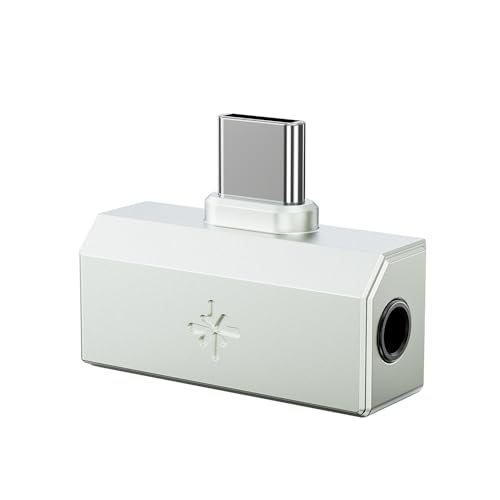
- Only 7g with a direct plug-in design
- PCM 384kHz/32-bit and DSD256 support
- 10-band PEQ with Android and PC web control
Best For: Android and PC users who prioritize minimum size and flexible EQ
Compact Hi-Fi Pick
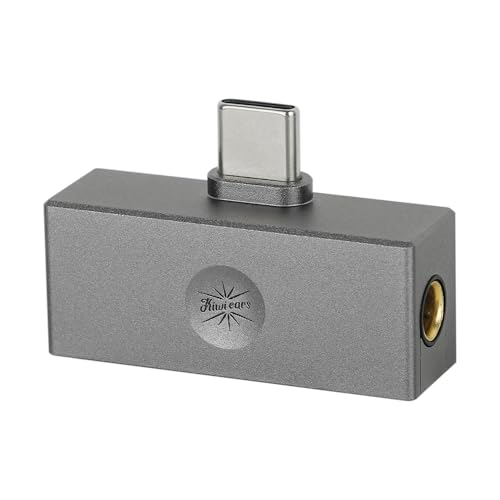
- 3.5mm and 4.4mm outputs
- 32-bit/384kHz PCM and DSD128
- Compact aluminum-alloy body
Best For: Mobile listeners and IEM users seeking flexible portable connectivity
DSP Tuning Pick

- App-based parametric EQ
- Dual CS43198 DAC chips
- 3.5mm and 4.4mm outputs
Best For: Audio enthusiasts who want adjustable sound and dedicated volume control
Powerful Dongle Pick

- Up to 170mW per channel
- 3.5mm and 4.4mm outputs
- Phone, tablet, PC, and Mac support
Best For: Users seeking a versatile, high-output plug-and-play headphone dongle
Feature-Rich Pick – FiiO KA15
The FiiO KA15 is a portable DAC for listeners who want extensive control in a compact package. Its colour display, app-based EQ, dual DAC design, and optional Desktop Mode make it especially versatile for mobile and headphone-focused listening.
Best For: Enthusiasts who want powerful output, custom EQ, and an informative screen.
Pros:
- Desktop Mode delivers up to 560mW+560mW balanced output.
- Ten-band lossless PEQ supports custom tuning and saved EQ profiles.
- 0.96-inch colour LCD shows settings and playback information.
- Supports PCM up to 768kHz/32bit and DSD256.
Cons:
- Its broad feature set may be more than casual listeners need.
- Desktop Mode is intended for higher power use and may increase device power demands.
The KA15 stands out when adjustment flexibility matters as much as sound quality. It is a strong choice for users who want a portable DAC that can also provide substantial headphone-driving power.
Lightweight Balanced Pick – iFi GO Link 2 Max
The iFi GO Link 2 Max is a lightweight portable DAC designed to improve headphone listening from USB-C phones, laptops, and other compatible devices. Its balanced 4.4mm output, dual ESS Sabre DACs, and compact 11.5g design suit mobile setups.
Best For: USB-C users who want a light, balanced headphone amp with useful dynamic headroom.
Pros:
- Balanced 4.4mm output provides up to 241mW of power.
- Dual ESS Sabre DACs use a balanced circuit design.
- Dynamic Range Enhancement adds up to 6dB of dynamics.
- Weighs 11.5g and includes a USB-C to USB-A adapter.
Cons:
- It is primarily suited to devices with USB-C ports.
- Its 4.4mm balanced output requires compatible headphones or an adapter.
With a low weight and a high-power balanced output, the GO Link 2 Max is a practical portable DAC for listeners who regularly switch between phone and computer listening.
High-Power Value Pick – FiiO/JadeAudio KA13
The FiiO/JadeAudio KA13 is a compact portable DAC with both 3.5mm and 4.4mm outputs. Its Desktop Mode reaches 550mW balanced output, while app connectivity adds control over lighting, filters, and other settings.
Best For: Headphone users who need strong output and both single-ended and balanced connections.
Pros:
- Desktop Mode provides up to 550mW through the balanced output.
- Includes convenient 3.5mm and 4.4mm headphone outputs.
- Dual CS43131 DACs and dual SGM8262 op-amps support its high-performance design.
- Handles PCM up to 384kHz/32bit and DSD256.
Cons:
- It does not list included accessories in the supplied product details.
- The highest output level requires Desktop Mode and a suitable power setup.
The KA13 is a compelling portable DAC for shoppers who want desktop-style output in a dongle form. Its two headphone connections also make it more flexible than many compact alternatives.
Display and Magnetic Design Pick – Fosi Audio MD3
Fosi Audio MD3 Portable DAC Headphone Amplifier Magnetic USB C Mini Amp HiFi Black
Check Price On AmazonThe Fosi Audio MD3 combines a portable DAC and headphone amplifier with a magnetic phone-friendly design. Its circular LCD, dual USB-C ports, memory-equipped volume control, and support for both UAC 2.0 and UAC 1.0 make it a flexible option for modern devices and consoles.
Best For: Phone, computer, and console users who value an integrated display and magnetic portability.
Pros:
- Magnetic leather back panel helps attach the MD3 to a phone.
- 1.28-inch circular screen displays volume and playback status.
- Offers 3.5mm single-ended and 4.4mm balanced outputs.
- Supports UAC 2.0 for high-resolution audio and UAC 1.0 for PS5/Switch.
Cons:
- Its 80mW single-ended and 180mW balanced output may be less powerful than some desktop-oriented dongles.
- The feature-rich interactive display may not appeal to listeners seeking a minimal adapter.
The MD3 is a distinctive portable DAC for users who want more than basic audio conversion. Its magnetic attachment, visible controls, and broad device support make it particularly practical for phone and gaming setups.
Powerhouse Precision – Protocol Max
The Protocol Max is a portable DAC for listeners who want substantial amplification and detailed sound-shaping options in a compact aluminum housing. Its dual DAC design, balanced output, and persistent parametric EQ make it especially flexible for both sensitive IEMs and demanding headphones.
Best For: Audiophiles who need high output power, balanced connectivity, and customizable EQ for portable or professional audio playback.
Pros:
- Dual Cirrus Logic CS43198 DAC chips support high-resolution conversion.
- Balanced 4.4mm output delivers up to 600mW of amplification.
- 10-band parametric EQ can be adjusted and saved without an additional app.
- Includes both 4.4mm balanced and 3.5mm single-ended outputs.
Cons:
- At 110g, it is heavier than the ultra-light options in this roundup.
- It is not water resistant.
- Its advanced EQ setup may be more than casual listeners need.
Choose the Protocol Max if driving power and detailed tuning matter more than minimum size. Eco and Boost modes also let you prioritize battery efficiency or maximum performance.
Wireless Hi-Fi Companion – Khadas Tea Pro
The Khadas Tea Pro is a slim portable DAC that combines wired USB audio with Bluetooth 5.4 convenience. Its built-in display, magnetic iPhone-compatible design, dual headphone outputs, and 2,100mAh battery make it a practical choice for mobile listening.
Best For: Travelers and smartphone users who want a lightweight wireless or wired DAC with a display and long battery life.
Pros:
- Uses ESS ES9039Q2M, XMOS, and Qualcomm audio chips for wired and wireless playback.
- Supports 3.5mm single-ended and 4.4mm balanced headphone connections.
- Bluetooth 5.4 supports codecs including LDAC, aptX HD, and aptX Adaptive.
- Lightweight 96g design includes a 0.95-inch AMOLED display and 2,100mAh battery.
Cons:
- Wireless playback is rated for up to 11 hours, while wired playback is rated for up to 8 hours.
- The magnetic docking feature is specifically suited to compatible iPhones.
- Its 7.85mm-thick design may offer less amplification flexibility than larger units.
The Tea Pro stands out when wireless freedom and portability are priorities. It is also a strong fit for users who appreciate quick access to playback information through its built-in screen.
Ultra-Compact Plug-In Pick – FiiO Snowsky Tiny A
The FiiO/Snowsky Tiny A is a highly compact portable DAC designed for direct connection to compatible devices. At 7g, it is easy to carry, while its 10-band PEQ, high-resolution decoding, and dual-port layout add useful functionality beyond basic plug-and-play listening.
Best For: Android and PC users seeking a minimal, lightweight DAC with customizable EQ and simultaneous charging and playback.
Pros:
- Weighs just 7g and uses a direct plug-in design without a separate audio cable.
- Supports PCM up to 384kHz/32-bit and DSD256 decoding.
- Built-in 10-band PEQ works through Android control or PC web controls.
- Separate 3.5mm headphone and USB-C charging ports allow playback while charging.
Cons:
- The control app is supported on Android, not iOS.
- The supplied notes identify the product as a 3.5mm version rather than a balanced-output model.
- Its direct plug-in format may be less convenient with devices whose USB-C ports are awkwardly positioned.
The Tiny A is the most portability-focused option here. It makes sense for listeners who want useful tuning controls and high-resolution support in an exceptionally small all-metal package, especially when using Android or a PC.
Compact Hi-Fi Pick – Kiwi Ears Allegro Mini
The Kiwi Ears Allegro Mini is a practical portable DAC for listeners who want a compact USB-C setup with both everyday 3.5mm and balanced 4.4mm headphone outputs. Its aluminum body, broad Android compatibility, and high-resolution support make it well suited to mobile and PC listening.
Best For: Mobile listeners and IEM users who want flexible outputs in a small, durable enclosure.
Pros:
- Offers both 3.5mm single-ended and 4.4mm balanced outputs.
- Supports PCM up to 32-bit/384kHz and DSD128.
- Compact aluminum-alloy construction with low stated THD+N of 0.004% at 32 ohms.
Cons:
- USB-C connectivity may require an appropriate adapter or cable for some devices.
- The supplied notes specify Android compatibility but do not detail iOS support.
The Allegro Mini stands out when portability and output flexibility matter more than extra controls. It is a strong choice for users who want a straightforward, high-resolution portable DAC with a premium-feeling shell.
DSP Tuning Pick – MOONDROP Dawn PRO 2
The MOONDROP Dawn PRO 2 is a portable DAC and headphone amplifier for listeners who want more control over their sound. Its app-based parametric equalizer, dual CS43198 chips, independent volume control, and 3.5mm/4.4mm outputs give it a feature-rich approach to portable listening.
Best For: Enthusiasts who want app-based EQ customization, balanced output, and dedicated hardware volume control.
Pros:
- Supports customizable DSP equalizer settings through the MOONDROP app.
- Uses dual Cirrus Logic CS43198 DAC chips and three independent LDO power chips.
- Provides 3.5mm and 4.4mm outputs with up to 124 + 124mW output and 4Vrms voltage.
Cons:
- Its advanced app-based tuning may be more than casual listeners need.
- The supplied notes do not specify a device compatibility list beyond the included USB cable.
The Dawn PRO 2 is a compelling portable DAC for users who want to shape their headphone response rather than rely only on fixed tuning. Its aluminum housing and vented heat-dissipation design further support a more substantial, enthusiast-oriented build.
Powerful Dongle Pick – Fosi Audio DS2
The Fosi Audio DS2 is a portable DAC dongle designed for phones, tablets, and computers. It combines 3.5mm and 4.4mm outputs with independent volume buttons, high-resolution decoding, and enough stated output power to suit a wide range of headphones.
Best For: iPhone 15-series, iPad, Android, and computer users who want a powerful plug-and-play headphone dongle.
Pros:
- Supports PCM up to 32-bit/384kHz and DSD256.
- Provides 3.5mm single-ended and 4.4mm balanced outputs with up to 170mW per channel at 32 ohms.
- Includes 60-step volume controls, volume memory, and broad phone, tablet, PC, Mac, and laptop compatibility.
- Uses dual CS43131 chips with stated 1μV noise floor and 0.0001% THD.
Cons:
- Its higher output capability may be unnecessary for efficient IEMs.
- The compact dongle design offers fewer standalone controls than a larger DAC/amp.
The DS2 is the practical choice when you want a portable DAC that can serve multiple source devices and accommodate both standard and balanced headphones. Its physical volume controls and plug-and-play design keep everyday operation simple.
How We Picked the Best Portable Dacs
We focused on practical performance rather than specifications alone. Each Portable Dac was evaluated for its connection options, output formats, amplification capability, portability, control features, and compatibility with common phones, tablets, computers, and digital audio players.
We also considered whether each model suits sensitive IEMs, demanding over-ear headphones, or both. Features such as 3.5mm and 4.4mm outputs, balanced drive, hardware volume control, app support, parametric or graphic EQ, display information, and battery-free USB operation can make a meaningful difference in daily use.
Quick Comparison
| Best For | What to Look For |
|---|---|
| Everyday phone listening | Small USB-C design, low power draw, and a standard 3.5mm output |
| Hard-to-drive headphones | Higher output power and a balanced 4.4mm connection |
| IEM users | Low noise, accurate volume control, and a sensitive output stage |
| Sound customization | App-based EQ, PEQ, onboard controls, or a display |
| Multiple devices | Broad Android, iOS, Windows, macOS, and music-player support |
Key Buying Factors for a Portable Dac
Outputs and Compatibility
Check which connector your headphones use before buying. A 3.5mm output works with most conventional wired headphones, while 4.4mm balanced output can provide more power with compatible cables. USB-C is the most convenient connection for newer Android devices, laptops, and many tablets, but iPhone users may need the correct adapter or cable.
Power and Sound Control
Most IEMs and efficient headphones do not require extreme power. Larger planar or high-impedance headphones benefit from a stronger amplifier, especially through a balanced output. Hardware volume buttons are useful with phones, while EQ and PEQ support help tailor the sound to different headphones or personal preferences.
Size, Noise, and Battery Impact
Dongle-style models are easiest to carry but may draw power from the source device. Larger units can offer stronger amplification, displays, wireless features, or internal batteries. For sensitive IEMs, prioritize a quiet output and smooth low-volume adjustment over maximum wattage.
Who Should Buy Which Portable Dac?
Choose a compact 3.5mm dongle if you want an inexpensive, low-profile upgrade for a phone or laptop. Select a model with both 3.5mm and 4.4mm outputs if you use several headphones or may upgrade to balanced cables later. Listeners with demanding over-ear headphones should prioritize higher output power, while IEM owners should focus on low noise and precise volume control.
For enthusiasts who like to adjust their sound, a Portable Dac with app control, PEQ, or a built-in display offers more flexibility. If you switch between devices frequently, verify operating-system support and included cables before ordering. Finally, remember that a DAC cannot fix a poor recording or transform every headphone into a different class of product; its main benefits are cleaner conversion, better drive, useful controls, and greater connection flexibility.