
As you explore the top mini PCs for self-hosting in 2026, you’ll find a range of models that expertly balance power and performance. With advancements in processors and connectivity, these compact systems cater to various needs, whether for personal projects or business applications. Each option presents unique features that could redefine your hosting experience. What might surprise you is how these machines can elevate your efficiency and versatility in ways you hadn’t considered.
GMKtec G10 Mini PC Ryzen 5 3500U

The GMKtec G10 Mini PC, powered by the Ryzen 5 3500U, is an excellent choice for anyone looking to set up a self-hosting environment without sacrificing performance. With its 4 cores and 8 threads running up to 3.7GHz, this mini PC outperforms many Intel chips, making it perfect for multitasking. You’ll appreciate the included 16GB RAM and 512GB SSD, ensuring fast operations and ample storage. Plus, its triple-display support and robust networking features mean you can manage multiple tasks efficiently. Compact yet powerful, the G10 fits seamlessly into any space while delivering the performance you need for your self-hosting projects.
Best For: The GMKtec G10 Mini PC is best for users seeking a compact yet powerful solution for multitasking, light gaming, and self-hosting environments.
Pros:
- High performance: Powered by AMD Ryzen 5 3500U, it offers superior performance compared to many Intel chips.
- Flexible storage: Upgradeable to 32GB RAM and dual M.2 2280 PCIe 3.0 slots for up to 16TB SSD storage.
- Triple-display support: Ideal for multitasking with support for multiple monitors, enhancing productivity.
Cons:
- Limited gaming capabilities: While suitable for light gaming, it may struggle with more demanding titles.
- No Thunderbolt support: Lacks advanced connectivity options like Thunderbolt for high-speed peripherals.
- Compact design may limit expansion: The small form factor could restrict additional hardware upgrades or modifications.
KAMRUI Hyper H2 Mini Gaming PC
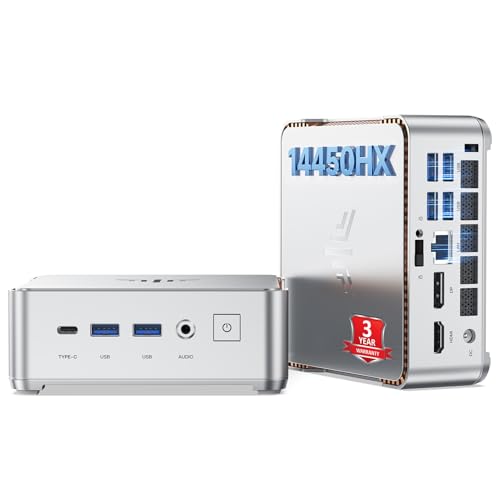
If you’re a gamer or content creator seeking powerful performance in a compact package, the KAMRUI Hyper H2 Mini Gaming PC stands out. With an Intel Core i7-13620H processor, it delivers impressive multitasking capabilities. The 32GB DDR RAM and 1TB NVMe SSD guarantee swift performance, while support for triple 4K UHD displays enhances your visual experience. Connectivity options, including Wi-Fi 6 and 2.5GbE LAN, keep you connected seamlessly. Its efficient cooling system and compact design allow for versatile placement. Plus, with lifetime technical support, you can game and create with confidence, knowing help is just a call away.
Best For: Gamers and content creators who need a compact yet powerful PC for high-performance multitasking and 4K visual experiences.
Pros:
- Exceptional multitasking performance with the Intel Core i7-13620H processor.
- Supports triple 4K UHD displays for enhanced visual quality.
- Compact design allows for versatile placement and easy mounting options.
Cons:
- Limited upgrade options for graphics, as it relies on integrated graphics.
- Higher initial cost compared to standard desktops or gaming consoles.
- The compact size may lead to potential thermal constraints under heavy loads despite the cooling system.
GMKtec Mini PC with Intel N150, 16GB RAM, 512GB SSD

For those seeking a compact yet powerful solution for self-hosting, the GMKtec Mini PC stands out with its Intel Twin Lake N150 processor. With 16GB of DDR4 RAM and a speedy 512GB SSD, you’ll enjoy quick boot times and seamless multitasking. The dual HDMI ports support 4K@60Hz output, making it ideal for home theater setups. Connectivity is robust, featuring WiFi 6, Bluetooth 5.2, and multiple USB 3.2 ports. Weighing just 12.6 ounces, it’s portable yet efficient. Plus, with a warranty and solid customer support, you’ll have peace of mind for your self-hosting needs.
Best For: Individuals seeking a compact and efficient mini PC for self-hosting, home entertainment, or office work.
Pros:
- Powerful Performance: Features an upgraded Intel Twin Lake N150 processor with improved speeds for seamless multitasking.
- 4K Dual Display Support: Dual HDMI ports enable connection to two 4K@60Hz displays, perfect for home theater setups.
- Robust Connectivity: Equipped with WiFi 6, Bluetooth 5.2, and multiple USB 3.2 ports for enhanced connectivity options.
Cons:
- Limited Gaming Capability: While it supports 4K video playback, it may not handle high-end gaming due to integrated graphics.
- Compact Design: Smaller size may limit upgrade options compared to traditional desktop PCs.
- Weight: At 12.6 ounces, it may still be heavier than other ultra-portable mini PCs on the market.
KAMRUI Pinova P2 Mini PC with AMD Ryzen 4300U

Ideal for tech enthusiasts and small business owners, the KAMRUI Pinova P2 Mini PC with AMD Ryzen 4300U packs a powerful punch in a compact form. Its 4-core processor reaches speeds up to 3.7 GHz, handling demanding tasks with ease. With 16GB DDR4 RAM and a 512GB M.2 SSD, you’ll enjoy seamless multitasking and quick file transfers. The integrated Radeon graphics support Triple 4K displays, perfect for presentations or entertainment. Plus, versatile connectivity options, including USB3.2 Type-C and Gigabit LAN, enhance your productivity. Its compact design allows for easy mounting, while KAMRUI’s lifetime support guarantees peace of mind.
Best For: Tech enthusiasts and small business owners seeking a compact yet powerful computing solution for multitasking and multimedia.
Pros:
- High Performance: Powered by the AMD Ryzen 4300U processor, it efficiently handles demanding applications and multitasking.
- Ample Storage: Comes with 16GB DDR4 RAM and a 512GB M.2 SSD, expandable for extensive data storage needs.
- Triple 4K Display Support: Integrated Radeon graphics enable smooth visuals across three 4K displays, ideal for presentations and entertainment.
Cons:
- Limited Integrated Graphics for Gaming: While suitable for casual gaming, it may not perform well with more demanding titles.
- Additional Storage Needed: The maximum storage capacity of 4TB is not included, requiring additional purchases.
- Compact Design May Limit Upgradeability: The small form factor might restrict some upgrades or modifications compared to larger desktop PCs.
KAMRUI AM21 Mini PC with AMD Ryzen 7 and 32GB RAM

The KAMRUI AM21 Mini PC, powered by the AMD Ryzen 7 processor and equipped with 32GB of RAM, stands out as an excellent choice for gamers and content creators who need robust performance in a compact form factor. With its 8-core, 16-thread architecture, it outperforms competitors, ensuring smooth multitasking. The AMD Radeon 780M graphics handle 1080p gaming effortlessly, rivaling dedicated GPUs. You can expand the memory up to 96GB and storage to 4TB, meeting all your future needs. Connectivity options are plentiful, including Wi-Fi 6 and USB4, making it a versatile addition to any workspace.
Best For: Gamers and content creators seeking high-performance computing in a compact mini PC.
Pros:
- Exceptional performance with AMD Ryzen 7 and 32GB RAM, ideal for multitasking and demanding applications.
- Impressive graphics capabilities with AMD Radeon 780M, providing smooth 1080p gaming and competing with dedicated GPUs.
- Extensive connectivity options, including Wi-Fi 6 and USB4, enhancing versatility and workspace efficiency.
Cons:
- Limited internal space may require future upgrades for larger storage needs.
- Compact size may lead to potential overheating issues under heavy loads.
- Some users may find the price point higher compared to entry-level mini PCs.
DreamQuest Mini PC with Windows 11 Pro (Intel N95, 12GB DDR5, 512GB SSD)

Looking for a powerful yet compact solution for self-hosting? The DreamQuest Mini PC packs a punch with its 12th Intel Alder Lake N95 processor, delivering a 35% boost in performance. With 12GB of DDR5 memory, you’ll enjoy smooth multitasking and energy-efficient operation. The 512GB M.2 SSD is upgradeable to 2TB, ensuring ample storage for your needs. Its versatile connectivity includes dual USB-C and HDMI ports, supporting triple-screen output at 4K resolution. Preloaded with Windows 11 Pro, it offers compatibility with various systems. Lightweight and portable, this mini PC is backed by a one-year warranty, making it an ideal choice for your self-hosting setup.
Best For: Individuals seeking a compact and powerful solution for self-hosting, multitasking, and high-resolution display setups.
Pros:
- High performance: The Intel Alder Lake N95 processor offers a significant performance boost, making it suitable for demanding applications.
- Ample connectivity: With multiple USB-C and HDMI ports, you can connect various devices and enjoy triple-screen setups.
- Energy-efficient: The 12GB DDR5 memory ensures smooth multitasking while maintaining low power consumption.
Cons:
- Limited initial storage: Although upgradeable, the built-in 512GB SSD may not be sufficient for users with extensive storage needs right out of the box.
- Compact size may limit upgrade options: The mini PC’s small form factor might restrict certain hardware upgrades compared to larger systems.
- Potential heat generation: High performance in a compact design could lead to increased heat, which might require additional cooling solutions during intense workloads.
GMKtec Mini PC Gaming (AMD Ryzen 7 PRO 6850U)

For gamers and content creators seeking high-performance computing in a compact form, the GMKtec Mini PC Gaming powered by the AMD Ryzen 7 PRO 6850U stands out. With an 8-core processor and 32GB of upgradable DDR5 RAM, it delivers impressive multitasking capabilities. The integrated AMD Radeon 680M GPU enhances your gaming experience, supporting resolutions up to 8K. Its cooling system guarantees quiet operation, and multiple connectivity options, including WiFi 6 and dual 2.5Gbps NICs, keep you connected. Plus, the compact design makes it easy to fit into any setup, all while maintaining powerful performance for demanding tasks.
Best For: Gamers and content creators seeking a high-performance yet compact computing solution that can handle demanding applications.
Pros:
- Supports quad display capabilities with up to 8K resolution, perfect for multitasking and immersive gaming.
- Advanced cooling system ensures quiet operation while maintaining optimal performance levels.
- Expandable storage options and RAM capabilities allow for future upgrades to meet increasing performance needs.
Cons:
- Limited to a 1-year warranty, which may not be sufficient for heavy users.
- Compact size may lead to thermal constraints under maximum load despite the cooling system.
- Price point may be higher compared to traditional gaming PCs with similar specifications.
KAMRUI Hyper H1 Mini Gaming PC

When it comes to powerful computing in a compact form, the KAMRUI Hyper H1 Mini Gaming PC stands out as an ideal choice for gamers and professionals alike. Equipped with an AMD Ryzen 7 6800H processor, it handles heavy multitasking and demanding applications effortlessly. With 32GB LPDDR5 RAM and a 1TB NVMe SSD, you’ll enjoy ample speed and storage for everything from gaming to image editing. Plus, it supports triple 4K displays, enhancing your visual experience. Its portable design makes it easy to fit into any workspace or travel bag, ensuring high performance wherever you go.
Best For: Gamers and professionals seeking a powerful, compact computing solution for multitasking and demanding applications.
Pros:
- High-performance AMD Ryzen 7 6800H processor for seamless multitasking and demanding tasks.
- Ample memory and storage with 32GB RAM and a 1TB NVMe SSD, ideal for various applications.
- Portable and compact design makes it easy to fit in any workspace or travel bag.
Cons:
- Limited upgradeability compared to larger desktop PCs, due to its compact design.
- Potential overheating if not adequately ventilated during heavy gaming or computing sessions.
- Higher price point may not be suitable for budget-conscious consumers.
ACEMAGICIAN W1 Mini PC – AMD Ryzen 7 H 255

The ACEMAGICIAN W1 Mini PC, powered by the AMD Ryzen 7 H 255, is an exceptional choice for tech enthusiasts and professionals seeking a compact yet powerful solution for self-hosting. With an 8-core processor clocking up to 4.9GHz, you’ll experience enhanced performance, particularly with its AMD Radeon 780M graphics supporting 8K resolution. The 32GB DDR5 memory is expandable, and you can store up to 4TB with additional SSDs. Its compact design fits seamlessly in any workspace, while robust connectivity options, including USB4 and WiFi 6E, guarantee stable connections. Plus, its advanced cooling keeps everything running smoothly under load.
Best For: Tech enthusiasts and professionals seeking a powerful, compact PC for self-hosting, office tasks, and creative work.
Pros:
- Enhanced performance with AMD Ryzen 7 H 255, offering superior CPU and GPU capabilities.
- Versatile connectivity options including USB4 Type-C and WiFi 6E for fast and stable connections.
- Compact design ideal for limited workspace, making it perfect for both commercial and home use.
Cons:
- Limited built-in storage at 1TB, requiring additional SSDs for users needing more space.
- Cooling system may generate noise under heavy load, which could be distracting in quiet environments.
- Price point may be higher compared to other mini PCs with less performance.
Beelink Me Mini PC NAS with Intel N95 CPU

Compact yet powerful, the Beelink Me Mini PC NAS with Intel N95 CPU is perfect for tech enthusiasts and families looking to enhance their home media experience. With its 4-core processor and up to 3.4GHz turbo frequency, you’ll enjoy seamless performance. The 12GB LPDDR5 RAM and 1TB PCIe SSD guarantee ample storage for your media library, expandable to 24TB. Dual 2.5G LAN ports and WiFi 6 provide fast networking for smooth 4K streaming. Its compact design operates quietly, making it ideal for any room. Plus, a rich interface simplifies connectivity, while the 45W power supply keeps setup hassle-free.
Best For: Tech enthusiasts and families seeking a compact and efficient media center with extensive storage and high-speed networking capabilities.
Pros:
- Powerful Performance: Features an Intel Alder Lake N95 CPU with 4 cores and a turbo frequency of up to 3.4GHz for seamless multitasking.
- Expandable Storage: Comes with 1TB SSD and supports up to 24TB, making it ideal for extensive media libraries.
- Quiet Operation: Designed for 24/7 use with a silent fan, making it suitable for any room in the house.
Cons:
- Limited Graphics Performance: Integrated Intel UHD Graphics may not be sufficient for high-end gaming or graphic-intensive applications.
- Weight: At 2.51 pounds, it may be heavier than some other compact mini PCs on the market.
- Price Point: May be considered expensive compared to traditional NAS devices with similar storage capacity.
Factors to Consider When Choosing a Mini PC for Self Hosting
When you’re choosing a mini PC for self-hosting, several key factors come into play. You’ll want to think about the processor performance, RAM, storage needs, and connectivity options that suit your projects. Additionally, consider how cooling, noise levels, and compact design will affect your setup.
Processor Performance Requirements
Choosing the right processor for your mini PC is essential, especially if you want to self-host multiple services efficiently. Focus on core count and thread capability; an 8-core, 16-thread processor will manage tasks better than a 4-core, 4-thread one. Higher clock speeds, reaching up to 4.9 GHz, enhance performance in CPU-intensive applications, so keep that in mind. Look for newer architectures like Zen 2 or Zen 3, as they offer significant improvements in performance and energy efficiency. Also, consider the thermal design power (TDP) rating, aiming for lower values to guarantee energy efficiency. Finally, integrated graphics capabilities can save on additional hardware costs, particularly for tasks involving video playback or casual gaming.
RAM and Storage Needs
A solid foundation of RAM and storage is essential for any mini PC you’re considering for self-hosting. Aim for at least 16GB of RAM to guarantee smooth multitasking and efficient performance across various applications. SSD storage is a must; opt for 512GB or more to assure quick boot times and fast access to your essential files. It’s wise to choose models with upgradeable RAM options, allowing you to expand to 32GB or beyond as your needs grow. Additionally, consider mini PCs with dual M.2 slots for SSDs, enabling configurations up to 4TB for extensive data and application support. Finally, verify the system supports high-speed RAM and SSD technologies, like DDR4/DDR5 and PCIe 3.0/4.0, for maximum responsiveness.
Connectivity Options Available
Reliable connectivity options are vital for anyone setting up a mini PC for self-hosting. Look for models equipped with dual 2.5GbE LAN ports, providing up to 2500Mbps wired internet speeds for stable connections. Wi-Fi 6 support is another key feature, as it offers improved coverage and lower latency, making it ideal for environments with multiple devices. Additionally, make sure your mini PC has a variety of USB ports, like USB 3.2 and USB4, for fast data transfer and peripheral connectivity. HDMI and DisplayPort outputs are also important for multi-display setups, enhancing your productivity. Finally, Bluetooth 5.2 support will enable stable connections to wireless devices, such as keyboards and mice, essential for your self-hosting tasks.
Cooling and Noise Levels
When setting up a mini PC for self-hosting, effective cooling and manageable noise levels are vital for maintaining performance and comfort. Look for systems that feature dual centrifugal fans and copper thermal frameworks to keep temperatures stable during heavy workloads. Ideally, choose a model that operates quietly, around 30-35dB, so it won’t disrupt your work environment. Advanced cooling solutions with independent aluminum heatsinks can help maintain temperatures below 70°C under load, which prevents thermal throttling and extends component lifespan. Pay attention to the placement of cooling vents and airflow design, as these are important in compact mini PCs. Regular maintenance, like cleaning dust from vents, will also guarantee efficient cooling and low noise levels for your self-hosting setup.
Compact Design Considerations
Choosing the right mini PC for self-hosting often hinges on its compact design. You’ll want to take dimensions carefully into account, as smaller units fit easily in tight spaces or on limited desk areas. Look for models that support VESA mounting; this allows you to place the PC behind monitors or on walls, saving valuable desk space. Weight is another factor—lighter models are more portable and easier to relocate when needed. Additionally, guarantee the mini PC has adequate thermal management features to prevent overheating in confined areas. Finally, a well-designed unit should offer sufficient I/O options to connect your necessary peripherals and networking equipment without creating a cluttered environment.
Upgradeability and Expansion Potential
Compact design is just one part of the equation; upgradeability and expansion potential are equally important for a mini PC used in self-hosting. When choosing your mini PC, consider the RAM upgrade capacity. Models that support expansion from 16GB to 64GB or even 96GB greatly enhance performance for multiple applications. Look for dual M.2 slots for storage expansion, allowing upgrades to larger SSDs, like 2TB or 4TB, as your data needs grow. Check for additional RAM slots to improve multitasking and server performance during peak loads. Also, evaluate the cooling system design, as efficient heat dissipation helps maintain higher performance levels. Finally, consider the availability of modular components for future upgrades, ensuring your mini PC remains adaptable.
Operating System Compatibility
Before diving into self-hosting, you’ll want to verify your mini PC is compatible with the operating system you plan to use. Compatibility can vary widely between Windows, Linux, and other systems. Look for mini PCs that support easy installation of various operating systems, including options for virtual machines or dual-boot configurations. Check for available drivers for your chosen OS to avoid hardware compatibility issues—especially for network interfaces and peripherals. Consider the system requirements of the software you intend to run, as some applications may require specific OS versions for peak performance. Finally, confirm your mini PC can receive firmware updates for enhanced security and compatibility with new operating system features, essential for a reliable self-hosting environment.