
A fast CPU is only part of a good Linux desktop. Graphics drivers, Wi-Fi support, memory capacity, and room to upgrade can matter just as much once you install your distribution.
These 10 desktops span compact Dell OptiPlex systems and newer gaming and workstation builds. The right choice depends on whether you need an affordable development machine, a multicore workhorse, or a powerful GPU—and how much setup you are willing to do.
Best 10 High Performance Deskcpu for Linux Picks for 2026
Everyday Linux Pick

- Six-core Core i5-8500
- 1TB SSD; RAM listing conflicts
- HDMI, DisplayPort, and Ethernet
Best For: Everyday multitasking and a Linux installation project
Quiet Workstation Pick

- 16-core Ryzen 9 and RTX 4080
- 64GB DDR5 and 4TB NVMe
- Liquid-cooled, compact design
Best For: Demanding creative and graphics workloads
Small-Form-Factor Pick

- Core i7-7700 and 32GB RAM
- 1TB SSD in a compact case
- HDMI and DisplayPort outputs
Best For: Space-conscious office multitasking
High-End Graphics Pick

- Ryzen 9 9950X3D and RTX 5080
- 32GB DDR5-6000; 2TB NVMe
- 360mm liquid CPU cooler
Best For: High-end CPU and graphics hardware
Compact Office Pick

- Quad-core i7-7700 and 16GB DDR4
- 512GB NVMe SSD in a compact case
- Windows 11 Pro installed; 90-day limited warranty
Best For: Space-conscious office work and general development
Ryzen Gaming Pick

- Ryzen 7 9800X3D and RTX 5070
- 32GB DDR5-6000 and 2TB NVMe SSD
- 360mm liquid cooler; Windows 11 installed
Best For: Gaming-oriented Linux setups with dedicated graphics
Intel Tower Pick

- Core Ultra 7 265KF and RTX 5060 Ti 8GB
- 32GB DDR5-6000 and 2TB NVMe SSD
- 240mm liquid cooler; Windows 11 installed
Best For: Intel-based desktops with dedicated graphics
AMD Gaming Pick
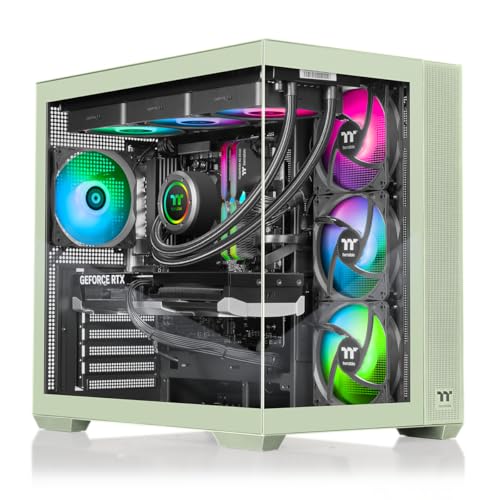
- Ryzen 7 9800X3D and RTX 5070
- 32GB DDR5-6000; 2TB NVMe SSD
- 360mm liquid-cooling radiator
Best For: Buyers prioritizing a Ryzen 7 9800X3D and 2TB of included storage
Intel 5060 Ti Pick

- Core Ultra 7 265KF processor
- RTX 5060 Ti with 8GB graphics memory
- 32GB DDR5-6000; 1TB NVMe SSD
Best For: Buyers seeking the Core Ultra 7 265KF with RTX 5060 Ti graphics
White Intel 5070 Pick

- Core Ultra 7 265KF and RTX 5070
- 32GB DDR5-6000; 1TB NVMe SSD
- White case; 240mm liquid cooling
Best For: Buyers wanting Intel and RTX 5070 hardware in a white tower
Everyday Linux Pick – Dell OptiPlex 3060
For shoppers seeking a high performance deskcpu for linux, this renewed OptiPlex 3060 offers a six-core Intel Core i5-8500, a listed 32GB of DDR4 RAM, and a 1TB SSD for a capable everyday desktop. It ships with Windows 11 Pro, so Linux installation is a separate step.
Best For: Everyday multitasking and a Linux installation project on a compact office desktop.
Pros:
- Six-core i5-8500 and 1TB SSD suit general desktop work.
- HDMI, DisplayPort, Ethernet, Wi-Fi, and Bluetooth offer connection options.
- Listed internal SATA connections allow for storage expansion.
Cons:
- Ships with Windows 11 Pro rather than Linux.
- The listing conflicts on RAM: its title says 32GB, while one specification says 8GB.
Check the installed memory with the seller before buying. This is a practical office-class choice, but the supplied notes do not verify Linux hardware compatibility.
Quiet Workstation Pick – Cooler Master Cooling X
If high performance deskcpu for linux means substantial CPU, GPU, and storage capacity, the Cooling X pairs a 16-core Ryzen 9 7950X3D with an RTX 4080, 64GB of DDR5, and two 2TB NVMe SSDs. It ships with Windows 11 Pro, not Linux.
Best For: Buyers planning demanding creative or graphics workloads who are prepared to set up Linux themselves.
Pros:
- 16-core processor, dedicated RTX 4080 graphics, and 64GB of memory.
- 4TB total PCIe 4.0 NVMe storage.
- Liquid-cooled CPU and GPU in a relatively compact case.
Cons:
- Linux installation and driver setup are not included.
- The 39-pound system is heavy despite its compact dimensions.
This is a strong hardware configuration for demanding work, but the supplied notes do not establish Linux support for its graphics, wireless, or cooling controls. Confirm your intended distribution and driver needs before committing.
Small-Form-Factor Pick – Dell OptiPlex 7050 SFF
For a high performance deskcpu for linux in a smaller office footprint, this renewed OptiPlex 7050 SFF combines a quad-core Core i7-7700, 32GB of DDR4 RAM, and a 1TB SSD. Windows 11 Pro comes installed; Linux would require your own setup.
Best For: Multitasking on a space-conscious desktop with HDMI and DisplayPort monitor connections.
Pros:
- 32GB of RAM and a 1TB SSD provide room for everyday applications and files.
- Small-form-factor case measures 11.5 by 3.6 by 11.4 inches.
- Includes HDMI, DisplayPort, Ethernet, a wired keyboard and mouse, and USB Wi-Fi.
Cons:
- Uses an older four-core processor with integrated graphics.
- Renewed unit has a listed 90-day seller warranty and no preinstalled Linux.
Its memory and compact size make it worth considering for an office-style Linux conversion. Check compatibility for the bundled USB Wi-Fi adapter and your preferred distribution before purchase.
High-End Graphics Pick – Thermaltake View 9580S-380XL
For a high performance deskcpu for linux built around current high-end components, the View 9580S-380XL lists a Ryzen 9 9950X3D, GeForce RTX 5080, 32GB of DDR5-6000 memory, and a 2TB NVMe SSD. It comes with Windows 11, so a Linux build starts with installing your chosen distribution.
Best For: Buyers seeking powerful CPU and dedicated GPU hardware in a display-focused desktop tower.
Pros:
- Ryzen 9 9950X3D and RTX 5080 provide a high-end hardware pairing.
- 32GB DDR5-6000 memory and 2TB NVMe storage.
- 360mm closed-loop CPU cooling and HDMI/DisplayPort video connections.
Cons:
- Linux and NVIDIA driver setup are the buyer’s responsibility.
- Tempered-glass tower weighs a listed 20.07 kg.
Choose this configuration for its processing and graphics hardware rather than out-of-box Linux convenience. The supplied notes do not verify Linux support for its wireless or RGB features.
Compact Office Pick – Dell Optiplex 5050 SFF
If your search for a high performance deskcpu for linux calls for a compact, practical desktop rather than a gaming tower, this renewed Optiplex pairs a quad-core Intel Core i7-7700 with 16GB of DDR4 and a 512GB NVMe SSD. It ships with Windows 11 Pro, so plan on installing Linux yourself.
Best For: A space-conscious Linux workstation for office work and general development.
Pros:
- Small-form-factor case measures 11.5 x 11.4 x 3.7 inches.
- 16GB of RAM and a 512GB NVMe SSD provide a useful starting configuration.
- Includes a wired keyboard and mouse, with HDMI and DisplayPort video outputs.
Cons:
- Ships with Windows 11 Pro rather than Linux.
- Integrated Intel HD Graphics 630 is less suited to GPU-intensive work than a dedicated graphics card.
- Listed limited warranty is 90 days.
Choose this one for a tidy desktop and a straightforward CPU-and-storage configuration; check your intended Linux distribution’s hardware support before replacing the installed OS.
For shoppers comparing a high performance deskcpu for linux with substantial graphics hardware, the Thermaltake View 9870S-380 combines a Ryzen 7 9800X3D, GeForce RTX 5070, 32GB of DDR5-6000 memory, and a 2TB NVMe SSD. It comes with Windows 11, not a preinstalled Linux distribution.
Best For: Buyers who want a powerful gaming-oriented tower and are prepared to set up Linux themselves.
Pros:
- Ryzen 7 9800X3D and RTX 5070 pair a high-end CPU with dedicated graphics.
- 32GB of DDR5-6000 memory and a 2TB NVMe SSD offer ample starting capacity.
- Includes Wi-Fi and closed-loop liquid cooling with a 360mm radiator.
Cons:
- Ships with Windows 11, so Linux installation is an additional step.
- NVIDIA graphics may require distribution-appropriate drivers for your intended setup.
This is the strongest graphics configuration of the three listed systems. Before buying it specifically for Linux, check support for the RTX 5070 and the rest of the build in your chosen distribution.
The Thermaltake Versa u2660TS is an Intel-based option for anyone searching for a high performance deskcpu for linux: it lists a Core Ultra 7 265KF, GeForce RTX 5060 Ti 8GB, 32GB of DDR5-6000 memory, and a 2TB NVMe SSD. Windows 11 is installed, so Linux setup is left to the buyer.
Best For: Buyers seeking a current Intel desktop with dedicated NVIDIA graphics and room for a Linux installation.
Pros:
- Core Ultra 7 265KF and RTX 5060 Ti 8GB provide a CPU-and-dedicated-GPU configuration.
- 32GB of DDR5-6000 memory and a 2TB NVMe SSD come standard.
- Includes Wi-Fi, DisplayPort and HDMI outputs, and a 240mm closed-loop liquid cooler.
Cons:
- Ships with Windows 11 rather than Linux.
- Check NVIDIA driver availability for your chosen Linux distribution.
This tower makes sense if you prefer the listed Intel platform and do not need the other Thermaltake model’s RTX 5070. Confirm Linux hardware support before committing to an OS switch.
AMD Gaming Pick – Thermaltake View 9870M-380
If you’re shopping for a high performance deskcpu for linux, the View 9870M-380 offers a Ryzen 7 9800X3D, RTX 5070, 32GB of DDR5 memory, and a roomy 2TB NVMe SSD. It ships with Windows 11, so plan for a separate Linux installation and check hardware support for your preferred distribution.
Best For: Buyers who want the Ryzen 7 9800X3D and more included storage in a prebuilt tower.
Pros:
- Ryzen 7 9800X3D paired with an RTX 5070 with 12GB of graphics memory.
- 32GB DDR5-6000 memory and a 2TB NVMe SSD.
- Closed-loop liquid cooler with a 360mm radiator.
Cons:
- Ships with Windows 11, not Linux.
- The supplied specifications do not confirm Linux driver or wireless compatibility.
This is the storage-rich option among these three towers. Its hardware is appealing on paper, but factor Linux installation and component compatibility checks into the purchase.
Intel 5060 Ti Pick – Thermaltake View u2660T-170
For a high performance deskcpu for linux, the View u2660T-170 combines an Intel Core Ultra 7 265KF with 32GB of DDR5-6000 memory and an RTX 5060 Ti. It arrives with Windows 11 rather than Linux, so allow time to install your distribution and verify support for the included hardware.
Best For: Buyers who want the Core Ultra 7 265KF and can work with the included 1TB SSD and RTX 5060 Ti.
Pros:
- Core Ultra 7 265KF with 32GB of DDR5-6000 memory.
- Dedicated RTX 5060 Ti graphics with 8GB of graphics memory.
- Closed-loop liquid cooling with a 240mm radiator.
Cons:
- Ships with Windows 11; Linux is not preinstalled.
- Its 1TB SSD and 8GB graphics memory are smaller than those of the other listed configurations.
This is the RTX 5060 Ti configuration in the group. Compare its storage and graphics-memory limits with your workload, and confirm Linux support before replacing Windows.
White Intel 5070 Pick – Thermaltake View u2670S-170
The white View u2670S-170 is an Intel-based high performance deskcpu for linux candidate, pairing a Core Ultra 7 265KF with an RTX 5070, 32GB of DDR5-6000 memory, and a 1TB NVMe SSD. Because it ships with Windows 11, Linux installation and hardware support checks are part of the buying decision.
Best For: Buyers who want an RTX 5070 and Core Ultra 7 265KF in a white prebuilt tower.
Pros:
- RTX 5070 with 12GB of graphics memory.
- Core Ultra 7 265KF and 32GB of DDR5-6000 memory.
- White case with RGB lighting and a 240mm liquid-cooling radiator.
Cons:
- Ships with Windows 11 rather than Linux.
- 1TB of included storage, versus 2TB in the listed Ryzen configuration.
Choose this one if the Intel processor, RTX 5070, and white finish fit your priorities. The supplied specifications do not establish Linux compatibility, so verify the GPU and wireless setup for your distribution.
How We Picked the Best High Performance Deskcpu for Linux
We compared the listed processors, memory, storage, graphics, and case formats against common Linux workloads: development, multitasking, content creation, and GPU-accelerated work. We also considered practical setup concerns, including wireless adapters, firmware, and upgrade access. The listings do not establish that every component has been tested with Linux, so treat compatibility as something to verify before purchase.
Quick Comparison: Where the 10 Systems Fit
The Dell OptiPlex 3060, 7050 SFF, and 5050 SFF are compact choices for everyday development and office tasks. Their older platforms make them less compelling for demanding rendering or large builds, but they may suit buyers who prioritize footprint and cost. The Cooler Master Cooling X pairs a Ryzen 9 7950X3D with 64GB of RAM and an RTX 4080 for memory-heavy workflows and GPU work. Thermaltake’s Ryzen 9 9950X3D and RTX 5080 configuration is the higher-end option on this list. Its Ryzen 7 9800X3D systems and Core Ultra 7 265KF systems offer other CPU and GPU combinations; check the exact configuration, especially where similarly named models differ.
Key Buying Factors for a High-Performance DeskCPU for Linux
Match the CPU to Your Workload
For compiling large projects, running several virtual machines, or CPU rendering, prioritize sustained multicore performance and enough RAM. For lighter coding and general use, an older OptiPlex may be sufficient. A gaming-focused processor is not automatically the best value for workloads that mainly benefit from more cores or memory.
Check Graphics and Driver Requirements
If you need CUDA or other NVIDIA-dependent tools, confirm that your distribution supports the required proprietary driver and your application supports the selected GPU. If you do not need discrete graphics, a simpler graphics setup may save money and reduce setup work. Verify display outputs against your monitors; do not assume every listed system has the same ports.
Verify Wireless, Storage, and Upgrades
“Wi-Fi included” does not identify the adapter. Ask for its model if wireless connectivity is essential, and check Linux support for Bluetooth too. Confirm usable storage capacity, available M.2 or SATA connections, maximum supported RAM, and whether the case and power supply can accommodate future upgrades. Small-form-factor OptiPlex systems have tighter expansion limits than larger towers.
Plan for Installation
These listings mention Windows, not a preinstalled Linux distribution. Check firmware settings, obtain installation media for your chosen distribution, and confirm the seller’s return policy before replacing the operating system. On newer hardware, a current distribution and kernel may be important for full device support.
Who Should Buy Which High Performance Deskcpu for Linux?
Choose an OptiPlex if you want a compact, lower-cost Linux development or productivity PC and can accept older hardware. Consider the Cooling X when your work needs 64GB of listed RAM alongside a powerful NVIDIA GPU. Look at the Thermaltake Ryzen 9 and RTX 5080 build for a top-end CPU/GPU combination; compare the Ryzen 7 and Core Ultra 7 models if their exact specifications and prices better match your workload. For any High Performance Deskcpu for Linux, verify the components you cannot easily replace—especially networking, graphics support, and case expansion—before buying.