
In 2026, finding the right color-accurate monitor for video editing is more essential than ever. With advancements in technology, monitors now deliver unmatched visual fidelity and ergonomic comfort. You’ll want to guarantee the monitors you choose can keep up with your creative demands. From stunning 5K resolutions to exceptional color accuracy, the options are diverse. Let’s explore the top contenders that can elevate your editing experience and help you make the best choice.
ASUS ProArt Display PA278QV 27” WQHD Monitor

If you’re a video editor seeking unparalleled color accuracy, the ASUS ProArt Display PA278QV 27” WQHD monitor is an exceptional choice. With its 27-inch WQHD (2560 x 1440) IPS display, you get stunning visuals and a frameless design that maximizes your workspace. The monitor boasts a Delta E < 2 color accuracy, covering 100% sRGB and 100% Rec. 709 color gamuts. Equipped with extensive connectivity options like Mini DisplayPort and HDMI, it guarantees compatibility with various devices. Plus, eye care technology and adjustable ergonomics keep you comfortable during long editing sessions. Enjoy a complimentary 3-month Adobe Creative Cloud access with your purchase!
Best For: Video editors and creative professionals seeking exceptional color accuracy and ergonomic design for long editing sessions.
Pros:
- Delta E < 2 color accuracy ensures precise color reproduction for professional editing.
- Wide color gamut coverage of 100% sRGB and 100% Rec. 709 enhances visual quality.
- Extensive connectivity options including Mini DisplayPort and HDMI offer versatility for various devices.
Cons:
- 27-inch screen size may be too small for those who prefer larger displays for multitasking.
- No built-in speakers, which may require additional equipment for audio output.
- Limited to WQHD resolution, which might not meet the needs of users looking for 4K capabilities.
ASUS ProArt Display 27” 4K HDR Monitor (PA279CRV)

The ASUS ProArt Display 27” 4K HDR Monitor (PA279CRV) is an exceptional choice for video editors who demand precise color accuracy in their work. With a stunning 3840 x 2160 resolution and a wide 178° viewing angle, you’ll enjoy vivid visuals. It offers 99% coverage of DCI-P3 and Adobe RGB, ensuring your colors remain true. Plus, it’s Calman Verified and factory pre-calibrated for a Delta E < 2. The monitor features extensive connectivity options, including DisplayPort over USB-C, and comes with a 3-year warranty. To top it off, you’ll receive a complimentary 3-month Adobe Creative Cloud subscription!
Best For: Professionals and video editors seeking precise color accuracy and extensive connectivity options in a high-resolution monitor.
Pros:
- Exceptional color accuracy with 99% DCI-P3 and Adobe RGB coverage, ensuring true-to-life visuals.
- Factory pre-calibrated for Delta E < 2, providing reliable color performance out of the box.
- Versatile connectivity options including DisplayPort over USB-C, HDMI, and a USB hub, accommodating various devices.
Cons:
- Higher price point compared to standard monitors, which may not be suitable for casual users.
- Limited gaming features, such as refresh rate and response time, which may not appeal to gamers.
- Weight and size may require a sturdy desk setup for optimal ergonomics and viewing comfort.
ASUS ProArt Display 27” 5K HDR Professional Monitor (PA27JCV)

Designed for professional video editors, the ASUS ProArt Display 27” 5K HDR Monitor (PA27JCV) delivers stunning color accuracy with its 99% DCI-P3 and 100% sRGB coverage. Its 27-inch 5K display guarantees crisp visuals, while the IPS panel provides a wide 178° viewing angle. This monitor is Calman Verified and pre-calibrated to achieve a ΔE < 2, guaranteeing precise color reproduction. With ambient light and backlight sensors, you’ll enjoy bright imagery and accurate color temperature in any environment. Plus, USB-C PD 96W connectivity keeps your devices powered. A 3-year warranty and complimentary Adobe Creative Cloud access make this monitor a solid investment.
Best For: Professional video editors and graphic designers seeking exceptional color accuracy and high-resolution displays for their work.
Pros:
- Exceptional color accuracy with 99% DCI-P3 and 100% sRGB coverage, ideal for color-critical tasks.
- 5K resolution (5120 x 2880) provides crisp and detailed visuals, enhancing the editing experience.
- Ambient light and backlight sensors automatically adjust brightness and color temperature for optimal viewing conditions.
Cons:
- The premium price point may not be suitable for casual users or hobbyists.
- Limited to a 27-inch size, which may not meet the needs of users requiring larger displays.
- Some users may find the USB-C PD 96W power delivery insufficient for charging larger devices.
ASUS ProArt 34” Ultrawide Curved Professional HDR Monitor (PA34VCNV)

For professional video editors seeking exceptional color accuracy, the ASUS ProArt 34” Ultrawide Curved Professional HDR Monitor (PA34VCNV) stands out with its impressive 100% sRGB and 100% Rec. 709 wide color gamut. This 34.1-inch IPS curved display features a stunning 3440 x 1440 resolution and is Calman Verified, ensuring a Delta E < 2 color accuracy right out of the box. With extensive connectivity options like USB-C with 96W Power Delivery and HDMI, you’ll stay connected effortlessly. Plus, its ergonomic design allows for tilt, swivel, and height adjustments, providing a comfortable editing experience. Enjoy a 3-year warranty for peace of mind.
Best For: Professional video editors and graphic designers who require exceptional color accuracy and a wide viewing area for their work.
Pros:
- Impressive color accuracy with 100% sRGB and 100% Rec. 709 wide color gamut, Calman Verified.
- Extensive connectivity options including DisplayPort over USB-C with 96W Power Delivery, HDMI, and a USB hub.
- Ergonomic design allows for tilt, swivel, and height adjustments for a personalized viewing experience.
Cons:
- Higher price point compared to standard monitors, which may not be suitable for casual users.
- Limited native resolution of 3440 x 1440 may not meet the needs of some high-end graphic designers or gamers.
- Curved display may not appeal to everyone, especially those who prefer flat screens.
ASUS ProArt 24″ Monitor (PA248QV)
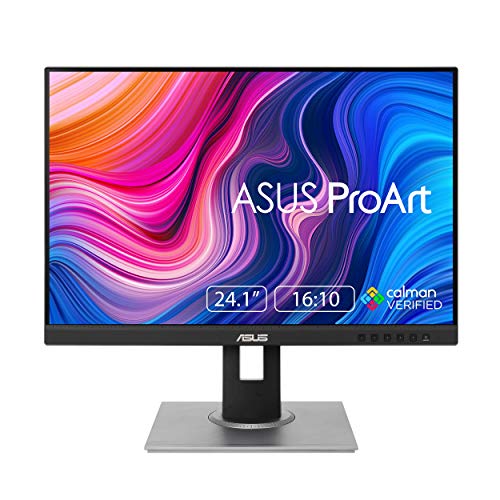
Color accuracy stands out as an essential feature for video editors, and the ASUS ProArt 24″ Monitor (PA248QV) excels in this area with its impressive 100% sRGB and Rec.709 coverage. With a WUXGA resolution of 1920 x 1200, you’ll enjoy sharp images and vivid colors. The IPS panel guarantees high color fidelity, achieving a DeltaE of less than 2 for precise reproduction. Ergonomic features like tilt, pivot, swivel, and height adjustability enhance your comfort during long editing sessions. Plus, you’ll get complimentary access to a 3-month Adobe Creative Cloud subscription with your purchase, making it a fantastic investment.
Best For: The ASUS ProArt 24″ Monitor (PA248QV) is best for video editors and creative professionals who require high color accuracy and ergonomic features for extended use.
Pros:
- 100% sRGB and Rec.709 coverage ensures true-to-life color reproduction for accurate editing.
- WUXGA resolution delivers sharp images with high clarity, enhancing the visual experience.
- Ergonomic adjustments allow for comfortable viewing during long editing sessions with tilt, pivot, swivel, and height flexibility.
Cons:
- Limited connectivity options with only DisplayPort and HDMI available.
- The 24″ screen size may feel small for some users who prefer larger displays for multitasking.
- The monitor lacks built-in speakers, which may require additional audio equipment for video editing.
Dell 27 Plus 4K Monitor (S2725QS)

The Dell 27 Plus 4K Monitor (S2725QS) stands out as an exceptional choice for video editors seeking precision and vibrancy in their work. With a stunning 27-inch 4K resolution and a 120Hz refresh rate, it delivers sharp, fluid visuals. The IPS panel technology guarantees vivid colors and excellent depth, thanks to 99% sRGB color coverage. Enjoy all-day comfort with ComfortView Plus, which reduces harmful blue light emissions. Plus, the sleek design features an ultra-thin bezel and integrated speakers, enhancing your workspace. The re-engineered audio quality further elevates your editing experience, making this monitor a top contender for professionals.
Best For: Video editors and professionals seeking precise color accuracy and vibrant visuals in a sleek design.
Pros:
- Exceptional 4K resolution and 120Hz refresh rate for sharp, fluid visuals.
- 99% sRGB color coverage ensures vivid colors and excellent depth.
- ComfortView Plus reduces harmful blue light emissions for all-day comfort.
Cons:
- May be priced higher than standard monitors for casual users.
- Integrated speakers may not satisfy audiophiles seeking high-end sound quality.
- Limited adjustability options for height and tilt compared to some competitors.
LG 27US500-W Ultrafine Monitor 27-Inch 4K UHD
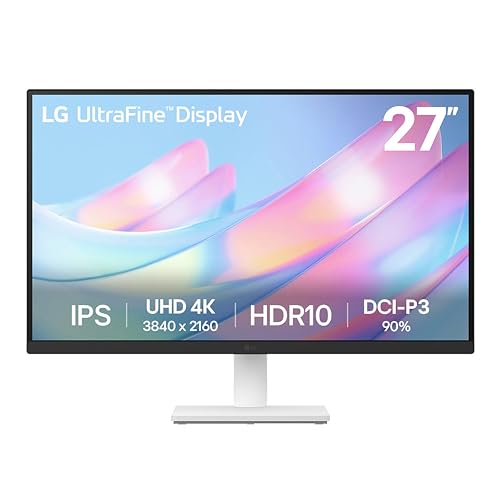
Creative professionals will appreciate the LG 27US500-W Ultrafine Monitor, which boasts a stunning 27-inch 4K UHD display that delivers exceptional detail and clarity. With a 1000:1 contrast ratio, you’ll experience deeper blacks and vivid colors, enhancing your visual projects. The wide viewing angles guarantee you see detailed imagery from various perspectives, while HDR10 support covers up to 90% of the DCI-P3 color gamut for accurate color representation. Its borderless design adds elegance, and the ergonomic stand allows for flexible tilt adjustments. Plus, the Onscreen Control feature makes workspace customization a breeze, perfect for multitasking efficiently.
Best For: Creative professionals needing high-resolution, color-accurate displays for work and design tasks.
Pros:
- Exceptional 27-inch 4K UHD display with stunning detail and clarity.
- Wide viewing angles and HDR10 support for accurate color representation.
- Ergonomic stand with flexible tilt adjustments for comfortable viewing.
Cons:
- Limited connectivity options may not suit all users.
- Higher price point compared to standard monitors.
- Lacks built-in speakers, requiring external audio solutions.
ASUS ProArt Display 27″ Monitor PA278CV

For video editors seeking exceptional color accuracy, the ASUS ProArt Display 27″ Monitor PA278CV stands out with its Calman Verified factory calibration, ensuring a Delta E of less than 2. The 27-inch WQHD display features a vibrant IPS panel with a 178° wide viewing angle, making it perfect for detailed editing. With a 75Hz refresh rate and Adaptive-Sync technology, you’ll experience smooth visuals. Plus, it covers 100% of the sRGB and Rec. 709 color gamuts. Connectivity options include USB-C, DisplayPort, and HDMI, while the height-adjustable stand and Eye Care technology enhance your comfort during long editing sessions.
Best For: Video editors and creative professionals who demand exceptional color accuracy and ergonomic features for detailed work.
Pros:
- Calman Verified factory calibration ensures high color accuracy with Delta E < 2.
- Wide connectivity options including USB-C with Power Delivery, DisplayPort, and HDMI for versatile setups.
- Eye Care technology helps reduce eye strain during long editing sessions.
Cons:
- Limited refresh rate of 75Hz may not satisfy gamers seeking higher performance.
- No built-in speakers, requiring external audio solutions for video editing.
- Daisy-chaining capability may depend on specific setups and could complicate multi-monitor arrangements.
Samsung 32″ UJ59 Series 4K UHD Computer Monitor

Offering stunning color accuracy and a resolution of 3840×2160, the Samsung 32″ UJ59 Series 4K UHD Computer Monitor is a top choice for video editors who demand precise visuals. Its VA panel supports a billion shades, ensuring every detail pops. With UHD upscaling, your SD and HD content transforms to near-UHD quality effortlessly. The monitor also features Picture-by-Picture and Picture-in-Picture modes, perfect for multitasking. Weighing just 16.61 pounds and sporting slim bezels, it fits neatly into any workspace. Plus, its gaming features like AMD FreeSync and low input lag enhance your overall experience when you’re not editing.
Best For: Professionals and gamers seeking a high-resolution monitor with exceptional color accuracy and multitasking capabilities.
Pros:
- Stunning 4K UHD resolution provides exceptional image clarity and detail.
- Versatile multitasking features like Picture-by-Picture and Picture-in-Picture enhance productivity.
- Gaming enhancements such as AMD FreeSync and low input lag deliver a smooth gaming experience.
Cons:
- Weight of 16.61 pounds may be cumbersome for some users to mount or move.
- VA panel may have slower response times compared to some other panel types, affecting fast-paced gaming.
- Limited adjustability in stand height and tilt options may not suit all ergonomic preferences.
ASUS ProArt Display 32” 4K HDR Monitor (PA329CV)

The ASUS ProArt Display 32” 4K HDR Monitor (PA329CV) stands out as an exceptional choice for video editors who demand precise color accuracy in their work. With a stunning 32-inch 4K UHD display and an IPS panel offering 178° viewing angles, you’ll enjoy vivid visuals from any position. Its 100% sRGB and Rec. 709 color gamut guarantees your edits look true to life, supported by Calman Verified factory calibration boasting a Delta E < 2. Plus, with USB-C, DisplayPort, and HDMI connectivity, you’re set for versatile setups. Enjoy a complimentary 3-month Adobe Creative Cloud access when you purchase it!
Best For: The ASUS ProArt Display 32” 4K HDR Monitor (PA329CV) is best for video editors and creative professionals seeking exceptional color accuracy and detail in their work.
Pros:
- Excellent color accuracy with 100% sRGB and Rec. 709 coverage, ideal for professional editing.
- Calman Verified factory calibration with a Delta E < 2 ensures true-to-life visuals.
- Versatile connectivity options including USB-C, DisplayPort, and HDMI for easy integration into various setups.
Cons:
- The 32-inch size may be too large for smaller workspaces.
- Higher price point compared to standard monitors may not fit all budgets.
- Limited adjustment options beyond height adjustment with the included stand.
Factors to Consider When Choosing a Color Accurate Monitor for Video Editing
When you’re choosing a color accurate monitor for video editing, several factors come into play. You’ll want to take into account color gamut coverage, Delta E accuracy, and display resolution, as these elements greatly affect your editing experience. Additionally, understanding panel technology types and calibration settings can help you achieve the best results.
Color Gamut Coverage
Color gamut coverage is an important factor in choosing a monitor for video editing, as it directly impacts how accurately colors are reproduced. You’ll want a monitor that offers 100% sRGB and 100% Adobe RGB coverage to guarantee colors are represented closely to their real-world counterparts. For cinematic projects, a wider color gamut like 99% DCI-P3 is vital for maintaining color fidelity. Additionally, look for monitors that are Calman Verified with Delta E < 2, as these provide a high level of color accuracy. When selecting a monitor, consider the color gamut requirements based on your specific projects, as different types of content may demand varying standards for color accuracy to achieve the best results in your video editing.
Delta E Accuracy
Achieving precise color accuracy in video editing hinges on understanding Delta E values. Delta E is a numerical representation of how closely the displayed color matches the intended color. For professional use, aim for a Delta E of less than 2, with values of 1 or below indicating colors that are virtually indistinguishable to the human eye. Monitors that are Calman Verified typically meet this standard, delivering factory calibration for improved color fidelity. Keep in mind that Delta E values can differ across color spaces, so consider the specific gamut, such as sRGB or Adobe RGB. Regularly calibrating your monitor is essential to maintain a low Delta E, ensuring accuracy in your creative projects like color grading.
Display Resolution Matters
How important is display resolution in video editing? It’s vital. Higher resolutions like 4K (3840 x 2160) and 5K (5120 x 2880) allow you to see finer details in your work, enhancing clarity markedly. If you’re looking for a balance, WQHD (2560 x 1440) offers decent sharpness and ample screen real estate for both editing and general use. As resolution increases, pixel density improves, providing smoother gradients and more accurate color reproduction—essential for color grading and visual effects. You’ll also appreciate that higher resolutions let you display multiple clips and timelines simultaneously without losing clarity. Ultimately, editing at higher resolutions helps you spot subtler differences in hues and tones that lower resolutions might obscure.
Panel Technology Types
When selecting a monitor for video editing, understanding the different panel technologies is essential, as each type has unique strengths and weaknesses that can impact your workflow. IPS panels excel in color accuracy and wide viewing angles, making them the go-to choice for precise color reproduction. VA panels offer deeper blacks and better contrast, enhancing darker scenes but may lack the color fidelity you need. TN panels are fast and budget-friendly but fall short in color accuracy and viewing angles. OLED panels shine with exceptional color accuracy and true blacks, though they tend to be pricier. Finally, verify your monitor covers a wide color gamut, like 100% sRGB or Adobe RGB, for the best editing experience.
Calibration and Settings
Calibration and settings play an essential role in guaranteeing your monitor delivers accurate color representation for video editing. To achieve this, look for monitors with factory calibration that maintains a Delta E value of less than 2. For even greater accuracy, consider using a colorimeter to measure and adjust your monitor’s output against standardized references. Regular calibration is vital; aim to recalibrate every few weeks or months, as performance can drift over time. Customizable settings, like ProArt Preset and ProArt Palette, let you tweak color parameters to suit your editing style. Additionally, make sure your monitor covers a wide color gamut, such as 100% sRGB or 99% Adobe RGB, to accurately reproduce the colors in your projects.
Connectivity Options Available
Choosing the right connectivity options is essential for maximizing your video editing workflow. Look for monitors with multiple connections like HDMI, DisplayPort, and USB-C to guarantee compatibility with your devices. DisplayPort daisy-chaining is a great feature, allowing you to connect multiple monitors with just one cable, which enhances your workspace efficiency. Additionally, having USB hubs or extra USB ports makes it easy to connect external devices such as storage drives and cameras. Don’t forget to check if the monitor supports Power Delivery over USB-C, letting you charge your devices while transferring data. Versatile options like Mini DisplayPort or dual-link DVI-D can also provide added flexibility when connecting to professional video sources.
Ergonomic Design Features
To guarantee a comfortable and productive editing experience, it is important to take into account ergonomic design features in a color-accurate monitor. Look for height adjustability, tilt, pivot, and swivel options that reduce strain during long editing sessions. Monitors with ergonomic stands let you customize your setup for the best eye-level alignment, promoting better posture and minimizing neck and back discomfort. Anti-glare screens are vital to cut down reflections and enhance visibility, creating a less distracting work environment. Additionally, adjustable viewing angles help maintain color accuracy by allowing you to view the screen from the best position without distortion. Finally, consider desk space and the ability to daisy-chain multiple monitors to boost workflow efficiency while keeping an ergonomic setup.